
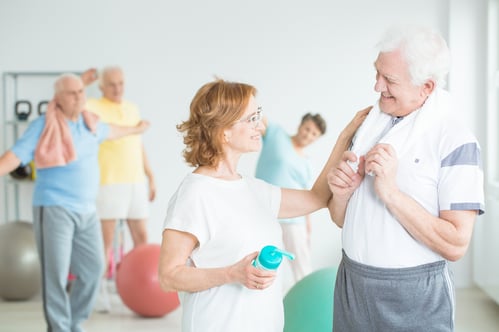
 As we age, we are constantly looking for ways to continue living our lives to the absolute fullest. One key element to reducing the effects of aging and to warding off possible health threats is to sustain a healthy and active lifestyle!
Living an active and balanced lifestyle that incorporates a mixture of aerobic, muscular strength and endurance, and balance and flexibility exercises will help to ward off a wide range of diseases. For example, regular exercise helps the body control blood pressure, body fat, heart disease, anatomical and structural impairments, cholesterol, and can even help reduce cognitive decline.
More times than not have I heard clients tell me that the aches and pains, or other health issues they have is just part of aging. While this may be true to some extent, you can still improve your over well-being in your older adult years even if you have never exercised in the past. Of course, the earlier you get started with an exercise routine the better but even just by including a moderate amount of exercise has shown substantial health benefits particularly for adults 50 years and older. Now that you recognize that exercise can help turn around your health at any age, the next step is figuring out what types of activities you enjoy and will be able to stick with long term.
Beginning an exercise program later in life will require you to find more meaning behind why you are moving. As previously mentioned, you should choose activities in which you enjoy doing so that sticking to a regular program is easier. To avoid normal biological changes caused by aging, pursue kinder, gentler workouts that consist of slower and longer warm-ups and cool-downs, and exercise routines that focus on lowering the risk of injury while still promoting posture, strength, endurance, flexibility, agility, and balance.
The most effective type of cardio training for an older adult is low impact physical activities. For example, swimming, walking, cycling etc. Many fitness professionals recommend a minimum of 20 minutes of cardiovascular training most days of the week. Personally, I have found it easier to get clients to commit to a cardio training program when they work their way up to 20 minutes. In other words, starting off small with bouts of cardio in 5–10-minute increments every day and then gradually increase the time. Just getting up and taking a walk around your apartment or through the halls can be a good way to burn some calories and get you moving!
Between the ages of 50-70 years old we lose 30% of our muscle strength. Sedentary adults beyond the age of 50 can expect to lose upwards of about 0.4 pounds of muscle per year. To slow this process down it is important to include strength training exercises into your routine at least twice per week. This way you will allow for adequate rest times for all muscle groups. It is important to have a strong upper body as well as a strong lower body. Increased leg strength has been shown to reduce the risk of falls with seniors greatly. Personally, I find it easier for my clients to stay committed to their strength training routine when they focus on the full body rather than splitting up their upper and lower body day.
One fear many older adults have is their increased risk of falling. On average falls are reported by 1/3 of all individuals over the age of 65. You can easily prevent your risk of falling by including regular balance training into your exercise program. Including a regular stretching routine into your overall exercise program can help to prevent injuries and can even help to increase blood flow to tired muscles, aiding in the recovery process.
The truth of the matter is that exercise is and will always be one of the main elements in living well across the lifespan. There are many ways to get started on an exercise routine. Everything from personalized exercise prescriptions, group fitness classes, and even personal training may be an appropriate starting point. There is something for every active ager out there, so get up and get moving!
 Every 4 (or 5) years a special summer event comes around that makes us all want to feel like an athlete. This year, residents in CCRCs from Minnesota to Florida showed that they have what it takes to compete in the NIFS Summer Games. NIFS fitness staff put together 8-10 different events that residents could compete in over the course of the Games. On the surface, this program looked like a way to celebrate the summer, but there was certainly more intention behind the design.
 When members of our corporate fitness centers meet with our staff for a complimentary fitness evaluation or exercise prescription appointment, it has long remained our focus of meeting that employee where they are in their fitness journey. Whether they are rehabbing a knee replacement, looking to improve their half marathon time, or returning to work from maternity leave, our degreed and certified staff do a deep dive to learn about the employee’s goals, motivations, and barriers to tailor a program unique to their needs. Through the pandemic, meeting employees where they are has taken on new meaning as we developed a stronger capacity to support members beyond the four walls of their employer’s corporate fitness center. NIFS HealthYou programming provides an array of virtual fitness and wellness services to support employees as they work remotely or travel for business.

 Name:
Name: