 There are a lot of news releases lately outlining new construction or expansion projects in senior living. Many of those projects include outfitting a brand new or dramatically overhauled community fitness center.
Because the construction projects are typically significant and encompass more space than just a fitness center, it’s easy to get lost in the details about treadmill features when you need to answer questions about flooring, HVAC demands, city permits, and more. And even within the four walls of the senior fitness center, there are several other things to be concerned about beyond simply selecting the equipment.
[Read More: 5 things to avoid when building a fitness center for senior living]
To help you streamline decision making about your community's new fitness center and increase the chances that the purchase decisions you make are the right ones, we've offered some key questions to ask before you buy fitness equipment to outfit your updated space. The list isn't comprehensive (you should hire a consultant for that), but it will provide a solid starting point to get to the bottom of determining what’s best for your residents.

As you’re working with the reps, make sure you’re clear about the age and ability level of your intended user. The same is true if you want to send out residents to test equipment at a local gym (sales reps may offer this). Make sure you send residents who are a good representation of those you expect will use your updated fitness amenities.
And one last note of clarification before you dive into the questions. NIFS does not sell any exercise equipment, nor do we receive any benefit from equipment manufacturers. These questions are based purely on our years of experience helping clients design and equip their fitness centers for a range of audiences.
Strength Equipment
It comes in a lot of shapes and sizes.
- Pneumatic: An air compressor regulates the amount of pressure against which the user works.
- Selectorized: Plate adjusted, with the user pulling out and reinserting a pin for the desired weight.
- Band technology: Weights are replaced with bands used as pulleys to generate resistance.
- Body resistance: The user works against his or her own body weight (and gravity) to generate a workload.
When it comes to thinking through questions for your sales reps, consider these:
- How is the resistance adjusted by the user?
- What is the starting weight for each piece and can that be lowered in our order if our population needs that?
- Are the seat heights, leg positions, seat backs, etc. adjustable per user? If so, how are they adjusted?
- Is there any other equipment I need to purchase to make your equipment fully functional for us? (Some equipment requires a computer, other equipment requires a compressor, etc.).
- What is the warranty on the equipment?
- (When the equipment comes with a software component…) Do you provide training to our onsite staff to learn how to make the best use of your software? Do you offer technical support?
Cardiovascular Equipment
In general, your fitness facility should have a range of cardiovascular equipment, including treadmills, ellipticals, recumbent cross-trainers (think NuStep or a similar product), and bikes. In some cases, we’ve seen rowing machines included, too. (They provide a great workout; we’re just not sure it’s an ideal piece for most residents.)
Some basic questions are true for each type of cardiovascular equipment:
- What’s the warranty?
- Who is the warranty-certified repair company in our area?
- What are the power needs for this piece?
- Can I see the detailed screen of the computer console? (You’ll want to see how user-friendly it is for your audience.)
- Does it connect with any wearable technology, or can we opt for an interactive console?
- If we don’t elect an interactive console now, can we change them out later?
- Treadmills
- What’s the step height on your treadmills?
- What’s the starting speed?
- Does the unit decline or only incline?
Ellipticals
- Is the piece rear- or side-entry?
- What is the clearance threshold or step height to access the piece?
- Does it come with stationary arms?
- Does the elliptical require external power? If not, (1) ask what the starting wattage requirement is, and (2) ask if there is an optional AC adapter. If no adapter is available, note that we’ve found anything requiring a starting wattage higher than about 15W is too difficult for many residents to power.
Bikes
You’ll want to consider traditional upright bikes and recumbent bikes. Matrix offers a hybrid bike that presents an interesting option as well.
- Do you have an upright bike with a pass-through design?
- Does the bike require external power? If not, (1) ask what the starting wattage requirement is, and (2) ask if there is an optional AC adapter. If no adapter is available, note that we’ve found anything requiring a starting wattage higher than about 15W is too difficult for many residents to power.
General Questions
These are general questions to ask any vendor regardless of the type of equipment you’re considering buying.
- What’s the primary market your company serves? (Ask for clarity in sales volume.)
- Can I talk to a practitioner who has used your equipment with an 85+-year-old population?
This last round of questions has nothing to do with the function of the equipment for the residents. It’s really focused on details for your overall fitness program and the role the equipment plays in your fitness center, which should be a hallmark space in the community.
- Can I customize colors on frame and upholstery (for strength equipment) to match our brand?
- Are you able/willing to customize your equipment with our logo?
You’re making a significant investment by building a new fitness center or overhauling your current community fitness space. Make sure you get the right equipment to increase the chances for a vibrant and successful fitness program that will support this generation of residents and the next. These questions will help guide and inform your equipment decisions, but if you want to better understand how to design the fitness center with your resident's needs in mind, consider downloading our quick read below.

 We work on a lot of build/design projects in retirement communities where the project is either new construction for a new community, or the plan is part of a repositioning that includes enhanced wellness spaces and services. If you follow industry trends, you see it all the time in press releases, RSS feeds and other media avenues: ground breakings for projects that include a state-of-the-art wellness wing, indoor/outdoor pool complex, etc. Communities are serious about folding resident wellness into their broader business strategy to remain viable in the market. Over my years at NIFS, I’ve had the pleasure of working on dozens of fitness center builds. As you can imagine, I’ve learned quite a bit along the way. Below are our top five recommendations (in random order) on pitfalls to avoid during your design journey.
 Name:
Name: 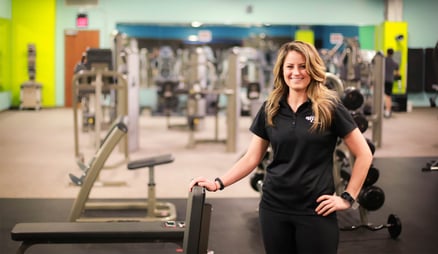 We’re a staffing organization – we provide well-credentialed and passionate fitness professionals to manage senior living fitness centers and corporate fitness programs for our clients. To say we know a thing or two about interviewing could be, perhaps, an understatement. Over the last 30+ years, we’ve hired hundreds of staff to fill a variety of fitness-focused positions for a diverse clientele. We have definitely made some mistakes and we’ve lived to tell about it.
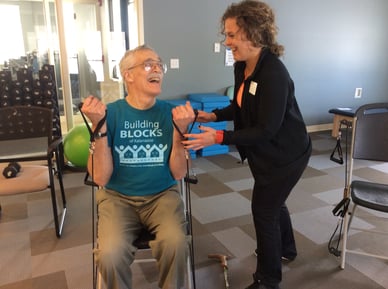 One of my favorite things about my job is when I have the opportunity to visit our client sites and spend time with our staff. Not only are these team members exceptionally knowledgeable and creative in developing fitness offerings for active older adults, but their passion to serve their clients and residents never ceases to amaze me. I think this is what truly differentiates the service NIFS provides from a traditional contractor partnership—how our staff members become one of the team and integrate so seamlessly with the community’s staff and vision.
 From group fitness instructors, to personal trainers, to fitness managers, finding the right people is at the heart of what we do, and our interview and vetting process helps us find the best of the best. If you are looking for support in recognizing fitness qualifications and making the right hire for your community, NIFS can lead your interview process. We can also aid in the training process once you make your hire to get your new team member on the right path and connected to NIFS resources and programming materials.



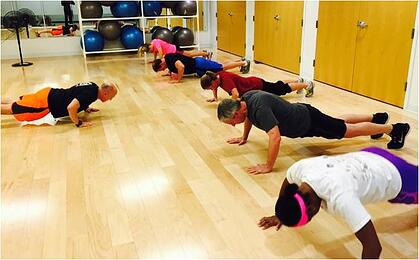 NIFS isn't the only agency that provides fitness management expertise to businesses. There are several like us because the market demands it. While many organizations have adopted a DIY attitude about managing their own fitness programs, an additional (and substantial) set of businesses has recognized the value in outsourcing fitness center management for their corporate fitness center or in their senior living community.
 My earliest memory of my biggest fear was around age seven or eight. I was playing in my backyard with my childhood best friend on the swing set. We were running around it trying to catch each other when I slipped and fell, cutting my arm. I didn’t even realize I was bleeding until my friend pointed it out to me. Immediately my heart started to race, palms began to sweat, and I quickly lost all the color in my face. The next thing I remember is my Mom and friend standing over me as I lay on the ground after passing out. Every encounter with blood after this episode only amplified this fear, often resulting in avoiding certain situations such as routine blood draws or even jobs that required me to be able to perform a finger stick cholesterol test to fitness center members. Finally, after living with this fear for over twenty years, I finally made up my mind that it was time to face it. What is the one big fear you have in your life? Are you ready to face it?
 We all know that fruits and vegetables are good for us, right? We hear it all the time that fruits and vegetables lower the chance of certain cancers, eating your spinach will prevent cataracts, eating fruits leads to longer life and beet juice lowers blood pressure. We also know that fruits and vegetables add color and texture to our dinner plate, they are low in calories and provide fiber, vitamins and minerals for our body. So, if something is good for us, why don’t we embrace it and take it all in? Well, it is not as easy as it sounds. For many, it may be the taste factor and immediate satisfaction of good tasting food, overrides thoughts of long-term health. Were you forced to eat your vegetables when you were younger? Possibly the half eaten peas and carrots that were in your mouth became the new center piece at the dinner table? Bad experiences tend to keep us away from trying it again. So, what are the top 3 reasons to increase fruit and veggie intake? Why would I want to give these foods another try?