Corporate Fitness and Active Aging

Postural Strength Matters More Than You Think

GettyImages-2233347904Did you know your everyday posture could have an effect on your overall health and wellness? Your posture is a makeup of your musculoskeletal system at work to maintain proper positioning throughout the body regardless of it you are in motion or static. While posture tends to be an automatic position that most of us do not notice, being hyperaware of your posture throughout the day could lead to positive overall changes in spinal health, balance, movement efficiency, breathing, focus, mental health, and maximizing your muscle gains during exercise.
First, let’s debunk the idea of maintaining a “perfect” posture. Everyone’s body is different, so, in turn, everyone’s posture is different. Putting too much stress on yourself to fit the mold of a “perfect” posture could be more detrimental than beneficial. This is due to the mental stress and muscle tightness that accompanies the overall anxieties of maintaining a “perfect” posture. Instead of trying to perfect our posture, let’s try to make our posture healthy.

How do you know if you have poor posture? There are plenty of common body symptoms that could exist because of improper positioning of the body. Improper posture could lead to back pain, headaches, neck pain, shoulder pain, and be a hindrance on your flexibility, mobility, or balance. According to The Pelvic Girdle, a clinical textbook that discusses posture and biomechanics (including breathing mechanics), bad posture can also reduce your lung capacity by 30%, leading to feeling groggy, having lack of focus, or experiencing shortness of breath.

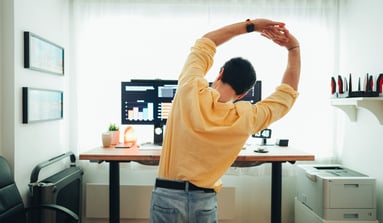
To maintain a healthy posture, make sure your head is always above your shoulders, shoulders always directly above the hips, maintain a neutral spine, keep your core muscles braced, and stabilize the lower body. To stabilize the lower body while standing, make sure to drive your weight more toward the midfoot or ball of your foot and keep the feet separated about shoulder width apart. Your weight should be equally distributed between both legs. To stabilize your lower body while sitting, make sure your feet lie flat on the floor with ankles apart and legs at a 90-degree angle. A good tip if you are unable to reach the floor from your chair is to utilize a footstool to maintain a proper 90-degree angle.

Incorporating small but effective mental and physical exercises everyday can lead to better posture overall. Arguably the most important muscle group associated with a health posture is your core muscles. Practice engaging your core intentionally throughout your day. How do you engage your core? The simplest way to put it is to imagine you are zipping up the fly on your tightest pair of jeans, so you must suck your belly button back to your spine and stand tall. That is the same sensation as engaging the core. Practice sucking your belly button to your spine while breathing steadily to trick your body into thinking this is your natural relaxed state. Making sure you have the proper footwear for your body’s gait is also highly important when it comes to proper posture. Runners Forum and Athletic Annex are two great examples of stores that will help you with gait analysis and fitting you with the proper shoes to aid your posture and comfortability throughout the day.

A disciplined diet and exercise routine will also lead to a positive change in posture due to the strengthening of the skeletal and muscular system. During exercise, the key muscle groups to hit to help improve your posture in order of importance are the core, upper back, shoulders, and glutes/hips. While strength training is important for those muscle groups in the posterior chain, having specified mobility/flexibility days incorporated into your workouts or everyday routine are vital for the release of tension of the muscle groups utilized in proper posture such as the chest, shoulders, back and hips. Working on your range of motion and loosening of the muscles will also help proper posture come more natural to you, which can take a lot of the mental stress of maintaining a healthy posture away.

A healthy posture is a lot more complex than just standing or sitting up straight. It is about creating a strong and stable foundation of the musculoskeletal system to support balance, breathing, boost confidence, improving focus, and efficiency of movements in everyday life. By making small, intentional changes now, you set yourself up for better movement, better workouts, and better overall health for years to come.

Topics: exercise exercise and health posture

Anywhere Body Weight Exercise for Office, Travel and Home

GettyImages-2246072718When life gets busy, it can be hard to always get into a proper workout space or gym to get a workout in, especially with tight-packed schedules, family life, or work stress, and finding the right time. This can make it easy for regular fitness habits to be placed on pause, with it being difficult to go back. Being active does not have to be a time-consuming commitment or create unnecessary stress. Doing small workouts that are 30 minutes or less can be effective and keep you active without requiring large amounts of time. Exercise does not have to be done in a gym setting; even short amounts of physical activity have been found to improve sleep, elevate energy levels, and reduce stress.

There are many options to get movement in to be active throughout the day without having to be at a gym. The ACSM (American College of Sports Medicine) recommends that adults should engage in at least 150 minutes of moderate aerobic exercise a week. A gym is not necessary to work out. A full body workout can be done at the office, home, or when traveling. This can be done by using bodyweight or resistance. Small loop resistance bands are a great piece of equipment to utilize for being on the go since they are lightweight and can be stored anywhere or put into a bag. Use the environment around you to assist with workouts. The steps in your house, a wall in a hotel or house, a chair, or a desk can all be used to help get a workout in and try out new exercises.

Bodyweight, minimal equipment, or resistance band exercises are simple and effective ways to build up strength, endurance, and mobility from anywhere. Exercises such as squats, lunges, pushups, and dead bugs are ideal for people who have short amounts of time, space, or little equipment available. Bodyweight exercise has an advantage because movements can be progressed or regressed to fit any fitness level. For instance, a plank can be done on an incline or on the knees for a lower intensity for beginners. Doing bodyweight exercises or exercises with a band or any equipment is still effective by working on balance, strength, mobility, and core stability/strength. Bodyweight exercise is a convenient way to still stay active when traveling, stuck at the office, or at home. These can be done from anywhere to be effective.


Topics: Wellness in the Workplace workout office workouts

How Exercise Can Help You Feel Better

GettyImages-1482271156_edited“I don’t always enjoy exercising, but I love when it’s done!” This statement is one of the most popular comments I hear in the fitness center, whether it’s a class or someone exercising on their own. Then, they often explain that it’s not just that they’re glad the exercise is over, but it’s about how they feel afterwards. They relieve stress, they feel accomplished, and even feel energized afterwards. We know there are many physical benefits to exercise, such as improving heart health, controlling blood pressure, improving bone, joint, and muscle health, and reducing the risk of type 2 diabetes. Recently, it is also becoming more common to hear about the mental and emotional benefits of exercise.

According to the CDC, about 20% of adults in the U.S. experience anxiety and/or depression. We also know that 1 in 6 people experience loneliness worldwide across all age groups, including about 12% of older adults. Even if you don’t have depression, anxiety, or experience loneliness, we all have some sort of stressors in our lives and could use a mood boost!

I have divided up the benefits of exercise on mental and emotional health into three main groups to discuss below:

  1. Supports Mood and Reduces Stress. When we exercise, our brains release endorphins, which are “feel good” hormones. They help to reduce stress and give the body a sense of well-being. Research shows that moderate and high physical activity are associated with 15-30% lower rates of severe loneliness and social isolation. Exercise, especially with a friend or in a group, can also be a distraction or way to take your mind off the things in your life that are causing you stress or anxiety. You might even make new friends from attending a class that you can spend time with outside of exercise!

  2. Boosts Energy and Improves Self Confidence. It’s understandable that some people think exercising will make them more tired, since they are exerting energy. While immediately after exercising you can feel tired, the act of exercise will help boost your energy levels. At a cellular level, your body produces more mitochondria while exercising. You may remember from your Biology 101 class that mitochondria are the powerhouse of the cell. Meaning, more mitochondria equal more energy! Exercising regularly also tends to improve sleep, and a well-rested body is a more energized body. Having more energy can also help improve self-confidence. The more energy you have, the more you can challenge yourself in your workout. Tackling the challenge of a tough workout can give you the confidence to tackle the challenges of your everyday life.

  3. Creates a Sense of Routine. Having a regular routine can help improve mood and give a sense of purpose. Scheduling a time for exercise each day, whether it’s a class, exercising on your own, or meeting a friend for a walk, can help create structure to your day that is important for mental health. It gives you something to look forward to that will help you feel better mentally and physically afterwards.

Keep in mind these mental and emotional benefits when you are lacking the motivation to exercise. As my members say, “you’ll love it when it’s done!”

Topics: exercise mental health Move Your Mood

Building Resilience & Strength Through Stillness


GettyImages-859650142Building strength by being still… did you know there was such a thing? My guess is yes, if you take a moment to think about it. Many of us associate getting stronger with constant movement, lifting weights, running, or completing repetitions. However, some of the most effective exercises actually involve holding completely still.

For example, there are a lot of exercises that ask us to “hold our pose” for 10 seconds or longer. These are called isometric exercises. So instead of moving through a full range of motion, your muscles contract and stay engaged while your body remains in one position. Common examples include holding a squat, maintaining a plank, or sitting against a wall in a wall sit. Although these exercises may look simple, they can be the most challenging.

Holding a still in a position during an exercise provides many benefits. For example, when we lower into a squat and pause before standing back up, we are strengthening the muscles, tendons, and connective tissues that support our joints. Because the muscles remain under continuous tension, they are working hard to maintain stability and control. This can improve muscular endurance, increase joint stability, and help build strength in that position.

For a lot of us, it feels like this type of exercise takes much more effort than traditional exercises when we keep moving. For example, if you perform 10 squats with a 10-second hold at the bottom of each squat instead of doing 10 squats in a row, your muscles will likely feel much more fatigued. That is because they never get a moment of relaxation that occurs during movement. The sustained muscle contraction creates a different kind of challenge, one that builds endurance as well as strength.

But the physical challenge is only part of the story. There is a mental benefit to this type of training as well. Isometric exercises help build resilience by teaching us how to tolerate being uncomfortable. Each time we successfully hold a challenging position, we feel more accomplished and confident in our ability to complete that exercise. In that moment, we set a goal, worked through the challenge, and finished feeling stronger—not only physically, but mentally.

The next time your workout asks you to pause and hold instead of moving, remember that you are doing more than strengthening your muscles. You are building stability, endurance, confidence, and resilience!

Topics: exercise Wellness Companion isometric exercise

From Fitness Amenity to Mental Wellness Ecosystem

GettyImages-2272923352The question is no longer, “Do we have a fitness center?” The stronger question is, “Are we using the fitness center to its full potential as part of our mental wellness ecosystem?”

For many senior living communities, the fitness center has traditionally been viewed as an amenity. It’s a highlight on a perspective resident tour as the place where residents can exercise. When intentionally programmed, staffed, promoted, and integrated into the broader community, the fitness center becomes more than an amenity. It becomes a meaningful part of the community’s mental wellness ecosystem. Why is this important? In a recent NIFS survey of the senior living industry, over 50% of communities reported an increased prevalence of residents struggling with depression and anxiety.

A fitness ecosystem is not just a room with equipment, or a calendar filled with classes. It is a purposeful system of programs, people, and touchpoints that helps residents move regularly, feel connected, gain confidence, and build meaningful routines. For residents navigating change, loss, stress, anxiety, depression, or loneliness, that support can be powerful. Fitness is not a substitute for clinical care, but it can be a valuable part of a community’s broader mental wellness strategy.

By now, the connection between movement and mental health is well known. The World Health Organization recognizes that regular physical activity provides both physical and mental health benefits, including reduced symptoms of depression and anxiety, improved brain health, and improved overall well-being. The Mayo Clinic also notes that physical activity can support emotional balance and may help reduce anxiety and depression.

For many residents, movement is not just about fitness. It is about feeling capable, connected, and supported in daily life. The CDC identifies reduced risk of depression, improved independent living, better bone health, and reduced fall risk among the benefits of physical activity for adults age 65 and older. When a resident feels more confident walking to dinner, joining a class, engaging in their favorite hobbies, or moving safely through their day, the benefits go far beyond physical health.

This is why community leaders should see the fitness center as more than a place to exercise. When done well, it becomes a familiar and supportive space where residents can build routines, see friendly faces, receive encouragement, and celebrate progress along the way. It creates simple but meaningful moments where residents are greeted by name, personally invited to participate, and recognized for the wins that matter to them. Those small touchpoints can make a big difference, especially for residents who may be feeling disconnected or unsure where they belong.

This ecosystem approach requires more than offering exercise classes. It requires intentional staffing, thoughtful programming, cross-department communication, and leadership buy-in. Fitness professionals should be empowered to notice changes in participation, connect residents to appropriate programs, communicate trends, and collaborate with life enrichment, therapy, nursing, food and beverage services, and resident services. When these departments work together, the fitness center becomes a hub for whole-person wellness.

For community leaders, this is where the opportunity lives. The fitness center can be more than a service residents use. It can become a meaningful part of how residents feel supported, connected, and encouraged in daily life. When fitness is intentionally woven into the community’s wellness strategy, it helps create an environment where movement feels accessible, progress is celebrated, and residents know they have a place to belong.

Click here to learn more about NIFS data-driven approach to helping residents gain strength and maintain their independence!

Topics: mental health senior fitnes Move Your Mood

Strength and Balance: How Stronger Muscles Reduce Falls

Working on balance for the reduction of falls should be a part of your fitness journey during your aging process. It is important to talk about strength and the relationship it has with the reduction of falls.

 GettyImages-2223798849An individual walks into my office and asks to work on his balance because he is very fearful of falling. He is 82 years old. I will call him Joe. So, I asked Joe a series of questions. Joe has already been a member (application and consent have been completed) and has had a doctor’s consent to participate in a program for our wellness center. There are sensory deficits that can contribute to balance issues, such as lack of hearing or vision loss. Joe has both. Also, he struggles with getting up from a chair and up and down stairs. He does use a cane.

Joe and I went through a series of tests to assess balance and strength and found some areas that could be improved. Listed below are a few of the tests that could be performed by a fitness professional. Based on these results, an exercise prescription would be provided.

  • Sit-to-stands test
  • Single leg stance test
  • Bicep curl test
  • Timed up and Go test
  • 2- min step test (cardio endurance)
  • Functional reach test

This can be overwhelming at times; steps can be taken to improve his balance and strength. He scored on the lower part of the scale, which is why he struggles with some of his day-to-day activities such as getting out of a chair or walking up and down the stairs. Adding to those day-to-day activities, what if he had a bag of groceries or was carrying something from the first floor to the second floor? That would increase his risk of falling due to his lack of strength. So, the question would be, how can we improve his strength and decrease his risk of falling?

Here are some simple exercises (after a medical consultation) that you can add to his routine to get him stronger and reduce his risk of falling:

Leg-Focused Exercises

  • Sit-to-stand exercises (chair squats to start with to modify)
  • Standing leg lifts (done holding on to a countertop, standing tall
  • Leg lifts lying in bed
  • Calf raises (hold on to a tall chair or countertop, standing tall)
  • NuStep (if applicable -or walking)
  • Balancing on one leg (staying close to a chair)
Core Strengthening Exercises
  • Bridges (can be done in bed, or if you can confidently get on or off the floor, with a mat)
  • Seated crunches in a chair
  • Seated marches in a chair

Since Joe was a new member, I did suggest a beginner-level balance class for him as well. When starting out a new exercise program, pay attention to how you are feeling. Ask yourself, does this make me feel good, do I feel pain, or am I too tired to continue for the rest of the day? It is ok to start slowly. Just remember it is ok to start slowly, but it is also important to know that the most effective way to prevent falls is to strength train and be consistent.

Ask yourself, do you have a strength program? If not, seek out a fitness professional that can help you with your strength journey. This can help you with future injuries and falls. Stay strong, my friends.

Topics: exercise fall prevention strength exercise and aging

Goal-Based Fitness Improves Long-Term Adherence

People find their way to fitness in many ways. Some started playing sports in their schools or travel programs at a young age; others do not feel the need to enter a gym or add cardio sessions to their regimen until their doctor suggests it, well into adulthood. I am a believer that in fitness, any plan works, if you stick to it.

Many miss the opportunities entirely. They never start because they are busy crafting the perfect plan for their end goal; in short, stop trying to refine your AI prompt, in fitness, the first step is starting, above all. The search for the “correct” pair of shoes or the newest gear is a stalling technique (you know it). And that is where our small goals that lead to big results begin. Put on the shoes you have been wearing for months and walk, ride your bike, or hike. Step one must be to start, immediately after visiting your doctor, to make sure they agree that it is a good choice of course.

GettyImages-1356446117While personalization is important (specificity is still my favorite training principle), determination is the real key to long-term success. And, we have found, through study and real-world evidence, the most effective way to complete a big goal is to break it up into smaller pieces and create ‘smaller’ goals that offer reward along the way.

When I have a new potential client come into the office, I have a few questions that I always ask. Ask yourself these questions as you read:

Why? I ask this simple question to get to the root of the desire to reach a fitness goal. Sometimes, they are well into late life. Usually, I find an emotional foundation, and that is generally good. We call it a fitness journey because it is not fast. Nothing that requires perseverance on this level should be called easy, though many in the industry make it look effortless after 20 plus years of athletics. Whatever your reason, let the seed take root and hold on to it. It will keep you going when it is tough.

How much sleep do you get, on average, each night? If the answer to that question is less than seven hours, I make a note and intend to set that goal. This is a baseline need for your body; all your recovery processes are happening while you sleep. If you are in that club, stop telling yourself you are one of the tiny percentage of humans that can live on 2 hours of sleep per night and accept that your telomeres are being run ragged by inflammation that adequate sleep can remedy.

How many minutes of zone II cardiovascular exercise do you get each week? Do not let “zone II” scare you away; this is exercise that you can do while still holding a conversation, and you should be getting at least 180 minutes of it each week. This is a baseline need for your heart, lungs, and circulatory system.

And then I ask about their goal.

So, what is your goal? Have you started already or are you still trying to find the perfect prompt, fit, or gym?

Here are my little wins list that will have you enjoying the long-term adherence phase of your journey before you know it.

  1. Be honest with yourself about your sleeping habits and fix them, if needed. Reward yourself for getting this where it should be. Shoot for 7 hours per night, minimum, and stop the late-night food and drink.

  2. Find your “zone II.” Here is the equation:

  3. Get a fitness assessment, preferably with a professional. You cannot see results without data.

  4. Journal your journey. Your brain will not always give you an honest take in the mirror. Measure, weigh-in at regular intervals (do not do this every day, once per week is plenty. At the same time each week), and write down all your successes. The rewards for this step are built in; you will see what I mean when you fill up your first notebook.

  5. When you reach your 180 minutes of zone II cardio goal, add strength training.

  6. Unless your goal is to put up the gold medal winning total in the Olympics, or run a marathon in a specific time, take a step back from intensive planning. Allow fitness to be integrated into your life; long-term is the goal, it is not the cabbage soup diet (don’t). Have fun, try new things, and keep going.

  7. There will be bumps. Settling back into poor habits because we missed a day of planned cardio or ate poorly over one weekend is a common trap. The key is to get up the next morning and get back to the business of your goal. No hard feelings, no punishing workouts. Just get back to the plan.

Lower limit = 220 - your age (in years) x 0.6

Upper limit = 220 – your age (in years) x 0.7

Then, honestly assess the amount of time you spend in that zone each week. If that number is less than 180 minutes, start increasing your activity level as soon as possible. Add thirty minutes each week until you hit this threshold. Reward yourself when you achieve the goal and keep this new standard moving forward.

Set up an appointment with one of our professional NIFS staff to see where you stand. Get started. Take it slow. Give yourself some grace when it feels tough and remember, it is never too late.

Topics: goal setting longevity health and fitness goals

Building Your Body's Armor

GettyImages-2206518409 (1)Your body needs to be able to handle whatever life throws at it, whether you’re an athlete training for your next competition, a weekend warrior striving for a personal best, or someone just wanting to finish a round of yardwork without a sore back. Progressive Resistance Training is the key to building your body’s natural armor, protecting you from injury while unlocking new levels of performance.

Your body builds resilience only when it is truly challenged. There are three primary ways your muscles adapt: mechanical tension, micro-tears, and metabolic stress.

  • Mechanical Tension: This is the literal "pull" on your muscles when lifting something heavy. Your body responds by strengthening the connections to your bones, making your tendons more resilient.

  • Micro-Tears: When you lift weights near your limit, you cause tiny tears in your muscle fibers. While this sounds negative, it’s the essential signal that tells your body to increase muscle size and density.

  • Metabolic Stress: This is the "burn" you feel toward the end of a set. It’s a mixture of lactic acid and blood rushing to the area. The more you challenge this system, the more efficient your body becomes at managing this response, allowing you to work harder for longer.

When building your body, you need a plan. Jumping in and lifting the heaviest thing you can find is a recipe for disaster. A solid rule of thumb is to increase your total workload by about 10% per week. It’s also vital to listen to your body. If your muscles are painful to the touch, it’s okay to swap a heavy lift for some flexibility work. Remember: your muscles are challenged in the gym, but they grow during recovery.

A progressive training plan does more than just grow your biceps; it makes your whole body more resilient. By sticking to a program, you improve neuromuscular coordination, allowing your brain to recruit muscle fibers more efficiently. You also strengthen your bones. When your skeleton is taxed beyond its normal limits, it is driven to increase its density and rigidity. Perhaps most importantly, every challenging session proves to you that you can do hard things. You’re building mental toughness that carries over into every other part of your life.

Don't wait for the perfect day to get started. Make a plan, track your progress, and start seeing results. Progressive fitness training is the ultimate investment in your future self. Every "hard set" you finish today is a building block for the resilient body you’ll have tomorrow.

Topics: muscle building strength exercise and aging

The Psychological Approach to Overcoming Injury

GettyImages-2182813644Experiencing an injury of any kind can be an immense setback. You went too fast too soon with your program? Had incorrect form that led to the worst possible outcome? Experienced a slight misstep on your run…whatever the cause, experiencing an injury is something up to 40% of active adults will face each year. This leads to physical disruption in your training plans, but sometimes what lingers even longer than the physical is the mental block that occurs—the perceived wall that prevents you from truly getting back on track. When we experience an injury, a physical therapist or knowledgeable trainer often prescribes a program that maps out physical actions you can take to get back to health.

What isn’t often given is a mental map that will aid you in your return—to guide you when you are afraid to do certain movements that you believe will cause your injury to recur, or how to feel motivated when you are back to square one after putting so much effort into getting to where you were. After reading this blog, you will be equipped with an understanding of certain psychological barriers you may encounter through injury rehabilitation, gain knowledge of how to overcome those barriers, and be provided with practical applications in the form of a workbook to sharpen your mental skills.

Known Psychological Barriers

To start, we must discuss what barriers people often face when trying to overcome an injury. The first is one most of us can relate to who has experienced a serious injury—the fear of re-injury. This can be a very real, plausible feeling. As you start your journey to recover, this is something you should keep in mind while going through your physical therapy program. This feeling becomes faulty when the reality of injury recurrence is minimal and we are not progressing with our program. What starts off as a natural feeling that aids in protection and is a wise, modest approach to rebuilding becomes erroneous when your body is capable and you have not adapted your mindset to reality.

This seed that is planted in your mind can become deeply rooted if it is not challenged.

Have you ever accidentally burned yourself on the stove? Maybe as a child, you reached across and felt the stinging heat cut through your skin barrier. Usually, it takes just one time for us to learn not to touch a hot burner. We call this “pain memory.” Our nervous system stores and recalls painful experiences, serving as a protective layer for our body and mind. Our mind can act in the same way when we suffer an injury. It tries to protect us from experiencing the same injury again. Once again, this becomes maladaptive when we are not in jeopardy of injury, but we avoid and dismiss exercise, thus preventing us from progressing or maintaining a healthy training program. Mental blocks, or the inability to continue with a task due to (conscious or unconscious) stress, anxiety, or emotional tension, can be a result of pain memory. This can cause you to feel stuck, confused, frustrated, and irritable—especially when it stems from an unconscious standpoint.

The Mental Comeback Plan

Maintenance
One of the most important shifts during injury recovery is understanding what progress looks like. Unfortunately, many fall into believing that if they cannot train at full capacity (or where they were before their injury), they have lost all their progress. This mindset can lead to frustration, disengagement, and even a complete halt in activity. Rather than getting caught up in what you currently can’t do, shift your focus to “what can I maintain or adapt?” or “what can I still do?” Whether it is training another area of the body, shifting more toward mobility, modifying what type of conditioning you can do, or prioritizing active recovery, these are all ways to continue to progress. The ability to maintain a routine, even while having to adapt a bit, allows your body and mind to preserve your physical qualities as well as your identity as a consistent and committed exerciser.

"I'm here… I'll make some tweaks, some changes, but I'm still coming."
– Kobe Bryant

Positive Self-Talk and the Power of Affirmations
Utilizing short, deliberate statements that reinforce positive beliefs about your body and recovery can aid in counteracting negative thought patterns and ultimately increase resilience. While affirmations alone do not drive recovery, they serve as a useful accompaniment to other psychological tools and training.

Imagery
Imagery is a powerful tool that has been proven (when practiced consistently) to reduce anxiety, accelerate healing, and aid in reducing fear associated with re-injury. By visualizing yourself successfully completing movements or returning to activity, you can reinforce neural pathways associated with those actions. Utilizing imagery to reduce anxiety surrounding exercise or certain movements allows your mind to rehearse the movements before physically engaging in them. This promotes a greater sense of internal control. The more familiar something feels in your mind, the less daunting it becomes when you go to perform the movement or exercise.

Goal Setting
Long-term goals (outcome goals) can feel bleak or distant after suffering a setback in the form of an injury. This is why having a plan ahead of time that considers setbacks is essential, but if you did not plan, this is your time to break your larger, big-picture goals into smaller, process-oriented goals. Instead of focusing on getting back to where you were, think about the daily actions you need to take that lead to weekly accomplishments—maybe that is completing your rehabilitation exercises, showing up to the gym consistently, or steadily measuring and improving your range of motion.

Shorter-term SMART goals allow you to have a sense of direction on your journey to full recovery. Without a map or plan, it is easy to get lost in all that your mind can throw at you. Having a tangible plan allows you to see past your inner doubts and helps bridge the gap between where you may currently be and where you plan to be. Lastly, it is completely okay to shift your outcome goals at any time. What you may have planned before may not match your current state, so give yourself grace and allow yourself to adapt and adjust.

Maintaining a Social Support System
If you are an avid social group exerciser or have a typical group of people you see and converse with at the gym, having an injury can result in something that goes beyond the physical and mental aspects of health. Your emotional health may suffer if you are unable to be around others you were once so used to seeing each week. Though you may be unable to participate as before, it is vital to maintain connections, as social support and accountability go a long way in aiding recovery. Social support allows for a sense of accountability, encouragement, and the feeling that you are not alone in your journey, even if it means you may not be a part of your social network in the same capacity.

Recovery is a journey, and it should never be navigated alone.

Regaining Confidence
Confidence can be one of the first areas that suffers after an injury and can be the last to return. Though you may reach a point where your body is capable, your mind can still hesitate. This is when intentional, small steps become so important. Begin with movements that feel very controlled and safe. As you get back into your lifting routine, start with successful repetitions with proper form rather than high intensity or volume. Confidence blossoms when you can gather momentum. Each successful experience builds into the belief system that movement is not dangerous. Over time, confidence will grow, and your perception will begin to mirror reality.

Practical Application
When you truly think about it, injury has a way of forcing you to slow down, reflect, and rebuild. This can be a challenge physically and mentally, and while it may feel like a setback in the moment, sometimes it can actually be an opportunity to develop a better training style, deeper awareness of your mind and body, and a more intentional routine. This workbook is designed to guide you through the psychological barriers discussed in this blog and aid you in adapting your routine while developing mental skills to assist you throughout your recovery journey.

 Click HERE to access the workbook!

Topics: employee health and wellness rehab recovery

Biomechanics: Understanding Movement to Perform and Move Better

What Is Biomechanics?

In the health and fitness world, biomechanics is a subdiscipline of kinesiology. Kinesiology is the broader study of movement, incorporating topics like anatomy, physiology, motor learning, and exercise science. Biomechanics narrows the focus to examine the structure and movement within the musculoskeletal system, mostly focused on mechanical forces acting on the body.

These mechanical principles come from physics and engineering and help us understand how internal forces like bones, joints, and muscles produce motion. External forces like gravity can also show how they impact the body during movement. Having this knowledge plays a key role in improving performance, injury prevention, and designing sport-specific equipment and training strategies.

Core Principles of Biomechanics

Biomechanics core principles involve kinematics and kinetics. Kinematics is about describing motion, or how things move, without considering the acting forces. Kinetics is about the forces that create motion, or why things move, and includes internal and external forces. Key components of this include understanding motion, force, leverage, and balance. The body functions as a system of levers, and understanding how these systems work together allows for more efficient and safer movement patterns.

Applications of Biomechanics

GettyImages-2170016393Biomechanics applies basic principles of physics toward key areas like improving human performance, reducing risk of injury, and designing specific exercise equipment. These insights can help increase speed, efficiency, and power, all great for improving technique.

Biomechanics and Injury Prevention

Biomechanics plays a major role in injury prevention by identifying improper movement patterns like poor lifting or running form. Addressing these issues can reduce excessive joint stress and overuse injuries. Applying biomechanical principles is also important in rehabilitation to help guide exercise selection, progression, and determine when an individual can return safely to activity.

When it comes to creating exercise gear and equipment for sport performance, biomechanics can play an important role. It can help with engineering designs such as making running shoes for certain gaits, prosthetics for replacing missing body parts, and wearable gear that can provide real-time data.

Improving Biomechanics

Improving biomechanics requires intentional work on movement quality, not just strength or endurance. Key strategies involve getting a biomechanical assessment, focusing strength training with quality form, and improving mobility and flexibility. Biomechanical assessments involve having a professional screen movement patterns to identify any imbalances. Weight training with proper form involves reviewing movements during lifts to identify posture issues or inadequate movement patterns. Building strength in smaller stabilizer muscles can help support the joints and aid in proper alignment. Improving mobility and flexibility can also benefit biomechanics by increasing range of motion and improving overall technique.

By bringing the worlds of biological science and engineering principles together, biomechanics allows us to examine all forces acting on the body. This understanding allows practitioners and individuals alike to prevent injuries, improve movement efficiency, and support effective rehabilitation.

By applying biomechanical principles, the general population can move more safely, perform more efficiently, and function better in everyday tasks. Ultimately, biomechanics serves as a foundation to help individuals of all abilities move with more confidence, control, and purpose.

Topics: healthy lifestyle functional movement exercise and aging