
The impact of prolonged, stationary sitting can pose risks, especially if it lasts more than 6–8 hours a day. Sitting for long periods without movement can cause stiffness, which leads to muscle weakness. It can also slow circulation and contribute to metabolic issues, increasing the risk of metabolic and cardiovascular diseases such as heart disease, type 2 diabetes, and obesity. Despite these potential consequences, there are ways to counteract sedentary behavior. Taking time for seated movement breaks can improve work productivity and help reduce these risks later in life.
Seated movement breaks can boost productivity by increasing blood flow to the brain, which helps improve cognitive function. This can directly enhance memory, attention span, and thinking ability. Movement also helps lower stress levels and releases “feel-good” hormones such as endorphins. Because of this, anxiety levels may decrease. Similarly, seated movement breaks physically reduce muscular stiffness. When you move, circulation increases, allowing blood flow to reach the muscles. This helps prevent muscle filaments from shortening and becoming tight. Movement also benefits the joints by triggering the production of synovial fluid, which lubricates surrounding cartilage and reduces joint stiffness. Sedentary activity lowers metabolism, which can cause a buildup of metabolic waste. Movement helps remove these wastes from the muscles.
Movement breaks can include physical activities that focus on dynamic stretching and posture adjustments. Below are some examples of dynamic movements that can be done while seated.
-
Seated neck rolls can help release built-up tension.
-
Rolling your shoulders backward and forward can help relieve tension and improve posture that may suffer from prolonged screen use.
-
Spinal twists gently rotate the core and help improve circulation.
-
Seated marches or extending your legs up and down under a desk can increase blood flow to the lower body. This helps areas like the hips stay mobile and prevents tightness that can lead to issues such as lower back pain.
Constantly adjusting posture or changing position can help prevent discomfort. It keeps nerves from becoming compressed, maintains steady blood flow, and prevents muscles from going numb. While not necessarily a movement, deep breathing can also help calm the mind and increase oxygen intake for stress relief. It is best to incorporate these movement techniques and postural changes every 30 to 60 minutes to reduce overall stiffness.
Movement, such as stretching or changing positions in a chair, can increase awareness and help break through short-term issues like difficulty concentrating, forgetfulness, and mental fatigue. It also reduces tissue tension, especially in vulnerable areas like the neck, hips, and back. For long-term benefits, regular movement can reduce the risk of cardiovascular and metabolic diseases, supporting a longer and healthier life. Incorporating seated movement breaks every 30 to 60 minutes can significantly improve productivity in the workplace.

 Looking for new things to do with your spouse/partner, teenage child, best friend, or even co-worker? A partner band workout is a great way to get some physical activity, work on team building skills, and have fun all in one! Partner band exercises require muscle control from both parties, so you have to pay close attention to the speed and location of your partner. This workout can be done anywhere; hotel room, on the beach, at home, in your office or conference room, in the garage/driveway, etc. All you need is a band to fit your
  In celebration of National Employee Health and Fitness Month, be a healthy trendsetter in your company by inviting a co-worker to join you for a workout at your corporate fitness center! Not only will working in a group help keep you motivated, you can push each other to strive for a better workout. Here are some ideas that are featured in the video below for partner exercises that are great for any level of fitness!
 Once you have learned basic strength moves separately and have mastered the form for each, consider trying a workout where you combine both a lower and upper body strength exercise into one.
 It’s been a long week, it is cold outside and you don’t feel like doing much of anything, right? Join the club. You don’t have to stress about your workout. At the end of the week maybe you just need a good stretch!
 Complete the following stretches to de-stress and relax your muscles. Worksite wellness can be easy by simply taking a moment to stretch at your desk!
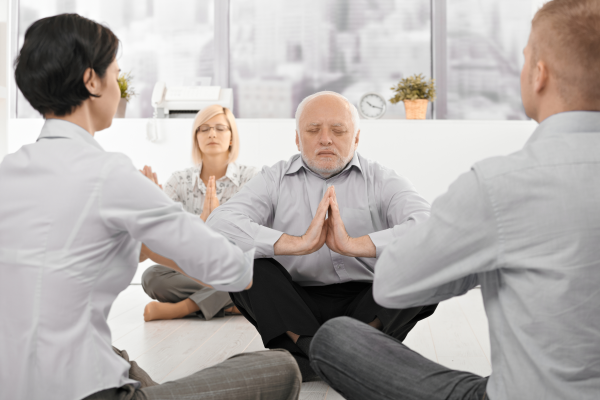 Do you find it difficult to make exercise part of your daily routine? You may be surprised at just how easy it is to squeeze in bouts of activity. Lunchtime is one such opportunity. Not only will you torch a few calories, you’ll tackle your afternoon tasks with a clear mind and increased energy levels.
 With more and more studies indicating just how dangerous to health sitting at a desk can be, incorporating small bouts of physical activity throughout the workday is as important as ever.