Play Isn’t Just for Kids
Play is often seen as something reserved for kids, a way to burn off energy and learn how to socialize. But it’s just as valuable for adults. In fact, play can be a powerful training tool that improves mental processing, reaction time, and the ability to adapt to unpredictable movement.
When we engage in play, we’re not just moving our bodies; we’re training our brains, muscles, and nervous systems all at once. Activities that feel like games help sharpen coordination, reflexes, and decision-making in ways that traditional workouts sometimes don’t.
What’s Really Happening During Play
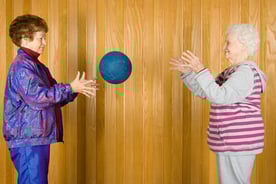 Take a simple game of catch. It may seem basic, but there’s a lot going on beneath the surface.
Using something like a tennis ball challenges motor skills, depth perception, and hand-eye coordination. Add a rule like standing on one leg while playing, and suddenly you’re working on balance, focus, and control. Now layer in the unpredictability of a throw with different speeds, angles, or spins, and your brain is forced to react, adjust, and stay engaged.
This type of play improves:
- Attention control (focusing on multiple things at once)
- Cognitive flexibility (adjusting to unexpected changes)
- Spatial awareness and memory
- Quick decision-making under pressure
Compare that to a more routine workout, where movements can become automatic and require less real-time thinking. Play keeps the brain actively involved.
Building Creativity and Problem-Solving
As play becomes more complex, it encourages something called divergent thinking—the ability to come up with multiple solutions to a problem.
Players start to experiment:
- Trying new throwing patterns
- Changing strategies
- Creating unpredictable movements
This kind of imaginative play taps into areas of the brain responsible for creativity and planning. It makes the game more dynamic and, in turn, pushes everyone involved to elevate their skills.
Just as importantly, successfully navigating these challenges builds confidence and reinforces a mindset of continuous learning.
The Role of Reflection
One of the most effective ways to deepen the benefits of play is through guided discovery.
After a game, simple questions can help participants reflect and improve:
- “What were you focusing on when deciding where to move?”
- “Which throws were hardest to react to?”
- “How did you keep your opponent guessing?”
This kind of reflection helps connect the physical experience with mental awareness. Players begin to understand not just what they did, but why they did it—and how they can improve.
From Practice Back to Play
After breaking down skills and working on them individually, the next step is bringing everything back into the game.
With repetition, these skills become automatic. That’s the goal! Building reactions and coordination that don’t require overthinking in the moment.
Research continues to show that better coordination and faster reflexes can reduce the risk of falls and everyday injuries. But beyond the physical benefits, play also:
- Builds confidence
- Strengthens social connections
- Keeps movement enjoyable
Why It Matters
When people understand why play is important, it changes how they approach it. It’s no longer “just a game” it’s meaningful, high-level training that happens to be fun.
By giving individuals the tools to reflect, improve, and re-engage, we help them develop skills that last a lifetime. And maybe most importantly, we remind them that improving their health and performance doesn’t always have to feel like work.
Sometimes, it just looks like play.
 When you were a kid, going out to play was something you likely did every day. No matter if it was riding a bike, skipping rocks at the pond, or running around the neighborhood with friends, it was just fun! Moving came naturally and easy and was not considered “exercise” to the adolescent mind even though it was most certainly keeping your body healthy. The reason I bring this up is because I want you to think about those times. They were a lot of fun, weren’t they? Sometimes in our fitness center, we will hear a member say that exercise isn’t very fun. We get it! Exercise isn’t everyone’s cup of tea, but as a fitness professional, my goal is to find a way to make it fun for you. Another thing we will often here is “I’m not as young as I was!” or “I can’t do that type of movement anymore.” It is true, with the play you did as a child, there was probably a lot of falling, bumps, and bruises and that can make a person apprehensive to get started in “play” again. But that is why we are here, to explore with you and find a form of fitness that you enjoy. Yes, the several number of changes that tend to happen to the body as it goes through the stages of life can make some things more difficult, but we want to help keep it from being the reason you decide to play less.
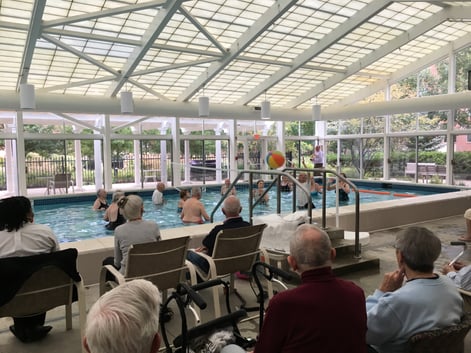
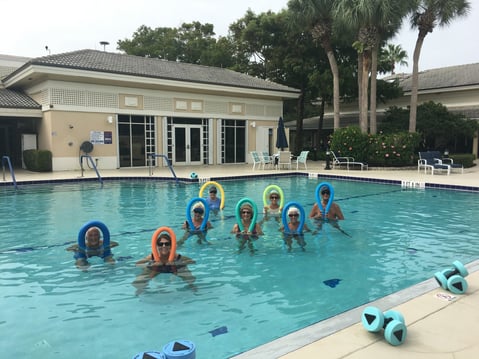
![IMG_0169[1] (edited) (1)](https://wellness.nifs.org/hs-fs/hubfs/IMG_0169%5B1%5D%20(edited)%20(1).jpg?width=471&height=325&name=IMG_0169%5B1%5D%20(edited)%20(1).jpg) Want to get a full body workout without the aches and pains of traditional exercise? Aqua exercise could be perfect for you! This low impact exercise is for people of all ages and varying physical abilities. Aqua exercise is especially great for the active aging community. Common workouts performed on land such as walking, running, and weightlifting, are important for building strength and endurance, but these workouts can be strenuous on the joints, ligaments, and bones. There are many ways to exercise in the water and you can do it with or without any equipment. Moving under water is a full body exercise, working your muscles in every possible direction with decreased rick of injury due to less impact and strain. With the help of
Want to get a full body workout without the aches and pains of traditional exercise? Aqua exercise could be perfect for you! This low impact exercise is for people of all ages and varying physical abilities. Aqua exercise is especially great for the active aging community. Common workouts performed on land such as walking, running, and weightlifting, are important for building strength and endurance, but these workouts can be strenuous on the joints, ligaments, and bones. There are many ways to exercise in the water and you can do it with or without any equipment. Moving under water is a full body exercise, working your muscles in every possible direction with decreased rick of injury due to less impact and strain. With the help of 
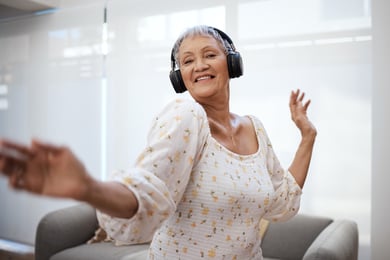

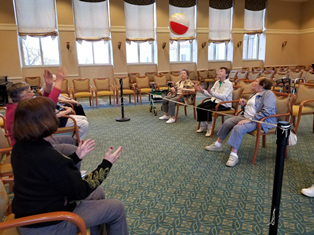
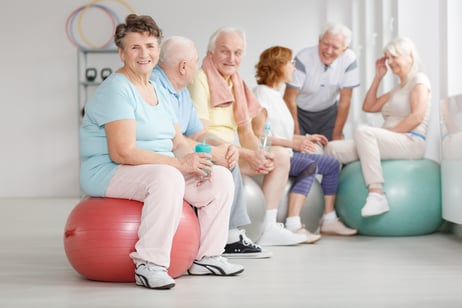 In the Active Aging community, group fitness is a large part of a resident’s daily life. Exercising solo and following a written workout plan doesn’t cut it for some residents. They need an extra motivational factor, such as being with a group and having someone instruct them step by step. Having friends around at all times is important to residents. It gives them a sense of security and accomplishment when they look in the mirror and see themselves exercising with close friends in the community.
.jpg?width=408&name=GettyImages-494388997%20(1).jpg) It should come as no surprise that most people aim to improve their lives in one way or another with the start of a new year. Particularly when it comes to focusing on better health and fitness, January’s clean slate seems to be the ideal time to get back on track and into shape immediately following the busy holiday season and prolonged period of indulgence. This seems to be a universal practice as we have found that to be no exception for our members and residents in senior living communities!
It should come as no surprise that most people aim to improve their lives in one way or another with the start of a new year. Particularly when it comes to focusing on better health and fitness, January’s clean slate seems to be the ideal time to get back on track and into shape immediately following the busy holiday season and prolonged period of indulgence. This seems to be a universal practice as we have found that to be no exception for our members and residents in senior living communities!