
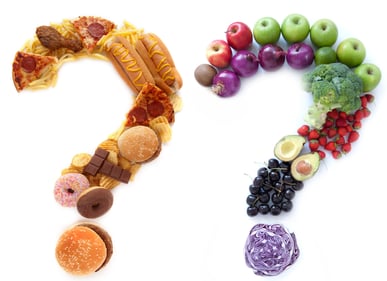
 As the Wellness Coordinator at NIFS, I get to meet a lot of great clients and help them attain their nutritional goals. I have noticed some common weight-loss questions that arise during the sessions. Hopefully if you have been wondering the same things, these answers will give you some more insight.
How do I gain muscle and lose fat?
The best way to lose fat is to either increase the amount of calories you burn or decrease the amount of calories you consume. As you are doing this, you also need to make sure you are doing 2 to 3 days of strength training per week to build muscle.
To decrease calories, it is important to keep track of what you are eating and see where you can decrease. This might mean decreasing the amount of coffee creamer you put in your cup of joe or swapping the potato chips at lunch for some raw veggies.
Increasing your protein intake won’t automatically increase your muscle mass. If you are strength training 2 to 3 times per week, a simple calculation to know your protein needs is to divide your body weight in half and multiply by 1.5.
Can you give me tips on how to lose weight?
The first advice I always give to anyone wanting to lose weight is to start keeping track of your food. Studies have shown you eat 40% less when you write it down! This can be done with the apps available for your phone, using a website, or just jotting it down with a pen and a piece of paper. It will allow you to see when and why you eat and also will hold you accountable for what you are eating.
The other thing that can be helpful with weight loss is to look at what you are drinking. Are you consuming empty calories from flavored coffee drinks, soda, juice drinks, or alcohol? Most people tend to eat the same amount of food no matter how many calories they consume from their beverages. So try to stick to water, low-fat milk, unsweetened tea, and 100% juices for the majority of your liquids.
How many calories do I need a day?
Every person is a different height and weight, and has varying levels of activity, so there isn’t one calorie number that works for all individuals to follow. Instead, use the simple Choose My Plate calculator that takes these factors into account to determine the proper amount you should be consuming. Not only does it give an overall number, but what is more important, it tells you how to get in that number. Recommended servings of grains, fruits, vegetables, dairy, meat and beans, and fat are given, along with some “extra” calories for those every-once-in-awhile food choices!
Personal Nutrition Coaching at NIFS
If you are interested in having your questions answered during a personal nutrition consultation, please contact me at amitchell@nifs.org or 317-274-3432, ext. 239. Click below for more information on packages and pricing.

 The next fad diet may work, but what happens afterward? Do you continue that system forever? Should you follow a program designed for weight loss if you’re
 Are you looking to give back to the community or help others? Did you know that you could do this while exercising too? If you have a SmartPhone or access to the Internet, there are several free apps you can download or sign-up through. Each application has a different organization or fund that you have the option of helping! I researched and found the top rated opportunity, along with a few others I have heard great things about.
 Are you looking for fitness tips, a little extra motivation or some exercise accountability? There’s an app for that! Over the past few years, health and fitness apps have grown and can provide information such as, distance and pace, strength, circuit and flexibility routines, estimate calorie expenditure, and some can measure your heart rate. Some apps will send daily fitness tips or motivational statements to help keep you on track with your exercise routine. But, if you’ve ever tried to search for health and fitness apps on your phone, you know how overwhelming it can be.