

Corporate Fitness and Active Aging

Managing Stress Through Movement as the Year Winds Down

GettyImages-2202993782As the final months of the year approach, life often feels like it’s moving in a million different directions at once. On one side, there’s the excitement of holidays, gatherings, and the promise of a fresh start with the new year coming. On the other hand, there’s the pressure of unfinished projects, year-end deadlines, and the emotional weight of reflecting on what we’ve accomplished - and what you haven’t accomplished. It’s a season of contrasts: cozy evenings and festive lights paired with long to-do lists and moments of overwhelming, stressful feelings. Stress during this time isn’t unusual; in fact, it’s almost expected. But there’s a simple, powerful tool that can help you navigate this busy season with more ease: movement.

Why Movement Matters More at Year-End

Movement is more than just exercise - it’s a way to reconnect with yourself. When we move, our bodies release endorphins, those natural mood boosters that help counteract stress hormones like cortisol. Movement creates pauses. It interrupts the cycle of overthinking, pulls us out of autopilot, and reminds us that we have control over our energy. Whether it’s a brisk walk, a stretch, or a dance in your kitchen, movement can shift your perspective in minutes. At the end of the year, when emotions run high and schedules are packed, this pause is invaluable. It’s not about pushing harder - it’s about moving with intention and taking time for yourself.

The Science Behind Movement and Stress Relief

When you’re stressed, your body enters a “fight-or-flight” mode. Your heart rate increases, muscles become tense, and your mind becomes hyper-focused on potential threats - even if those threats are just emails or holiday shopping lists. Movement helps reverse this response. Physical activity increases blood flow, delivers oxygen to your brain, and triggers the release of neurotransmitters like dopamine and serotonin, which improve mood and focus. Even short bursts of movement - like standing up and stretching for two minutes - can signal to your body that it’s safe to relax. Over time, these small actions build resilience, making it easier to handle stress when it arises.

Practical Ways to Incorporate Movement Before the End of The Year

Here are some approachable, season-friendly ideas to help you weave movement into your daily routine, such as Seasonal Walks - Bundle up and head outside for a brisk walk. The crisp air, changing leaves, or winter scenery can be surprisingly therapeutic. Use this time to reflect on the year - not with judgment, but with curiosity. Desk-Friendly Stretches - If work deadlines keep you glued to your chair, try micro-movements: shoulder rolls, neck stretches, wrist rotations, or standing to reach the ceiling every hour. These small actions can prevent stiffness and boost energy with proper blood flow. Dance It Out - Put on your favorite playlist and move freely. Dancing is a joyful, expressive way to release tension and elevate your mood. No choreography needed - just let your body follow the rhythm. Mindful Yoga - Gentle yoga can help you reconnect with your breath and body. Even 10 minutes of stretching can ease physical strain and quiet mental chatter. Lastly, Movement Breaks During Holiday Prep. If you’re cooking, decorating, or wrapping gifts, take short breaks to stretch or walk around. It keeps your energy steady and prevents fatigue.

The Emotional Side of Movement

Movement isn’t only about physical health - it’s deeply tied to emotional well-being. As the year winds down, many people feel a mix of nostalgia, regret, pride, and anticipation. These emotions can be heavy if left unprocessed. Physical activity offers a safe outlet for emotional release. A run can help you work through frustration; yoga can soothe anxiety, and a walk can spark gratitude. Movement becomes a form of self-expression, allowing you to process feelings without words.

Making Movement a Year-End Ritual

Instead of viewing movement as a chore, consider making it part of your year-end tradition. Imagine this:

  • A morning walk on December 31st to reflect on the year’s lessons.
  • A gentle stretch session before holiday dinners to stay relaxed.
  • A dance party with friends to celebrate the closing chapter of the year.

These rituals can help you release what no longer serves you and welcome what’s ahead with a lighter heart.

The year-end can be a whirlwind, but it doesn’t have to sweep you away. By weaving movement into your days, you give yourself moments of calm, clarity, and joy. So, as the calendar turns, keep moving - not just toward your goals, but toward a healthier, happier you.

Topics: functional movement new Years resolution movement

Starting Your Fitness Journey: Tips for Beginners

Starting your fitness journey can be intimidating, but it doesn’t have to be complicated. The key is to start with the right mindset, focus on the fundamentals, and to build long-lasting habits. Fitness isn’t a quick fix; it’s a long-term commitment to yourself that takes time but comes with great rewards when done properly. Setting S.M.A.R.T. goals (Specific, Measurable, Attainable, Realistic, and Timely) can help you stay focused and motivated throughout your journey.

Screenshot 2025-12-19 at 2.34.27 PMIndividuals can get held up by the numbers on the scale, and for good reasons, but it's also important to consider the changes in mood, energy, and strength along the way. These changes are often overlooked, yet they are often the first signs of progress and can be just as important as the numbers on the scale.

When it comes to exercise, keep things simple. Having a balanced routine of strength training to develop muscle and support bone and joint health, include cardio to improve heart health and endurance, and flexibility and mobility work to keep the body moving and reduce risk of injury. Fancy equipment or advanced techniques aren’t necessary in the beginning; start with the fundamentals and build from there. For example, begin with a bodyweight squat, and once you feel comfortable with form and technique, add resistance with a kettlebell or a dumbbell. Once you understand the basics, there are plenty of progressions to keep progress moving upward.

 Burnout, overtraining, and injuries are important things to avoid when starting out. These issues are common among beginners, but even experienced athletes can fall into the same trap. The good news is that they’re preventable. When you begin a new routine, it’s always better to start slow and build gradually. Your body needs time to adapt to the new stressors that exercise places on it, and pushing too hard too soon increases the risk of overtraining and injury. A smart starting point could be 20-30 minutes per session, 2-3 days/week. Focus on proper form; it might feel repetitive at first, but mastering technique pays off. Good form not only makes your workouts safer, it also makes them more effective because you’re able to control your body and any external resistance with confidence.

Nutrition and exercise are important, having a solid foundation of both is important to reach the goals you have in place for yourself. Stick to balanced meals that include lean protein, complex carbs, healthy fats, and plenty of fruits and vegetables. Stay hydrated with water being your go-to drink. Avoid extreme diets, for example, having a regular daily calorie intake of 2,500 and cutting it down to under 1,500 overnight is often hard to maintain, unhealthy, and should be progressive if needed. For workout recovery, prioritize protein and carbs to replenish energy and support muscle repair.

You don’t need a gym membership to start. Although it can help with consistency, it’s not necessary when starting. Try simple bodyweight exercises like squats, push-ups, and planks. Add some low-impact cardio such as walking, cycling, or swimming. If you have access to dumbbells or resistance bands, basic strength movements like rows, lunges, chest press, and overhead press are all great options.

Consistency will be the secret to your success. Try to create a routine where workouts are around the same time and same day. Over time, these habits will turn into second nature. Also remember that fitness isn’t just about how you look; it's about feeling the improvement in your mood, energy, and sleep on a day-to-day basis.

As you begin your fitness journey, watch out for common mistakes. Be careful with overtraining, which can lead to burnout and injury, and avoid comparing your progress to others, it can be discouraging. Everyone is built differently, which makes everyone’s journey different and unique. Rest and recovery are just as vital to the workout itself because your body will need time to adapt to grow stronger.

Your Fitness journey is about progress, not perfection. Keep things simple, stay patient, and celebrate every small win along the way. The habits you build now will set the foundation for a healthier, stronger future.

Screenshot 2025-12-19 at 2.32.59 PM


Topics: corporate fitness staying active new Years resolution

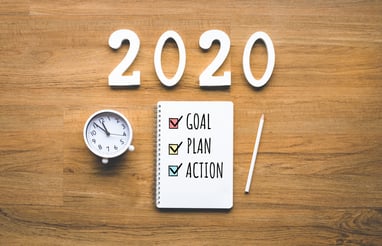
You Say You Want a Resolution: Change Your World in 2020

We all have places we get stuck, and January tends to be a time when we reassess what’s not working for us anymore. Mostly we are looking for ways to be better, healthier versions of ourselves. The trouble with trying to figure out how to get unstuck is that we limit our thinking. In fact, there are eight different areas that have been identified as contributors to overall wellness:

  • GettyImages-1166631072Emotional
  • Spiritual
  • Intellectual
  • Physical
  • Environmental
  • Financial
  • Occupational
  • Social

There are countless possibilities for satisfying resolutions.

Look for Inspiration

In the past, I limited my resolutions to what I “should” be doing, such as weight loss and getting to the gym; or what I “shouldn’t” be doing, such as drinking wine during the week or eating bread and sweets. Last year I decided to take an entirely different approach. I took a look at where I was feeling poor—emotionally, spiritually, physically, and socially.

Then I began looking for inspiration. I thought back to conversations that lingered in my head, to social media posts that gave me pause, to pictures in magazines that I had saved, and to impromptu experiences that made me happy. I listened for the voice inside that said, “Isn’t that different? Isn’t that interesting? More of that, please.” I understood that this was where my body was asking me to resolve something; that my inner voice was letting me know that there was an opportunity to integrate something that would provide extraordinary satisfaction. It was time to think outside just the physical wellness box.

A Creative Way to Improve Well-being on Many Levels

I remembered reading a social media post about a man who set out to visit all of his Facebook “friends.” He decided that he wanted to put the personal aspect back into friendship. A little bell rang inside my head. I too was feeling disconnected emotionally from many of the people I was connected to on social media.

With a milestone birthday approaching, I was reminded of a person I used to train who decided to try something new every month for her 50th birthday year. I had become an empty nester and was feeling that my “almighty calendar” was empty. I liked the idea of a monthly goal—of looking forward to going somewhere each month.

During the December holiday celebrations, I wore a shawl that I had crocheted for myself from a simple pattern and inexpensive yarn. Almost every woman stopped to admire my work. This pattern that I had learned was satisfying and helped hone my (self-taught) crocheting skills.

Next, an idea formed inside my head. I decided to run a half-marathon every month with the following stipulation: I had to ask/find a friend to run with me (or simply cheer me on!). As a surprise thank you to any person who signed on, I presented them with a homemade shawl stitched together by my hands and filled with gratitude.

Guess what? I have never had a more satisfying year in my life. I added time with family and friends. I added adventures in new places. And I expressed gratitude. Sure, I was also able to check off the physical wellness goal too, but my year was about so much more.

Let me share an example of my March half-marathon experience. One race morphed into a weekend in Philadelphia with my nephew, his mother, sister, aunt, cousin, and stepmother, and my sister-in-law and husband. The weekend was filled with laughter, food, running, and love. It kept my hands busy; I made six shawls to show my appreciation for the connections we made.

Challenge Yourself to Look at All the Wellness Dimensions

So ask yourself, “Where am I hurting?”, “Where do I want to add more significance to my life?”, and “Where can I develop more of myself?” I challenge you to look at all the wellness dimensions and creatively piece together a New Year’s resolution that changes your world in a way that is deeply meaningful and satisfying. Here’s a cheat sheet on the dimensions of wellness that you can use to get started. 

Like what you just read? Subscribe to our blog.

Topics: resolutions social wellness new Years resolution half marathon training well-being inspiration

Put Some "Spring" In Your Step

ThinkstockPhotos-492148452-1024x486.jpg

Were you one of the many people who made it a goal in 2018 that you were going to work out more and start focusing on your health? Then, perhaps as the days began to pass and you found yourself two months into the New Year, with nothing to show for your ambitious goal.

The shorter winter days and cold weather make it difficult to convince ourselves to get up and workout, when instead we could be on the couch watching a favorite TV show. But then the weather begins to get warmer, the sun shines longer, and everyone seems to feel a little bit more motivated and energized – because spring is right around the corner. If you're feeling a little more motivated, you might be wondering how you go from binge watching that TV show to committing to the fitness goal you made on January 1st. Follow these simple fitness tip to put some "spring" in your step!

Be Realistic. If you haven’t been working out then the likelihood of you getting to the gym 5x per week is unrealistic. Start small with your goals and gradually work up from there. The goals you choose should be attainable. Once you have found yourself sustaining and keeping with your workout and fitness goals is when you should begin to increase your workload.

[Read More: Tips for An Effective Exercise Program]

Be Held Accountable. Ask a family member or friend to start this journey with you. Make gym dates and don’t cancel at the last minute. Your workout partner will help keep you on track and you can do the same thing for them. A partner is also a great person to vent and share things with. Did you splurge and eat that bowl of ice cream or miss the gym on Sunday morning? Share it with your partner. They will be there for you through your lows and highs but also push you to achieve your milestones!

Make A Plan. You’re geared up and ready to go get your workout on. Then, you step into the gym and you have no idea what you are going to do. We have all been there. Make it a point to not only plan out when you are going to work out but what you are going to do when you get there. Remember, plans are not set in stone. However, they help keep you on track and pointing toward that end goal.

It is time to take full advantage of what spring has to offer in helping to achieve your goals. I encourage you to use our recommended tips toward becoming a healthier you, and what better time to do it then now? Make a realistic exercise plan and join that Cardio Pump class you and your co-worker have been interested in. Get ready to say, “so long” to old man winter and “hello” to spring by jumping back into fitness!

Like what you just read? Subscribe to our blog.

Topics: new Years resolution fitness resolutions fitness tips fitness goals