
Corporate Fitness and Active Aging

Why Posture Is the New Strength: 5 Tips for Better Posture


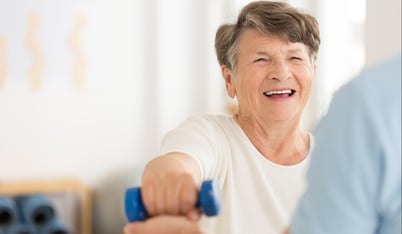
GettyImages-1435828851We all want to stay strong and active as we age, but real strength isn’t just about how much weight you can lift or how far you can walk—it’s about how you carry yourself. Good posture is like a superpower. It helps you move with confidence, reduces pain, and gives you more energy throughout the day. When we stand tall, everything from balance to breathing improves.
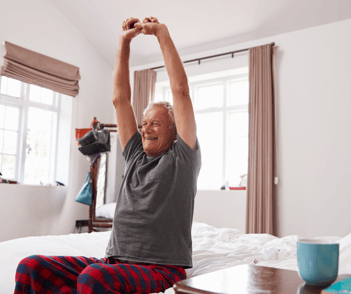

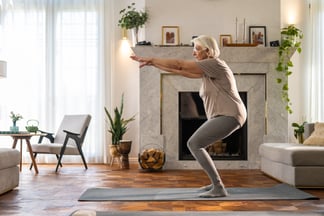
So before you push yourself with dumbbells or walk every hall of your community, start with the strength that comes from standing tall. Here are five simple ways to improve your posture and feel your best.

1. Stand Tall

The first step is self-awareness. Stand tall, take a deep breath, and imagine a string lifting the top of your head. Relax your shoulders down and back, tuck your chin gently, and feel your core engage. Using a mirror to check your posture throughout the day can help reinforce good habits.

2. Strengthen Your Core

Your core is like a natural back brace—it supports your spine and helps you stay upright. And core work is more than crunches. Try functional movements like seated marches, standing leg lifts, or Cat/Cow. Even simple balance exercises activate deep core muscles. A strong core means less back pain, better balance, and improved posture.

3. Improve Flexibility

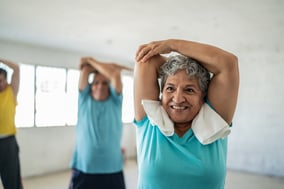
If your shoulders round forward or your back feels tight, stretching is your best friend. Try opening up your chest by clasping your hands behind your back and gently lifting them away from your body. Tight chest, neck, and hip muscles are posture wreckers. Daily stretching helps release tension and supports better alignment.

4. Move Often

We weren’t designed to sit for hours a day. You don’t need a full workout to counteract sitting—just standing and moving every 30–60 minutes supports a healthy posture. Take a quick walk, roll your shoulders, or do a few core twists. Small, frequent movements help your spine reset and stay energized.

5. Practice Posture Daily

Posture improvement isn’t a one-and-done task; it takes consistency. Set reminders on your phone or place a “Stand Tall” sticky note on your mirror or fridge. Joining a weekly balance or fitness class can also help reinforce strong posture habits.

When you focus on posture, you’re not just standing taller—you’re moving stronger, feeling better, and living with more energy. So the next time you think about getting stronger, remember: it all starts with standing tall.

Topics: posture core strength fitness for seniors Wellness Companion

How Daytime Movement Can Boost Nighttime Sleep

2025 CFM Socials-2Sleep is one of the most powerful tools we have for staying healthy as we age. But for many of us, a good night’s sleep can be hard to come by. Changes in sleep patterns are a normal part of aging, but the good news is there are simple changes you can make to your routine to improve your sleep quality. Finding ways to move your body during the day is a great place to start. 

Why Movement Matters for Sleep 

When you engage in physical activity, your body uses energy and experiences a slight rise in core temperature. As you cool down afterward, your body signals that it’s time to rest — helping you fall asleep faster. Exercise also reduces stress hormones, improves mood, and helps regulate your circadian rhythm. This movement doesn’t need to be high-intensity — a little activity throughout the day can lead to deeper, more restorative sleep. 

The Best Types of Movement for Better Sleep 

  • Walking: A simple, low impact walk outside, through hallways, or on a treadmill is a great option. 
  • Stretching or Yoga: Gentle stretching can relieve muscle tension and help you relax. 
  • Strength Training: Building strong muscles supports mobility and helps reduce those nighttime aches and pains that can keep you awake. 
  • Group Fitness Classes: Exercising with friends keeps you motivated and helps you stay social. This can improve your mood and lower stress. 

Timing Your Exercise  

When planning your exercise, try to move your body earlier in the day or at least a few hours before bedtime. Evening exercise can still be beneficial but avoids very intense activity right before bed — it might leave you feeling too energized to fall asleep. For example – take a walk after dinner, stretch while talking on the phone, or do chair exercises while watching TV. 

Pair Movement with a Relaxing Evening Routine 

Once you’ve added movement to your day, set yourself up for a great night’s sleep by creating a calm environment before bed. Dim the lights, avoid screens for 30 minutes, and try a few minutes of deep breathing or gentle stretching to let your body know it’s time to wind down. 

A more restful night often starts with an active day. Find small ways to add movement into your routine. Start with something simple — whether it’s a short walk, some stretching, or a fun fitness class — and you’ll enjoy deeper, more restorative sleep and wake up ready to make the most of tomorrow.  

Subscribe to our blog


Topics: sleep sleep habits healthy aging Wellness Companion

Stand, Squat, and Stretch to Better Balance

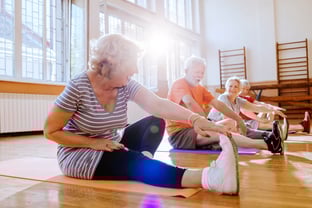
GettyImages-2187835967Improving and maintaining your balance is central to help prevent falls and avoid injury. There are many ways to enhance your current level of balance, whether it be getting your daily steps in by walking, taking weekly chair or standing yoga classes, or by strengthening your stability muscles to help keep your body standing strong. Balance is much more than simply standing on one leg. Consider this 3-step approach to improve your balance potential. 
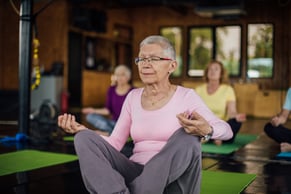
  • One Foot in Front of the Other – In addition to a weekly walking goal, consider trying a balance class or dance fitness workout. Or maybe do a few daily exercises in your home, such as Tandem Arm Swings, where you place the heel of one foot against the toes of your other foot, then swing your arms next to your sides front to back.  Have a sturdy chair within reach in case you need it. Do this 10 times then repeat on the opposite side at least once per day. 
  • Strong and Stable – Your leg, core, and arm muscles play a big role in maintaining stability. The stronger you are, the more confident you’ll be in keeping your feet on the ground. You might consider taking a strengthening class so a professional can help you learn great form. If you want a few things to try at home, consider these: 
     
    • A good exercise for stronger legs is a Sit-to-Stand.  Sit at the edge of a stable chair with your arms across your chest; use the front of your legs to help you rise up; feel the chair lightly touching the back of your legs; and sit back down with control…don’t plop! Repeat for 60-seconds at your own pace.
     
    • An upper body and core exercise to try is a modified plank against a wall. Place your hands slightly wider than your shoulders against the wall and step back about 1-2 feet. Keep your body as straight as a board while bending your arms and  leaning your weight toward the wall. Hold for 10 seconds at a time and repeat 10 times.
  • Stretched and Balanced – Your ability to move your body through a full range of motion helps you to maintain good posture and stability.  For example, tight hips will cause your body to bend at the crease of your body where your legs meet your trunk and keep you from being able to completely stand upright. Try a seated or standing stretch or yoga class.  For a simple hip stretch to do at home, stand next to a chair or counter, squeeze the muscles in your rear end as you push your hips slightly forward. An added benefit to this stretch is that it strengthens the rear of your body while you’re stretching the front. Hold for 10 seconds then repeat 3-4 times daily. 

Balance improvements can be made by simple changes done consistently over time. It is not a quick process but if you set up daily and weekly goals of making exercise a habit, you will see positive changes over time. Moving, strengthening, and stretching is vital for maintaining your mobility. 

Topics: exercise senior wellness balance stretching strength Wellness Companion

How Mindfulness Can Transform Your Life: Benefits and Techniques

Ever wish you could flip a switch and silence your mind, just like you do with your phone? It’s easy to get caught up in the whirlwind of worries and stress. We’ve all been there—feeling overwhelmed by what we need to do next. But remember those times when you lost track of time, fully immersed in what you were doing? In those moments, you were truly present, enjoying the beauty of now. That’s the magic of mindfulness, and here’s the good news: you can train yourself to access that state more often. 

GettyImages-1250776479Mindfulness isn’t just a way to hit pause on a busy mind; it’s a tool that helps you get out of your head and into the present moment. Not only does it improve focus and creativity, but the more mindful we are, the better we handle life's challenges. 

So, what exactly is mindfulness? Simply put, it’s the practice of being fully present in the moment and accepting your experiences without judgment. 

Mindfulness is built on three key pillars: Intention, Attention, and Attitude. Think of these as your mindfulness foundations: 

  • Intention is setting a conscious goal to be aware of your inner and outer world. Each day, ask yourself, “How do I want to show up today?” 
  • Attention is about focusing on the present, without getting lost in the details or content of a situation. When your mind wanders, gently bring it back. A helpful trick? Focus on your breath while in conversation or during tasks. 
  • Attitude is about embracing experiences as they are, with neutrality and without judgment. Cultivating a compassionate, non-judgmental perspective helps us stay grounded and aware. 

By paying attention to what’s happening right now, setting clear intentions, and approaching life with an open, non-judgmental attitude, we can foster a deeper sense of mindfulness in our everyday lives. 

Techniques You Can Try: "Sit and Know You’re Sitting," Body Scan, and Grounding Meditation 

Here are a few mindfulness techniques you might want to explore: Sit and Know You’re Sitting, Body Scan, and Grounding Meditation. 

  • Sit and Know You’re Sitting: This practice is about simply sitting with awareness. Find a comfortable seat, close your eyes, and take a few deep breaths to relax. As you breathe in, acknowledge that you’re breathing in. As you breathe out, know that you're breathing out. You can silently say “in” and “out” with each breath to steady your attention. And when your mind inevitably wanders (because it will), bring patience, curiosity, and forgiveness to the moment as you gently return your focus to your breath. 
  • Body Scan: This is a powerful way to become aware of the sensations in your body and release hidden stress or tension. You don’t need to “fix” anything during the scan—just notice what’s happening in your body. Here’s how: Close your eyes, take a few long, deep breaths, and let yourself arrive in the present. Relax both your body and your mind. Now, bring your awareness to the crown of your head, moving down to your forehead, eyes, cheeks, and neck. Continue down your shoulders, arms, and all the way to your fingertips. Then, shift awareness to your upper back, shoulder blades, and down your back. Notice the front of your torso, from your chest to your stomach, and move through your hips, legs, and feet. Let your whole body be at ease. Sit quietly with the experience of having a body, and when you’re ready, open your eyes and notice how relaxed you feel. 

One of my favorite quotes is, “Be where your feet are.” To help you ground yourself in the present moment, I want to share a simple, yet effective meditation called the 5-4-3-2-1 technique. This practice is fantastic for bringing your awareness back to the here and now. 

For this meditation, keep your eyes open and take a few deep breaths. As you settle into the present, become aware of your surroundings. With each step, take a moment to pause and fully absorb the experience: 

  1. Notice five things you can see. 
  2. Identify four things you can feel or touch. 
  3. Listen for three things you can hear. 
  4. Notice two things you can smell. 
  5. Think of one thing you can taste (if you can’t connect with a taste right now, just note a flavor you enjoy). 

This exercise is a beautiful way to anchor yourself and reconnect with the world around you. 

In our busy lives, practicing mindfulness can be a transformative journey. By embodying the principles of intention, attention, and attitude, you can cultivate a deeper sense of peace and live more fully in the present. Remember to grant yourself grace as you progress, it's not about perfection. As you continue this path, you may discover moments of clarity and connection that enhance the quality of your life. So, take a deep breath, “be where your feet are,” and embrace the journey of mindfulness. 

Subscribe to our blog

Topics: senior wellness brain health mindfulness Wellness Companion

Exercise Your Mind: Activities to Keep Your Brain in Top Shape

GettyImages-2194054524As we age, physicians and specialty doctors will talk to you about exercise and eating a well-balanced diet. We sometimes forget that brain health is just as important. Concentration on moving or getting 30 minutes of exercise per day, and strength training 2-3x a week, but is there any emphasis on brain exercises? If so, what does it look like? Are your residents participating in an craft or art? Are they doing word or cross word puzzles, easy math, or reading aloud? Are they resting their mind, or meditating?    

We all fear losing some of our memory and cognitive function.  As we age, it is normal to feel a sense of insecurity when we misplace our phone or keys, or even forgetting a step in a craft that you’ve done for many years. There are a lot of brain health exercises that the residents can participate in, it is just finding the ones they love to do where it is easy, slightly complex, but enjoyable.  

There are many simple activities that we can do to engage our brain. Here are a few easy ways to engage the brain, and possibly decrease risk of memory loss.  An easy way to help brain health is engaging with your neighbor, a friend, or a family member and discussing current life events, attending a church service, or maybe a music/ theater event.  Another simple exercise is handwriting notes or sending handwritten cards. Handwriting engages the brain more than sending a text or an emoji.  

And of course, there are “brain” games that we can play on our phones or iPads.  Look at your phone and check out the word games, or the simple math problems.  Simple math problems can engage the prefrontal cortex of the brain. Doing simple math is an easy way to exercise your mind. Keep in mind, when it becomes too stressful, you need to decrease the complexity of math problems.  Stress is not beneficial for your mind and body.  

Another awesome thing you can do for your brain health is to learn a new craft or perfecting your current craft.  Is there another advance step you can put into your current craft or skill to make it more challenging, such as learning a new stitch or a new painting style? These ideas can give you a sense of control and purpose. Lastly, meditate and rest your mind, if you love sleep, SLEEP, it is good for your body and mind.  

So how are you engaging with the residents in brain health or brain classes? What sorts of activities or classes are you hosting to entice the residents?  

Subscribe to our blog

Topics: active aging brain health brain fitness Wellness Companion

The Power of Hydration: Why Staying Hydrated is Essential for Your Health

GettyImages-1307929484After spending many years in the fitness industry, I often find myself talking about nutrition and how important it is to stay hydrated. A question I hear a lot is, "Am I drinking enough water?" Many people think they are, but the truth is, a lot of them aren't. Those who tend to skimp on water usually say they don't want to keep getting up at night or they just don't like water that much.

But here’s the deal: drinking enough water is crucial for your body to work properly. It’s more than just quenching your thirst—drinking enough water is essential for keeping your organs, bones, and skin in great shape! I often tell people that “water is life!”

Let’s look at how staying hydrated affects your health.

Sweating is your body's personal air conditioning system. Whether we’re exercising outdoors on a sunny, hot day or dealing with a fever, our body produces sweat to cool us down. When we sweat, we lose fluids—so it’s important to stay hydrated to replace them.

Digestion is another key player when it comes to hydration. Water helps flush toxins from the body and prevents constipation, helping everything run more smoothly.

Our kidneys are the workhorse of our bodies. These “beans” filter waste products through urine, and they need proper hydration to do their job well. Dehydration can put stress on the kidneys and lead to damage over time.

Muscles and joints also rely on water for lubrication, making it easier for us to move and reducing the risk of discomfort or injury.

And don’t forget about your skin—hydration keeps it looking smooth, plump, and healthy. Drinking water for a more youthful appearance is certainly more affordable than all those creams that claim to make you look 20 years younger!

So, what if you’re not a big fan of plain water? There are still plenty of ways to stay hydrated! Try foods like watermelon or any melons, celery, cucumbers, lettuce, bell peppers, strawberries, oranges, grapes, and tomatoes. You can also get hydration from soup, broth, smoothies, and milk. Just keep in mind—water is still the fastest and easiest way to hydrate quickly.

Now, how much water do you really need? We often hear that we should drink at least 8 oz of water 6 to 8 times per day. That’s a good guideline, but several factors can influence your needs—things like illness, medications, exercise intensity, and even the weather. If you live in the South, the summer months are especially hot and humid, and you’ll likely be sweating more, which means your body will need even more hydration.

In closing, when you reach for that delicious glass of water, remind yourself—you’re drinking to life!

Topics: hydration water Wellness Companion

How NIFS Became Experts in Digital Fitness Content for Older Adults

GettyImages-1487770785The quick answer, we became experts because we have been specializing in this population for over 20 years in our work in senior living communities. It takes time and dedication to develop a niche as strong as what NIFS has within an industry. We have been part of the wellness evolution as fitness centers were included in renovations and master plans and communities looked to staffing and programming models to help their residents use these amenities safely. We’ve further witnessed consumer options evolve in the senior living landscape with more choices than ever before on where older adults choose to live including 55+ neighborhoods, IL communities, to lifeplan communities. Each environment has its own priorities and challenges in supporting the health and fitness needs of the residents who live there but all understand the necessity of providing vibrant lifestyles. The industry is expected to grow by $100 billion by 2027 alone which means more even more options for consumers. That’s where NIFS Wellness Companion comes into play as a solution in fitness, nutrition and wellness resources that seamlessly plug into the needs of senior living communities.

What makes NIFS niche in senior living special? It comes down to 3 areas of expertise.

  1. We hire degreed professionals and provide them with rigorous training to become specialists in senior fitness. Few fitness professionals on the market possess the skillset to step into a senior living setting and provide aquatics programming, fall prevention services, balance assessments, group fitness classes and the background to prescribe customized exercise plans for someone 70+. NIFS staff report their skillset unique to older adult programming increases by 75% in their first year upon joining our team and 90% of these team members already possess a degree in exercise science. The needs of your residents and program are truly a specialization.
  2. Because we have worked in senior living for over 20 years with our fitness management clients, we know the players and we know the motivations in your community. Your lifestyle director is a jack of all trades often playing a role with activities, the concierge, transportation and outings. They love making their residents happy and are stretched on time and resources. Marketing and sales know that the ability to showcase a vibrant lifestyle is essential to their ability to meet occupancy goals. Your nursing staff knows that residents who are physically active and engaged can stay independent longer while decreasing fall risks
  3. We know your residents. We know that you have several different populations living within your community ranging from those in their late 60’s to 100+. We know that it takes variety in programs and the right approach to effectively engage them in what is being offered. This is truly where our specialization in creating content and programs is rooted. We understand the interests, barriers and goals of seniors and we have spent two decades flexing our creative muscles to effectively connect residents with education and programming that keeps them regularly engaged.

We have the unique perspective to combine that staff expertise, our understanding of the senior living space and our knowledge of your residents to provide a comprehensive digital content and programming platform in NIFS Wellness Companion that fills the gaps your wellness program may be missing.

Topics: financial fitness fitness center for seniors wellness-based lifestyle community wellness Wellness Companion

NIFS Unveils New Service for Senior Living Communities

Extra, Extra... Read all about it! The National Institute for Fitness and Sport (NIFS) has been providing Fitness Management Services in senior living communities across the US for over 20 years. In that time, we have hired some of the best professionals in the business catering to the health and fitness needs of older adults and developing great content and programs to enrich the lives of residents. We see the benefits of empowering seniors with education and choices for safe exercise to champion their health and we are proud to partner with communities who make resident wellness a priority.

20241004_142147At the International Council on Active Aging (ICAA) Conference this week in Raleigh, North Carolina, we were thrilled to unveil a new service to senior living providers making NIFS expertise more accessible to more communities with NIFS Wellness Companion! For the first time, communities can take advantage of a subscription-based service to receive NIFS expert content and programs to enhance their lifestyle programming.

Residents have been loving our content and programs written by our team of senior fitness specialist and registered dietitians for decades. If wellness is a priority for your organization, NIFS now has more solutions to support your community either through our professional staffing in Fitness Management or by your own wellness champion having an array of fitness, nutrition, and health-focused content and programs at their fingertips every month with NIFS Wellness Companion.

As communities have experienced the ease of participating in free events with us the past couple of years with Pump it for Parkinson’s, it’s left many asking, “Do you sell any of your programs because this was so easy to implement, and our residents loved it?” While NIFS Wellness Companion won’t be the full arsenal of NIFS programs and services, it does infuse a level of professionalism, consistency, and creativity into the monthly programs and education communities provide their residents without the frustration of trying to brainstorm what to do, or more importantly finding the time to sit down and develop the content. We know residents thrive on consistency and fitness coordinators, lifestyle directors or life enrichment directors will have the convenience of expertly curated content at their fingertips to plug into their monthly calendars and resident engagement apps.

According to a recent survey by the ICAA, 90% of CEOs in the senior living sector believe that providing wellness programming is vital for business growth. Current residents are engaging more than ever before, and prospective residents are making decisions on where they choose to move based on wellness offerings that will help them live independently for as long as possible. With NIFS Wellness Companion, communities can demonstrate their commitment to supporting resident wellness by partnering with a national organization who specializes in senior fitness.

As a nonprofit organization with a mission rooted in enhancing healthy living through the lifespan, we are thrilled that Wellness Companion will help us reach more seniors with education and exercise options to help them live well while making the jobs of busy wellness professionals that much easier!

Want to learn more about our new subscription-based service, Wellness Companion? Click below for more information!


Topics: resident wellness programs senior fitnes wellness-based lifestyle Wellness Companion