Corporate Fitness and Active Aging

New Exercise Guidelines Give Corporate Fitness Centers New Options

This blog was written by Jenna Pearson. Meet our blogging fitness specialists at the NIFS website.

The American College of Sports Medicine (ACSM) has issued new guidelines for the Quantity and Quality of Exercise for Developing and Maintaining Cardiorespiratory, Musculoskeletal, and Neuromotor Fitness in Apparently Healthy Adults. What exactly does this mean? Simply put, it means that fitness professionals now have a new framework to use when developing exercise programs.

If you think of exercise as medicine (which, in fact, it is!), personal trainers and corporate fitness centers are now using new guidelines for prescriptions of this miracle drug (including dosage and use).

exercise, balance, nifsFollowing are the recommendations for each type of fitness:

  • Cardiorespiratory fitness is developed through training that improves the efficiency of the aerobic energy-producing systems and can improve cardiorespiratory endurance. The ACSM recommends apparently healthy individuals to partake in at least 30 minutes of moderate-intensity exercise five days per week or 20 minutes of vigorous-intensity exercise three days per week. This can be achieved by one continuous session per day, or multiple shorter sessions of at least 10 minutes in duration.
  • Musculoskeletal fitness is developed through resistance/strength training. To have musculoskeletal fitness, you do not necessarily have to have great muscle strength. You should, however, train all major muscle groups 2 to 3 days per week, using 2 to 4 sets and 8 to 20 repetitions as the range for each exercise. A regimen including 8 to 12 different exercises should serve to exercise all major muscles in the body.
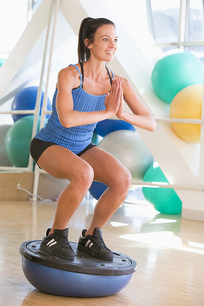
  • Neuromotor fitness is “functional fitness,” and can be improved through a variety of balance, agility, coordination, and proprioception exercises (think yoga and Pilates). The ACSM recommends these exercises be incorporated into an exercise program 2 to 3 days per week for 20 to 30 minutes per session.

In addition to these recommendations, the ACSM also suggests that healthy adults participate in flexibility training at least 2 to 3 days a week. Similar to strength training, a flexibility routine should target all major muscle groups. Each stretch should be held 10 to 30 seconds (to the point of slight discomfort, but not pain) and should be repeated 2 to 4 times so that each muscle group is stretched for a total of 60 seconds.

Considering these guidelines, how would you rate your current fitness routine? If you are meeting the minimum requirements, keep up the great work! If not, remember that all of these requirements do not have to be met in one single exercise session. If you have an onsite fitness center, make sure you are taking advantage of all that your wellness center staff can offer you!

Topics: exercise at work exercise corporate fitness exercise at home

Wellness Center Manager Advocates Exercise for Preventing Alzheimer's

This blog was written by Sean Holbrook. Meet our blogging fitness specialists at the NIFS website.

senior fitness, weights, aging wellIt’s probably just my desire as a wellness center manager at a Continuing Care Retirement Community for the National Institute for Fitness and Sport to recommend exercise for most questions I get. But when I speak with residents, one of their major concerns as they age is losing their cognitive function, which is most commonly associated with the development of Alzheimer's disease. A growing body of research is emerging to support my answer that exercise is one of the best medicines, especially in regard to exercise's ability to prevent Alzheimer's.

Alzheimer's disease continues to grow in prevalence worldwide, expected to affect 1 out of 85 individuals over 65 by 2050. With the cause of Alzheimer's still unknown, much of the current research is being focused on lifestyle and behavioral habits that decrease the risk of developing it. 

So how much does exercise help in the prevention of Alzheimer's disease? Deborah Barnes, a mental health researcher at the San Francisco VA Medical Center (SFVAMC), analyzed data from studies around the world involving hundreds of thousands of participants about modifiable lifestyle habits that can prevent Alzheimer's disease. Barnes found that the biggest modifiable risk factor in the United States was physical activity. She stated that the most exciting thing about the study was that some very simple lifestyle changes, such as increasing physical activity, could prevent more than half of the Alzheimer's cases.

Other modifiable risk factors that were identified by the study included smoking, hypertension, obesity, and diabetes, most of which can also be modified by increased physical activity.

So what steps can you start to take to increase your physical activity?

Topics: exercise disease prevention senior fitness

Corporate Wellness: How Do You Know Your Trainer Is Competent?

This blog was written by Penny Pohlmann. Meet our blogging fitness specialists at the NIFS website.

Have you ever thought about hiring a personal trainer? When choosing a personal trainer to work with, you should feel confident that the person you're hiring is not only qualified but is someone who will listen to you and your specific goals when it comes to exercising and improving your health.

You may be surprised to know that some certifying organizations do not require a formal education in the field of health and fitness to sit for their personal training exam. Now, this is not true of all certifications. But there are so many certifying bodies out there; how do you know which ones are reputable?

personal trainer, corporate fitness center managementRecognized Fitness Organizations

Here is a list of organizations that are recognized by the NCCA, a group that evaluates and measures organizations' professional competence, as certifying organizations that meet its Standards for the Accreditation of Certification Programs.

Making Sure Your Corporate Fitness Manager Is Qualified

Want to ensure your employee health and fitness program is staffed with qualified personnel? When interviewing a trainer to hire, he or she should maintain at least one certification from one of the organizations listed above. Additionally, he or she should also be able to produce a current copy of his or her CPR/AED certifications. These guidelines should help you determine who and what is the best fit for you and your fitness needs.

Topics: corporate fitness program exercise

Worksite Fitness: Improving Your Golf Game with Flexibility

This blog was written by Megan Jack. Meet our blogging fitness specialists at the NIFS website.

Gold, corporate fitness, flexibilitySpring is in the air, and you know what that means: golf season, an event of particular importance to corporate health and wellness clients. The single most important thing you can do to improve your golf game this year is to improve your flexibility.

The Benefits of Flexibility

Limited range of motion and lack of flexibility is responsible for keeping most golfers from reaching their full potential. Simply, the easier and more fluidly your body can turn, the better, more powerful your swing. Stretching is a key element in both injury prevention and peak performance. A proper stretching regime benefits the golfer by

  • Developing a smoother swing
  • Delivering more power to the ball with less effort
  • Reducing aches and pains

Developing a Proper Flexibility Program

Before beginning your round of stretching, complete a warm-up consisting of 5 to 10 minutes of aerobic exercise (walking, cycling, etc.) to raise your body temperature. Studies show that a proper warm-up will increase muscle extensibility and let you stretch more safely and effectively. Stretch prior to play, during play (when you feel you need to stretch), and post play. Follow this flexibility regime:

Knee to Chest: Stretching lower back and gluteal muscles

  • Lie on back with body extended.
  • Bend one knee, bringing it toward the chest.
  • Grasp with both hands behind the bent knee.
  • Hold the stretch, breathing for 20 to 30 seconds.
  • Repeat on other side.

Cat and Camel: Stretching upper and lower back muscles

  • Kneel on all fours.
  • Slowly round the back, arching it upward and bringing the head toward the floor.
  • Hold the stretch, breathing for 20 to 30 seconds.
  • Slowly scoop the back, bringing your abdomen toward the floor.
  • Hold the stretch, breathing for 20 to 30 seconds.

Figure Four: Stretching hips and gluteal muscles

  • Lie on back with both knees bent, feet flat on the floor.
  • Cross right leg over left knee.
  • Grasp with both hands behind the left knee, pulling the knee toward the chest.
  • Hold the stretch, breathing for 20 to 30 seconds.
  • Repeat on other side.

Hurdler’s Stretch: Stretching hamstring muscles

  • Sit upright with right leg out to the side.
  • Bend left the knee, bringing the left foot in to touch the right inner thigh.
  • Reach toward the right foot, holding the stretch and breathing for 20 to 30 seconds.
  • Repeat on the other side.

Quad Stretch: Stretching middle and upper quadriceps

  • Stand holding onto a wall for support.
  • Bend left leg, bring foot toward glute, and grasp left foot.
  • Keep knees together and flex your gluteal muscles.
  • Stretch, breathing for 20 to 30 seconds, and repeat on the other side.

Pec Stretch: Stretching pectoralis (chest) muscles

  • Stand facing an open doorway or corner.
  • Bend elbows to shoulder height at sides and place palms against the doorframe or wall.
  • Lean body forward, stretching and breathing for 20 to 30 seconds.

Consider starting a golf league within your company. It’s just another way to incorporate worksite wellness into your program!


Topics: exercise corporate fitness muscle toning

Worksite Fitness: Exercising in Warm Weather

This blog was written by Mechelle Meadows. Meet our blogging fitness specialists at the NIFS website.

Warmer weather is finally pushing its way into the nation, and many of your corporate fitness members will be itching to take their exercise outdoors. While outdoor workouts are a fun alternative and offer a great way to mix up your programming, even 75 degrees can dramatically intensify a workout.

As you’re rolling out new programs for the summer months―including outdoor boot camps, circuit classes, and training runs―remember to urge your members to take heat precautions.

worksite fitness, exercising outdoors, heat exhaustionHere are some tips to design safe outdoor workouts at your corporate wellness center:

  • As suggested in this article, try to plan activities or classes around the peak temperatures of the day. From 10am to 2pm, the sun’s rays are the strongest, but the heat can linger throughout the afternoon. Try early-morning or later-evening class options.
  • Build more rest/water breaks into your classes than you normally would. With hotter temperatures, the body will perspire more, so remind your participants to always bring a water bottle to these outdoor workouts. When planning the class agenda, build in periodic water breaks for at least a full minute each.
  • Keep sunscreen handy. At our corporate fitness center, we keep a few bottles of SPF 30 in our first-aid kit.
  • Monitor your participants closely for symptoms of heat exhaustion. Dizziness, confusion, and pale skin can all be signs that a person is overheating. If a member mentions that he or she has stopped sweating and feels a dry, salty layer on the skin, this can be an indication of dehydration.
  • Urge your runners to take their pace a little slower than normal. In temperatures over 60 degrees, runners cannot be expected to set record times. Jeff Galloway, author of several marathon-training books, suggests that for every 5 degrees above 60, runners should decrease their mile time by 30 seconds.

Here’s to a safe and happy summer!

Topics: exercise at work exercise corporate fitness exercise at home

Worksite Wellness: Commit to Be Fit

This blog was written by Kara Gootee. Meet our blogging fitness specialists at the NIFS website.

Like most people, have your resolutions fallen to the wayside, or have you simply forgotten them? It’s no secret that it is easier to be more active during the warmer months. The ability to get up off the couch and get outside is motivation from the sun! Start the month off right by reevaluating your current lifestyle habits and commit (or recommit) to be fit!

Here are some simple ways to commit:

  • corporate wellness, family health, scheduling, goal settingSet a goal. Having something to strive for can help keep you on track to achievement and success. Consider what you enjoy and set a SMART goal.
  • Schedule time. If you plan ahead and incorporate physical activity into your schedule, you may be more apt to stick with the plan. Pack your gym bag the night before.
  • Walk at lunch. Motivate your coworkers to commit to be fit! Let others know you plan to walk at lunch and ask them to join you. Worksite wellness programs are a perfect place to learn how to incorporate exercise into your day.
  • Engage your family. After dinner, strive to get the family involved in a bike ride or a walk through the neighborhood.

How do you make time for physical activity, or what does your company do to encourage employees to have healthier lifestyles?

Topics: exercise worksite wellness motivation

A NIFS Manager Asks: Is Indianapolis' Favorite Pastime a Sport?

This blog was written by Bethany Garrity. Meet our blogging fitness specialists at the NIFS website.

I’m not an Indianapolis native and I didn’t grow up around racecar driving. I’m a Buckeye―I’m all about the football. For me, baseball, hockey, and golf are sports. They're not sports I love, but I do view them as athletic pursuits (though I’ll admit, it took me a while to come around to golf as a “sport”). Racing is a different story. Unless we’re talking about racing on foot, it just doesn’t resonate with me as a sport.

exercise, sports, racingWhat's the Physical Challenge of Driving Around in Circles?

I originally chalked up that “it’s not a sport” mentality for racecar driving to the fact that I simply wasn’t into the hype. I don’t know anything about racecar driving, and to be honest, I didn’t see the physical challenge in driving a car in circles. So I started researching the Indy Racing League (IRL) to see what I could find out about stock-car racing.

I started seeing the term “land rocket” in my search results, and I noted that the drivers sometimes maintained speeds of 200 m.p.h. for four to six hours and in high heat. My education in exercise science and my experience in corporate fitness began to kick in and I realized that those physical demands had to have some kind of traditional exercise component, and thus, perhaps stock-car racing really was an athletic pursuit. There has to be something “fitness-y” about drivers expected to produce under those conditions.

Racecar Drivers Have High Levels of Exertion

My conclusion: It turns out racecar driving is a sport! I found quite a bit about training regimes both on and off season. But what hit home most for me was a press release from the American College of Sports Medicine (ACSM) for a December 2002 article in the Medicine and Science in Sports and Exercise journal. It noted that drivers reach levels of exertion similar to those athletes playing basketball might attain.

They also noted that the work level for a driver is comparable to someone running at an eight- to ten-minute-per-mile pace. Now that is something I can relate to. I’ve trained for the Indianapolis Mini-Marathon with a nine-minute-per-mile pace group. It’s hard for me to imagine maintaining that pace for four to six hours with temperatures in the high 90s to over 100 degrees.

Go NASCAR, go IRL―race your hearts out! I can’t promise I’ll watch with enthusiasm and follow like a true fan, but my appreciation has grown. Now, if we could just get more sports fans to adopt a piece of the exercise routines from their most beloved drivers, pitchers, shooters, goalies, defenders….


Topics: exercise

More Reasons to Use Corporate Fitness Centers

This blog was written by Dan Walker. Meet our blogging fitness specialists at the NIFS website.

Last time we looked at three of the top benefits of utilizing your company’s corporate fitness center: cost, convenience, and the environment. Today we will look at three more reasons why you can’t afford to pass up what your company has to offer in its fitness center.

Expertise

This isn’t entirely universal, but most corporate fitness center staff members are college educated and certified through a reputable organization such as the ACSM, NSCA, or NASM. This ensures a high level of expertise in helping you to exercise the right way and reach your goals.

Guidance

Many gyms have thousands of members and simply aren’t able to do much more for you than take your membership dues each month. But in corporate fitness centers, programming, classes, and education are top priorities with the goal being to get as many members as possible plugged into what is offered. Your company really sees a return on investment only if your health is improved through what the facility has to offer. You can rest assured that you are their top priority, not making money off membership dues.

Stronger Relationships

corporate wellness, employee health, exerciseWorking out with your coworkers gives you a chance to spend time with them in a new and different way. Taking group fitness classes together, working out with someone, or buddy training with someone else are all great ways to build teamwork and rapport outside the office. Often enough, different incentive programs and friendly competitions take place throughout the year, giving you yet another way to build a bond with those you work with.

The health benefits of regular exercise, which you can get at any gym, are well documented. But corporate fitness centers offer much more than your average commercial gym membership. Among those benefits are a better price, a more convenient location, a professional environment, expert staff, more guidance in your fitness journey, and a chance to build better work relationships.

If you aren’t already experiencing all the benefits your company’s corporate fitness center has to offer, go check it out today!

Topics: exercise at work corporate fitness program exercise corporate fitness

2011 Group Exercise Trends for Corporate Fitness Programs

This blog was written by Penny Pohlmann, MS. Meet our blogging fitness specialists at the NIFS website.

Why have group exercise classes remained popular since their introduction in the '80s? I don’t think it’s the leg warmers and leotards, but I could be wrong. Perhaps it is the motivation and social interaction that come with exercising with a group. Or it could be the time-efficient solution in our time-stressed culture.

Whatever it is that continues to draw people to participate in group exercise classes, this area of the fitness and exercise world goes through trends and fads much like other areas in life. Here are some trends you can expect to see in 2011.

Zumba

This Latin-inspired dance class is exploding right now. The Zumba motto, which is “Ditch the Workout; Join the Fun,” is a perfect way to describe how its participants feel about the class. “It’s so fun you forget you’re working out,” one of my members said to me. I think the bass-thumping music has something to do with it, too.

Boot Camp

You guessed it: This military-style class attracts both men and women for the no-frills approach to working out. Boot camp groups have been growing in popularity for the last several years, and they are still on the rise in 2011. Instructors lead their recruits through pushups, jumping jacks, lunges, and sprints before the sun rises.

Early mornings aren’t for you? Because of their popularity, health clubs and gyms are offering many indoor boot camps at all times of the day.

C  Documents and Settings kgootee My Documents Dropbox Hubspot Images group yoga resized 600Yoga

This slow paced, gentle exercise class known for its stress-relieving style of mind and body exercise is especially popular in corporate fitness centers. In addition to the traditional style of yoga, called hatha yoga, look for other forms to emerge in 2011, like power yoga and hot or bikram yoga

Group exercise class offerings can be a key factor in the success of a corporate fitness center. If you don’t already offer group exercise classes in your wellness center, they may be the best motivation to get your employees to get on board with exercise.

Topics: corporate fitness program exercise group exercise muscle toning

Corporate Wellness: Green Your Fitness Routine

This blog was written by Sean Holbrook. Meet our blogging fitness specialists at the NIFS website.

Does winter still have you feeling blue? Need a boost for your self-esteem? Regular exercise can improve your mood and sense of well-being; doing it outdoors can give you an extra lift!

Green exercise refers to exercise or physical activity that is performed in nature, which has shown an ability to create a calming effect as well as having a positive effect on your mental well-being. With spring just around the corner, you probably feel a bit like I do: you're ready for the fresh air, green leaves, and warm sun. Green exercise is a simple and free way to get all that and more.

exercise, wellness, corporate wellness, fitnessYou may ask yourself, how much time do I have to spend exercising outdoors to see the benefits of green exercise? Surprisingly, it takes only five minutes a day, according to a recent meta-analysis of 10 studies involving 1,252 participants. The study by Barton and Pretty (2010) showed improvements in self-esteem and mood for the overall population of the study.

Looking for ways to green your routine?

  • Take a five-minute walk during your lunch break.
  • Start a garden in your yard.
  • Try stretching outside on your deck or patio.
  • Plan a nature hike or bike ride on the weekend.

Gather your coworkers for a walk at lunch! Green fitness is one of the many ways your company can get on the corporate wellness bandwagon!

Topics: corporate wellness exercise at work exercise motivation