
 Sometimes it’s hard to juggle all the daily responsibilities in life. Balancing work responsibilities can be difficult enough but trying to also maintain a social life at the same time can feel impossible. Being able to manage your time can be invaluable in many ways. There many benefits of having time management skills and having the right strategies can improve your skills.
To start, time management is a process in which you plan and control the amount of time dedicated to certain tasks. This will in turn boost your efficiency, effectiveness, and productivity during the day. Controlling your time will allow you to become better at organizing and in turn will help you control your time both personally and professionally. Having the necessary skills to manage your time has different benefits for people, including:
- Increased time for self
- Improved feeling of accomplishment
- Improved self esteem
- Increased satisfaction in life
The more you can limit work stress and the more time you spend on yourself, the happier you will be. So how do we improve our time management skills? Here are some strategies you can implement:
- Know How You Spend Your Time: Making a time log of what you do during a day can help determine how you are already using your time. Over the span of a week or two, record everything you did in a 15-30 minute interval. Evaluate how you used that time. What time of the day are you most motivated? What tasks took the most time? Where do you value your time the most? Reflect on if you’re investing your time wisely, or if you need to reinvest time in other things.
- Set Priorities: Distinguishing what is urgent and what is important determines whether you’re managing your time effectively. Some of the most important tasks are not the urgent tasks, but that does not mean that you should let the urgent tasks control your life. Determining what tasks must be done can help you gain control of your life while reducing the amount of tasks that may become urgent.
- Use a Planning Tool: Utilizing a planning tool can increase your productivity. Writing down tasks, making notes on your schedule, and jotting down items to remember can free up brain space to focus on other, more important tasks. Review your calendar daily, synchronize your apps if you use two different types of planning tools, and always have a backup. Some examples of a planning tool: Time Trackers, Time Savers, Calendars, Task Managers, Habit Developers, etc.
- Get Organized: You can’t manage your time if you’re disorganized, and research has shown that clutter has a negative impact on perceived well-being.
- Stop Multi-Tasking: Humans in general are not efficient at multi-tasking. Studies show that multi-tasking doesn’t save time or increase efficiency. In fact, it does the opposite. Routine multi-tasking may lead to difficulty concentrating and maintaining focus.
Time management is a skill that can be vital to one’s success. What are some other strategies that you have found to help manage your time?
 Name:
 We are on the brink of a New Year and those looming resolutions start filling our head with what we should do or consider changing. Keep a positive mindset to not allow resolutions to fall to the wayside in the New Year, allow them to become lifestyle changes. Know that when you fall short, it's ok to give your self a restart. Check out these nine nutrition-related New Year's resolutions to not only set, but stick to.


 If music is good for the mind, and exercise is good for the body why not combine the two at the same time?

 When winter blows in and the days start to get shorter and colder, you can pull the blankets over your head and hibernate—or you can suit up and head outside for an outdoor winter adventure. Exercising in colder weather has distinct advantages over working out in warmer weather, so there is no reason to take a break when the temperatures drop. There are a number of advantages to working out in colder weather that most people disregard.
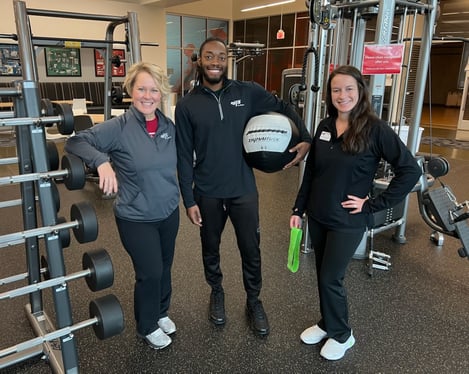 Daily headlines remind employers of what they are already feeling with the squeeze to find qualified candidates to fill the record-setting job openings across nearly every industry. And for HR professionals responsible for hiring in senior living or corporate fitness centers, it may already be challenging enough to recognize the necessary skills when hiring a fitness professional who can cultivate the engaging onsite fitness center you desire. In the past couple of months, I have heard from multiple fitness management clients that they are grateful that they are partnered with NIFS to manage their fitness center personnel as its one less department they have to worry about as time, resources and candidate pools are stretched thin with staffing struggles.

 Name:
 The impact of physical activity on mood has been researched over the last few decades. There has been speculation that an increase in physical activity can provide a substantial positive impact on one’s mood, but to what extent? Let’s dive into the known relationship between physical activity and mood, how much of an effect physical activity can have, and finally will provide a few brief explanations over the mechanisms of which physical activity increases mood!