
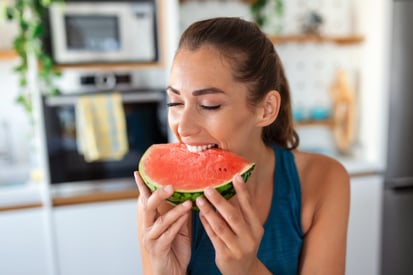
 Staying hydrated is an important part of staying healthy and functional during everyday life. Proper hydration helps the body perform several crucial functions including regulating body temperature, keeping joints lubricated, delivering nutrients to cells, and keeping organs functioning properly. Quality hydration also helps to improve quality of sleep, cognitive function, and general mood. Considering all the functions that hydration helps to maintain it’s important to ask a few questions: How much fluid to we need to consume and what are some sources to get it from?
According to the Mayo Clinic men should consume 15.5 cups of fluid per day and women should consume 11.5 cups of fluid per day. When people see those numbers, their minds immediately go to liquids: water, sports drinks, tea, etc. Water is an excellent and very popular source of liquid to maintain hydration. Sports drinks can also be very effective, particularly during or after lengthy, strenuous exercise. Even tea can be an effective hydrator when consumed in moderate amounts. As effective as these liquids are, they are not the only quality sources of hydration in our diet. In fact, about 20% of fluid is obtained through foods with high water content. There is a plethora of foods, particularly fruits and vegetables, that can help keep you hydrated throughout the day.
There are several great fruit options to help you stay hydrated. Watermelon might be the most famous and effective example. With a 92% water content is one of the most hydrating foods you can eat. It also is very low in calorie density which makes a good snack for weight loss or weight maintenance. Cantaloupe is another fruit that really packs a hydration punch. It has a 90% water content and Vitamin A which can boost immune health. You can also add cantaloupe to salads, smoothies or even yogurt to help hydrate while eating a meal. Other fruits that can be great for hydration include peaches, strawberries, and oranges. Not only do each of these fruits help with hydration but also provide other nutritional value.
Vegetables can also be a great source of hydration in everyday life. Iceberg lettuce is an excellent example of a veggie that help with hydration. It is also easy to a dd into your diet by making salads. Additionally, it contains fiber, vitamins A and K, and potassium which adds some good nutritional value. Zucchini is also a great way to help hydrate. It has a very high-water content and is also low in calories. Furthermore, it provides a lot of diet versatility, meaning you can eat it as is or add it to something larger. It works well on its own but can also be incorporate into soups, stir-fries, or other side dishes. Celery, Cucumbers and Tomato can also be very valuable sources of hydration outside of liquid. Each provide their own nutritional value whether it be antioxidants or valuable vitamins.
Staying hydrated is a vital part of maintaining your everyday health and well-being. As such it is important to know all the sources of hydration that are out there. Water, tea, milk, and other liquids are great options to stay hydrated but it’s important to know alternative sources. Incorporating water rich fruits and veggies into your diet can make it easier and tastier to stay hydrated throughout the year!

 At some point in our busy lives we eat a quick meal, or get so busy we forget to eat. Our jobs can leave us working while eating lunch, not truly taking the time to sit for the meal. Check out these four "not-so-healthy" habits and how you can work to fix them to avoid overeating during your meals.
.jpg?width=437&name=GettyImages-1279631867%20(1).jpg) When it come to health, certain fats can have a positive effect, whereas other can negatively impact your health. All fats are equal from a caloric standpoint meaning they all contain 9 calories per each gram of fat no matter the type. There are 3 main types of fat - saturated fats, monounsaturated fats, and polyunsaturated fats. The 2020-2025 Dietary Guidelines for Americans recommend that the
When it come to health, certain fats can have a positive effect, whereas other can negatively impact your health. All fats are equal from a caloric standpoint meaning they all contain 9 calories per each gram of fat no matter the type. There are 3 main types of fat - saturated fats, monounsaturated fats, and polyunsaturated fats. The 2020-2025 Dietary Guidelines for Americans recommend that the


 We are on the brink of a New Year and those looming resolutions start filling our head with what we should do or consider changing. Keep a positive mindset to not allow resolutions to fall to the wayside in the New Year, allow them to become lifestyle changes. Know that when you fall short, it's ok to give your self a restart. Check out these nine nutrition-related New Year's resolutions to not only set, but stick to.

 As a fitness manager, people frequently ask me how they can lose “this” as they aggressively squeeze their belly. In response with a smile, I ask them if they have a minute to talk about it. As common as this question is, it’s very hard to give an answer that satisfies. It’s a concern most of us have because we associate a trim belly with health. There’s no single magic pill, exercise, food, or ritual that will help bring back the desired abdominal aesthetic. Fortunately, there are several simple steps that can be taken to reach a healthier body composition. Here are three ways older adults can fight belly fat as they stay safe at home:
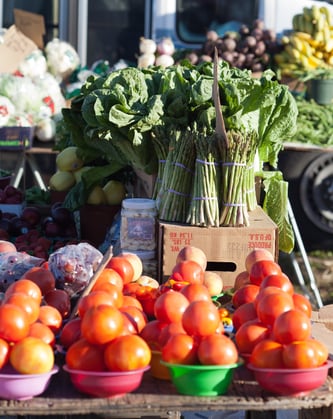 ere are my top 5 reasons why visiting your local farmer’s market is a must.
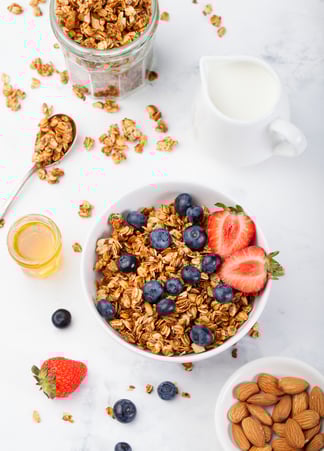 Some people think that snacking can sabotage your healthy eating plan. However, snacking keeps your energy levels up and prevents you from becoming overly hungry, which can lead to poor food choices. Eating every three to four hours can also help regulate your metabolism, which ensures that you burn calories throughout the day. Strive for at least two small snacks per day, but try to limit yourself to 100 to 150 calories or less per snack.
 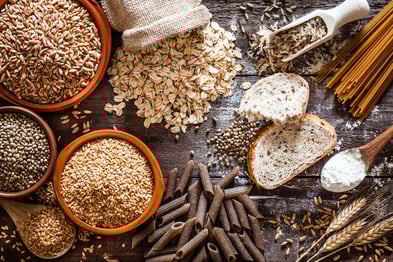 Whole grains have been advertised as being part of balanced diet for as long as I can