
Corporate Fitness and Active Aging

How Learning-Based Fitness Sessions Improve Engagement and Consistency

As a fitness professional, we often see gym memberships go unused, and workout routines are given up after a few weeks. We ask ourselves the critical question of how do we keep people coming back? One promising method to answer this question is learning-based fitness, which is an approach that blends physical fitness with education, skill building, and intentional progression. Rather than tell participants what to do, learning-based fitness sessions will help focus on understanding the why and how movements work. This shift will transform workouts from repetitive tasks into an engaging and confidence-building experience.

So, what is a learning-based fitness session? These sessions will intentionally integrate coaching, explanation, and feedback into the workout. These sessions could include teaching proper movement mechanics and technique, explaining the purpose behind specific exercises, encouraging questions, and progressively building skills over time. Instead of treating the participants as passive listeners and doers, this alternative approach positions them to be active listeners. Whether it’s understanding how to safely perform a squat, how heart rate zones work, or why rest days are important, education is part of the workout and not an afterthought.

Engagement is the biggest predictor of adhering long-term to exercise. When individuals feel bored or confused, the motivation drops quickly. Workouts that solely rely on repetition or intensity can lead to burnout and injury if you don’t have a good understanding of exercise as a whole. Learning-based sessions can address this by making workouts more mentally stimulating, creating moments of confidence and progress, and helping participants invest in their own development and growth. When people understand the what and the why, they are more likely to stay attentive and keep showing up.

Consistency is one of the biggest points we try to drive home when working with clients or individuals looking to get started on a fitness journey. These learning-based sessions will support consistency in different ways.

1. Many people quit exercising because they are intimidated or unsure. By teaching proper form and the different aspects of training, participants will gain the confidence to be in any fitness environment.
 
2. Learning-based sessions will emphasize progress, like mastering a bodyweight squat. This will give the participants a tangible milestone to work toward, making progress feel more rewarding.
 
3. When participants understand why a workout is structured a certain way or what muscles a certain movement targets, they take more ownership in their journey. This sense of control will increase their intrinsic motivation and reduces having to rely on external sources.

As confidence increases through these sessions, hesitationwill decrease. Clients/ participants are more willing to show up, be comfortable with trying new things, and stay committed because they feel more capable and not overwhelmed.

Building trust through these sessions is another key aspect ofthe relationship between the coach and client or participant. When a client sees that a coach is fully involved in their understanding, not just how they perform physically, it strengthens the relationship. This trust will show in ways like; clients are more open about their limitations, communicate honestly about their stress and recovery, and are more likely to follow through on recommendations provided by the coach. A trusted coach won’t just be a motivator but a guide when learning-based sessions are used.

The most powerful outcome that comes out of learning-based fitness is the feeling of empowerment and being able to make your own sound decisions about your own training. The education provided will help recognize quality movement and proper technique, understand how to modify exercises, and apply training principles on their own. This empowerment doesn’t reduce the value of coaching but enhances it. Clients will better understand the process and be grateful for the guidance that helped them continue progressing safely and effectively. This empowerment can also extend outside the gym setting by applying those same principles learned to activities like safely lifting objects, managing stress, prioritizing recovery, and overall staying active independently. It will help them understand that fitness isn’t about the short-term results but more about developing good skills and habits to support lifelong health.

Leaning-based fitness sessions will create more than a physical change, they build understanding, confidence, and long-term commitment. When we incorporate education into the training, it increases engagement, supports consistency, and strengthens the trust between coaches and participants. When individuals understand what and why they are doing it, fitness will become less intimidating and more empowering.Confidence will replace hesitation, motivation will become more intrinsic, and consistency feels within reach rather than forced.

Overall, learning-based fitness will shift the focus from simply completing a workout to developing necessary skills, awareness, and ownership. Take on these sessions with an open-mind and you will have your own success story to write about.


2026 HYOU Fitness Management


Topics: corporate fitness

Evening Mobility Routines to Help You Sleep Better

2026 HYOU Fitness Management-1By now, I’m sure you have recognized that most of the modern amenities we enjoy, especially as our days are winding down, are not helping us rest. Most US citizens now report falling to sleep while watching television or staring at their mobile phone. Moreover, those lost z’s are not being recovered, taxing our bodies in ways that may be leading us toward chronic illness. Rather than lecture on your nightly binge-watching on your favorite streaming service, though, here are some useful physical things you can add to the end of your day to help you sleep.
First, four tips to help calm your body and mind before you lie down to sleep and a note on the type of activity that is appropriate for an evening routine:

Tip 1: Try to plan your evening routine with the same vigor as your outlook schedule at work; I’ll give you an example at the end of the article.

Tip 2: Drink water early and regularly throughout the day. Trying to hit your hydration goal after 6pm is setting yourself up for multiple sleep interruptions to hit the restroom.

Tip 3: You should try to have your last bite of dinner three to four hours before you sleep and there is growing evidence that even more time is better for some individuals. Put your phone down and cut the streaming feed; you must prioritize restful, deep sleep to expect improvement and discover the benefits.

Tip 4: Within three hours of your intended bedtime is not the time for rigorous strength or cardio routines. As much as I would love to report that it’s better to get the HIIT session or weight training in, the science shows that pushing beyond zone 2, or moderate-intensity aerobic exercise (60-70% of your maximum heart rate [220-your age]), will make it more difficult to relax and reach the needed deep sleep for recovery. Without adequate sleep, your recovery from the stresses of work, family, and exercise is critically slowed, possibly halted.

So, some light activity at least an hour before you intend to sleep is the way. To start, go for a walk, not for speed, but for leisure, staying away from the lights of phone and television screens, just take yourself (if you must, just keep your phone in your pocket). I would also suggest a yoga flow or nightly stretching routine closer to bedtime. This potential habit is simple, requires little to no setup time or space, and can lower blood pressure, improve sleep quality, and help make those lingering muscle pangs put their fangs away for the evening. Here are three levels of a basic stretch routine; These stack upon each other and can be adopted first and then added to an evening walk or hike. Choose your speed and try them out. If you enjoy the base session over the course of a few days, step into the next!

A. Have a seat (in your bed, if you’re just getting ready to sleep), with legs crossed or out in front of you, in a comfortable position for you. Alternate a reach across your body two to three times, each way. End with a soft, alternating neck stretch (think ear to shoulder) with only the weight of your head – no additional weight or force from hands or arms is necessary.

B. Stand with your feet roughly double shoulder width. Keep your breath slow and steady, alternate a reach to the opposite foot with each arm. Each movement should take at least one full breath cycle. You may repeat this series one to three times. Then, perform series A.

C. Stand tall and slowly bring your arms overhead while taking a deep breath in. From the top of your stretch, lower your arms as you exhale and follow your hands down into a forward fold. Enjoy the stretch through your hamstrings and posterior chain for two to three breath cycles, slowly pedaling your feet (like walking in place) to increase the stretch carefully. Add series B. Repeat this standing protocol (series C, series B) for one to three rounds. Finally, finish the stretch cycle with series A.

With a little planning (and, possibly putting off that new show until the weekend) you can rewire your body to allow you to get the kind of sleep that finds you feeling rested when you wake. As promised, an example of the type of planning you may want to develop from Tip 1:

If you need to wake up at 4am to start your day, this probably means making some major changes. To achieve the suggested 7-8 hours of sleep to recover, that means lights out at 8pm, if you perform your stretch routine from above for three cycles, you need to be ready for bed and starting that routine by about 7:45. If you intend to do some light activity, a walk or hike, it needs to be completed by 6:45p. Your last bite of dinner goes down at 4pm, maybe 5pm. If your eyes just went wide, thinking about what that means for your tv and social schedule, how that might affect getting your kids to bed, and how very sad you will be to put that streaming series off until you actually have time to watch it… you’re right. It’s a commitment to make a necessary improvement. I believe in you.

In time, if you have adopted the protocol and see some improvement in your time in deep sleep and a more restful sleep overall, congratulations! You’ve taken just a few additional steps to prepare your body (and your mind) to rest, building a habit that will set you up for success. Adding a regular strength routine and more vigorous or longer-lasting cardiovascular training sessions earlier in the day will further increase their efficacy.


Topics: stretching sleep habits HealthYou

Motion is Lotion: Why Flexibility Matters More With Age


As we age, the phrase “motion is lotion” becomes more than just a catchy saying—it’s a principle for healthy living. Flexibility isn’t just about touching your toes; it’s about maintaining freedom of movement, reducing pain, and supporting overall well-being. 

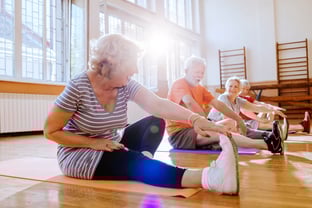
GettyImages-864357324Why Flexibility Declines With Age 

Over time, muscles shorten, joints stiffen, and connective tissues lose elasticity. These changes can
lead to limited range of motion, making everyday tasks—like bending, reaching, or walking—more challenging. Reduced flexibility also increases the risk of falls and injuries. 

The Benefits of Staying Flexible 

  • Improved Mobility: Flexible muscles and joints make movement easier and more efficient. 
  • Pain Reduction: Stretching helps relieve stiffness and tension, reducing discomfort in areas like the back and hips. 
  • Better Posture & Balance: Flexibility supports alignment and stability, which are crucial for preventing falls. 
  • Enhanced Circulation: Gentle movement stimulates blood flow, nourishing muscles and joints. 

How to Keep Your “Lotion” Flowing 

  • Stretch Daily: Focus on major muscle groups—hamstrings, hips, and shoulders. 
  • Incorporate Gentle Movement: Yoga, tai chi, or dynamic stretching can improve flexibility and balance. 
  • Stay Consistent: Even 10 minutes a day can make a big difference over time. 

Aging doesn’t mean slowing down—it means moving smarter. Keep your body in motion, and let flexibility be your secret weapon for longevity and independence. 

Tips to Improve Flexibility 

1. Stretch Daily 
  • Incorporate static stretches (hold for 20–30 seconds) and dynamic stretches (controlled movements like leg swings). 
  • Focus on major muscle groups: hamstrings, hips, shoulders, and spine.  
2. Practice Gentle Yoga or Tai Chi 
  • These low-impact activities improve flexibility, balance, and mental health. Seniors in yoga programs report a 15–20% increase in joint mobility within three months.  
3. Stay Active with Low-Impact Exercises 
  • Walking, swimming, or cycling maintains joint health and prevents stiffness.  
4. Use Resistance Bands 
  • Combining stretching with light resistance improves both flexibility and strength.  
5. Hydrate and Eat Well 
  • Proper hydration keeps muscles and connective tissues supple. Adequate protein supports muscle health.  
6. Consistency is Key 
  • Research shows that just 10 minutes of daily stretching can improve flexibility by up to 20% in older adults within weeks. 

Your Turn! How are you helping residents (or yourself!) stay flexible and active? Share your favorite stretches or creative ideas in the comments—we’d love to hear from you! 

Topics: staying active flexibility selfcare Wellness Companion