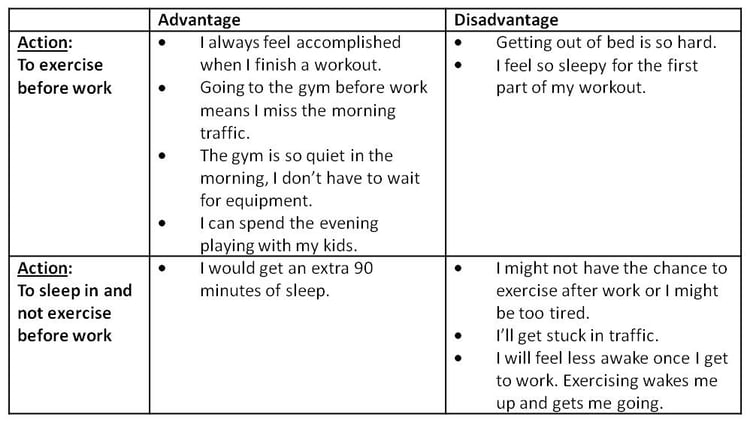
 Have you ever set a big goal - such as exercising regularly, drinking 64oz of water daily, getting 8 hours of sleep daily, or improving your overall health? Only to find yourself struggling to stay consistent after a few days? This is very common. Many individuals start with good intentions for all their goals but often get overwhelmed by them, making it difficult to stay focused on achieving those goals. Although this can be very frustrating to accept sometimes, we must start with small commitments to create habits to crush long-term commitments. Most of the most successful actions start with short-term commitments. Instead of looking at these long-term goals maybe you simplify them to start by exercising 3 days a week instead of everyday, start by drinking at least 32 oz of water a day, aim for 6-8 hours of sleep every night, or maybe you focus on fitness before you focus on weight goals to improve your overall health. By focusing on manageable actions over a set period of time to become more consistent and build confidence, eventually these short-term commitments will become easier and more natural.
Make Big Goals Feel More Manageable
Many people struggle with long term commitments because they can feel overwhelmed. Rather than focusing on the end goal, ask yourself: why am I pursuing this goal? What am I trying to achieve? When do I want to accomplish it? Where should I start? Most people don’t fail because they lack motivation or desire; they struggle because the goal they are trying to achieve feels too big. Looking at the entire journey at once can make it feel impossible, causing individuals to lose momentum by focusing on the total distance instead of the next step. Shortening the timeframe on a long-term commitment can make the goal feel more achievable and closer to completion than the long-term commitment, which will reduce the pressure associated with the commitment.
Turn Small Commitments Into Lasting Habits
 Short-term commitments are a great place to start when trying to make changes. They feel more manageable and less stressed. Committing to a change/goal for a week or month will feel less stressful and less intimidating than looking at the entire long-term goal. Short-term commitments will also decrease the possible mental barriers you may face. It also removes the excuses, and it's easier to convince yourself to take smaller steps rather than a long process drawn out every day. Short term commitments also help in shifting focus instead of looking at the total distance you are just focusing on the small term goals that are directly in front of you. These short-term victories increase self-confidence and create positive momentum that encourages long-lasting efforts.
Motivation for these long-term and short-term goals is what comes and goes. Building long-lasting habits is what keeps us consistent when motivation is low. The key isn’t always finding that motivation, it is creating routines that become second nature. By repeating this behavior, the brain connects the action with the reward more effectively so that over time that action will become easier to manage. Small actions repeatedly completed over time become automatic. Think about the tasks that you complete daily, brush your hair, get ready for the day, pack your lunch, and drive to work. You don’t debate whether you are going to complete these; you just complete them without thinking. These short-term and long-term commitments are developing the same way by repeating them daily to transition them into long-term commitments and habits.
Small actions through short-term commitments can lead to more meaningful change. As people consistently take small actions, they begin to identify with those behaviors, making those habits feel like second nature rather than something they are forced to do. Completing short-term habits also makes the larger goal feel more achievable due to building confidence.
Progress Over Perfection
Lastly, overcoming the all or nothing mindset. A lot of individuals get into the mindset that one missed workout and one unhealthy choice they must let go of their goal they view the small setback as something that they can’t succeed in. Individuals also need to keep in mind that progress is built through repetition not perfection no one follows a plan perfectly the matter is that your overall pattern of small commitments not a single missed day because the consistency overtime will be better than the perfection of something. If you make a mistake or miss a goal, focus on getting back on track rather than starting over.
Long-lasting habits aren’t built through overnight transformations. They are built through the tough days, small, intentional action of repetitive small term commitment. By focusing on short-term commitments, you reduce the overwhelming feeling, build confidence, and create a foundation of success. The next time you're tempted to make a drastic change, start small and only look at the step-in front of you and not the whole staircase. Commit to one healthy habit or action for a few weeks and see where it takes you may be surprised how powerful that short-term commitment can be.
 Strength training, also known as resistance training, uses external resistance to improve physical function, build strength, and increase lean muscle mass. While many people recognize its role in building muscle, strength training also provides two often-overlooked benefits: increasing energy levels and helping prevent injuries.
 While personalization is important (specificity is still my favorite training principle), determination is the real key to long-term success. And, we have found, through study and real-world evidence, the most effective way to complete a big goal is to break it up into smaller pieces and create ‘smaller’ goals that offer reward along the way.
 Goal-setting’s impact has been defined in two ways; the first is the
 .jpg?width=365&height=243&name=GettyImages-1778515577%20(1).jpg) As the festive season draws near, the anticipation of joy, celebration, and connection fills the air. Yet, for many of us committed to maintaining a healthy lifestyle, the holidays can also bring a sense of unease. The abundance of indulgent feasts, tempting treats, and busy schedules can pose challenges to our well-established routines.
As the festive season draws near, the anticipation of joy, celebration, and connection fills the air. Yet, for many of us committed to maintaining a healthy lifestyle, the holidays can also bring a sense of unease. The abundance of indulgent feasts, tempting treats, and busy schedules can pose challenges to our well-established routines. It is almost that time of year where people set goals for themselves but have a hard time following through with the goals or accomplishing them as time goes on. We have all been there before or know someone that struggles with executing their goals during this part of the year. Managing your time, being realistic when setting goals and supporting those goals can get tough as we go into the holidays. Here are a few ways you can avoid becoming stagnant and set your self up for success while finishing this year.
 Have you wanted to create a healthier lifestyle, but don’t quite know how to get there? Maybe you have tried before, but haven’t been able to stick to your goals? Or life has thrown you a curveball (hello COVID-19 lockdowns) and you got knocked off track. It can be hard to keep yourself motivated to make good decisions every single day. Instead of relying on self-discipline to make these changes, studies have found that taking those healthy goals and turning them into habits might be the most efficient way to enact the changes you want to see! Do you have any habits you want to add to your routine?
 As a fitness manager, people frequently ask me how they can lose “this” as they aggressively squeeze their belly. In response with a smile, I ask them if they have a minute to talk about it. As common as this question is, it’s very hard to give an answer that satisfies. It’s a concern most of us have because we associate a trim belly with health. There’s no single magic pill, exercise, food, or ritual that will help bring back the desired abdominal aesthetic. Fortunately, there are several simple steps that can be taken to reach a healthier body composition. Here are three ways older adults can fight belly fat as they stay safe at home:
.jpg?width=401&name=Woman%20running%20in%20snow%20-%20GettyImages-894281874%20(1).jpg)