Corporate Fitness and Active Aging

Active Aging: Making time for Physical Activity

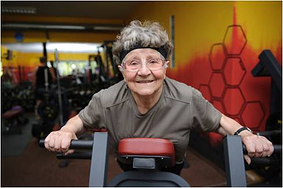
elderly woman pumping ironRegular physical activity is essential for healthy aging!  There are two main questions that I am constantly being ask: how much exercise should I do? and how do I find the time to exercise?

The first question is easy to answer.  There are specific guidelines that seek to help older adults select types and amounts of exercises appropriate for their abilities. The key word is ability, please know your limitations and make sure you have your doctor’s consent.

Key Guidelines for Older Adults (65 years or older):

  • Avoid inactivity. Some is better than none!
  • Do at least 150 minutes (2hours and 30minutes) per week of moderate-intensity Aerobic Activity! These include walking, biking, rowing, nu-step, water aerobics, and even dancing. These could be performed in episodes of 10-15 minutes throughout the week.
  • Do at least 2 days of muscle-strengthening activities. These include weight machines, hand-held weights, exercise bands, calisthenics, even digging in the garden.
  • Do stretching and relaxation exercises as often as possible. Yoga and Tai Chi are excellent choices.
  • Do Balance Exercises 3 or more days per week. These include backward walking, sideways walking, heel walking, toe walking, and standing from a sitting position.  Remember use support (wall or chair) until you feel more stable.  Tai chi also may help with balance and preventing falls.

The second question is always the most difficult because the number one excuse for not exercising is “LACK OF TIME”.  Even when one retires it seems that all the coupled activities and events leave little room for that important part of our day “EXERCISE”!  No matter how busy you are, someone even busier than you is finding time to exercise.  Here are some ways to squeeze in that time.

  1. Wake up earlier or get to bed later. Sleep is definitely important but you can start your day an extra 30 minutes earlier or end your day an extra 30 minutes later.  You have the advantage of making your own time schedule, and you know whether you’re a morning or evening person.
  2. Cut down on media.  Record how many hours of television you watch or how many hours you spend reading or on the computer.  Cut out some of that time and you will find you have an extra 10 to 30 minutes to exercise.  See Number #3!
  3. Be an active TV watcher or active listener. Combine exercising with watching your favorite show! They have televisions in Fitness Centers! Books on tape are wonderful in enjoying the time you exercise.
  4. Walk around! Getting from one place to another by walking there and back is a great way to incorporate exercise.   Consider your limitations (using a walker, cane, bad knees etc.) but find ways that promote movement.  The stairs, the hallways, standing and talking will burn calories and improve lung function. So take a walk to your retirement community fitness center.
  5. Make it part of your routine.  You brush your teeth, you find time to eat, to socialize, to shower and even to catch up on your favorite television shows or good book.  Therefore, make exercise a part of your daily routine, once it becomes a habit it will be something that you don’t even think about you just do it. Before you know it you will be an active member of your senior living fitness program!
  6. Mix socializing with exercising.  Find an exercise partner, a group to walk with outside or in the hallways, even attend exercise classes where there are others on a regular schedule.  Motivate someone to join you and have them motivate you.  
  7. Schedule an appointment. You wouldn’t want to miss that doctor’s appointment because you may not get another one for over a month.  So why not set a standing appointment with an exercise buddy, a retirement fitness center personal trainer or your dog, and be accountable to exercise on a specific day and time.
  8. Set a goal.  Whether it’s losing weight, gaining weight, standing taller, walking longer or even balancing better.  Exercise provides you those results!  Think about what motivates you to want to incorporate exercising and start working to achieve your goals!
  9. Find an activity you love.  Not everyone wants to come to the community fitness center and not everyone enjoys attending classes.  Dancing, hiking, walking outside and even playing golf provides exercise.  Therefore, do what you love but make sure it keeps the body moving!
  10. Say no.  The big one.  Look at your priorities and responsibilities.  Do you really have to involve yourself in everything on that list?  Can you start to say no to specific things that hinder your ability to find time to exercise? 
Quick Tip to Strengthen Your Community Exercise Program
Topics: adapting to exercise active aging active living balance training staying active

NIFS: How Happy is your Heart?

heart healthIt's mid-February and you started the year out strong, but have all of your resolutions already departed? Every year, the same two resolutions are shared amongst everyone – exercising and losing weight. Those who exercise regularly prior to New Year’s seem to stick with their same routine, while those who want to start to exercising come January 1st seem to have fallen off the wagon by February. February is month to be aware of your heart health, so I have provided you with some tips to help you stay on track as we enter into spring!
  1. Think: Why is your resolution not working? Do you want it bad enough? What’s your excuse? Is it a realistic resolution?
  2. Create SMART goals: Your goals should be specific, measurable, attainable, realistic, and timely. By using the SMART method you can are set for success.
  3. Exercise: The American Heart Association recommends at least 30 minutes of moderate intensity aerobic activity at least 5 days per week or 150 minutes. Another option is 25 minutes of vigorous intensity aerobic activity 3 days per week. The first excuse is not having enough time. Have you found yourself with 10 minutes to spare in the day? Do something to get your heart rate up! That something is better than nothing and can improve your quality of life.
  4. Diet: You can start by eating and drinking the necessary calories to maintain your weight. This is based on your age and physical activity. Be sure to not consume more calories you can burn off for that day. It is beneficial to eat a variety of nutritious foods from the all of the food groups. Your body requires specific nutrients to stay healthy. Limit the foods and beverages that are high in calories and low in nutrients, while also limiting your intake of saturated fat, trans fat, cholesterol, sodium, and added sugars. Be aware of your portion sizes and follow the American Heart Association’s recommendations.
  5. Control Your Stress: You can start by setting goals that are attainable. You could also try to positive self-talk or turning your negative thoughts into positive thoughts. Always look at the bright side of things. Other ways to cope with stress are relaxation and deep breathing exercises, engaging in physical activity, or doing something you enjoy.
  6. Motivation: Try and workout with a friend. You can hold each other accountable, as well as push each other through your workouts. It can also make it fun!

If you’re looking for help or motivation, reach out to your corporate wellness staff. Your overall wellness should be a priority, so what’s stopping you from getting back on track to make your heart happy and healthy?!

Topics: corporate wellness active aging heart health month heart healthy

5 Ways Wellness Consulting helps the Mission of your Senior Living Community

There are a lot of commonalities among senior living community mission statements including high quality of care, exceptional service, and peace of mind.  Also making the list are pledges to promote enhanced quality of life, independence, wellbeing, and dignity.  These are lofty aims and organizational mission statements are not to be taken lightly.  But as resident wellness comes under an increasingly brighter spotlight, I wonder how many communities are examining their wellness-related services under a mission-focused microscope. 

I do a lot of consulting for communities across the country and what I see time and time again is that wellness is still sitting in a second place seat under an Activities banner that represents an old way of doing business.  Wellness is not an activity; it is a way of life. 

And while executive directors often recognize that more should be done for their residents to help them live well and to truly engage with life, they don’t know how to progress to a true community wellness strategy. Add to that confusion an organizational ambivalence about “consultants” and in the blink of an eye, the inertia of status quo starts to look very, very appealing. 

But doing what you’ve always done because it’s too hard to make a change may not truly be aligning your wellness strategy with your mission. 

This is where a consultant can help.  Before you recoil at the word “consultant”, consider these five very-real benefits you can gain from opening up your senior living community to wellness consulting.

#5:  The Fresh Perspectivehappy senior

You know it’s true.  Sometimes activity directors are so buried with the task of filling a calendar each month that it’s difficult for them to see the forest for the trees.  And when you have director-level staff who have been with your organization for several years, “what we’ve always” done is a tough cycle to break, even with the best of intentions. 

When we come in to consult, we bring the benefit of unbiased observation.  We don’t know you and we’re starting with a clean slate to figure out what you’re doing really well, and where the opportunities for improvement might be.  We think there is profound value in not knowing your organization because we can use that position of ignorance to build a non-threatening relationship with your staff.  We can ask the hard “why” questions, because we simply don’t know the answers.  We can see areas of opportunity that wouldn’t be readily visible to you because you’re in the environment every day.

#4:  The Change Agent

Let’s go back to the idea that you recognize there should be more substance and strategy to how your community is facilitating a healthy resident lifestyle.  It’s tough to get there, or to even start the conversation as an insider.  Staff can get suspicious, they may feel threatened by potential change (“Is what I’m doing not good enough?”), and before you know it, your efforts to live into the community’s mission are thwarted. 

Bringing in a consultant, as an outside observer, allows you to position the consultant as the change agent.  Then, you can effectively leverage the consultant’s experience in wellness strategy design to start initiating change in your lifestyle offerings. 

#3:  The Resources

If you work with NIFS for wellness consulting, you get the benefit of our years in the field and all of the work we’ve done with other communities.  We don’t just consult; we put our staff on ground in communities across the US.  So we’ve tested our own recommendations and we’re continually innovating with real-world programs for actual residents. 

In short, we walk the talk.

The same should be true for any other consulting organization you choose.  If they bring a cookie cutter approach to evaluating your situation, be suspicious.  You’re unique, and the consultant’s approach should be also.

#2:  The Report

When we consult, we provide a report that covers areas of need/attention specific to the client.  It’s common for our recommendations to cover everything from branding your wellness strategy for effective marketing, to updates on physical spaces in the community.  We don’t shy away from tough topics like assessing staff credentials and effectiveness, evaluating liability and making risk reducing recommendations, or establishing better structure to your initiatives so that you can evaluate effectiveness

We’re not just pointing out areas for improvement.  Our report offers practical and tested solutions that you can put into action. 

#1:  The Value

Consulting isn’t free; you will get billed for time and travel.  But you can get a project estimate up front that should outline both anticipated costs as well as expected outcomes from the consulting work.  Before you engage in a consulting relationship, get all of your questions answered. 

  • Find out how the agency works with your staff.
  • Determine if they will be willing to talk to your residents.
  • Learn about their specific areas of expertise in wellness strategy.
  • Ask what the final report will look like.
  • Find out whether there is opportunity for ongoing support if needed.
  • Ask if they can provide you with references from previous work.
  • Determine if their recommendations will narrowly connect you with their product/service or if they will connect you with resources where you can decide which are best for your organization?

It’s time to look at aligning your wellness programming with your mission.  And the great news is, you don’t have to tackle this alone.  Consulting doesn’t have to be daunting, unfulfilling, and lacking in value.  If you’re ready to cultivate a wellness focus for your community that works with your current strengths and that compliments your existing brand, then contact me to get answers to those value questions I outlined above.

Are you ready to do wellness better? Learn more about wellness consulting.
Topics: active aging nifs fitness management senior center solutions Wellness consulting Active Aging senior wellness consulting

Active Aging: Beginning Exercise Program for Seniors

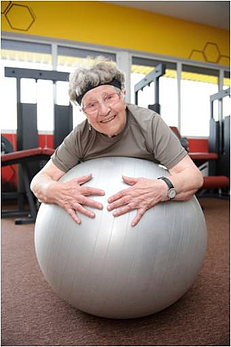
senior woman on ballEveryone needs a starting point.  Anyone who has ever tried to begin a new exercise program knows that the first few weeks often determine whether you stick with the program or not.  I often have residents ask me where to begin and while different considerations have to be made for each individual’s situation, I’ve found that this is usually a good starting point.

1. Try not to overwhelm them

A few times per week is plenty for an older adult who is new to exercise.  We’re trying to build a habit and that takes a little time.  For someone who was previously sedentary, doing structured exercises 3 times per week is plenty.  I do try to encourage people to take a short walk every day so they are getting up and moving around more than they’re used to.  (And walking down to the dining room doesn’t count!)

2. Include a little cardio, a little strength, and a little flexibility

Barring any special circumstances or directions from their physician, it’s safe for older adults to include a large variety of exercises in their routine.  Aim to be well-rounded.  It’s good for the body and it helps to keep them interested as well.  Cardio exercises could include things like walking, riding a bike, or just working out on the Nu-Step or elliptical.  Start out for 10 minutes at a time and work up from there.  Strength exercises should be functional and safe for the older adult.  Using variable resistance machines is usually a good place to start and it can help to build the confidence of your new exerciser.  Always include flexibility exercises as well.  You’ve all heard “use it or lose it” and this applies to mobility and flexibility just as much as any other area.

3. Always include balance exercises

My most successful residents are the ones who do balance exercises most days of the week.  Practicing those tasks not only makes them more stable, but also really boosts their confidence.  It’s an area where a lot of them feel unsure of themselves and a little fearful so showing them that they can do something to change that feeling can really help.

4. Modify, modify, modify

It’s easy to try a “one size fits all” model for older adults.  Many people just assume that they can’t do the same things as someone who is younger, but this isn’t true!  As our population ages, there are many circumstances where people have been exercising their whole lives and are still very capable of difficult exercises.  Don’t be afraid to challenge people a little bit.  On the flip side, many people are just beginning an exercise program with the goal of maintaining their independence a little longer so don’t be afraid to modify exercises down to their abilities as well.

Do you have tips and tricks that work for beginners in your community?

Download Balance Training Whitepaper

Topics: active aging nifs fitness management senior fitness exercise for elderly

Top 5 Wellness Blogs from 2013 that you may have Missed

Top 5You’re busy, we publish at least a couple blogs a week, and there’s a good chance ours isn’t the only blog you read.  I get it – it’s tough to stay on top of all of that reading.  So I thought I’d help you get your “read more” resolution kicked off on the right foot by compiling a “best of” list for NIFS Corporate Fitness and Active Aging blog in 2013. 

Check out the list below and let us know if we missed one of your favs. 

Most Viewed Blog:  Employee Health and Nutrition:  The Pros and Cons of Organic Foods

We must have hit a hot topic on this one.  It’s a quick read covering basic the pros and cons of helping to improve your employee’s health by offering organic food options at work. 

Most Controversial Blog:  Corporate Wellness:  Is Obesity Really a Disease

In 2013, the American Medical Association declared obesity a disease.  We couldn’t help ourselves – we had to write about their declaration.  It has significant, as yet not dealt with, implications.  This blog series generated a lot of buzz in the social sphere.

Most Practical/Useful Blog:  3 Must-Dos During a Senior Living Fitness Center Renovation

This two part blog was written with much love and direct experience.  Melissa, one of NIFS managers who just lived through a fitness center renovation at the community where she works, puts forward some very practical advice on how to help both your fitness staff and your residents survive the dreaded change. 

Best Vlog Series:  Free Workout Fridays

In May, 2013, we launched a weekly Free Workout Friday series.  It’s been a great outlet for our creative staff to share a variety of simple workouts you can do with limited (or no) equipment.  The most popular video we posted was on how to use a circular resistance band for an effective workout.  Check out NIFS Corporate Fitness Youtube channel for more Free Workout Friday options.

Best “Tell It Like It Is” Blog:  Top Five Reasons Your Residents Don’t Engage in Wellness

I’m nothing if not direct.  In this blog, I outline the five most common reasons I see that residents don’t participate in wellness in your community.  If wellness has floundered in your organization and if you can’t seem to get staff or resident buy in, you might want to review these reasons to see if any of them ring true. 

Don't miss out in 2014, subscribe to our blog and receive our postings straight to your inbox!

Subscribe to NIFS blog

Topics: corporate wellness active aging Best of 2013 blogs

NIFS Fitness Management: 12 Days of Wellness

December calendarThe holidays are in full swing and everyone is singing about jingling bells, and Dasher and Dancer, Prancer and Vixen,  Comet and Cupid, Donner and Blizten, and Rudolph of course.  Another reoccurring song or tradition that has become a part of our culture in various ways is the 12 Days of Christmas.  We see it on TV with 12 Days of Giveaways, our staff did 12 Days of Fitness via Instagram, and all over Facebook there have been 12 days of something or another where companies thank you for supporting them by offering contests throughout the 12 days. 
This got me thinking about how we jump on that wagon, easy enough… we are going to offer the 12 Days of Wellness.  So I set out to ask around the office, when do the 12 Days of Christmas occur?  Most people, including myself thought “around the 13th or 14th?”, 12 days out from Christmas.   Doh, I’ll just google it. Here I thought I’d engage people, because that’s what we are good at, engaging your residents in your senior living communities or your corporate wellness members and strike up a conversation.   I could have gotten the answer right away if I just Googled it. 

If you haven’t Googled it yourself, in general you would find that the 12 Days of Christmas actually begins on Christmas and carries on for 12 days ending on January 5.  If you need a more detailed explanation, I recommend you Google it for yourself as it does vary between beliefs.

Back to me jumping on the band wagon to celebrate 12 days…  Join us via our Facebook page or Twitter for the 12 Days of Wellness starting tomorrow.  As we head into the New Year and establish those dreadful resolutions, take into account more than just the typical exercise more, lose 10 pounds, eat better.  There are more aspects to your overall wellness that will help you lead a healthier life.  Subscribe to our blog, we have some new authors from our staff in 2014 along with some great programs to share with you in our NIFS Best Practices series where we will feature some of our most successful programs in both Corporate Fitness settings and Active Aging communities.

Enjoy the holiday season and our 12 Days of Wellness!

Subscribe to NIFS blog

Topics: corporate wellness corporate fitness active aging nifs fitness management senior living community 12 Days of Christmas 12 Days of Wellness

NIFS Fitness Management's Thanksgiving Traditions

thanksgivingHappy Thanksgiving!!  Some of you have already been active by participating in a Turkey Trot or Drumstick Dash, others may be enjoying some morning coffee while watching the Macy’s Thanksgiving Day Parade, or on the road traveling to see family, and those extra special individuals are busy cooking today’s feast.  We all celebrate differently and have family traditions and things are thankful for.  We are thankful for our amazing staff and the hard work they put in year round.  We asked them to share what they are thankful for, what their favorite Thanksgiving dishes are, and about their family traditions.

Thanksgiving has always been an important holiday for the entire family to get together. When I married my husband at first we had to split Thanksgiving between the two families. After the first two years of doing this, my husband and I asked to hold the entire day’s events at our place and invite all family from both sides. We also invited family friends. This was turned into a wonderful tradition that allowed everyone to get together and not run from one place to another throughout the day. This leads to my thing I am most thankful for, which is my WHOLE family and that we do not have a division of "my family" or "your family."  -Cathy Hampe

We have some competitive people in the family, and they do a lot of “trash talking”.  We usually have some sort of dodge ball, kickball, or bball game….which is hilarious in itself because not all of us are athletic! I have one aunt that brings board games every year and no one ever wants to play, so that’s usually another funny episode because she’s trying to talk anyone and everyone into playing with her.  -Lisa Larkin

This probably started when we were teenagers, but my brothers and I would set a plastic trash can a certain distance from the throwing line. Then we would throw a football at the trash can to try to hit it. If we hit it, the trash can was moved farther away. If you missed, you were out. Very simple, but always a good time with my bro’s.   -Michael Boyle

My favorite part is introducing healthy options to my boyfriend’s family.  This is the 3rd year I will be cooking with his mom, it’s really fun to watch them devour the healthier options that they would have never imagined liking. I’m also thankful for the loving family I have supporting me, near and far.  –Sarah Johnson

My dad’s entire family started the family reunion type Thanksgiving back in the 1980’s with my grandfather having seven siblings. We used to rent out an old farmhouse and since have moved to various churches. The entire meal is a pot luck and having family coming from all over the world there is an amazing selection of food... Greek breads, German desserts, Asian salads, the best part of this meal is the homemade ice cream!  -Amy Briggs

My favorite part of the holiday is just getting to spend the day with my family.  It is so nice to be able to relax, enjoy each other’s company and be thankful for one other.  I am most thankful for my children, family, friends and health!  -Shawna Kendrick

I am thankful that a have the most amazing family, a wonderful job, my house, and my two awesome dogs!  After dinner, our entire family crowds into the living room to watch the Dallas Cowboys play football.  -Diana Price

My oldest son served in Iraq and missed Thanksgiving with our family for 4 years in a row.  Thanksgiving is so important to us because we feel so thankful that he is home and is able to spend Thanksgiving with us again! He has been home for the last 5 Thanksgivings, but I never forget the importance of being blessed when I look across the table and see him among us!  -Ruth Reyna

I enjoy waking up Thanksgiving morning to do a local 5k Turkey Trot with my family- no better way to start the day than with some exercise!  My favorite part of the Thanksgiving meal is pie, pie, and more pie. Did I mention pie?  -Stephanie Parsons

This isn't really a tradition, and it only happened last year. But my wife and I were trimming our turkey in one of those disposable tin foil turkey pans. Our dog was right under foot waiting for something to drop. After about 5 minutes we look down to see our dog's head soaking wet. Apparently the pan sprung a leak and the turkey grease was running off the counter right into our dog's mouth in what I can only imagine was pure bliss. Surprisingly not a drop touched the floor and I'm sure this goes down as one of the greatest days of our dog's life. So from now on, we'll probably give our dog some turkey grease with her food. (the turkey was good too!)  -Doug Trefun

My favorite part of the Thanksgiving meal is the dressing.  I only eat dressing once or twice a year and I ask my mom to make it.  She uses my grandmother’s recipe that I loved so much as a child.  -Matt Reeves

Our family tradition is getting in circle all holding hands telling what we are thankful for, toasting to them and then we do a gobble off. Whomever has the best turkey gobble gets to take the traveling turkey home for the year. For some reason the turkey has never made it to my home.  -Sheila Heavin

What is your favorite non-food related way you spend this holiday with your family? Every year we do a “Turkey Bowl”. My dad’s family gets together at the local college and plays flag football on the field. Last year we had over 50 people play from ages 4-65. We do a traditional tailgate in the parking lot after the game. It is a great way for us to get together before we go our separate ways to other relatives houses for thanksgiving dinner. It’s also a great way to be active before all the holiday treats.  -Mistie Hayhow

I’m thankful for our healthy girls and to not be pregnant and nauseous this Thanksgiving.  –Emily Davenport

My personal fav is the Macy's Thanksgiving Day parade. But my grandmas pumpkin pie always has a strong family presence.  -Bethany Garrity

My family always participates in the Galloping Gobbler, which is a 4 mile race back in my hometown. My entire family dreads it but we all do it because it is something that my mother loves to do! She gets so excited every year, that she wakes us all up around 6 am to the Rocky Theme Song blaring!! It’s an interesting way to start Thanksgiving! -Margaret Allgeier

I am thankful for family.  -Christy Monday

My immediate family gets up at the crack of dawn and drives to Ohio where my great aunt and extended family gather for Thanksgiving lunch.  Afterwards, we take a walk around the farm to get in some activity after the big meal.  The rest of the visit is spent catching up with family, watching the Macy’s Day Parade and football.   -Melissa Cusick


What are some of your favorite Thanksgiving traditions?

Topics: active aging nifs fitness management employee health and wellness thanksgiving traditions

Corporate Wellness: Free Workout Friday - Turkey Trot Training

free workout fridayThanksgiving is almost here! That means it’s time to sign up for your local Turkey Trot, Drumstick Dash or your own personal Thanksgiving Day 5K! Studies have proven that your metabolism increases for several hours post-workout, so make a priority to squeeze in some exercise and boost your body’s calorie burning abilities before the big feast. If you do happen to be training for a 5K on Thanksgiving Day, see below for a sample training program that starts on Monday, 11/11.  So today, we want you to go for a brisk walk because you need to pick up the pace on Monday!
Note: This an aggressive running plan, as Thanksgiving is quickly approaching. It is highly recommended that you have done some running prior to starting this program, and that you are comfortable running 1+ miles. If you are a beginner runner, make a goal of finishing the 5K through a combination of walking and running.  You can easily just walk through this schedule to help prepare for your event of choice.

11/11: Run 1 mile

11/13: Run 1.25 miles

11/15: Run 1.5 miles

11/18: Run 1.75 miles

11/20: Run 2 miles

11/22: Run 2.25 miles

11/25: Run 2.5 miles

11/27: Run 0.5-1 mile

11/28: Race day! Run 3.1 miles!

On days in between runs, focus on cross-training, for example weight-lifting or non-impact cardio (elliptical, biking, swimming, etc.) Allow for 1-2 days of rest each week.  Check out past Free Workout Friday videos for cross training options.

Happy turkey trotting and drumstick dashing!

Topics: employee health exercise active aging nifs fitness management fitness

NIFS Nutrition News: Pumpkin isn't just for pie

One of the most versatile and healthy foods out there also happens to be a favorite for most when decorating this time of year.  Pumpkins are not only something that can be used to spruce up your front porch in the fall but is also an excellent addition that should be incorporated into your daily eating routine!pumpkins

Pumpkin is loaded with Vitamin A, which helps with vision.  The carotenoid, beta carotene, in pumpkins is converted to Vitamin A for even more eye protection! This antioxidant has also been found to have a role in cancer prevention.  It is also loaded with fiber (3 grams for 1 cup), which we know is excellent for heart health.   One final perk of pumpkin is the amount of potassium it contains.  Electrolytes, especially potassium, are important after a hard workout, and 1 cup of pumpkin provides more potassium than a banana (564 milligrams vs. 422 milligrams).

Try these recipes to obtain all of the health benefits that pumpkin has to offer!

Pumpkin Pie Dip

Ingredients:

1, 15 oz can of pumpkin
1, 5 oz box of instant vanilla pudding, just the powder
1, 16 oz container of low fat cool whip
1/2 Tbsp Pumpkin Pie Spice
1/2 Tbsp Cinnamon

Directions:

Mix pumpkin, pudding mix, cool whip, and pumpkin pie spice together by hand in a very large bowl and chill for several hours before serving.  Sprinkle with cinnamon, and serve with fresh apples slices, vanilla wafers or ginger snaps.

Pumpkin Spice Smoothie

Ingredients

1/2 cup pumpkin (canned or freshly cooked)
1/2 frozen banana
3/4 cup almond milk
1 tsp cinnamon
1/2 tsp pumpkin pie spice
pinch of ground ginger

Directions

Put all ingredients in the blender and blend until smooth. Pour into a glass and enjoy!

Pumpkin Chili

Ingredients

1lb ground beef
1 green pepper, diced
1 onion, diced
1 Tbsp chili powder
1 Tbsp cumin
1 tsp garlic powder
1 tsp onion powder
1 (15oz) can pumpkin puree (NOT pie filling)
1 (15oz) can pinto beans, not drained
1 (15oz) can black beans, not drained
1 (28oz) can diced tomatoes, not drained
salt and pepper, to taste
olive oil

Instructions

In a large soup pot, brown ground beef with pepper, onion, and a drizzle of olive oil. As the meat and veggies are cooking, sprinkle over chili powder, cumin, garlic powder, onion, powder, and a healthy pinch of salt and pepper. When the meat is cooked through, and the veggies are tender, add pumpkin puree, undrained beans, and the tomatoes with their juice to the pan. Cover and simmer until ready to eat.

Pumpkin isn’t just for pie!  These recipes can be included anytime during the day. 

For more information on pumpkin or other super foods, please contact Angie Scheetz, RD at ascheetz@nifs.org or 317-274-3432 ext 239.


Topics: employee health active aging healthy diet nifs nutrition news angie scheetz

Benefits to offering Zumba Gold® in your Active Aging Community

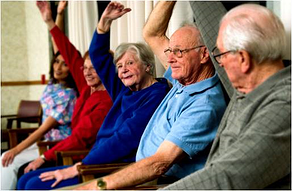
senior woman dancingWhen I first began working at a CCRC a year ago I learned that Zumba® classes were being taught.  I was very intrigued and actually sat in on the class within the first couple days of being here.  Prior to attending the class, I kept thinking to myself that this was a pretty intense class to be taught to seniors.  After attending the class I was pleasantly surprised as to how enjoyable the class is for the participants.  The type of class that was being taught is actually called Zumba Gold® and was specifically designed for active seniors as well as those participants who may not be ready for full on Zumba®.  Zumba Gold® still uses the same concept of original Zumba® by incorporating exciting Latin and international dance rhythms.  Some of these dances include Merengue, Salsa, Cha Cha, Cumbia, and Belly Dancing.  You are guaranteed to get a full body workout but the exercises are modified for success and safety.  A lot of the moves may even be done at 1/2 tempo so that everyone is able to follow.  The most interesting thing that I observed was that many of the participants were seated during the Zumba Gold® class.  This makes the class available to everyone, including those who may be in wheelchairs or are unable to stand for long periods of time.

There are a wide range of benefits of Zumba®, these include:

  • Improved muscular strength and endurance
  • Improved cardiovascular system
  • Improved range of motion
  • Improved posture
  • Reduces depression, stress and anxiety
  • Opportunity to meet new people
  • Enhanced quality of life

The residents at our community absolutely love that this class is offered!  It is one of our most well attended classes at our community.  This population has grown up around music so what better way to get some exercise while dancing around to good music!  I hear over and over again from the residents that it doesn’t even feel like they are exercising because they enjoy the music so well and they just start grooving.

If you are interested in having Zumba Gold® at your CCRC you will first need to have a licensed Zumba Gold® instructor to teach the classes.  There are always training workshops being taught all over the United States you just have to find the one nearest to you.  You may find these training workshops at the following address Zumba Training.  Now the question is are you ready to live up to the Zumba® motto and ditch the workout and join the party?

Click me 

Topics: active aging nifs fitness management CCRC fitness center zumba gold senior group fitness classes