
 Last week, I was in the Fitness Center chatting with one of our residents, Kent. He’s quick-witted, loves trivia, and can tell a joke faster than I can blink. But when a light body sculpt ball rolled off a chair behind him, he turned around, snatched it mid-air, and said, “I’ve still got it!”
We both laughed, but afterward, I couldn’t stop thinking about how powerful those quick, spontaneous movements really are. Reflexes aren’t just about catching falling objects or avoiding a stubbed toe. They’re about keeping your brain young, alert, and adaptable.
When you move quickly, your brain doesn’t have time to overthink - it has to act. Those lightning-fast reactions come from communication between your nervous system and muscles, and the more you practice, the sharper that communication becomes.
Every time you step over a puddle, catch your balance on uneven ground, or tap your foot to the beat of a song, your brain is firing signals at top speed. It’s a dance between brain and body.
Science backs it up, too. Reflex-based activities improve reaction time, coordination, and cognitive processing speed. In other words, quick moves don’t just help you stay on your feet, they allow you to think faster and stay mentally flexible.
Reflexes Aren’t Just for Athletes
Here’s the good news: you don’t need to sprint or play tennis to keep your reflexes sharp. In fact, some of the best reflex workouts are simple, fun, and doable right in your living room.
Try these:
- Ball toss drills: Grab a tennis ball and bounce it off a wall. Catch it with one hand, then switch to the other to challenge coordination.
- Follow the clap games: Have a partner clap or call out “Go!” and respond as fast as you can with a movement like tapping your knees, reaching overhead, or even jumping in place.
- Step reactions: Stand behind a line and step forward, back, or sideways the moment a cue is given.
You can even turn daily life into reflex training. Ever reach for a falling spoon or dodge a closing elevator door? That’s your nervous system doing brain bootcamp.
A Story from the Studio
A few months ago, one of our residents told me she’d started dropping things more often—coffee mugs, keys, you name it. “I feel like my hands are on vacation,” she joked.
So, we started working small reflex drills into her exercise routine. Ball catches, fast-paced tapping sequences, and reaction games. Within weeks, she began to notice a difference. “I didn’t realize how much quicker I could feel,” she said. “It’s like my brain woke up.”
That’s the power of quick moves, they don’t just train your body, they wake up your mind.
Your Turn
You don’t need fancy equipment or a structured class to boost your reflexes, just curiosity and a willingness to play. Challenge yourself to move a little faster when the opportunity pops up. Reach for the phone before the second ring, try a new dance step, or see how quickly you can tap your toes to a favorite tune.
The goal isn’t perfection, it’s staying engaged with the world around you. Every quick move you make tells your brain, I’m still learning. I’m still quick. I’ve still got it.
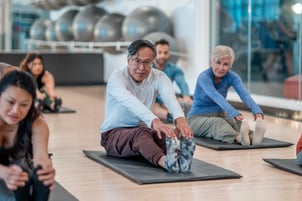 It is natural for our bodies to lose mobility and stiffen as we age. This results from becoming more sedentary as we get older. The less we move our bodies, the more our body adapts to the lack of movement by reducing its range of motion. That is where the famous saying “move it or lose it” comes into play.