Functional training (also referred to as balance training in our circle) is one of the four main components of fitness that the American College of Sports Medicine recommends be incorporated into weekly exercise programs for all populations. It’s not just cardio, strength training and stretching these days as the physical benefits of functional training ring true for all. The days of static exercises like standing on one foot are behind us – and thank goodness because frankly that’s boring and doesn’t truly simulate how we move in our everyday lives. Dynamic movement patterns, utilizing different training surfaces and unique pieces of exercise equipment can make balance training far more engaging and far more effective.
Here’s our equipment checklist for an effective balance training program:
- Balance Pads & Beams – there are a variety of foam products on the market that can be utilized to enhance the challenge level of many balance exercises. Performing a balance stance on a foam pad or performing a tandem walk on a foam beam creates an unstable base of support kicking the somatosensory system into overdrive for improved lower body and core stabilization.
- Biodex Balance System or Wii Fit – technology can make everything a little more fun and when any fitness endeavor feels less like “exercise” it can be a win! The Biodex Balance System provides an array of assessments, drills and games to track progress and engage residents in balance training exercises. The platform of the Wii Fit is a less expensive yet fun option to help residents play games while also working on weight shifting and balance.
- Agility Ladders – these aren’t just for athletes! Tasking participants with a variety of stepping patterns both front to back and laterally can help improve stability and gait. Qualified fitness professionals can create countless exercises for residents to perform on an agility ladder for low to high-impact movements.
- Painters Tape – perhaps the most basic piece of equipment of them all! Use painters tape to create a variety of grids and paths on the floor in your fitness center, aerobic studio, or even in an outdoor area. Fitness staff can help guide residents through a variety of movement patterns simulating ADL’s or perhaps other functional movements for recreational activities like
.jpg?width=335&name=GettyImages-526312285%20(1).jpg) pickleball.
pickleball. - BOSU or Wobble Board – much like the challenge of completing a stomach crunch on a stability ball opposed to the stable floor, using a BOSU or Wobble Board while performing side leg lifts or squats helps to further engage the core and lower body muscles to get more bang for your buck out of that movement.
Our staff are using these tools every day in senior living communities across the US as part of NIFS Balance Redefined fall prevention programming. Having the equipment is one thing and having the creativity and expertise to apply them in balance classes, one-on-one services and other balance training offerings is another. The price points range greatly on these items from just a few dollars to thousands of dollars but the options are endless in how to creatively engage participants in effective balance training.

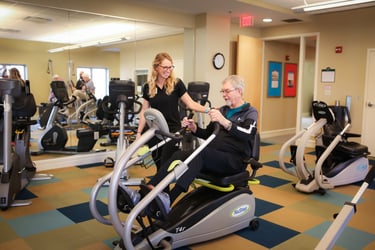 Our fitness management staff members have some of the best stories around on the impact their fitness programs are having on resident lives in the senior living communities we serve. They hear comments from residents or their family members, they see new faces in classes, and they track the data in programs and services that demonstrate solid engagement. Our staff takes great pride in these affirmations knowing that the work they are so passionately committed to is truly making a difference not just for residents but also for the culture of a community as a whole.
 When thoughtfully planned and executed well, there are a variety of opportunities to generate revenue out of robust health and fitness programs in senior living communities. But you might be thinking, “I didn’t realize there was ANY revenue potential."
.jpg?width=383&name=GettyImages-1008096704%20(1).jpg) All personnel working in a senior living community have a stake in supporting resident well-being from your concierge to your bus drivers to your service staff in the dining room. The daily interactions your team have with residents and the work culture at a community all directly impacts the quality of life of residents. As communities pursue opportunities to both evaluate resident care needs and broader program and service needs under the banner of enrichment, forming a wellness committee of your key stakeholders can be an integral step. Finding the right balance of personnel to represent different arms of the community as well as getting their buy-in with already full workloads can be a tricky step.
All personnel working in a senior living community have a stake in supporting resident well-being from your concierge to your bus drivers to your service staff in the dining room. The daily interactions your team have with residents and the work culture at a community all directly impacts the quality of life of residents. As communities pursue opportunities to both evaluate resident care needs and broader program and service needs under the banner of enrichment, forming a wellness committee of your key stakeholders can be an integral step. Finding the right balance of personnel to represent different arms of the community as well as getting their buy-in with already full workloads can be a tricky step.
.jpg?width=527&name=GettyImages-985893328%20(1).jpg) is where it is critical that communities identify their wellness champion. This person can act as a catalyst in eliminating the silos and bringing everyone together to work from a unified vision of how lifestyle offerings and services are delivered to residents.
is where it is critical that communities identify their wellness champion. This person can act as a catalyst in eliminating the silos and bringing everyone together to work from a unified vision of how lifestyle offerings and services are delivered to residents..jpg?width=434&name=GettyImages-1161759077%20(1).jpg) When we’re talking about whole-person well-being, it isn’t just the health care options available, or the fitness program offerings. Communities should be cautious about how narrowly they define “wellness” when connecting it to their physical spaces or services. This can have a significant impact in the messaging of your community culture to your residents and prospective residents. Supporting resident well-being should flow through every nook, cranny, department, and service under your roof; however, many communities miss opportunities because they want the word “wellness” labeled on a space or department.
When we’re talking about whole-person well-being, it isn’t just the health care options available, or the fitness program offerings. Communities should be cautious about how narrowly they define “wellness” when connecting it to their physical spaces or services. This can have a significant impact in the messaging of your community culture to your residents and prospective residents. Supporting resident well-being should flow through every nook, cranny, department, and service under your roof; however, many communities miss opportunities because they want the word “wellness” labeled on a space or department.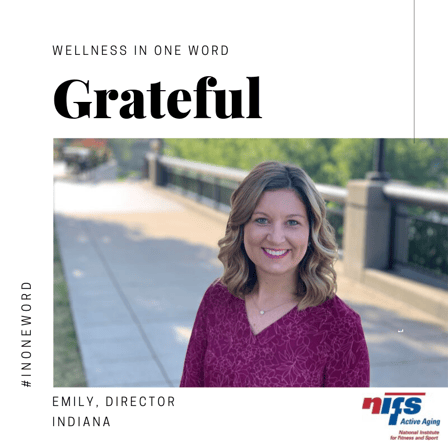 When I asked our NIFS team members to share their “word”, I received submissions of vitality, fulfillment, longevity, power, and balance. Our staff join our team from all walks of life and personal and professional experiences, yet their commonality is a strong desire and passion to work with seniors. Through providing individualized exercise services and teaching a variety of exercise classes, our staff are building relationships and helping improve the quality of life for older adults across the country. The tone and context of their submissions was similarly unified.
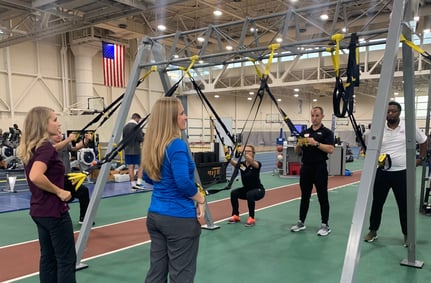 Variety is the spice of life, and that’s what we’ll have in town this week at our annual managers’ meeting. Each year we fly our management team to our headquarters in Indianapolis for professional development, collaboration, and networking. Our passionate team arrives from across the U.S. from different client settings and with varying personal interests and backgrounds. Their one commonality is their passion for serving their members, and we love the dialogue and collaboration that unfold when everyone gets together.
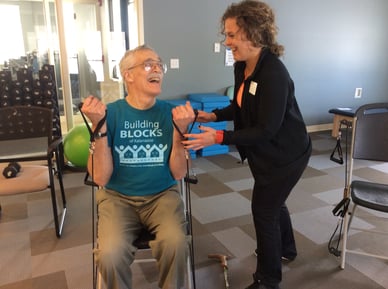 One of my favorite things about my job is when I have the opportunity to visit our client sites and spend time with our staff. Not only are these team members exceptionally knowledgeable and creative in developing fitness offerings for active older adults, but their passion to serve their clients and residents never ceases to amaze me. I think this is what truly differentiates the service NIFS provides from a traditional contractor partnership—how our staff members become one of the team and integrate so seamlessly with the community’s staff and vision.
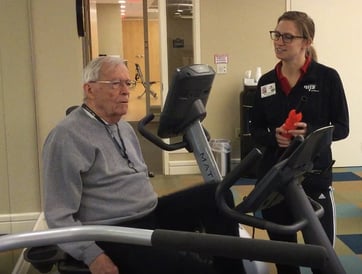 Fitness management is the cornerstone of our business. Recently we have seen an uptick in clients requesting our support in developing broader wellness programming for their residents through the continuums of care. Sometimes the need arises due to challenges with community personnel who don’t have the tools and resources to cultivate the desired lifestyle for residents. Sometimes it’s because they don’t have a point person to pull everyone together out of their silos across the continuums. Sometimes it’s both! Sound familiar?