Corporate Fitness and Active Aging

Employee Health: The Sweatier, the Better

Here’s some good news: You do not have to meet your sales Sweatquota to be considered among the elite at your worksite wellness center. All you have to do is start breaking a sweat.

According to a study published in the October issue of the American Journal of Preventive Medicine, researchers analyzed the American Time Use survey and concluded that only 1 in 20 Americans engages in vigorous exercise on any given day. That’s right, a paltry 5% of us are working hard enough to actually sweat when we work out.

Why is this important to employee health as well as corporate health?

The way to sustained weight loss is through a healthy diet and prolonged cardiovascular exercise (45 to 60 minutes) at least five days per week. If you want members of your workforce to reach healthier body weights, you have to (among other things) create an environment that supports and provides opportunities for your employees to work out hard enough to sweat. You need to build a corporate health culture that supports breaking a sweat in your worksite fitness center.

What if businesses publicly rewarded the sweaty elite alongside the sales leaders? After all, employees who can help you control healthcare costs do as much for the bottom line as those who meet their sales quotas.

Topics: exercise at work employee health corporate fitness program healthy workforce control healthcare costs

Group Exercise: Important Job Benefit for Employee Health

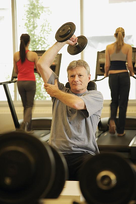
describe the imageGroup exercise classes are known for their high-energy environments and uplifting tunes. However, employees can gain numerous other benefits, especially if your organization provides on-site group exercise classes. And because people spend more time at work than ever before, it only makes sense to offer worksite wellness programs and onsite group exercise as a benefit to employees.

Stress Reduction and Accountability Increases

One of the benefits of worksite group exercise classes is reduced daily stress. In a world where 12-plus hours of work are shoved into an eight-hour workday, any reduction in stress is a huge help. Not only is stress reduced, but accountability and success rates increase. Who wants to miss a worksite group exercise class when the instructor and your colleagues will know you skipped out?

Mood and Morale Improvement

Not only can worksite exercise programs positively contribute to employee’s weight-loss success, but group programming can improve the mood at the office when employees are pressed to perform and produce. A well-run worksite group exercise class will allow for the sociability that employees may not otherwise receive throughout the day. Classes can also build on an element of friendly competition where participants will work harder in a group than they would push themselves on their own.

Reduced Liability

Last but not least among the benefits of group exercise is an increase in participant safety and organizational liability. Classes that are taught by a certified instructor drastically decrease the likelihood of employee injury and minimize liability for the employer.

Your employer may not offer a corporate wellness program or a corporate fitness center now. But when they realize all of the benefits for their associates and the company, I’m sure they won’t be too far behind the fitness train.

Topics: exercise at work corporate fitness program employee health benefits corporate fitness

No Room to Sit in Worksite Wellness

WELCOA, Wellness Council of America, recently released an interview with Dr. Stephen Blair, one of the most renowned researchers in physical activity. The interview profiled the dangers of sitting too much. Although it touched on population health, the focus was on opportunities specific to employee wellness.

Move More, Sit LessOffice Chair

Throughout the interview, Dr. Blair points to the basic premise that moving more is better for your health. He outlines how today’s workforce sits way too much and then points to some fairly recent worksite wellness research, which shows that simple breaks in sitting (such as standing more often and moving a little bit throughout the day) can lead to positive change in important health markers like blood pressure and waist circumference. It's important to note that these short breaks in sitting didn't qualify for the classic 10-minute walk break; they were very minimal breaks in sitting.

How Company Wellness Programs Can Help

The good news is that this type of frequent break from sitting might be actionable by much of America's workforce. For those who are intimidated by the Surgeon General's recommendation to accumulate 30 minutes of physical activity most days of the week, “sit less” sounds a little more doable. Even better, employers could start to order their employees' days to truly encourage this type of movement.

Making changes in sitting patterns during the day won't take off extra body weight, but it might be the catalyst to a little more movement, and then a little more movement...which leads to that 10-minute walk break.

What are you doing to encourage movement for a healthy workforce?

Topics: exercise at work employee health

Fitness Book Review: 14 Days to Wellness

14 Days to Wellness: The Easy, Effective, and Fun Way to Optimum Health by Donald B. Ardell

 14 Days to Wellness book resized 600

This book is one of the best fitness books on the market. Although it was released in 1999, it remains timely because it does not promote time-sensitive trends, refrains from endorsing brand names, and is simple. The intent is for the reader to cover one chapter per day, for 14 days. By the end, readers will understand the need for personal wellness and have the tools to begin a plan.

Ardell tackles one health topic at a time, giving the reader an entire day to digest that particular concept. The book offers a multidimensional approach to wellness; and, as health professionals in a corporate wellness center, we’ve learned that multidimensional viewpoints is the only successful route. It covers topics such as

  • Creating a healthy self-image
  • Assuming responsibility for your own well-being
  • Eating for performance and enjoyment
  • Being physically active
  • Learning your vital signs

My favorite aspect of this book is that Ardell steers clear of deep scientific processes and terms, while still driving home the most important components of health. The subtitle is accurate when it claims to be both effective and easy. This book sheds new light on topics for health professionals, but also offers a great starting ground for the average person wanting to start a personal wellness plan.

Consider adding 14 Days to Wellness to a worksite wellness program library. You can pick up used copies for a reasonable price on Amazon.com.

Topics: corporate wellness corporate fitness program resources

What a Healthy Workforce Can Do About Childhood Obesity

Child BurgerChildhood obesity is on the rise. According to the CDC, in 1980 the prevalence of obesity in children aged 6 to 10 was 6.5% compared to 19.6% in 2008. Among adolescents aged 12 to 19, obesity has grown from 5.0% to 18.1%. That is a whopping 13% increase in childhood obesity in 28 years.

At this rate, some believe this will be the first generation of parents to outlive their children. Childhood obesity is an expensive employee health issue now and will continue to be so into the next generation if parents don't intervene. Let's look at the factors parents can control.

What Can I Do as a Parent?

The main responsibility of a parent is ensuring the safety, health, and well being of their child. Children come into this world knowing only what they learn from their parents and immediate surroundings. If your child is carrying around excess weight, as a responsible parent it is your job to explore any avenue you can to keep your child healthy. Here are some ideas to get your child on the road to living a long, healthy life:

  • Teach your child that exercise and play can be fun. The American Heart Association recommends that children and adolescents participate in at least 60 minutes of moderate to vigorous physical activity every day. Treat this as an opportunity to spend quality time together and learn more about what your child enjoys. Explore new activities together like bike riding, going to the park, walking the family pet, jumping in a local bounce house, or joining them in another favorite activity.   
  • Set an example. Children learn from their parents. Your child will generally pick up any habits that you have or practice. Use this to your advantage and keep it in mind in everything you do. If you currently have the luxury of using a corporate fitness facility, take what you have learned and incorporate it into your home life. 
  • Make fresh, healthy foods available. Ultimately, you or your spouse is responsible for the grocery shopping. Bring home a variety of fresh fruits, veggies, and healthy snacks for the family to enjoy together. If you don't buy the bad stuff, it won't be around for them to eat. Your kids don't like produce? Start with the sweeter fruits like strawberries or apples that they are more likely to enjoy. If you need to, keep around a low-sugar or low-fat dip like fat-free CoolWhip for them eat along with fruit.

Take Responsibility for Your Child's Health

Keep these tips in mind as you point your child toward living a healthy lifestyle. Don't hesitate to start taking some personal responsibility for your child's future. We don't want to outlive our children!

Topics: employee health overweight employees nutrition exercise at home control healthcare costs

Physical Activity vs. Exercise: Do Corporate Fitness Programs Care?

Most people use the terms "physical activity" and "exercise" interchangeably, even though there is a difference between the two. Physical activity is movement that causes the muscles to contract, while exercise is structured and helps to maintain or improve physical fitness.

So, is it okay to use these terms interchangeably, or should companies promoting employee health and fitness be sure to specify one over the other? (Ugh, the confusing terms of the fitness industry.)describe the image

Physical Activity Is Easy to Incorporate into Your Day

The biggest bonus to physical activity is that you can be physically active throughout the day by taking the stairs, raking leaves, or parking your car in the back of the parking lot. You can do all of these things at your own leisure when you don’t have time to schedule a workout. And, if you are being physically active to the point where your heart rate is elevated and you feel as though you are working hard, your overall health will benefit.

Scheduled Exercise Makes Employee Health a Priority

I think the biggest question among corporate wellness promoters is, "Will a daily exercise routine benefit employees more in the long run compared to physical activity?" I have mixed emotions on this. By scheduling time to exercise, individuals are making their health a priority and have taken the step to improve their overall well being. But being physically active, beyond activities of daily living, can make a difference in an employee’s health as well.  

If companies want to see the benefit of incorporating corporate fitness into their organization, they can start by encouraging employees to take the stairs instead of the elevator. I can guarantee that once employees make this a habit, their productivity will increase, stress levels will decrease, and they will start asking for more ways to increase physical activity throughout their shift. Or they might even start asking for an onsite fitness center!

Topics: exercise at work corporate fitness program corporate fitness exercise at home

Workplace Wellness Programs Can Recoup Billions Lost to Obesity

It is not news that obesity is a major health concern in our nation. Not only is obesity responsible for billions in healthcare cost each year; it can also mean billions lost in terms of work productivity.

UnhealthyManA recent study estimates that $73.1 billion dollars in workplace productivity are lost each year due to obesity. These numbers highlight the value of employee health. The study cites an increased number of sick days taken and presenteeism (lost performance while at work) as the main reasons for lost productivity from obese employees. Examples of presenteeism can be additional time needed to complete job responsibilities or more problems meeting physical demands at work.

How can employers save money that might be lost due to obesity? They can invest in workplace wellness programs and health improvement plans. Promoting healthier lifestyles and providing wellness education can be just the support your overweight employees need to lose weight and get healthier. Even small weight losses by individuals classified as obese by BMI (body mass index) can mean millions of dollars saved for your company.

Topics: overweight employees productivity

P90X: Using Muscle Confusion in Corporate Fitness Programs

Some will argue that muscle confusion is no good for building muscle mass. But I have to admit, the P90X workouts are no joke! I would like to consider myself somewhat in shape, but when I did the videos I was extremely sore. After doing the biceps video, I Woman PushUpscouldn’t straighten my arms all the way for two days. I liked the videos so much, I’m going to put a copy in my corporate fitness center for employees to use on their lunch breaks.

Mix It Up in Corporate Fitness Programs

I feel that mixing up your workouts and adding variety will help increase strength, endurance, speed, and agility. You increase in all of those areas by keeping your muscles guessing and challenged. After years of always running and lifting the same weight and exercises, I finally discovered it is okay to not have a routine. This might seem difficult to those of you who hate change, but the results are worth it.

Now I change up all my workouts, especially in the classes I teach at the onsite corporate fitness facility. This helps the employees who won’t change their workouts on their own. As a result, our bodies can handle more basic daily movements (unloading the groceries, cleaning out the garage, and so on) and we are stronger for those not-so-graceful falls.

P90X Is Not for Beginners

In my opinion, P90X is not for beginners. Like I said, I work out on a regular basis and teach at a corporate facility, and for two days I couldn’t wash my hair because I couldn’t get my arms up that high. So, please take it slow and do only half the video at first if you are a true beginner or if it’s been years since you have worked out.

Topics: exercise at work corporate fitness program muscle toning

Four Reasons Employee Health Is Hard to Change

Before I launch into my list, I want to note that this is not an all-inclusive list, nor is it ranked in order of importance. It’s just four pieces of the 1,000-piece puzzle that so many health practitioners, employers, employees, and others are trying to solve.

1. People don't realize how much of a problem their weight is.

Perception is reality, and adults’ perceptions about their weight are way out of whack. According to an August 2010 Harris Interactive/Health Day poll that included feedback from almost 2,500 adults ages 18 and older:

  • 30 percent of overweight people think they’re actually normal size.
  • 70 percent of obese people feel they are merely overweight.
  • 39 percent of morbidly obese people think they are overweight but not obese.

2. Many workplaces have a bad health culture.Donuts

Healthy corporate environment and policies are often overshadowed by an unhealthy workplace culture that supports donuts at meetings and candy bars for fund-raisers.

3. Office wellness initiatives lack educated leadership.

Knowledge is power. Unfortunately, most corporate health promotion initiatives are overseen by individuals lacking the appropriate educational background to safely and effectively sustain those efforts.

4. Politics and uncertainty hamper corporate wellness programs.

Legal landmines tied to worksite health promotion scare away serious wellness efforts that might have a healthy impact on the workforce. Add to that the great unknown that is Health Reform and employers start to feel like their health promotion hands are tied.

Topics: corporate wellness employee health overweight employees health culture

Managing Chronic Illnesses in Corporate Wellness Programs

When tailoring programs at corporate wellness centers, the question arises: What can be offered to individuals who have chronic illnesses? Here is an outline of ways to help corporate wellness clients manage chronic illnesses in the workplace:

  • Host a health fair or health expo. Bring in representatives from various organizations to your workplace. Making information easily accessible by having several booths of resources makes employees more likely to seek out information. Think of local companies, but also include larger organizations such as the American Cancer Society and the American Diabetes Association. Invite representatives from larger hospitals to offer screenings at the health fair, including cholesterol, blood sugar, bone density, and aortic artery screenings.
  • Start resource groups. My corporate health promotion staff recently organized a group called the Cancer and Chronic Conditions Resource Network. Led by three key people who themselves have had past diagnoses of cancer, the group began by personally inviting people on our company’s campus who had been affected by a chronic illness themselves, or who were primary caretakers of loved ones with such ailments. Be sure to stress the resource component of these groups in the naming, rather than calling it a "support group" or "care group," since those might be less appealing in a corporate setting.
  • Host information sessions over lunch. Pinpoint certain diseases or chronic ailments that affect a significant population of your company. Then look into monthly or quarterly Lunch and Learns on such topics. Remember to include ailments that are less severe but perhaps more common, such as migraines or sleep disorders.
  • Find ways your company can partner with other organizations. The American Cancer Society, in particular, has phenomenal resources specifically designed for use in corporate settings and to aid you, as the health delivery specialist.

Above all, take it upon yourself to understand these illnesses. You don’t have to know scientific details about each disease or condition, but become familiar with the most pressing needs and concerns of these individuals to take your corporate health promotion above and beyond customer service.

Topics: corporate wellness