Every year we set new resolutions with every intention to improve our health, stay better organized, lose weight… the list goes on. Often these fall to the wayside and we fall back into our routines we know so well. We are kicking the year off by asking some of our fitness staff what their 2013 resolutions are and if you keep reading you will see that even individuals in our industry have to recommit each year!
New Year… New You… Resolutions from NIFS Fitness Management:
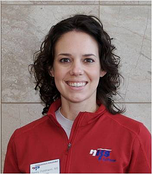 Penny Pohlmann: Wellness Center Manager - Atlanta, GA
I noticed that our family’s TV/Internet usage on week nights had gotten out of control lately so we have resolved to limit it this year. We plan to watch no more than two hours of TV and spend no more than one hour in front of the computer on weeknights with limited time on weekends as well. We hope to spend the time we’d ordinarily be in front of the TV or computer reading, cleaning, and completing other odd jobs around the house that never seem to get done. We also plan to hike all 76.4 miles of the Appalachian Trail in Georgia before the end of the year!
 Kimberlee Swift: Fitness Manager – Towson, MD
This year I have decided to go VEGAN! I have been a vegetarian for over 10 years, and feel that giving up all animal byproducts will only increase my health, wellness, and vitality. I also look at this change as my way to give back to the environment, and significantly decrease the impact my dietary choices have on our ecosystem.
 Callie Johnson: Wellness Program Manager - Indianapolis, IN
My resolution this year is to live more consistently in all aspects of my life! I plan to do this by: eating cleaner, living simpler and being happy with less, being more appreciative of all around me, and being a better, more phenomenal, more genuine ME!
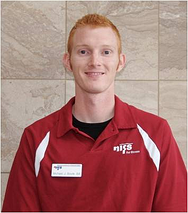 Michael Boyle: Manager – St. Louis, MO
I tend to be overzealous when it comes to New Year’s resolutions and I actually come up with an entire list each year, but for now I’ll focus on a few of the ones that are important to me. First, I’d like to spend more time with God. Whether it’s through reading the Bible, volunteering or just being more giving, I want to spend more time in His presence. I’d also like to cook dinner for my wife at least once per week. As far as fitness is concerned, I’ve got an overall plan of action that culminates in a sub 1h45m half marathon. Here we go!
 Donisha Carter: HFS - Indianapolis, IN
Run the Mini, Save money! My main goal this year is to compete and finish my first ever Mini Marathon. I’ve managed to complete step 1 (actually signing up for the Mini)! I’m a little nervous because I’ve never considered myself a “runner”, we’ll see how well this goes. Another resolution for me this year is to shop less and save more. I’d really like to focus on paying off my credit card and student loan.
 Kimmberly Thiel: Manager – Middletown, NY
My goal for 2013 is to increase my strength and endurance to a point where I can compete with the males on my team for the Spartan Races this summer. I got my butt kicked by these races last year and I won’t let it happen again. This year’s teams can count on me to be a coach and motivator in the pre-race season and the ‘white rabbit’ on race day! Bring it on boys!
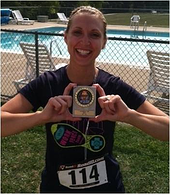 Jenna Pearson: Wellness Center Manager - Albany, NY
Put my own oxygen mask on first! It wasn’t until I was flying home from spending Christmas and New Year’s in England that I set my New Year’s resolution. As we were getting ready to take off, the stewardess said something I’ve heard hundreds of times before, but this time it meant something different. I need to learn to put my own oxygen mask on before helping others with theirs. I get so consumed with making other people happy and taking care of everyone around me that I have literally worried myself sick! It’s time to start taking better care of myself, making time to do the things that I want to do, because every day is a gift and sometimes you just need to be a little selfish.
 Adrienne Kistner: Wellness Manager - Cincinnati OH
My biggest resolution for 2013 is to have a baby! This little miracle baby was not suppose to be in the cards for me, so I am super excited to give birth to a baby boy at the end of March. From a fitness standpoint, I am hoping to resume my Ironman training as soon as the doctor clears me and I plan on competing in my first half Ironman by the end of the year. Nutritionally, I plan on cutting back on my wine-drinking habit. I’m off to a good start, being pregnant, so I’m hoping to continue after the baby is born. Finally, I have several projects around the house that are on my to-do list for 2013. A bathroom renovation is currently in the works.
 Erin Trentham: Wellness Center Manager - Columbus, GA
My first resolution is to cook more. I know how to cook the basics (i.e. meat and veggies), but I really want to try and think outside the box and come up with some new dinners for my family. I know my husband would love this! I would also like to concentrate on my flexibility more (yes I know we are in the fitness industry). I tend to neglect that aspect of my workouts.
 Stephanie Pence: Assistant Manager - Mason, OH
Expand my Cooking Knowledge!! My New Year’s resolution is to try one new recipe a week. I would like to expand my cooking abilities and add new healthy recipes to my cookbook. I have never been a very good cook so I would like to take this year to become more comfortable in the kitchen. Hopefully I won’t be eating too many burnt dinners!
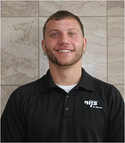 Keith Ledbetter: Fitness Center Manager – Indianapolis, IN
Organize Everything… My New Year’s resolution is to get organized. My plan is to organize one room a month, for the first six months. The following six months go back and tweak and the system I put in place the first time around. Step one is the bedroom, starting with the closet.

Sara Durham: Wellness Center Manager – Indianapolis, IN
To cook more nutritious meals at home for my family rather than eating out. (So far so good)
 Rachel Huffman: HFS – Indianapolis, IN
Shift away from my “procrastinate now, don’t put it off” habits. I’ve never been one to create a list of resolutions, because taking on a laundry list of changes all at once quickly becomes daunting. This is simply because we try to conquer everything at once rather than taking baby steps toward a better direction. In my attempt to continue in a “better direction”, this year I will focus on altering the choices that can be made on a conscious level, namely the ones that sound like this: “Hmm, I can do that later.” This small change is so simple, yet so effective, because it taps into and balances my social life, organizational habits, the cleanliness of my home, and, subsequently, my work life. I recently asked a friend to teach me his ways of keeping up with his social life and responsibilities all while having an adult job. “Just do it,” he responded. So I’m going to just do it.
Mistie Hayhow: HFS - Indianapolis, IN
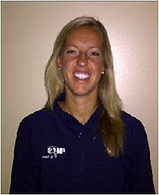
Pick up a new hobby. I received a sewing machine for christmas so my goal for the new year is to learn to sew. I think the gift was a hint from my family that they will be expecting some hand made gifts this year. So in 2013 I will test my patience and creative and hopefully have a new hobby to enjoy in my spare time!
We want to know... What resolutions do you plan to stick with in 2013?

 It’s been a long week, it is cold outside and you don’t feel like doing much of anything, right? Join the club. You don’t have to stress about your workout. At the end of the week maybe you just need a good stretch!
 Complete the following stretches to de-stress and relax your muscles. Worksite wellness can be easy by simply taking a moment to stretch at your desk!
 Good posture
 By June 2013 only 46% of people will still be sticking to the resolutions they vowed to keep as the ball dropped and we said goodbye to 2012. A recent study showed that the three most popular resolutions are finding more family and friend time, increasing or starting an exercise program, and trying to lose weight. The tips below will help you stick to those resolutions so they will last all year long.

 If you are new to group fitness, or new to the
 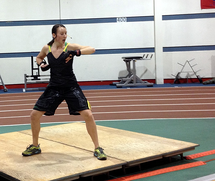 This past Tuesday, January 8,
 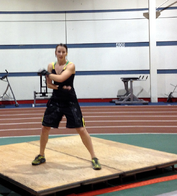 Bodycombat is for everyone at a moderate-intermediate fitness level, and the moves are simple so little coordination is required! When you attend a regular Bodycombat class, you should expect to be led by your instructor through the martial arts moves drawn from various disciplines such as karate, taekwondo, tai chi, and muy thai while moving to the beat of heart pounding music. At the end of the class, you will feel strong, empowered, and slightly invincible.
  People everywhere are always searching for the best, most modern training device that will produce great results in the least amount of time. It is likely that you’ve tried the latest craze, yet you’re still searching for something more. Ironically, you may already own one of the most inexpensive yet effective training devices: the jump rope.
 There is never a better time to start than now. Pick up a jump rope and try this FREE workout.
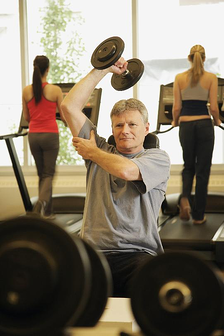 We don’t really know how other management companies do what they do for their clients; corporate fitness services aren’t easy to secret shop. But we are great at what we do – we’ve got the satisfaction survey feedback and
  While many residents aren’t burning the midnight oil to ring in the new year on December 31, that doesn’t mean that the spark of renewal and enthusiasm to embrace a new year is any less for these folks. The new year is a great time for senior living communities to launch or promote their community wellness program.