
Corporate Fitness and Active Aging

Employee Wellness: Healthy Joints, Healthy Body

This blog was written by Anna Hiple. Meet our blogging fitness specialists at the NIFS website.

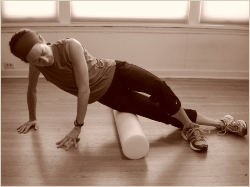
healthy jointsYour joints play an important role in all of life’s activities. They connect bone to bone, which allows your body to move during everything from sports and exercise to everyday functions such as playing with kids, lifting groceries, performing yard work, and even sitting at a desk.

However, factors such as age, injury, diet, and lifestyle can negatively impact the joints over time, leading to stiffness, pain, and possibly even the onset of arthritis. Keep your joints mobile with the following tips:

  • Maintain a healthy weight. Shedding a few pounds can help take the pressure off of lower-body joints, including the knees, which seem to suffer the most from weight gain.
  • Mix up the aerobic exercise routine. Running and playing sports can help build bone density, but too much impact can hurt your joints. Mix in lower-impact exercises such as biking and swimming.
  • Pump iron. Strength training builds up the muscles that support joint health. Mix together upper-body, lower-body, and core exercises.
  • Keep it moving. Sitting for too long invites stiffness. Take stretching or walking breaks at the office, when watching your child’s sporting event, or when watching TV or reading at night. When you do find yourself at your desk, practice good posture.
  • Stretch. Stretch after exercising. You may also find yoga, Pilates, and t'ai chi soothing for sore joints.
  • Eat for joint health. Consume foods rich in calcium, omega-3 fatty acids, and vitamins A, C, D, and K.
Topics: nutrition weight management arthritis pain relief joint health yoga injury stretching

Corporate Wellness: Bail Your Body Out of Sleep Debt

This blog was written by Mara Winters. Meet our blogging fitness specialists at the NIFS website.

tired, headache, sleep debtYou know the feeling. The alarm clock is ringing and you're thinking, “If only I had one more hour to sleep.” Americans tend to lose about an hour of sleep per night (about two full weeks of slumber per year), pushing our bodies into sleep debt.

The side-effects of sleep deprivation are not fun to experience: impaired memory, foggy brain, worsened vision, and impaired driving. Long-term effects of lack of sleep can include obesity, insulin resistance, and heart disease.

Work Out Wisely to Improve Sleep

If you’re like many people, you are looking to get out of sleep debt. Exercise can help you sleep more soundly. Consider the following when exercising:

  • Morning exercise can relieve stress and improve your mood. Coupling exercise with the natural morning light reinforces your body’s sleep-wake cycle, improving your night’s rest.
  • The most beneficial exercise time is mid-afternoon to early evening. Vigorous exercise during this time raises your body temperature a few hours before bed. Then as you get ready for bed, your body temperature is falling, allowing a natural wind-down for the night.
  • Vigorous exercise before bed is not good for sleep. It raises your temperature and stimulates your brain and muscles, making winding down more difficult.

Understand the Importance of Sleep to Your Health

With some practice you can repay your sleep debt. Just like with exercise, the amount of time and intensity you sleep is important. Add an extra hour or two of sleep a night to ensure that you spend more time in deep sleep. Go to bed when you are tired and allow yourself to wake up naturally.

Sleep is vital to restorative health, so bail your body out of sleep debt by being active and catching up on your Zs!

Topics: exercise heart disease sleep worksite wellness stress obesity memory

Senior Wellness: Exer-games Provide Cognitive Benefit

This blog was written by Jenna Pearson. Meet our blogging fitness specialists at the NIFS website.

senior fitnessMost people would agree that regular exercise is part of a healthy lifestyle, but how much of an impact does physical activity really have on one’s health and well-being?

The American College of Sports Medicine (ACSM) has been advocating exercise as medicine since 2008, and when you look at the statistics, the reasoning behind their now-famous Exercise is MedicineTM initiative becomes clear. Studies have shown that regular exercise does the following:

  • Lowers the risk of stroke by 27 percent.
  • Reduces the risk of developing type-2 diabetes by 58 percent.
  • Reduces the incidence of high blood pressure by approximately 50 percent.
  • Can reduce mortality and the risk of recurrent breast cancer by approximately 50 percent.
  • Can lower the risk of colon cancer by over 60 percent.
  • Can reduce the risk of developing Alzheimer’s disease by approximately 40 percent.
  • Can decrease symptoms of depression as effectively as Prozac or behavioral therapy.

Newer research also suggests that certain exercise provides cognitive benefits. Specifically, exer-gaming may delay—or even prevent—dementia, and has been shown to improve cognitive function in normal aging. Such exer-games include CyberCycle by Expresso and Shadowboxer ACTIVE.

Exer-games are also beneficial to physical aspects of health, as they shift one’s attention from the sometimes monotonous mindset of exercise to the task at hand, allowing them to put forth greater effort. Exer-games may also be more enticing for those who are easily bored by traditional exercise, thus helping them to more easily commit to a regular exercise routine.

Topics: motivation senior wellness programs senior fitness cognitive function memory dementia

The Importance of Breakfast for Employee Health

This blog was written by Lisa Larkin. Meet our blogging fitness specialists at the NIFS website.

breakfast, healthy startIt’s okay to eat breakfast food for dinner, but is it okay to eat non-breakfast foods in the morning? I don’t think it matters what you eat, as long as you eat something healthy to get the body and brain ready to start your day. Breakfast is the most skipped meal of the day, but the most important!

Skipping Breakfast Makes You Gain Weight

Eating breakfast helps to control weight gain. Some people skip breakfast thinking it’s going to help them lose weight, but it could cause you to overeat later in the day. It is very important to at least eat some low-fat yogurt and fruit in the morning to get your metabolism started. Breakfast will also help you to concentrate better at work and help with memory.

Make Time for Breakfast

Another reason people skip breakfast is that they don’t have enough time in the morning. It’s better to get out of bed and have five extra minutes to eat breakfast than hitting the snooze button. Make something quick (for example, a piece of wheat toast with peanut butter) you can eat on the way out the door. Or, pack a few things for breakfast the night before to have it ready to go in the morning.

Try to avoid eating such a large dinner that you’re not hungry in the morning. Eating an earlier dinner and avoiding late-night snacks will help to increase your appetite in the mornings, and help to prevent weight gain. We all know preventing weight gain also protects you from heart disease and other health issues. So try it tomorrow morning: Eat a healthy breakfast to start your day!

Topics: employee health nutrition breakfast weight management

Tackling Workplace Fitness at Lunchtime

This blog was written by Anna Hiple. Meet our blogging fitness specialists at the NIFS website.

workout at work, lunchtime yogaDo you find it difficult to make exercise part of your daily routine? You may be surprised at just how easy it is to squeeze in bouts of activity. Lunchtime is one such opportunity. Not only will you torch a few calories, you’ll tackle your afternoon tasks with a clear mind and increased energy levels.

Hit the Corporate Fitness Center

Consider visiting a local or corporate fitness center to complete your own workout or take a class. Just be sure to increase the intensity (think circuit training) to compensate for the fact that you may be performing a shorter workout than normal. Leaving your office for a walk or a run is also an appealing option to many people. Don’t want to do it alone? Organize a walking group! On days like these, it’s probably a good idea to bring your lunch from home to ensure you have enough time to eat.

Exercise in Your Office

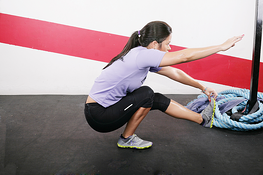
No time to get away from your home or office? Mix bodyweight strength-training exercises such as pushups, squats, lunges, and sit-ups with cardiovascular exercises like marching, jumping jacks, stationary jogging, or jumping rope. Small hand weights or resistance bands can be tucked away in a drawer for a workout at a moment’s notice.

Just Get Moving at Lunch

At the very least, get up and get moving on your lunch break. At work, walk a few flights of stairs or do some laps around the building. If you need to purchase your lunch, skip the company cafeteria and walk to a restaurant (a healthy one!) that’s farther away.

Topics: exercise at work worksite wellness corporate fitness centers exercies at your desk

Olympic Inspiration - Mind and Body Matter

This blog was written by Bethany Garrity. Meet our blogging fitness specialists at the NIFS website.

There’s a good chance on this Monday morning that you have a little bit of an Olympic hangover after opening weekend of the 2012 games in London.  Yes, sports fans, they have arrived!  After all the qualifiers, prelims, and other drama (security debacle anyone?), the torch has been passed and the highly anticipated amateur sporting event has begun.

Did you watch the opening ceremonies?  Was it what you expected?

Our blog is full of articles that talk about ways to stay well, tips for getting in more exercise, ideas for getting the most out of our staff in your corporate fitness center or retirement community fitness center, etc.  And if you're reading regularly, you've probably read the recommendation that adults get 150 minutes of cardiovascular exercise each week.

Did you know that, depending on the sport, many Olympians train anywhere from 3-5 hours per day with typically only one day of rest?  Eighteen to 30 hours per week!  That really puts my struggle to get a 30 minute run into perspective!

I heard a story recently about the history of the games, and, it turns out that the Greeks originally intended the games to focus on more than just body.  They believed that the mind was an important part of the games.  So there used to be (wait for it) poetry competitions as part of the games!  Who knew?!

Why, you ask, is poetry no longer part of this globally loved tradition?  Ironically, globalization of the games made it harder for translation of submitted poems to be effective, and,  according to Olympics organizers, quality was also an issue.  Poetry fell out of the games in the 1948 Olympics. 

We've returned to London for the 30th Olympiad, and I'm on the edge of my seat for what great stories will surface about the amateur athletes around the globe who've come together in London in pursue of the gold.  In the Olympic spirit, I’ve left my own poem below about the games.  (I’m more of an athlete than I am a poet…thank goodness!) Olympic Torch resized 600

Roses are red
Violets…hooray!
It’s time for the Olympics
Go USA!

If you’re moved by the ceremony, the athleticism, the purity of the games, take a stab at your own Olympic-sized poem in the comment section below. If poetry isn't your thing, play our Olympic trivia challenge on our Facebook page.  

Topics: Be inspired senior wellness programs fitness corporate fitness centers Olympics

Corporate Fitness Center Turns 20 Years Old!

This blog was written by Bethany Garrity. Meet our blogging fitness specialists at the NIFS website.

A few weeks ago, I had the distinct pleasure of joining one of our long-time staff members at his corporate client’s fitness center for their 20th anniversary.  In the last 20 years, that location has relocated once, and evolved significantly; the offerings have changed as trends in the fitness industry have changed. 

Step aerobics has been replaced by indoor cycling offerings, and Zumba fills a spot once held by more “old school” group class formats.  They’ve gone through several treadmills, and other types of equipment.  (Though they still have a few original cardio pieces that are kickin’ it!)

Perhaps most importantly, we’re proud to say that the manager of the facility has NOT changed…and his members love him for it.  NIFS knows how important personal relationships are to successful corporate health initiatives, and Scott has helped more than his share of associates make positive lifestyle changes over the last several years. 

SW old  SW new 

The 20th anniversary celebration was marked with fun carnival-type games (great for ANY fitness level!), fun prizes (necessary for any celebration!), and brand new selectorized strength equipment from Cybex.  They've been a great partner for us with great equipment, and solid service.

Corporate Fitness Games Cybex strength

NIFS is proud to be a long standing provider of fitness center management services for this client, and we’re grateful to Scott for his long service to his members.

Topics: exercise at work corporate fitness program exercise corporate fitness Wellness in the Workplace worksite wellness employee wellness corporate fitness centers business fitness solutions

NIFS Nutrition News: Take It Off, Keep It Off!

This blog was written by Angie Scheetz, RD. Meet our blogging fitness specialists at the NIFS website.

NIFS, nutrition, portion controlI love what I do. Seeing people succeed with their weight-loss goals is one of the most rewarding feelings as a dietitian. However, it can also be very challenging when I see clients revert back to old habits and struggle to keep off the weight that they worked so hard to remove.

After checking out some research of highly successful dieters, I have found the best things that can be done to keep off the weight for good:

  • Keep a food journal. Individuals who keep food logs tend to eat 40 percent less because they are writing it down. Also, a recent study found women who kept a food journal lost 6 pounds more than those who didn’t. Some excellent online food tracker sites include My Daily Plate and Choose My Plate. Free apps for your smartphone that are highly rated include My Fitness Pal and Lose It.
  • Practice portion control. As a society we are terrible at eyeballing portions! The secret to success is consistently measuring food items to make sure you are eating the same amount you are journaling. The simplest way to do this is to use measuring utensils to dish out your meals and to associate common items to certain portions. For example, a serving of meat should be the size of a deck of cards, a baked potato should be the size of a computer mouse, a half-cup of pasta is the size of a tennis ball, and a teaspoon of oil is the size of one dice.
  • Don’t skip meals. Lots of people think if they skip a meal they will be decreasing the total calories they are taking in for the day. In reality, the opposite usually happens. When someone skips a meal they typically end up overeating at a different time of day to compensate for missing out on the food that their body needed. Also, whenever you skip a meal it makes your metabolism work at a slower rate and, therefore, makes it harder to lose weight. Eating balanced meals and snacks throughout the day is the best way to stay on track!

The more you follow these rules, the higher chance of success you will have in keeping off the weight. For more information or to set up an individualized nutrition appointment, contact me at ascheetz@nifs.org.

Topics: overweight employees nutrition weight loss weight management NIFS weight control healthy habits

Stay Fit on Weekends Away from the Corporate Fitness Center

This blog was written by Mechelle Meadows. Meet our blogging fitness specialists at the NIFS website.

hiking, active weekendAs corporate health/fitness specialists, we see our clients giving it their all in the gym Monday through Friday. Then, something called the weekend happens.

Generally speaking, most people take a break from exercising in their corporate fitness center on the weekends. While it can be a good idea to devote two days to recovering from a week of hard workouts and busy work schedules, weekends also present several opportunities for unhealthy eating. Talk about a double whammy!

Keep Up Your Exercise Momentum

Remind your corporate wellness clients that while they should rightfully enjoy their weekends, they should also practice moderation, so that when Monday morning rolls around, they don’t feel like their fitness levels are back at square one. For those with weight-loss goals, in particular, the lack of exercise Saturday through Sunday combined with the increase of calories can do enough damage to negate all the calorie burning done Monday through Friday. 

Watch Your Sodium Intake

Aside from the high-fat and high-sugar foods and beverages that are consumed on weekends, this article from the Men's Health blog points out that sodium is also the culprit of weekend weight gain. Pizza, nachos, candy, sodas, and other junk food or restaurant selections often include loads of sodium, causing bloating and water retention that reflects on the scale.

Tips for Staying Fit on the Weekends

Here are tips to keep the weekends guilt-free and the scale happy:

  • Rather than indulge in everything, pick one to three of your favorite “splurge” foods to eat during the weekend (in reasonable portions), while keeping the rest of the diet in check.
  • Use Saturday and Sunday for recreational activities with family members or friends, such as gardening, softball, or hiking.
  • If you do plan on exercising on the weekend, do it first thing on Saturday morning before excuses or other plans ruin good intentions.
Topics: exercise nutrition weight management corporate fitness centers sodium

New Habits, a Lifetime of Results at NIFS's Slim It to Win It

This blog was written by Lori Griffin. Meet our blogging fitness specialists at the NIFS website.

NIFS, Slim it to Win it“Exercise is boring…,” “I don’t have the time…,” or “I don’t know where to start” are words many have used as excuses at some point or another in regard to a fitness routine or lifestyle change. With the emergence of Slim It to Win It in 2011, NIFS sought to squash not one, but all three of those excuses. With the guidance of health and fitness professionals two hours a week, members teamed up to conquer fun, limit-pushing workouts.

After experiencing personal successes the first year, members anxiously awaited the return of Slim It to Win It, and the second run of the program proved to be life-changing once again. Slim It is a chance for people to step outside their comfort zones and into a new way of life. With a total weight loss of 635 pounds and 1.6 percent body fat lost on average, coaches and participants alike celebrated forming new exercise habits and breaking old eating habits.

Slim It Helps Participants Achieve New Fitness Levels

While the empirical evidence demonstrates the physical success, it is the individual stories that explain the true victories. Participants accomplished fitness feats they never thought possible. From kicking their walking pace up to a jog to finally tackling a box jump, participants used the team atmosphere as fuel in their quest to shed some weight.

Nutrition and Healthy Eating Benefits

Not only did Slim It provide stellar exercise sessions, the program also spurred participants toward healthier eating habits. One participant in particular completely shifted his mindset regarding food. Rather than look for convenience at the last minute during lunch breaks, he learned to plan ahead for healthier, more satisfying options. Another member lost 26 pounds in the 10 weeks and attests to a true change in her body composition. “I am wearing jeans I have not worn in months! Not only did the numbers on the scale change, but I can really see a difference in myself.”

The Fun of Working Out as a Group

In addition to encouraging participants to challenge their fitness boundaries and reset their food mentalities, the program also instills a unique camaraderie among team members. Members exchanged numbers and worked out together outside of the team time. Even as the program ends each year, participants still connect to keep up their fitness.

With Slim It, people discover the fun in working out as a group. For example, coaches encouraged participants to log into a calorie-tracking website and when teammates noticed it had been awhile since someone had tracked his or her food intake, teammates made it a point to razz the individual a bit to get back on track. Each year with Slim It, “teammates” quickly turns into strong friendships rooted in a common lifestyle.

A Lifetime of Fitness Results

At the start of Slim It to Win It, 155 people began a 10-week program that took each of them to a new health and fitness level. With the challenging and encouraging group atmosphere, participants conquered their weight-loss goals. Coaches worked to instill new habits so that weight-loss goals were not only achieved, but also maintained. 

One member comments as to why he chose NIFS’s Slim It program two years in a row: “I’ve been able to maintain the weight loss. In the past the weight would reappear.” Combining raw statistics and personal success stories, it is safe to say Slim It to Win It creates a lifetime of results for NIFS members.

Topics: nutrition weight loss weight management motivation NIFS fitness fitness success Fitness Center