Corporate Fitness and Active Aging

Obesity Is Still Prevalent, but Corporate Wellness Can Help

This blog was written by Mara M. Winters. Meet our blogging fitness specialists at the NIFS website.

Hit TV shows about weight loss such as The Biggest Loser and My 600-lb Life continue to excel in ratings, and we are bombarded daily with new information about how excessive weight negatively affects health. However, U.S. obesity prevalence remains high.

Recent studies show that overall obesity prevalence in the U.S. is 35obese employee.7 percent in the adult population and 16.9 percent in children. Over the past two years (2009–2010), there were significant increases in obesity for men of all ethnic backgrounds compared to data from the previous studies (1999–2010). There were no significant increases among women overall, but researchers found statistically significant increases in African-American women and Mexican-American women. Another sobering finding of the studies is that children are going into adulthood weighing more than ever before.

While this report seems a bit grim, there is hope. The Journal of the American Medical Association reports that over the past 12 years, the obesity rates among adults and children are not increasing.

While no one can say exactly why there has been a stall in the obesity rates, most experts are hopeful that national campaigns in promoting healthy eating and exercise are having some type of effect. We know that obesity costs the U.S. $147 billion every year and is a major health problem.

Many corporate wellness centers offer unique ways to curtail obesity, such as the following:

  • Body composition screenings and health assessments
  • Weight-loss contests and incentive programs
  • Group fitness classes
  • Educational telesminars about healthy living

While it seems U.S. weight gain has leveled out, we will still feel the effects for a while. Take advantage of wellness services available to you to reduce problems caused by obesity.

Topics: corporate wellness overweight employees obesity

Senior Fitness: Make a Splash for Your Health

This blog was written by Anna Hiple. Meet our blogging fitness specialists at the NIFS website.

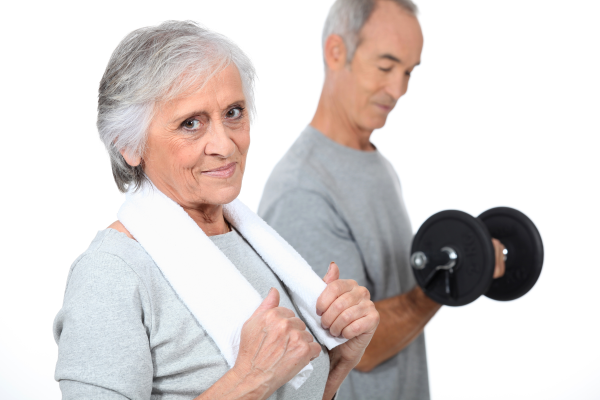
Swimming has long been a heralded exercise due to the fact that it provides a solid cardiovascular workout while remaining gentle on the joints. The water can provide a stable environment, free from harsh elements, that keeps swimmers from overheating during a workout. These features make swimming attractive to older adults, and new research that shows it can lower blood pressure boosts its stock even more.

swimming older adult resized 600The small study, conducted at the University of Texas, found a decrease of almost 10 mm Hg in the systolic blood pressure (the number “on top”) of seniors who had borderline high blood pressure but were not receiving any type of treatment for their condition. As a bonus, researchers also found improved elasticity in the arteries of the participants, which is beneficial for preventing stroke and heart disease. These positive results were exhibited after three to four days per week of various swimming exercises for a total of twelve weeks.

If you’re an older adult seeking a lifestyle change that can help decrease blood pressure or someone simply wanting more variety, consider trying swimming. Or, perhaps you’re looking to get a parent, grandparent, or other loved one involved in an exercise program. Due to swimming's popularity, use of a swimming pool and aquatic programs is offered at many fitness centers associated with senior living communities. Other local fitness centers and community pools may also provide an opportunity to reap the benefits of swimming.

Topics: exercise swimming senior fitness

Walking for Employee Health

This blog was written by Kara Gootee-Robinson. Meet our blogging fitness specialists at the NIFS website.

April is the perfect month to start walking for exercise, or to simply ease back into a workout regimen. It is easy to do and can be done anywhere. All you need is a good pair of tennis shoes.

There are many health benefits associated with walking. It helps to lower LDL levels (“bad cholesterol”), raise HDL levels (“good cholesterol”), lower blood pressure, reduce risk of type-2 diabetes, manage weight, improve mood, and increase overall fitness level.

How to Start a Walking Programwalking shoes

Remember to begin slowly when starting a walking program. Take a few minutes to prepare yourself at the beginning of every walk. Wear comfortable clothing and protective shoes. Begin each walk with a five-minute warm-up at a comfortable pace and then stop to stretch major muscle groups. This will increase your heart rate and help prevent injuries. After each workout, cool down for five minutes at a comfortable pace.

It is important to follow proper technique when walking. Head should be held high, shoulders down and relaxed, arms swinging naturally at side, and feet should be shoulder-width apart.

Setting Exercise Goals

Setting realistic goals will keep you motivated and more focused on the end result. Make a few short-term goals such as “I will walk three times each week.” Also set a long-term goal so you know what you are working toward. An example of a long-term goal is, “I will be able to walk three miles after three months of walking.”

Tracking progress will help keep you motivated. It will also show improvements over time. Record in a notebook the date and how long each walk was.

The most important thing is to have fun! If you enjoy what you are doing, you will continue doing it. Change your walking route often to prevent you from getting bored. Try walking at lunch and invite a few coworkers to join you!

Topics: exercise at work employee health exercise adapting to exercise walking

Corporate Fitness: Kettlebell Exercises

This blog was written by Lisa Larkin. Meet our blogging fitness specialists at the NIFS website.

What are the benefits of incorporating kettlebells into your workouts?

Kettlebells resized 600Kettlebells have a comfortable, easy-to-use handle, which I feel is a little safer if you are swinging them around your head, although others may think because the weight is on the bottom, one slip of your grip could lead to an injury.

Kettlebells allow you to get a greater range of motion, and force you to use more stabilizer muscles. The more muscles you use, the more calories you burn! Performing a lot kettlebell exercises will help to strengthen your core as well. Core muscles play a major role in stabilizing your body.

Kettlebells in the Corporate Fitness Center

Working at a corporate fitness center, we teach a lot of classes and work with a fit population overall. Our participants like to be challenged using the kettlebells. They are good way to mix up workouts instead of always using traditional dumbbells. These fun-looking weighted balls with a handle are also easy to store and don’t take up a lot of room, which is good for group fitness classes.

Best Kettlebell Exercises

A squat kettlebell swing is one of my favorite exercises. This single exercise strengthens the lower body, core, and shoulders, and gets the heart rate up. What’s not to love? I’ve listed a few of my other favorite kettlebell exercises. Try them today!

Topics: muscle toning corporate fitness centers weight training

Corporate Wellness: Is Nighttime Eating a DO or a DON'T?

binge eating, late night snackThis blog was written by Anna Hiple. Meet our blogging fitness specialists at the NIFS website.

Snacking before bedtime has long been a hotly debated subject. Although we’ve learned that weight control is largely dependent on the balance between calorie consumption and calorie expenditure, late-night eating must be done with care. Otherwise it may damage your weight loss or maintenance efforts. Follow these simple tips for nighttime eating.

Nighttime eating is a DON’T if…

  • You eat out of boredom or habit; not because you are hungry.
  • It leads to mindless consumption of excessive calories, especially of foods void of nutritional value such as potato chips, candy, cookies, ice cream, etc.
  • You tend to suffer from nighttime heartburn, indigestion, or acid reflux.
  • You tend to reach for foods that contain caffeine, such as chocolate.
  • You wake up feeling too full in the morning to eat breakfast.

Nighttime eating can be a DO if…

  • Heavy, greasy foods with a high fat content are avoided.
  • It has been several hours since your last meal.
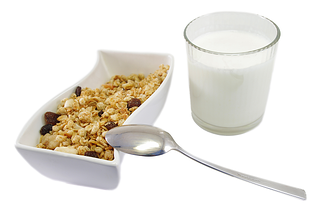
  • The snack is light and nutritious and contains a mix of carbs and protein (examples: whole-grain cereal and milk, a piece of fruit with cottage cheese, low- or non-fat dairy, popcorn, a small turkey sandwich, whole-grain crackers and cheese or hummus, etc.).
Topics: nutrition weight loss weight control

Office Wellness: Using a Stability Ball to Exercise at Your Desk

exercise ball, stability ball as a chairSome of the biggest issues I see in corporate fitness clients with sedentary office jobs are a weak lower back and poor shoulder posture. When we sit in a chair, staring at a computer screen for eight hours of the day, our core tends to get a little soggy. Posture and core strength can easily be improved by simply switching out your swiveling office chair for a stability ball, sometimes called a Swiss ball or physio ball.

Sitting on an unstable ball immediately engages your core and forces you to sit tall and upright. Not only does it instantly improve posture, it also serves as a great tool to have in your office to use for short bouts of exercise. Try replacing your office chair with a stability ball for at least an hour per day. Then, at the end of that hour, try these posture enhancing exercises:

  • Plank: Place your elbows just below the top of the ball. Extend your legs behind you, balancing on your toes and elbows. Keep your body in a straight line from your shoulders to your hips and knees. Hold for 20 seconds.
  • Shoulder I-Y-Ts: Place your stomach on the ball so that your body is at a 45-degree angle with your hands touching the floor in front of you. With your thumbs up and moving only at your shoulders, lift your arms so that your upper arms come right by your ears, forming the letter I with each arm. After 10 repetitions, move your arms out to a 45-degree angle, forming the letter Y. Again, moving only at the shoulders, lift your arms into a Y position. Lower your arms and repeat 10 times. Next, move your arms straight out to 180 degrees, a T position. Lift your arms and squeeze your shoulder blades together. Lower and repeat 10 times.
Topics: exercise at work corporate fitness

Corporate Fitness and March Basketball

This blog was written by Penny Pohlmann, MS. Meet our blogging fitness specialists at the NIFS website.
Many of us have sedentary jobs and get very little physical activity, planned or otherwise. Additionally, it doesn’t help our waistlines that many of us prefer to spend our leisure time stagnant as well. With some planning and creativity, you can get your less-than-active hobbies moving.

Getting a Workout While Watching TV

It’s March, and I lovemarch madness college basketball, so for the next few weekends I could park myself on the couch for hours of entertainment and bliss without moving a muscle. However, I know that long periods of inactivity have dangerous consequences. How can I “squeeze” some activity into my basketball watching marathon?

I get into the action with this “game” I’ve created for myself. When my team makes a three-pointer, I do five push-ups. Free-throws equal five squats each. I stretch during time-outs, and for every 10 points my team scores, I hold the plank for one minute. By the end of the game, regardless of how well my team played, I’ve probably gotten quite a bit of activity.

Cue Yourself to Take Exercise Breaks at Home and Work

If your hobby isn’t already active like hiking or biking, what reminders or cues can you create to remind yourself to take an activity break? Maybe you can take a lap or two around the block at the end of each chapter you read in your novel. Perhaps you can take a break to play with your kids outside when you finish a page in your scrapbook.

This type of activity can also be included in your workday, too. In fact, employees who get more physical activity are more productive at work. A well-rounded corporate wellness program can help you determine how to get your employees more active each day.  

Topics: corporate wellness exercise at work exercise at home productivity staying active

Employee Health: Smaller Is Better

This blog was written by Melissa Cusick. Meet our blogging fitness specialists at the NIFS website.

cell phones, technologyIn the world of technology, time equals improvement and efficiency. Back in the day, we had computers that occupied the space of an entire room and Zack Morris-sized cell phones. Now we have personal computers that fit in the palm of a hand and Zoolander-sized cell phones. It seems that as more is discovered in the world of technology, items have become smaller and more efficient. Interestingly enough, this concept does not seem to apply to people.

In 1995 when the United States began tracking obesity rates, Mississippi had the nation’s highest adult obesity rate at 19.8 percent. Now, 16 years later in 2011, Colorado has the nation’s lowest adult obesity rate at 19.4 percent.

As you can see, what used to be the upper end of the nation’s obesity scale is now at the extreme low end of the spectrum. This is concerning because common conditions associated with obesity include, but are not limited to, high cholesterol and triglycerides, type-2 diabetes, and heart disease, all conditions that can be avoided with proper nutrition and activity.

Nowadays, we have low-calorie options at stores and restaurants, fitness centers popping up on virtually every corner, and educational tools at our fingertips. We can download an app on our tiny cell phones to count calories or find a healthy restaurant or fitness facility. But do we?

Something common to the field of technology and humans is that bigger is not always better. What has changed in our society in the last 16 years that has influenced the adult obesity rate to increase so severely? What can corporate wellness programs do to help reverse this alarming trend?

Topics: corporate wellness obesity technology

Five Steps to Employee Health During National Nutrition Month

This blog was written by Kara Gootee-Robinson. Meet our blogging fitness specialists at the NIFS website.

March is designated as National Nutrition Month and has been making a healthy impact worldwide for nearly 30 years. Eating healthy does not have to be complicated, time consuming, or boring. All it takes is a little thought and a positive attitude. Follow these 5 tips for a healthier you and a happier dinner plate!

Tip 1: Start in the produce section when grocery shopping.

describe the imageFill the cart with many fresh fruits and vegetables. Fresh produce packs a healthy punch with vitamins, minerals, and antioxidants. Focus on color by rainbow shopping. Look for fruits and veggies that are green, yellow, red, purple, orange, and white in color. The more colors you purchase, the better.

Tip 2: Always have healthy snacks on hand.

Keeping a small stash of almonds, dried fruits, whole-wheat crackers, granola bars, or pretzels in your bag or desk drawer will come in handy when a snack attack hits. Although vending machines are convenient, cravings may take control of food choices, leading to an unhealthy purchase. Be prepared and avoid unnecessary calorie consumption.

Tip 3: Enjoy foods from all five food groups.

Consuming a variety of foods from each food group helps to fuel the body. However, it is important to make healthy choices. Choose foods that will be both filling and satisfying without sacrificing too many calories. For example, a peanut butter sandwich on whole-wheat bread will be more filling, supply the body with ample energy, and yield less calories than a piece of chocolate cake.

Tip 4: Be knowledgeable about portion sizes and include variety in each meal.

A serving does not mean whatever makes it on the plate. Follow serving sizes on packages and in recipes to help keep calories in check. Using smaller plates will help keep excess food consumption to a minimum. At every meal, foods from the fruit and vegetable groups should take up half of the plate while the other half should be equally divided by grains and proteins.

Tip 5: Drink plenty of water.

Water is essential to the body. Consuming approximately 64 ounces of water daily helps replenish any fluids lost through functions such as sweating, urinating, and breathing. Water also helps the heart to pump blood efficiently. While other fluids such as 100% fruit juice, sports drinks, and tea assist in replenishing fluids, they also contain calories. For a calorie-free way to reload, fill up with H2O.

Topics: employee health nutrition water

Employee Wellness: A Healthy Makeover for School Lunches

This blog was written by Anna Hiple. Meet our blogging fitness specialists at the NIFS website.

With the recent release of new standards regarding school lunches and theischool lunch resized 600r nutrition content, it won’t be long before the food on your child’s plate will be more colorful, more portion-conscious, and more nutritious than ever before. The changes brought forth by the National School Lunch Program, in connection with the USDA, feature the following in lunches at participating public and not-for-profit private schools as well as various child care institutions:

  • Minimum requirements for veggies and fruits, with more choices and an emphasis on color variety

  • More whole grains and less refined carbohydrates

  • Milk choices of either skim or 1%

  • Calorie ranges for different grade levels that promote portion control

  • Limits on sodium and fat content

To better illustrate the improvements being made as the guidelines were introduced, a “before” and “after” menu was provided for a typical day. Instead of pizza sticks, raisins, a banana, and whole milk, the choices were a chef salad with low-fat dressing and a whole-wheat pretzel, choice of raw carrots or cooked corn, a banana, and chocolate skim milk. The healthier menu is certainly more well-balanced, yet reasonably attractive to a child’s appetite.

Plans are in place for a movement toward healthier breakfast and vending machine options as well. With about 32 million children taking advantage of these school lunches in America today, it’s hopeful that the new guidelines will not only help kids be at their best both mentally and physically, but perhaps put a dent in childhood obesity as healthier food habits are instilled at an early age.

Topics: employee health nutrition employee wellness kids