Corporate Fitness and Active Aging

Misunderstood Carbs Are Not the Enemy of Corporate Wellness

This blog was written by Mechelle Meadows. Meet our blogging fitness specialists at the NIFS website.

carbs, sweetsCarbohydrates, carbs for short, is generally a misunderstood term among your corporate wellness members. When people hear the word “carb,” they instantly think of breads, cookies, chips, or other treats that, in their heads, automatically equate to extra pounds on the body. Many fad diets, such as Atkins, focus on the elimination of this nutrient, so it’s no wonder that the general population thinks of carbs as a five-letter dirty word.

There's More to Carbs Than Breads and Sweets

The first step in educating those in your corporate fitness center is to remind them that the carbohydrate food group is much wider than just breads and sweets. This group includes vegetables, fruits, and plenty of healthy grain options. Our bodies are made to function best when carbohydrates comprise about 55 percent of our diet. When we overload on the two other nutrients—protein and fat—health problems can occur.

Carbs Are an Important Source of Energy

Secondly, carbohydrates are the main source of energy for exercise as well as your body’s daily functions. Carbs support your body’s central nervous system, so it’s easy to see why people on low-carb or no-carb diets can have trouble focusing on daily tasks, may become irritable, or always seem tired.

There's a Difference Between Complex Carbs and Simple Carbs

Lastly, educate members on the difference between complex carbs, which are higher in fiber and carry more nutrients, versus simple carbs like refined or processed foods. Steer away from phrases like “good carbs” and “bad carbs,” because both versions can be incorporated into a healthy diet. Carbs are not the enemy!

Topics: corporate fitness nutrition worksite wellness

Employee Health and Productivity Depend on Breaks

This blog was written by Fitness Staff. Meet our blogging fitness specialists at the NIFS website.

hectic work schedule, busy, employee stressThe e-mails are piling up, the phone is ringing off the hook, papers are stacked around you, and you are the go-to person at the office for all those who need a helping hand. While it may seem most productive for you to stay glued to your desk chair with your eyes fixed on the computer screen, it may actually not be the most productive choice after all. 

Just as your body needs rest after tiring physical activity, your mind needs breaks as well. In fact, your brain will be more likely to perform at an optimal level if it given rest breaks, just like your physical body performs best with adequate rest. Research has actually shown that employees who spend time daydreaming are more creative and better at generating ideas.

So, before responding to those e-mails, answering the phone calls, and being the helping hand for all, step away from the desk! Take a couple minutes to clear your head. Go for a walk, chat with a coworker, or eat lunch outside. Your body and mind will appreciate that rest break, but so will your business!

Topics: corporate wellness employee health productivity

Corporate Wellness Confronts the Costs of Obesity

This blog was written by Penny Pohlmann. Meet our blogging fitness specialists at the NIFS website.

obesity cost, employee healthLarger office furniture, larger company cars, and reinforced toilets are a few of the major costs companies are taking on to accommodate their larger employees. In fact, at a recent trade show for tech and office furniture, one company displayed its bariatric seat, designed to hold up to 600 pounds and at a cost of $1,300! The representative from Ergogenesis, the maker of this specific seat, says there is a “tremendous amount of demand.”

In a research report released by the School of Public Health and Human Services at George Washington University, it is estimated that 50 percent of the population will be obese by 2030. This means the healthcare costs associated with obesity will continue to grow as well. The study also estimated that the current overall annual cost for obese women is $4,879 and $2,646 for obese men. This estimation includes costs associated with medical care, short-term disability, absenteeism, and productivity losses.

With rising healthcare costs in the midst of an economic recession, many companies have chosen to cut benefits. However, they have kept their corporate wellness programs and incentives for employees who practice healthy behaviors.

What can your company do to invest in your employees while they’re healthy rather than when they get sick?

Topics: corporate wellness obesity

Corporate Fitness: What Is VO2max?

This blog was written by Jenna Pearson. Meet our blogging fitness specialists at the NIFS website.

VO2 max, exercise, endurance, intensity, employee healthYour VO2max, or maximal oxygen uptake, is defined as the maximal capacity for oxygen consumption by the body during maximal exertion. It sounds very scientific, and it is!

The More You Exercise, the Easier It Gets

A lot happens inside our bodies when we exercise, and regular aerobic (cardiovascular) exercise is known to illicit adaptations that make prolonged, endurance-type activities easier. If you work out in the corporate fitness center regularly, chances are you’ve experienced these improvements! Adaptations to exercise are due in part to changes that occur in your muscles (i.e., getting stronger) as well as the changes that occur in the systems responsible for fueling you with energy to perform exercise and daily tasks (they become more efficient). Changes also occur largely because of improvements in the cardiovascular system, which not only results in increased circulation to and within the muscles, but is where VO2max comes into play.

What Does VO2max Mean to You?

Many exercise professionals view VO2max as a good indicator of how physically fit a person is, as the more aerobically fit you are, the higher your VO2max will be. A good exercise program is one that is sustainable (you can stick with it) and attainable (effective in helping you reach your goals). If you are following a well-rounded exercise program and are conscious of incorporating physical activity into your daily routine, it is likely you are working to improve not only your fitness, but also your VO2max.

Topics: corporate fitness fitness corporate fitness centers cardio

Employee Health: Planning Ahead for Healthy Meals

This blog was written by Samantha Whiteside. Meet our blogging fitness specialists at the NIFS website.

meal planning, employee health, nutrition, dietFind it nearly impossible to eat a well-balanced breakfast, prepare nutritious dinners, or snack on nutrient-rich foods? You are not alone! Follow these simple tips on how to plan healthy meals and start eating smart.

Step One: Moderation

Don’t attempt to make too many changes at once. Start with switching to whole-grain breads and sides. Then bring in more vegetables and fruit. Next, focus on lean protein. Then switch to low-fat dairy. Focusing on one thing at a time will ensure that this will be a lifestyle change and not just a fad diet.

Step Two: Research

Use the Internet as a tool to find quick and healthy recipes, foods that are low in calories and full of fiber, and alternatives to typical cookout or holiday dishes.

Step Three: Be Prepared

Plan out your meals a week ahead. Take one day a week to write down what all meals will be and stick to it as best you can. Secondly, cut up all fresh vegetables and put them into clear containers as soon as you bring them home. This will make salads and all other meals much faster to assemble. Additionally, always keep canned vegetables such as mushrooms, beans, tomatoes, and beets on hand for casseroles, soups, and homemade sauces.

Step Four: Choose Color and Variety

Ensure that each meal contains at least two different colors of fruits and vegetables. Different colors provide different nutrients and ensure a well-balanced diet. Additionally, try new things. Introduce a new fruit or vegetable or alternative protein every few weeks. Not only does this keep things interesting, but it expands your knowledge of nutrition and aids in a more nutritious food intake.

Sound reasonable? By doing a little research and prep work, adding in variety, and keeping things in moderation, you will achieve healthy meals on a daily basis and have plenty of time to spare.

Topics: nutrition

Corporate Fitness: Should I Exercise When I’m Sick?

This blog was written by Mechelle Meadows. Meet our blogging fitness specialists at the NIFS website.

exercising while sick, cold and fluMost people fall victim to mild colds or other bugs in the course of the year, making them second guess whether or not they can still exercise while being sick. Sometimes, when you are sick, you are not physically able to exercise, so the obvious choice is to stay home and rest. But what if you just have the sniffles or a pesky sore throat?

WebMD says that in most cases, practicing exercise restraint is the safest bet. It is a myth that exercising can sweat out toxins. Your immune system has the sole responsibility of fighting and protecting from illness.

Here are some situations in which to definitely avoid the gym:

  • If you are contagious. First and foremost, if you think there is any chance you could pass on an illness to other participants in your corporate fitness center, please stay home. Gym equipment is a major carrier of germs. Different sicknesses have varying lengths of contagion periods. A person with a very severe stomach virus can be contagious up to a week before he or she experiences symptoms and up to two weeks after recovery.
  • If the type of sickness will worsen with exercise. Respiratory infections can be aggravated by working out, especially by performing high-intensity cardio. Migraines, other headaches, or body aches can also worsen with the movement of exercise. Ask yourself whether there is a chance the exercise session will leave you worse off than before.
  • If your symptoms are below the neck. In one of my Exercise Science courses, we were taught that if symptoms were only above the neck and no fever was present, a person might be fine to continue working out, but at a lighter level. However, symptoms from the neck down, for instance nausea or stomach pain, can worsen with exercise.

When you do resume exercise after being sick, start light and build your way back to the level you were previously at. The good news is that a boosted immune system is a well-known benefit of a regular exercise routine, so encourage your corporate wellness participants to keep moving while they are healthy!


Topics: exercise at work exercise exercise at home

Corporate Fitness: Stop Muscles from “Cramping” Your Style

This blog was written by Anna Hiple. Meet our blogging fitness specialists at the NIFS website.

stretching, muscle crampsWe’ve seen muscle cramps strike athletes on the basketball court, football field, and during running events, and many of us have experienced them first-hand. This sharp, sudden pain can be so fierce that it is temporarily crippling. A cramp may also be physically manifested by a hard lump under the skin.

While muscle cramps generally resolve themselves and don’t cause any lingering damage, their onset can be extremely frustrating, not to mention painful, when they choose to strike in the middle of a crucial game or important workout in the corporate fitness center.

When mild cramps occur, the best treatment of the symptoms is to hydrate, rest, and stretch. But it's even better to stop them before they happen. Let’s look at the most common causes of exercise-related cramps and how to prevent them:

  • Cause: Dehydration
  • Remedy: Stay well hydrated during exercise (even during colder months) by drinking plenty of water. Consume a diet rich in fluids and fresh fruits and vegetables.


  • Cause: Electrolyte Imbalances
  • Remedy: Consume foods containing potassium (avocados, nuts and seeds, beans, dried fruit, bananas, potatoes), calcium (dairy, dark leafy greens; fortified cereals, juices, or grains), and magnesium (bran, nuts or seeds, dairy, fish and seafood, spinach, beans, whole grains). A sports drink may be appropriate, especially for high-intensity exercise lasting longer than an hour.


  • Cause: Environment
  • Remedy: Limit workouts in extreme heat and humidity. Take frequent breaks to hydrate and seek shade.


  • Cause: Fatigue
  • Remedy: Deconditioned individuals should start an exercise program slowly. Consult a doctor, if necessary.


Topics: exercise corporate fitness hydration fitness injury

Snacking Is Good for Employee Health!

This blog was written by Anna Hiple. Meet our blogging fitness specialists at the NIFS website.

Your stomach is growling, you’re having trouble concentrating at work, and you can’t help but count the hours until dinnertime. Sound familiar?

Nix the idea of snacking as a diet disaster and feel free to indulge! As long as it’s not potato chips from the office vending machine or candy in the office, snacking can lead to long-term health benefits and healthy weight maintenance.

healthy snacks, trail mix, snacking at workAim to eat a 150 to 300-calorie snack with a mix of carbs, protein, and healthy fats in between meals. Most likely, this will average out to eating approximately every two to three hours. Consistently fueling your body provides a boost to your metabolism and prevents the overeating that can happen all too easily when you approach a meal with an empty stomach.

Just remember to compensate for the snacks' calories by consuming smaller meals, so that your calorie distribution remains balanced throughout the day.

Healthy snack options are endless; take a look at the handful listed here:

  • Homemade trail mix
  • Yogurt and granola or fruit
  • A handful of nuts
  • Whole-grain crackers and low-fat cheese
  • Vegetables and hummus or guacamole
  • A piece of fruit—with or without cottage cheese
  • Whole-wheat English muffin and peanut butter
  • Popcorn
  • Protein bar
  • Small cup of soup
  • Small turkey sandwich with veggies on whole-wheat bread
  • Small baked potato with salsa
  • Whole-grain cereal with skim milk

What other suggestions do you have for between-meal nibbles?

Topics: employee health nutrition calories weight control

Senior Fitness: Improving Balance Through Training

senior balance, fitness trainingBalance: simple right? I regularly work with a senior population that tells me, “My balance is lost” or “I don’t have balance.” They are under the impression that you either have balance or you don’t.

But your body’s ability to maintain your balance is much more complicated than having it or not. Your body, or your brain, processes multiple sensory and motor inputs to help you stay upright.

The Sensory Systems Involved in Balance

Your brain relies on sensory information from three systems in your body:

  • Vestibular (inner ear): This is a system of channels in your inner ear that allows your brain to know your body’s position, relative to gravity, while your head is moving.
  • Vision: This system works with your vestibular system to keep objects in focus by relaying to the brain the location of external objects in relation to the body.
  • Somatosensory (nerves): This system is used by the brain to know the position of your center of gravity in relation to your base of support.

Your brain uses the information from your sensory systems with your motor system, which works to control the actions of your muscles to detect changes in your body position with respect to your base.

Balance Diminishes with Age

Your balance naturally diminishes as you age because your brain’s ability to receive and integrate sensory information is reduced. This is why it is important to start training your balance before you begin to notice any problems.

If the function of one or more of your sensory systems declines (say you lose your vision or develop a neurological condition that would affect your somatosensory system), your brain will have to rely more heavily on the other properly functioning systems for information.

What Can I Do to Work on My Balance?

Regular exercise (cardiovascular, strength, and flexibility training) is great for areas of your balance. But if you're looking to focus more specifically on balance, the easiest way is by adding or making simple changes to your current exercise program. You can do this by changing your base of support to make it smaller. The smaller or narrower your base is, the more difficult it is to maintain your balance.

Try adding in exercise stances such as these:

  • A narrow stance: Stand with your feet together, side by side.
  • Semi-tandem stance: Stand with your feet together and then take a big step forward with one foot. Your feet should be hip width apart with a step length between them.
  • Tandem stance: Stand with your feet together and then place one foot in front of the other so you are standing heel to toe.

Other ways to manipulate your base of support include using a BOSU stability trainer, standing on a foam pad or wobble board, or using an exercise ball. These will provide an unstable surface for your base of support, making it even harder. You can also add exercises to the balance stances listed above to challenge your sensory inputs by turning your head side to side or looking up and down, closing your eyes, or reaching with one or both arms.

Balance isn’t just one thing; your brain is constantly working to process all kinds of information to keep you on your feet. But just like any other type of exercise, with some practice you can certainly do a lot to improve your balance.

Topics: senior wellness programs balance senior fitness balance training

Take Your Workout Outside the Corporate Fitness Center

This blog was written by Lori Griffin. Meet our blogging fitness specialists at the NIFS website.

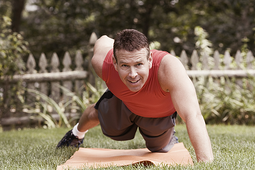
pushups, exercise at home, exercise while travelingWith the start of a new year, work schedules can begin to take over. Try as we might to make a permanent slot in our schedules for gym time, appointments and assignments seem to pop up at the most inconvenient times. Often times people tend to believe that just because they don’t have a whole hour to spend at the gym, there is no use in working out at all.

However, that is very far from true. Even if there aren’t enough minutes in the day to make the trek to the gym, don’t forget about the power of your body weight. There are countless exercises that involve no equipment and are quick ways to fit your workout in anywhere.

When thinking of a circuit away from the gym, think in large movements. Try to involve as many muscle groups as possible and incorporate total body movements to maximize your caloric burn.

Next time you find yourself deleting gym time from your calendar, try this circuit of exercises to stay fit. This is also a great workout to take with you when traveling, whether for work or for pleasure.

  • 10 push-ups
  • 20 high knees
  • 30 squats
  • 20 jumping jacks
  • 10 lunges
  • 30-second plank

Repeat this circuit three to five times. Whenever you're short on time, you can use this workout to keep active without having to take time out to hit the gym or corporate fitness center.

Topics: exercise corporate fitness exercise at home