
What Is Biomechanics?
In the health and fitness world, biomechanics is a subdiscipline of kinesiology. Kinesiology is the broader study of movement, incorporating topics like anatomy, physiology, motor learning, and exercise science. Biomechanics narrows the focus to examine the structure and movement within the musculoskeletal system, mostly focused on mechanical forces acting on the body.
These mechanical principles come from physics and engineering and help us understand how internal forces like bones, joints, and muscles produce motion. External forces like gravity can also show how they impact the body during movement. Having this knowledge plays a key role in improving performance, injury prevention, and designing sport-specific equipment and training strategies.
Core Principles of Biomechanics
Biomechanics core principles involve kinematics and kinetics. Kinematics is about describing motion, or how things move, without considering the acting forces. Kinetics is about the forces that create motion, or why things move, and includes internal and external forces. Key components of this include understanding motion, force, leverage, and balance. The body functions as a system of levers, and understanding how these systems work together allows for more efficient and safer movement patterns.
Applications of Biomechanics
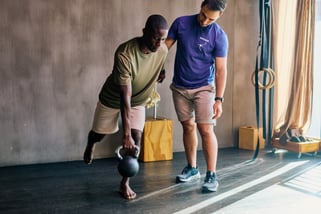 Biomechanics applies basic principles of physics toward key areas like improving human performance, reducing risk of injury, and designing specific exercise equipment. These insights can help increase speed, efficiency, and power, all great for improving technique.
Biomechanics and Injury Prevention
Biomechanics plays a major role in injury prevention by identifying improper movement patterns like poor lifting or running form. Addressing these issues can reduce excessive joint stress and overuse injuries. Applying biomechanical principles is also important in rehabilitation to help guide exercise selection, progression, and determine when an individual can return safely to activity.
When it comes to creating exercise gear and equipment for sport performance, biomechanics can play an important role. It can help with engineering designs such as making running shoes for certain gaits, prosthetics for replacing missing body parts, and wearable gear that can provide real-time data.
Improving Biomechanics
Improving biomechanics requires intentional work on movement quality, not just strength or endurance. Key strategies involve getting a biomechanical assessment, focusing strength training with quality form, and improving mobility and flexibility. Biomechanical assessments involve having a professional screen movement patterns to identify any imbalances. Weight training with proper form involves reviewing movements during lifts to identify posture issues or inadequate movement patterns. Building strength in smaller stabilizer muscles can help support the joints and aid in proper alignment. Improving mobility and flexibility can also benefit biomechanics by increasing range of motion and improving overall technique.
By bringing the worlds of biological science and engineering principles together, biomechanics allows us to examine all forces acting on the body. This understanding allows practitioners and individuals alike to prevent injuries, improve movement efficiency, and support effective rehabilitation.
By applying biomechanical principles, the general population can move more safely, perform more efficiently, and function better in everyday tasks. Ultimately, biomechanics serves as a foundation to help individuals of all abilities move with more confidence, control, and purpose.