
 Lasalle Pinnock joined the corporate wellness center in July when his department moved. Almost immediately he scheduled an exercise prescription with the NIFS Fitness Management staff and has been following that exercise program ever since. He started with a few days of strength training and cardiovascular exercise. After about a month he came to the staff looking to add one more day of activity to his routine. Each week he updates us on his progress not only with weight lost but how he is improving in stamina and strength. Because of his dedication to exercise he has also been motivated to make healthier choices when it comes to his diet and started sharing the things he’s learned with his wife.
LaSalle’s success has come from his commitment to making healthier choices and his consistency with exercise read his journey toward a healthier lifestyle below:
I started working in the Wellness Center when my department moved from the Galleria location because I felt I had no excuse. The gym is right here at work, what more can I ask for? This was the best time and opportunity for me to really focus and make changes in my life. My beautiful wife and kids are who keep me motivated to work out and eat healthily. Having two young daughters, I told myself I want to be alive to see both of them go to college and get married. I knew I had to make changes and they are what keep me going.
Since starting in the gym and using Penny’s workout routines I have lost a little over 10 pounds in just under month. I have also changed my eating and drinking habits greatly. I was a huge Coca-Cola® drinker and used to drink Cokes daily. I now only drink water throughout the day. I will have the occasional Coke® or Coke Zero® on the weekend. I have cut out  fast food, fried, and greasy foods. If I’m unable to eat a healthy meal I make sure I eat a smaller portion. Instead of getting sodas or chips from the vending machine I grab trail mix or eat some type of fruit. I have noticed since working out I have so much more stamina, energy, and I am less tired during the day. I can really feel and see the difference in my mood and body. Mentally I feel more focused and less stressed, I just feel great. Right now my goal is to stay focused and to keep moving forward. I want to reach my target weight and inspire others.
My advice for others is this, It’s hard and it’s going to take some time but don’t let that stop you because it’s worth it. One of the best quotes I’ve read and that keeps me going is, “Some quit due to slow progress. Never grasping the fact that…slow progress is progress”.
*Weight loss claims or i

 A plyometric exercise is one that includes a stretch of the muscle, followed by an explosive movement, working the power aspect of the muscle. For example, in a jump squat, you will bend the knees and lower down towards the ground, stretching the quads and glutes, then jump straight up into the air in an explosive movement, landing back into the deep squat.
 When I first began working at a CCRC a year ago I learned that Zumba® classes were being taught. I was very intrigued and actually sat in on the class within the first couple days of being here. Prior to attending the class, I kept thinking to myself that this was a pretty intense class to be taught to seniors. After attending the class I was pleasantly surprised as to how enjoyable the class is for the participants. The type of class that was being taught is actually called Zumba Gold® and was specifically designed for active seniors as well as those participants who may not be ready for full on Zumba®. Zumba Gold® still uses the same concept of original Zumba® by incorporating exciting Latin and international dance rhythms. Some of these dances include Merengue, Salsa, Cha Cha, Cumbia, and Belly Dancing. You are guaranteed to get a full body workout but the exercises are modified for success and safety. A lot of the moves may even be done at 1/2 tempo so that everyone is able to follow. The most interesting thing that I observed was that many of the participants were seated during the Zumba Gold® class. This makes the class available to everyone, including those who may be in wheelchairs or are unable to stand for long periods of time.
 Looking for new things to do with your spouse/partner, teenage child, best friend, or even co-worker? A partner band workout is a great way to get some physical activity, work on team building skills, and have fun all in one! Partner band exercises require muscle control from both parties, so you have to pay close attention to the speed and location of your partner. This workout can be done anywhere; hotel room, on the beach, at home, in your office or conference room, in the garage/driveway, etc. All you need is a band to fit your
 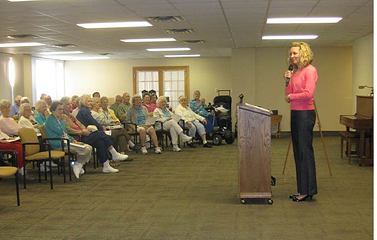 Recruiting residents to participate in your community fitness offerings can be a challenge. Most communities offer a variety of standard services, classes, and programs to try to regularly engage their residents. Whether you are wanting to recruit new residents or spark some enthusiasm for your regulars, read on to learn about three nontraditional programming ideas that can help boost participation in your community fitness offerings.
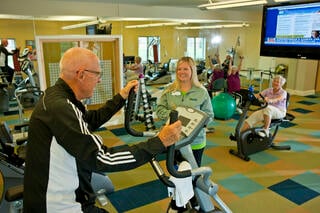 You're senior living community is missing out on some important benefits if you don't have detailed data from your fitness program. Read on to find out what you stand to gain by getting smarter about gathering and using data from resident participation in the fitness center and group exercise classes as well as evaluating resident participation in fitness center appointments and services.
 Are you sad that summer is coming to an end or getting bored with your workouts and just need a change? Taking advantage of the warmer weather is a good way to challenge your body and try different exercises outdoors before it’s too late and the cold winter months keep us all inside. I bet you pass several landmarks and unique open areas every day on your way to & from work that could be used for your next workout. Do me a favor and get creative the next time you are on your way to work or school and find a public place you can run stairs and a bench you can do lunges and tricep dips on.
 The heat index is approaching 100 degrees, and its only 8am. You are sick to death of running on the treadmill at the gym and want another option to burn some calories and improve your cardiovascular endurance. Well, my friend, have you considered the pool? You don’t have to be a swimmer, have fancy equipment, or even be coordinated to get a great workout in the pool.
 Did you know that you can exercise your abs every single day of the week? Normally with strength training, you should wait 48 hours before lifting with those same muscles again—however, since the abdominal muscles are made for endurance by performing jobs like supporting posture and breathing, they can be worked all 7 days of the week! If you are particularly sore after an ab workout, still use your best judgment, and delay working them until the soreness is gone.
 Whether we like it or not, we have an epidemic on our hands. Whether you are overweight, obese or not, classifying obesity as a disease will affect you, if it hasn’t already. Changes are in order. Simply classifying obesity as a disease does not make the necessary changes automatically occur and I’ve already expressed my concern with the direction I think this could go.