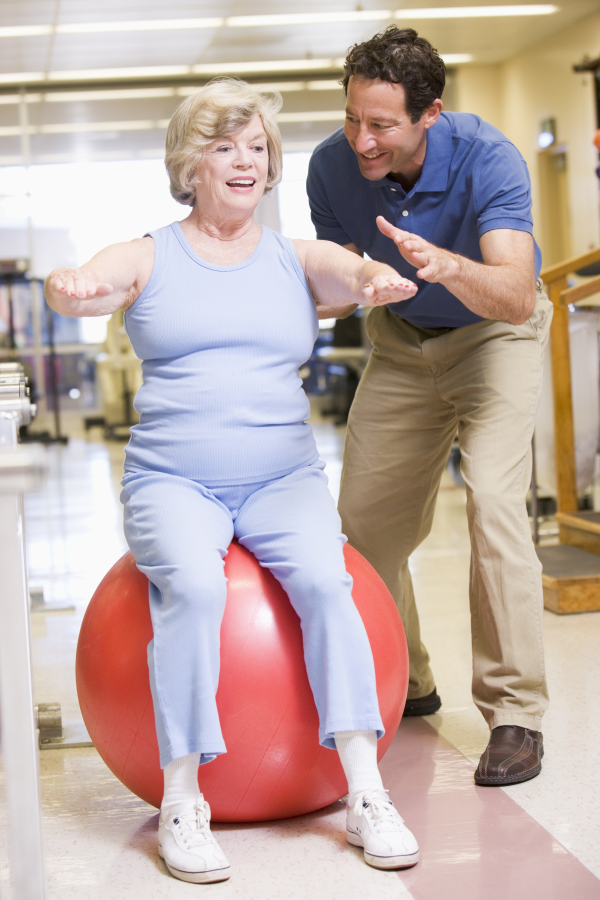
Corporate Fitness and Active Aging

Free Workout Friday: Upper and Lower Body Combo Exercises

Free Workout FridayOnce you have learned basic strength moves separately and have mastered the form for each, consider trying a workout where you combine both a lower and upper body strength exercise into one. Combo exercises have many benefits, such as burning more calories and increasing your physical and mental coordination. They also allow you to pack more into a certain amount of time, making your workout thorough and efficient. On busy days, this can be a good way to squeeze your normal 40 minute workout into 20!

There are many ways you can combine separate, basic strength moves into a combo exercise: upper body paired with lower body, lower body plus core, two arm exercises combined, etc. Even combinations of more than two are possible, for example a squat with a bicep curl into a shoulder press. Get creative, as long as you are using proper form for all exercises. Here are five upper body/lower body combos to try today:

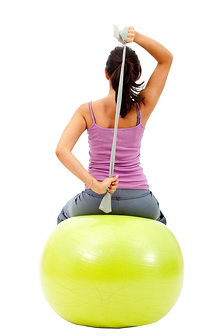
1. Squat w/ tree-hugger - placing a band behind your back (or ancor if possible), sit back into a squat while bringing your extended arms out in front of you as if you were hugging a tree.

2. Deadlift w/ upright row - maintain a straight back while performing the deadlift, as you return to standing position, perform an upright row leading with your elbows.

3. Step-up w/ bicep curl - stepping up onto a box or bench while performing a bicep curl, maintain proper form keeping knee in line with the ankle.

4. Backwards lunge w/ front raise - as you step back into a lunge simultaneously perform a front shoulder raise with manageable weight, strive to maintain proper form.

5. Shoulder press w/ leg extension - can be performed sitting or standing, if standing you will balance on one leg lifting the opposite knee. You will perform a shoulder press while simultaneously extending the lifted leg at the knee and lowering.

Take a 10 minute break today and work through these exercises for worksite wellness.  Be sure to complete exercises on both sides where applicable.

Like what you just read? Click here to subscribe to the blog.


Topics: employee health healthy workforce exercise corporate fitness employee wellness Free Workout Friday fitness corporate fitness centers Fitness Center exercies at your desk

How to Develop Successful Group Fitness Classes in Senior Living

active aging group fitnessJust as it is important to establish appropriate hiring criteria for Group Fitness Instructors (GFIs) at Continuing Care Retirement Communities (CCRCs), its equally important to routinely evaluate the performance of GFIs and the group fitness offerings to residents.

The challenge to this evaluation is to establish the community personnel qualified to complete these evaluations. If your community has a qualified fitness professional, it’s a no-brainer that this individual can ensure that GFIs have the appropriate qualifications and can regularly evaluate their instruction. If your community does not have a qualified fitness professional, it can be a challenge to find the right personnel to fill this role. In either case, steps should be taken to ensure the safety of participating residents.

Evaluating the Senior Fitness Instructor

Evaluating an instructor can be accomplished in a variety of ways. Simply observing the class and taking notes on the questions in the following list can be a decent starting point, although a traditional graded model rating the instructor’s performance is ideal. Rating his or her performance is a real challenge for a layperson who doesn’t know what to look for. Even these questions might be too much of a stretch. This may lend significant weight to a community’s decision to hire a qualified fitness professional to oversee its fitness center and group exercise program. If community personnel can’t observe the following qualities in an existing instructor, how can they feel qualified to hire a new GFI? This may be placing your community personnel in a difficult position and not holding your community’s fitness offerings to a high enough standard.

  1. Are they providing a proper warm-up and cool-down for participants?
  2. Are they providing modifications to exercises to better challenge residents who are more advanced or to provide a safe exercise for residents who need an option at a lesser intensity?
  3. Are residents able to follow the cueing the instructor provides? Is the instructor providing additional cueing for residents to correct their form throughout the class?
  4. Is the instructor receptive to the needs of the class (for example, when it’s time to take a break, transition to seated exercises, get a drink of water, etc.)?
  5. Do the participants appear engaged and challenged by what they are doing, or do they need additional stimulation in the class?

Evaluating the Group Fitness Class Offerings

While it’s important to make sure the instructors are meeting resident needs, it’s also important to regularly evaluate the class formats and schedule for your group fitness program. Classes often evolve as participants progress and provide their feedback to instructors on their likes and dislikes. This gradual evolution may result in a completely different type of class from what it was at its inception. Review your current schedule at least once a year and consider the following:

  1. Are there class options for residents of all ability levels spanning from the lower-functioning participants to residents who may need a challenge from a higher-intensity class? (As existing classes evolve and residents progress, make sure that a moderate-level class that welcomes beginners actually hasn’t become too advanced.)
  2. Is there structure provided to the way classes are scheduled? For example, strength and conditioning classes should not be held on back-to-back days, and folding all of the group fitness offerings into a Tuesday-Thursday or Monday-Wednesday-Friday schedule will not promote maximum resident engagement.
  3. Do you have cardio, strength training, balance training, flexibility training, and spiritual elements within your class schedule?

Using these questions as a starting point will help you evaluate your group fitness instructors and programs to ensure that they are offering the best experience to your residents.

Quick Tip to Strengthen Your Community Exercise Program


Topics: group exercise senior fitness management CCRC fitness center senior fitness

Balance Programs: Are You Meeting Your Residents’ Needs?

Many communities offer balance training to their residents simply as a component of a group fitness class on the activities schedule. I’m here to tell you that is not enough! Residents need an opportunity for group classes solely dedicated to balance training, as well as balance assessments, equipment, and workouts in their community fitness centers.

Comprehensive balance training programming is often an early success when NIFS begins staffing a fitness center at retirement communities. We’ve been able to engage many residents in the fitness program who previously wouldn’t buy into other modes of physical activity, but they are chomping at the bit to participate in balance training opportunities that can decrease their risk of falls and improve their confidence. Doing so is sometimes a “gateway activity” to help residents recognize their abilities. After building that initial confidence, they experiment with a NuStep or a chair aerobics class. We’ve all got to start somewhere!

NIFS’ Balance Challenge ProgramNIFS Balance Challenge

To promote existing balance training programs at our CCRCs, NIFS will hold its inaugural Balance Challenge in March. The Balance Challenge program encompasses different elements of our regularly offered balance training programs and services as well as a few new opportunities for residents. Participants will track their activity on a scorecard and will be required to participate in group classes, educational lectures, assessments, fitness center workouts, obstacle courses, and much more to complete the Challenge. The program is designed with activity options for residents of varying ability levels so it can be marketed to someone new to the fitness program looking to get into a routine, or for seasoned participants to further hone their skills.

All participants in the Challenge will complete a Fullerton Advanced Balance Scale test as well as a pre- and post-program survey in which they will rate their current balance skills and confidence levels. In future programs, we hope to see that our participants are maintaining or improving their balance abilities as well as their confidence levels through engaging in not only the month-long Challenge, but also throughout the year in regularly scheduled programs. (Consider the marketing advantages for a community with data of this nature to back up the effectiveness of your balance programs!)

Things to Consider When Starting a CCRC Balance Program

Here are a few key considerations when launching a comprehensive balance program for your residents:

  • Who is qualified to lead these types of classes and services for your residents?
  • How will you track the impact the program is having on your residents’ functional abilities and how will you utilize that information?
  • How can you utilize resident volunteers to act as your balance champions to demonstrate exercises, provide testimonials, etc., on the effectiveness of the program? (Residents seeing their peers demonstrate exercises may help them get over any fears of participating.)
  • How can you partner with your community therapy department in balance program offerings?

Whether your community already has a variety of balance training opportunities, or you are looking to launch some new initiatives, consider how a comprehensive program can help spark enthusiasm in your residents!

Senior Fitness, teaching balance
Topics: senior wellness programs senior fitness management balance senior fitness balance training

NIFS: Core Power, Coca-Cola invests in a Healthy Protein Shake

core powerA Coca-Cola protein shake? Seriously? You’re telling me the manufacturer of a soft drink (that can clean the gunk off a car battery, mind you) has invested in something that’s actually beneficial for me to drink? Never did I think I would see something like this.

For those who have absolutely no idea what I’m talking about, the Coca-Cola Company has partnered with Fair Oaks Farm Brands to assist in the branding and distribution of a protein shake called Core Power. No, it is not Coca-Cola flavored. It’s vanilla, chocolate, or strawberry, and so on, just like the other protein shakes out there (and honey-flavored, which I found interesting). I personally tried the vanilla flavor. One word: delicious! And why wouldn’t it be? Coke’s primary objective is to make its products taste good. Well, they have succeeded once again in supporting this new drink.

But let’s get down to the nitty-gritty here: it's the nutritional information that really counts. Generally speaking, Core Power is not too far off the mark. However, these five things stuck out to me as a wellness professional when learning about this drink:

  • Taste: We already know…delicious.
  • Protein: It’s a protein drink. Of course this tops the list of things to look at. Compared to the protein shake I normally drink (which shall remain under anonymity), it has only about half as much protein. We’re not off to a good start.
  • Sugar: Protein shakes are not always known to have the best taste, so a little sugar to sweeten things up isn’t the end of the world if it’s going to help you drink it consistently. However, Core Power has a huge serving of sugar. In one 11.5-ounce bottle, there are 26 grams of sugar, compared to the 2 to 3 grams I get with my normal shake.
  • Carbohydrates: Although it’s not as bad as the sugar, the carb count is much higher in this shake than in comparable serving sizes of other brands.
  • Protein: I know, I already mentioned protein, but this is a different topic concerning protein. I’m not denying the fact that there are 26 grams of protein per serving. However, I wanted to point out that I don’t think it’s necessarily “good” protein. Under the ingredients, I don’t see the words “whey” or “casein” anywhere. These can often be signs of a quality protein shake. Not that the protein included in Core Power is negative, it’s just not quite as beneficial as other types.

In conclusion, I unfortunately will have to give Core Power a sad thumbs-down. It just tastes so good, though. It’s like an ice cream shake (see my comments on the sugar above). Perhaps it could be a good “gateway” protein for those new protein users out there. It will get them started on protein consumption, but then they can lean toward using the more beneficial versions once they get their routine down. Sometimes you gotta do whatever works.

Subscribe to our blog

Topics: nutrition sports drinks sugar healthy habits

Free Workout Friday: Strong, Pain Free Lower Back

Free Workout FridayThe lower back can be a problematic area for many people. It is a common area for tension, tightness, discomfort and even chronic pain. Those who sit for long periods of time at a desk or in a car can be especially prone to lower back problems.

A fact that many people don’t know, is that the hamstrings (muscles of the back thigh) are so closely connected to the lower back, that often tight hamstrings are the actual cause of back problems.

The best bet to preventing or alleviating low back discomfort is to both strengthen and stretch the muscles of the low back and hamstrings. When you strengthen muscles, you maintain increased range of motion and capacity for load bearing. Then, when you stretch muscles, you physically lengthen the muscles, fending off chronic tension and tightness.

Here are 4 exercises to strengthen these muscles, and then 4 to stretch them, see video below for exercise demonstrations:

Strength:

1. Single leg deadlift

2. Single leg bridge

3. Superman

4. Bird Dog

Stretch:

1. Forward fold

2. Child’s pose

3. Seated hamstring stretch

4. Lying down “figure 4” stretch


3 Must-Haves in Group Fitness Instructors for CCRCs

considerations for hiring group fitness instructorsMany Continuing Care Retirement Communities (CCRCs) offer a variety of group fitness classes to their residents. The community personnel who hire the group fitness instructors (GFIs) may benefit from a few pointers on hiring standards beyond someone’s personality alone. Don’t get me wrong, the right personality and ability to build relationships with residents is crucial for making a class successful. However, a narrow focus on personality alone may not provide your residents with the maximum benefits of participating in the activity and could create a dangerous environment.

Certifications and Insurance

To protect participants in group exercise classes (whether in commercial gym, church, school, or CCRC settings), fitness industry standards require that GFIs maintain current instruction certifications and CPR/AED certifications. Contracted GFIs should also carry proof of personal liability insurance. Well-qualified GFIs are aware of these standards and likely would not be in the practice of instructing without maintaining those certifications. For community personnel hiring these individuals, that may be your first sign. If someone applies for the position and cannot provide proof of current certifications and liability insurance, they likely aren’t the best fit for meeting the fitness program standards for your community.

Furthermore, communities should make sure that they are maintaining current copies of certifications from their existing GFI staff. If you find that existing instructors do not have current certifications, it’s likely time to establish a timeline within which your GFIs can obtain a certification to continue with their instruction.

Experience in Senior Fitness

It’s also important to make sure that GFIs have experience teaching an older-adult population. When looking for an instructor, you might contact local senior centers, churches, or YMCAs and share information about your opening and provide the requirements and qualifications you are looking for in a GFI. This may provide you with a better candidate pool than having to sift through GFIs who teach boot camp, kettlebell, or kickboxing-type classes.

Personality

Looking at certifications and experience instructing older adults is the best starting point when looking for a GFI. However, as previously mentioned, the personality of the GFI is also critical for the overall enjoyment of the participants. When replacing an instructor or recruiting an instructor for a new class format, you might consider surveying your residents on their desired qualities in an instructor and in a class.

For example, if you are searching for a yoga instructor, residents may have feedback on enjoying the relaxation benefits of the class. This could allow you to question candidates on elements of relaxation they build into their class. While you may not have the expertise to recognize the specific details on the relaxation elements they are discussing, you should be able to gather feedback on their style of instruction: Is it soothing, focusing on breathing and guided imagery and providing a sense of calming for participants? Or does the instructor focus on deep stretching or strengthening throughout the class?

Establishing standards for GFIs in your group fitness program can benefit more than just your residents. Sharing these standards with prospective residents can be a great marketing tool to promote the dedication and focus your community places on its wellness programming.  

 Watch Resident Testimonials

Topics: group exercise senior fitness management CCRC fitness center senior fitness yoga

Free Workout Friday: Strengthen Your Muscles with Yoga

Free Workout FridayAfter a long week you may just need to relax, de-stress and put your mind at ease.  Yoga not only can help you relax with deep breathing, but can help to relax while working your muscles.  One of the many benefits of yoga is increased total body strength. When you hold certain poses for extended periods of time, you are building your muscular endurance while also working on flexibility and breathing.   There are many varieties of yoga and whether you are a novice or have been doing it for years, the following five poses can help you to build strength.  You don't have to stress about this Friday workout, simply do it during your lunch break.

Try these 5 poses for a strength-building yoga session this Friday!  It is important to properly warm up before stretching the muscles with these poses, simply walk for 5 minutes, do some toe taps and step side to side to get the blood pumping!

Hold each pose for five to ten deep breaths.  If you are able, try to inhale and exhale through the nose, lengthening your muscles with each breath.   For more poses and descriptions click here.

1. Warrior I

2. Chair Pose

3. Plank and side plank

4. Boat pose

5. Bridge

Enjoy our Free Workout Friday blog every Friday by subscribing to our blog!

Like what you just read? Click here to subscribe to the blog.

How to Establish a Balance Training Regimen

balance trainingThe number-one challenge that the aging population faces is balance because the number-one concern is falling!

In order to maintain balance, you must balance your day to include balance exercises! A wise person once said, “Practicing balance doesn’t make perfect; practicing balance makes permanent!” Therefore, include specific balance exercise daily, incorporate them into your exercise routine, provide a variety of balance exercises, and do different ones daily to challenge your stability.

Start with the three goals of achieving better balance:

Goal 1: Establish a Routine.

What’s the first thing you do when you get up in the morning? You usually head to the bathroom, take a shower, brush your teeth, and so on. It’s a consistent routine. So is practicing balance! Find the time, whether it 's before or after exercising, after breakfast, or before bed. Schedule in a few balance exercises and make it part of your routine.

Goal 2: Think Before You Start.

Remember, all the exercises in the world will not do any good if you don’t follow these simple safety rules:

  • Wear proper shoes. Your ankles and feet need good support. No sandals or fancy shoes!
  • Utilize your strong muscles. Strengthen the muscles that support the body (especially the lower legs and ankles). So make sure your exercise routine includes strengthening these areas.
  • A mirror is helpful. Look at yourself when you attempt to balance, check your posture, and note what your limitations (such as knee replacements or back issues) permit.
  • Stand on good flooring. Do your exercises on stable and level ground. If one side is higher or more unsteady than the other, you will be the same.
  • Use stable support. Make sure that there is a stable chair or counter available. As you practice, you will need an occasional support when you feel unsteady. The main goal is to prevent falling.
  • Avoid fast movements and position changes. Slow down! Learn to turn and react with deliberate patience. Incorrect weight shifting is the number-one cause of falls. So when you go to move or turn, remember to be as cautious as possible. What’s the real hurry? Let your body catch up with your mind’s intent.

Goal 3: Practice Being Unsteady to Become Steadier.

Sounds silly, doesn’t it? Practicing exercises that force the body to feel unsteady actually helps the body become steadier. That being said, you should also continue to challenge the body. For example, if you’re capable of supporting yourself by raising both arms out and holding them for 10 seconds, next you can incorporate holding on with one hand and lifting one leg out to challenge yourself. Eventually and over time you can regain better balance.

Like what you just read? Click here to subscribe to the blog.

Topics: exercise exercise at home balance senior fitness fall prevention balance training

Corporate Fitness: FREE Workout Friday

free workout fridayIf you’ve spent time in a gym, you know “that guy,” the one who doesn’t work his lower body and just focuses on upper body. Lower-body strength training is just as important as upper-body. The largest muscles are located in the lower body. Working larger muscles tends to get your heart rate up higher and burns more calories. More important, the muscles in the lower body are used for everyday movements and help with balance and coordination.

Regular lower-body strength training helps to increase bone density and strength. Strengthening the lower-body muscles around the joints also helps to strengthen the joints, decreasing the risk of injury in the hips and knees. The lower body is the powerhouse for most sports and activities, so try this workout for maximum results!

Eventually work your way up to going through this workout twice. (See the video link for specific instructions on form.) All you should need for this workout is a set of dumbbells and a step/bench/chair. I love lower-body workouts, so join me for this one and let me know what you think.

  • Side/lateral lunges (12 to 15 reps each side)
  • 45 seconds skater lunges
  • Repeat
  • Squat―alternating knee crunches (1 minute)
  • 30 seconds squat hops
  • Calf raises―toes straight, in and out (15 reps each direction)
  • 30 seconds calf jumps (stay on toes)
  • Straight leg deadlifts―form is very important! (15 reps)
  • Single-leg squats (15 reps each leg)
  • Single-leg squat hops
  • Right leg lunges (10 reps), lunge hold (20 seconds), lunge pulses (20 seconds)
  • Left leg lunges (10 reps), lunge hold (20 seconds), lunge pulses (20 seconds)
  • Squat hold (30 seconds) staying in a squat―hop feet out and in (30 seconds)
  • Lunges with back foot elevated on step/bench (12 reps each leg)

You can also refer to the demonstration video for details on which exercises are to be used with weights. Toward the end of the workout, if your legs get too fatigued, just set the weights down and do the lunges/squats with no weight. Don’t forget to stretch at the end of all workouts!

Topics: corporate fitness Free Workout Friday balance joint health strength training bone density

How to Improve Balance with Weight Shifting Exercises


The number-one challenge that the aging population faces is balance because the number-one concern is falling. The question has always been, “What causes these falls and how can we continue to prevent them”? The answer from a recent study is outstanding (no pun intended!).

Study Shows What Causes Senior Falls

An observational study determined how and why falls occur in the aging population by actually videotaping falls in two long-term-care facilities between 2007 and 2010. These video cameras were placed in the common areas such as the dining rooms, hallways, and lounges. When a fall occurred it was reviewed with a focus on the actual cause of imbalance and the activity at the time of falling. The study captured 227 falls from 130 individuals. The result of the study concluded that the number-one cause of falls (41 percent) was incorrect weight shifting: basically, how one moves or transfers from one position to another.

The study identified that the majority of falls occurred during standing and transferring, how we go from the position of standing still to starting to move. Staying balanced doesn’t involve only maintaining it when we are in motion, but the study has proven that how we begin that motion can be much more crucial to staying in balance.

Weight-Shifting Exercises for Senior Fitness and Balance

Therefore, in order to improve balance and prevent falls, it is crucial that a balance program incorporate weight-shifting exercises to help teach seniors about their center of gravity. Weight-shifting exercise can also improve coordination, strengthen the muscles in the lower extremities, and teach slower and more precise movements. Older adults should speak with a qualified fitness professional who understands the functional needs of the population, including balance-training recommendations. Fitness professionals can administer balance-training and weight-shifting exercises through one-on-one personal training sessions, group exercise classes, or simple recommendations of exercises for one to include in his or her normal fitness routine.

Here are some examples of weight-shifting exercises for active older adults:

  • Side Sways: While seated in a chair or standing, place the feet slightly wider than hip width apart. Leading with the upper body, lean the body gently to the right while keeping both feet in contact with the floor. Repeat in the other direction. Repeat 10 to 15 times.
  • Forward Steps: Standing with the feet together near a chair back or counter top to hold onto, take an exaggerated step forward with the right foot. Then take the necessary amount of steps to recover to a normal standing position. Repeat 8 to 10 times and then perform on the left leg.

If you are interested in reading about the study and the specific findings, follow this link.

Download our QuickRead for more information on the importance of teaching physical balance in your active aging community!

Senior Fitness, teaching balance

Topics: senior wellness programs balance strength training senior fitness fall prevention