Corporate Fitness and Active Aging

Corporate Fitness Programs Can Motivate Employees to Exercise at Work

This blog was written by Bethany Garrity. Meet our blogging fitness specialists at the NIFS website.

Are your employees spending too many hours per week at work and not enough hours being active through the week because it's hard to find time to exercise? If your answer is a resounding yes, consider using their "too much time at work" to your employee health advantage. 

It's well known that adults in the U.S. do not get enough exercise daily. But that’s even more likely to be the case for adults with children at home under 18. Throw a 50+-hour-per-week job into the mix and getting regular exercise can seem all but impossible.

You can't do much to change the dizzying schedule of working parents, but you can make it easier for your captive audience (aka your employees) to choose to be an active audience when they are at work.

Building an onsite corporate fitness center might be the way to go. But if that seems expensive, intense, or impossible, think about offering a corporate fitness program that includes group classes (such as these offered by NIFS), walking groups, or incentives for running or cycling commuters. Start an "exercise with the execs" program where employees can join the C-suite folks for a walk and a chance to chat about how the company is doing, where it’s headed, and so on. 

With the right mix of creativity, hard work, and resource support, you can turn your captive audience into an active audience--and help improve their work-life balance.

Topics: employee health corporate fitness program business fitness solutions corporate rewards health culture

Steady Obesity Rates Good News in Fight for Healthy Workforce

This blog was written by Bethany Garrity. Meet our blogging fitness specialists at the NIFS website.

A recently released Centers for Disease Control and Prevention (CDC) report noted that obesity rates in the U.S. were steady last year compared with 2008 rates. This is good news because once we stop the health decline, we can start to make improvements.

Even better news from this report is that more Americans report Girl on mat resized 600being physically active--up to 34.7 percent compared with 31.9 percent in 2008. This is also good news; moving more can’t be bad. Regular exercise is a key to successful weight loss and weight management. If that doesn’t motivate overweight employees to move more, note some of the many other scientifically proven benefits of engaging in regular exercise.

We're cautiously optimistic. Health professionals across the country are doing great work to help address the obesity epidemic. Workplaces are driving much of that meaningful work in their communities with onsite corporate fitness centers, corporate fitness programs, wellness-focused benefits, healthy food options in cafeterias, and health cultures and policies that support good choices.

More work needs to be done. What are you doing to build a healthy workforce and help overweight employees lose pounds?

Topics: employee health corporate fitness program healthy workforce overweight employees health culture

Why Wellness Programs Should Tackle Childhood Obesity

This blog was written by Kara Shipman. Meet our blogging fitness specialists at the NIFS website.

We’ve all heard the staggering facts: One in three children is overweight or obese. This rate is three times higher than it was 30 years ago. If these trends continue, nearly 50 percent of the child population could be obese in a matter of years. 

Why Is Childhood Obesity a Problem for Employers?

But why does childhood obesity matter to employers? Does childhood obesity even come to mind when employers think of worksite wellness? It should. Why? Because employers’ health insurance covers every member of the family up to a certain age—and that includes kids. And obese kids are at risk for a variety of complications and serious illnesses.

Making Kids Part of the Health Culture

Hot dog lunch resized 600I know it can be difficult to target programs toward children, especially if you have age restrictions at your onsite fitness center. One of the things NIFS did recently was put on a Kids' Camp, offering summer-camp–style workout sessions for children. Parents got to drop off the kids and work out at the facility while the kids had fun getting their recommended daily 60 minutes of physical activity.

When employers show that they care about the health of the entire family, they’ll appeal to the parents. This, in turn, may lead to more involvement in the corporate wellness program. Meanwhile, making kids and parents healthier helps control healthcare costs.

How do you incorporate families in your worksite wellness offerings?

Topics: corporate fitness program control healthcare costs health culture

Can Recess at Work Increase Worksite Wellness?

This blog was written by Bethany Garrity. Meet our blogging fitness specialists at the NIFS website.

According to Playreport, an international project focused on children, families and play, children in a recent study overwhelmingly preferred to play with their parents versus watching TV or getting on the Internet. Sadly, 25 percent of parents interviewed reported feeling too stressed to play with their children. Further, 45 percent of parents don't feel like they have enough time to play with their kids.

Maybe parents have forgotten hPlayground resized 600ow to play. Maybe our work-life balance is so poor that we work too hard, sleep too little, or sit too long to remember what it's like to have fun playing games. Or maybe we just need a little reminder.

Remember recess? What if your employees engaged in occasional recess at work? What if you took the concept of worksite wellness or corporate fitness programs to a whole new level and invited everyone to get crazy with a game of kickball in the parking lot. What if you hosted a Wii tournament in the cafeteria? Even better, what if you had a hula-hoop challenge or a treadmill marathon to raise money for a corporate-sponsored charity?

Maybe, just maybe, if employees remembered how to have fun being active, they could engage more at work and at home.

Have you incorporated play at work yet?  What are you waiting for?

Topics: corporate wellness employee health corporate fitness program

What Matters More in Weight Loss: Food Types or Calories?

This blog was written by Mechelle Meadows. Meet our blogging fitness specialists at the NIFS website.

CNN recently reported on an experiment by Mark Haub, a professor of human nutrition, who attempted to prove that weight loss is dependent only on calorie restriction. To test his theory, for 10 weeks he followed a diet of two-thirds “convenience store” foods (mostly Twinkies, but also Doritos, Oreos, etc.) and one-third vegetables and protein. He restricted himself to 1,800 calories per day and dropped 27 pounds, lost a significant body fat percentage, and improved his cholesterol levels.

Will the Twinkie Diet Work for You?

Many people fall into the trap of thinking that because they eat healthy foods—including fruits, vegetables, lean protein, and whole grains—they are healthy. In reality, these people may still be overeating and thus gaining weight because they never find the balance between calories in versus calories out.

Haub lost hiWoman Reading Food Labels weight because although his past diet consisted of healthier foods, it was simply too much food for his body. However, he admits that he would not recommend this diet to anyone and is “not geared to say this is a good thing to do.”

Calories Matter—But So Do Nutrients

This article presents a great reinforcement that calories do matter. But before you load up your grocery cart with Hostess and Little Debbie goodies, consider your overall quality of life beyond the pounds. Many of these foods contain trans fats, which are notorious for clogging arteries and increasing bad cholesterol (LDL). These snacks are also low in fiber and protein, two nutrients that keep the stomach fuller longer, discouraging overeating.

So the fact remains: If it sounds too good to be true, it probably is.

Topics: overweight employees nutrition

Employee Health: Aerobic Exercise Improves Sleep

This blog was written by Lisa Larkin. Meet our blogging fitness specialists at the NIFS website.

Sleeping at Desk resized 600Sleep and exercise can be a vicious cycle. The more tired you are, the less motivation you have to exercise. Working in a corporate fitness program, I see a lot of tired and stressed people. The onsite fitness facility seems to help improve their moods.

When I’m tired, the last thing I feel like doing is exercising. But then I feel worse because I didn’t exercise. Even getting up and going for a 15-minute walk can help to improve your mood, stress level, confidence, and sleep patterns. Most people will tell you they feel better after exercise. 

Physical activity can help to clear your mind and concentrate better at work, which will help you sleep better at night, too.

Even though sleep is important for health and daily functioning, the average person doesn’t get the recommended seven to nine hours of sleep a night. So, why not get up and start exercising now to help you sleep longer and better tonight?

Topics: exercise at work corporate fitness exercise at home productivity

Burning Calories in Wellness Center Cardio Workouts

This blog was written by Lisa Larkin. Meet our blogging fitness specialists at the NIFS website.

It’s nice to see the number of calories burned increasing along with the time on your cardio machine. But when your machine reaches a certain number, don’t always believe what you read.

Getting the Most Accurate Calorie Count

Most machines give you a general number of calories burned that you can use as a guide. But do not think that is your exact number. It is important to always enter your age and weight to have a more accurate calorie count. Everybody burns calories differently, so I recommend that you use a heart-rate monitor to get the most accurate count.

Mix Up Your Workout and Burn More Calories

It may not seem fair, but the more you weigh, the more calories you burn in a cardio session. Also, the more fit you are, the fewer calories you will burn because your body gets used to that activity level. In other words, mix up your workouts to keep your body guessing and burning the most calories. Teaching group fitness classes at an onsite corporate fitness center gives me the opportunity to mix up the workouts for our wellness program members.

To burn the most calories, I recommend using machines that move your arms and upper body. You can also try not to hold on when walking on the treadmill or using the stair climber. This will increase the intensity, which will increase the amount of calories burned.

Topics: overweight employees corporate fitness

Employee Health and Weight Loss Tips for the New Year

This blog was written by Samantha Whiteside. Meet our blogging fitness specialists at the NIFS website.

Supersize portions. Hydrogenated and over-processed foods. Lack of activity and responsibility. Decreased nutrient-rich foods in school systems. All of these reasons and more have led America to be the most obese country in the world.

The Risks and Consequences of ObesityObese man resized 600

Obesity is defined as having a Body Mass Index (BMI) of 30 or more. Obesity a risk factor for not just heart disease and high blood pressure, but also for osteoarthritis, gallbladder disease, high cholesterol and triglycerides, respiratory problems, cancer, sleep apnea, stroke, type 2 diabetes, and a decrease in life expectancy.

How much of a drain is this epidemic on our society? Obesity kills approximately 300,000 people in the United States every year and we spend $117 billion annually on obesity-related healthcare.

Do I have your attention yet?

Tips for Living a Healthier Life

Wonder what you can do to lead a healthier life? Here are a few tips to take you into 2011 and beyond:

  • Get more active—every day.
  • Focus your diet on fruits, vegetables, lean protein, and low-fat dairy.
  • Participate in corporate wellness programs.
  • Sign up for a gym; or if your company has a worksite fitness center, begin using it.
  • Take part in employee health fairs, classes, and health promotion trainings.
  • Stay educated. If your employer has onsite wellness staff, use them as your go-to resource.
  • Reduce your daily stress. Take advantage of worksite stress-management classes.

Obesity is no longer a silent epidemic. Obesity is screaming, shaking both fists, and asking everyone to step up to the plate and make a change.

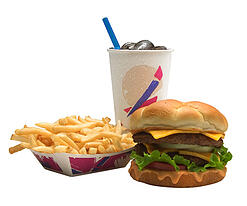
After all, how much value is really in a value meal?

Topics: corporate wellness healthy workforce overweight employees

Emphasizing Preventive Care in Corporate Wellness

This blog was written by Mechelle Meadows. Meet our blogging fitness specialists at the NIFS website.

While more Americans gain access to healthcare in the next decade, and more senior citizens are eligible for Medicare, one-third of physicians will be due for retirement. Experts predict this will create a shortage of medical doctors. This is alarming news, if it comes to fruition. Now is the time to stress preventive care in corporate wellness programs.

Schedule Health SBlood Pressure Screening resized 600creenings

Preventive care includes scheduling all regular screenings specific to your age and gender; for example, mammography, colonoscopy, and dental checks. People should schedule as many of these screenings as can fit into one doctor appointment, assuming they fall under the physician’s scope of qualifications. They shouldn't wait until they discover something irregular to make that doctor visit because it may become increasingly hard to secure timely appointments.

Practice Self-Care

In taking preventive measures, there is also a component of self-care that requires no physician. Remind your corporate fitness center participants that exercise and nutrition are perhaps the two biggest methods of self-care.

After you exercise, the immune system is elevated for 24 hours, says the American Council on Exercise. A workout regimen including impact and weight-bearing activities enhances bone health, reducing the need for osteoporosis treatments.

The most well-known fact is that exercise improves all the body’s workings related to the heart, decreasing the chance of cardiovascular disease.

Proper nutrition, including vitamins and minerals, is related to a decreased risk of developing almost all forms of cancer. Also, don’t discount self-exams. While a physician has a better-trained eye for abnormalities, regular self-exams including breast self-exams, skin cancer self-exams, and more can supplement the annual doctor’s assessment.

Make Preventive Health a Priority

Teach your employees to make their own health a priority. Using corporate wellness programs to prevent rather than cure is less costly to the company and the individual.

Topics: corporate wellness employee health worksite wellness disease prevention control healthcare costs

My NIFS Nutrition Coaching Session

This blog was written by Lori H. as a guest blogger with NIFS.

Just a few days after Christmas, I met with NIFS Wellness Coordinator Angie Scheetz, a Registered Dietitian, to go over the food diary I kept earlier in the month and get an assessment of my dietary habits.

Getting a personal nutrition coaching session is something I have been wanting to do for myself for several years. But that didn't keep me from being nervous about it. I enjoy fatty foods and lead a fairly sedentary life. I wasn't looking forward to being told to lay off the potato chips!

Meeting the Registered Dietitian

But Angie put me at ease from the very first minute of our meeting. I never felt like I was being judged. She had analyzed my food diary and found that I was actually not far off the mark in terms of calories consumed. But to reach my goal of losing 25 to 30 pounds, she said, I needed to be getting more calories from protein and less from fat. She also said I wasn't getting enough fiber.Pasta Salad resized 600

We talked about what foods I like (cheese) and which ones I really don't like (fish). She told me how to select cheeses that are lower in fat and higher in protein. We talked about ways to get more fiber into my diet, such as brown rice and high-fiber cereals. (My usual favorite cereal bars are out the window and Fiber Plus cereal is in.) She also told me to have skim-milk hot chocolate for breakfast instead of sugared-up hot tea. (That's a switch I can make easily.)


Angie worked up a good plan for optimal meals and snacks, giving me ideas of some healthy alternatives, and ways to still eat my favorites in moderation and paired with more fruits and veggies.

We talked about how, when I was keeping my food diary and noting everything I ate, I was reluctant to eat unhealthy things because I would have to write it down. As it turns out, that trick serves dieters well. She directed me to My Daily Plate, where I can continue to track what I eat and get nutritional reports on it.

One casualty of the meeting was my daily indulgence of one soft drink per day. It's much better to have water instead, and Angie told me to try adding thin slices of lemon or cucumber to flavor it. She also suggested high-protein Greek yogurt instead of the sweeter varieties I have recently learned to like.

Three Power Rules for Healthy Eating and Weight Loss

She ended the meeting with some high-impact rules to keep in mind:

  • Eat three food groups at every meal.
  • Eat every four to five hours (this means two healthy snacks a day in addition to meals).
  • Drink 64 ounces of caffeine-free fluid per day.

It was a cruel irony to go into my final family Christmas celebration armed with all of this information. Check back in a few weeks to see how I'm doing!

Disclosure: NIFS discloses that it does remit monies to Lori H. for other nonrelated services. However, this venture with the nutritionist is being conducted at the will and request of Lori H., and Lori H. is not being compensated for the authorship of this blog.

Topics: overweight employees nutrition