Corporate Fitness and Active Aging

Worksite Wellness and the Healthy People 2020 Goals

This blog was written by Penny Pohlmann. Meet our blogging fitness specialists at the NIFS website.

Each decade the Department of Health and Human Services identifies a list of health goals to strive for over the next 10 years to improve the health of all Americans. You may be familiar with Healthy People 2010. Now that 2010 has come to an end, Healthy People 2020 has just been released with an updated list of goals.

Take a look at the following objectives taken from Healthy People 2020 followed by the Workplace Action for contributing to this goal while also improving the health of your employees.

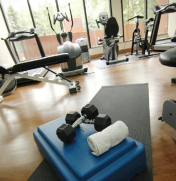
Physical ActivityWorksite Fitness resized 600

Objective: Increase the proportion of employed adults who have access to and participate in employer-based exercise facilities and exercise programs.

Workplace Action: Provide your employees with an onsite wellness center staffed with certified fitness professionals who can provide safe, effective fitness routines.

Offer incentives for employees who regularly participate in worksite exercise programs.

Immunization and Infectious Disease

Objective: Increase the proportion of children and adults who are vaccinated annually against seasonal influenza.

Workplace Action: Provide onsite flu-shot clinics so that employees can get immunized for the seasonal flu at work. Provide discounts or reimburse employees for flu shots for family members.

Tobacco Use

Objective: Reduce tobacco use by adults.

Workplace Action: Offer a free onsite smoking-cessation program for employees who use tobacco. Provide discounts for nicotine replacement therapy products for employees wishing to quit smoking.

What are you doing to help us meet the Healthy People 2020 workplace goals?

Topics: exercise at work corporate fitness worksite wellness disease prevention tobacco cessation

Quick Walk for Easy Employee Wellness

This blog was written by Kara Gootee. Meet our blogging fitness specialists at the NIFS website.

Many employees say they do not have time in their day for exercise, or they forgot their workout clothes. Don’t let excuses stand in the way of your corporate wellness program. Implement a quick walk at work to encourage worksite wellness and get employees up and moving.

Walking Meeting resized 600The Benefits of an Exercise Break

Recent studies show that more breaks and less sitting results in smaller waist sizes and a decreased risk of heart disease and diabetes. A quick 20-minute break is a great way to refresh the mind, catch some fresh air, and get the body moving.


How to Add Walking to Your Corporate Wellness Program

Starting a walking program is easy. Designate a time and location, and get moving. Many employees may enjoy getting out for an afternoon break for a quick walk around a parking lot, or a trip around the block. Encouragement and participation from management will help get the ball rolling.

If Your Wellness Program Already Includes Walking

Here are some ways to spruce up your walking program:

  • Specify a day: Get Movin’ Monday, Walk Wednesday, etc.
  • Give out walking group t-shirts to create camaraderie.
  • Provide healthy snacks following a walk.
  • Track steps taken with pedometers.
  • Sign up for local area events and walk together.

The benefits of walking outweigh the excuses. Encourage worksite wellness not only for a healthier workforce, but for a happy work environment.

Topics: corporate wellness exercise at work employee health

Reward Employee Health in 2011

This blog was written by Kara Gootee. Meet our blogging fitness specialists at the NIFS website.

With the new year, many individuals make resolutions that quickly fall by the wayside. Statistics show that 75% of people keep chugging after the first week, and motivation starts decreasing. Start the year off right by rewarding employees for working toward a healthier lifestyle.

Offer Corporate Wellness Incentives

Corporate wellness programming is on the rise, and while company results vary, the return on investment is encouraging. Rewarding employees with the simplest prizes can help keep them on track to maintaining a healthier lifestyle, which in turn reduces health care costs and increases productivity for your company.

Ways to Reward Healthy Employees

Here are some ways to reward employees:describe the image

  • Small tokens: Everyone loves free stuff. Try items such as key chains, mouse pads, and water bottles.
  • Gift cards: Large amounts aren’t necessary. Who wouldn’t like having a $5–$10 gift card to Subway or Starbucks?
  • Point systems: By developing point systems for reaching wellness goals, employees can earn points throughout the year to be put toward larger prize items, or even toward a flexible benefits account.

Rewarding is easy. Everyone likes to know that their hard work is being noticed. Treat your employees for being healthy by encouraging worksite wellness.

In what ways are you recognizing employee efforts to become healthy?

Topics: corporate wellness employee health motivation productivity corporate rewards

A Corporate Fitness Program Manager Evaluates the Shake Weight

You might have seen, or at least heard about, the Shake Weight commercial. It's that somewhat (and by "somewhat," I mean "very") suggestive ad with a woman (and now a man) shaking a spring-loaded dumbbell at chest level.

As a corporate fitness professional, when I see a new fitness Shake Weightproduct, my first instinct is to investigate further. Did I miss out on inventing yet another ingenious fitness product? Am I going to think "Why didn't I think of that?" There are a plethora of fitness products that I should have invented, including the Gliding disks, the BOSU, and the Bender Ball. Will the Shake Weight be the next product on my list?

The Claims: Strong, Toned, Ripped Arms and Chest

During my initial investigation, I found the product's claim on its website: “In just 6 minutes a day, you'll get strong, toned, ripped arms and chest.” The 2.5-pound (5 pounds for men) product has a spring on either end and is powered by your movement. It comes with an upper-body-toning DVD and an unconditional money-back guarantee.

The product promises to meet its claims through a “completely new workout technology called dynamic inertia.” According to the manufacturer of the Shake Weight, dynamic inertia (the vibration of the muscles) results in a 300 percent increase in muscle.

The Verdict: Not So Fast

A recent simulation study by LifeMOD concluded that vibration training can give us the body we have been waiting for. Keep in mind, though, that this study was not done on humans.

Although the product may have one supporting study, I still have my doubts. The arms and chest may be the most glamorous-looking muscles, but in order to have a well-functioning body, all the major muscle groups should be worked. More importantly, six minutes a day of upper-body work does not meet the Centers for Disease Control and Prevention recommendations of 150 minutes of aerobic activity and two or more days of strength training for all the major muscle groups.

If getting the “ripped arms and chest” that you see advertised in the commercials is the primary goal of your workout, it will take a lot more work than just shaking a weight for six minutes a day to get them. Without a balanced diet, a regular exercise program, and some hard work, it is nearly impossible to build those “ripped” muscles.

A Whole Lotta Shakin' Going On

If the Shake Weight claims are true, be on the lookout for exercisers everywhere shaking things in the gym. Gone will be the days of shoulder presses, lunges, and pushups. In will be the days of shaking to create results.

In hindsight, I won't be adding the Shake Weight to my list of fitness products that I should have invented. I will stick with traditional weightlifting for now. If I feel the need to shake something for some muscle activation, I'll grab a bottle of all-natural fruit juice and shake it for six minutes before I take a drink. But hey, if the New York Jets think it's amusing enough to try out in training camp, my conclusion may be way off! 

Topics: exercise at work corporate fitness program corporate fitness technology

The Importance of Water for Employee Health

Water is necessary for the digestion and absorption of food. In describe the imageother words, it’s essential to life. But does everybody require the same amount of water? You always read that we need to drink eight glasses of water a day. So I did a little more research to figure out under what circumstances you would need more than that.

According to corporate fitness program consultants, you should drink more water when you

  • Are on a high-protein or high-fiber diet
  • Have an illness that causes vomiting or diarrhea
  • Are more physically active
  • Are exposed to hot weather conditions

Many worksite wellness centers have handouts for more information on how much water you personally need based on several circumstances. The Mayo Clinic's website also offers some helpful guidelines.

Most people choose beverages that dehydrate them instead of drinking water. Coffee, tea, alcohol, soda, and other sugary drinks are all examples of beverages that dehydrate your body. Not only do sugary drinks cause dehydration, but they also cause you to pack on the pounds. Then you will need to spend your lunchtime going for walks or in the corporate fitness center trying to work off the extra weight.

Water is a great natural resource and it’s involved in all bodily functions, so drink up! Try to drink more water on a daily basis starting today.

Topics: corporate wellness employee health corporate fitness program

Busy Mom Gives NIFS's Personal Nutrition Coaching a Try

This blog was written by Lori H. as a guest blogger with NIFS.

As a busy mother with a full-time job and a freelance business onBusy Woman resized 600 the side, I know that I don't always make the healthiest food choices―for myself or my family. It's too tempting to grab fast food on the dash between work and the Girl Scout meeting. Too often I find myself completely stumped about what to fix for supper that will be easy, healthy, and satisfying.

Then there are my family's specific health concerns. I suffer from increasingly troublesome acid reflux and low blood sugar. And ever since I got a desk job and gave up caffeine (which is appetite suppressing) nearly 20 years ago, I've been carrying around an extra 25 pounds. My husband has high blood pressure, so we also need to watch our sodium intake. And our daughter is a frustratingly picky eater.

When I saw that NIFS provides personal nutrition coaching with a registered dietitian, I knew that it was something I needed to do. Like everything else, though, I procrastinated about investigating the possibility. I knew that I would probably hear some things I didn't want to hear. But the need to make a change finally overwhelmed me and I connected with the professionals at NIFS.

The first step was to fill out a three-day food diary covering two weekdays and one weekend day. When I announced to my coworkers and Facebook friends that I was undertaking this endeavor in the two weeks between my birthday and Christmas, they said I was brave (and crazy). There are so many temptations this time of year!

As I kept the diary, I found myself trying to avoid eating junky snacks because I didn't want to have to write them down. (Maybe this would be a good continuing exercise to keep me mindful of what I eat in the future.) But in the end, when someone waves a hot-out-of-the-oven chocolate-chip cookie in my face, there's not much I can do to stop myself.

One day at lunch I ordered a beef dish at the Thai place, so that I could accurately represent what I tend to eat. But they got the order wrong and brought chicken! The next day was our company Christmas lunch, for which I had already pre-ordered the chicken dish. So I think most of my meals during the diary period ended up being chicken! I wasn't trying to game the system, I promise!

After dinner tonight I will be done with my food diary and can send it back to NIFS. The next step will be to set up a meeting to hear where I can make some improvements. I have a funny feeling that I'm going to hear that I need to exercise more. Finding time for that will be another challenge, especially now that it's too cold and snowy outside to go on my usual lunchtime walks. Stay tuned and see what I find out!

Disclosure: NIFS discloses that it does remit monies to Lori H. for other nonrelated services. However, this venture with the nutritionist is being conducted at the will and request of Lori H., and Lori H. is not being compensated for the authorship of this blog.

Topics: overweight employees nutrition

Can Smartphone Apps Help Employee Health?

SmartphoneSmartphones and related devices are pretty versatile. They can remind you where you parked your car, help you locate the nearest drugstore, and provide you with the latest gardening tips. But did you also know that they could help your employees stay committed to their health and fitness goals?

Some of the most popular smartphone applications that are available (for purchase or for free) can help you design a fitness routine or report the calorie content of the jumbo java you’re eyeing. Here are a few apps your employees might find useful for staying on track and improving their health and fitness.

Do your employees need help designing a beneficial fitness routine?  

App: iFitness
Available for: iPhone, BlackBerry, iPod Touch
Price: $1.99

Ranked the number-one paid fitness application for iPhone, this application is like a personal trainer in your pocket. iFitness enables you to view up to 100 exercises (pictures and instructions included) by muscle group or select one of the 12 predesigned workouts to follow. Once you’ve mastered the preset routines, you can create your own. You also have the ability to track your progress by making notes; recording sets, reps, and weight lifted; and other achievements like weight and inches lost.

Help overweight employees take off those unwanted pounds.

App: Lose It!
Available for: iPhone and iPod Touch
Price: Free

This app is a calorie-tracking tool that uses a predetermined equation to establish what your daily calorie intake should be based on your target weight goal. The large database allows you to enter the foods you’ve eaten, including the portion size, and track your intake each day. Lose It! hasn’t forgotten about exercise, either. Enter an activity like playing Frisbee or mowing the lawn, and it is factored into your daily caloric allowance.

Chill Out: Help employees relax and de-stress.

App: iRelax Melodies Lite and iRelax Premium
Available for: iPhone, iPod Touch, and iPad
Price: Lite—free; Premium—$3.99

iRelax Melodies is the self-titled “Sleep & Meditation & Yoga & Relaxation Helper.” Listen to one of four looping sounds on the Lite version designed to help you relax or sleep. Other features allow you to mix any of the sounds yourself for a personalized melody as well as a timer that ends the melody at the time you decide. Save and replay your favorite melodies anytime you need to escape. The premium edition includes 36 melodies as well as binaural beats known to help the brain reach a particular relaxation state.

Improve employee health one morsel at time.

App: Morsel
Available for: Apple devices, Android, and BlackBerry
Price: Free

Move toward a healthier lifestyle one daily, healthy suggestion at a time. This application from GE offers up simple daily tasks, or “morsels,” that everyone can do. “Morsel empowers you to take control of your well-being, one step at a time,” says the app description. Examples of the daily tasks include

  • "Drink and refill a water bottle."
  • "Don’t put extra salt on anything you eat today."
  • "Walk backwards for 10 steps."

Help your employees stop smoking.

App: No Smoking
Available for: BlackBerry
Price: $9.99

Thinking about quitting smoking? This app may be for you. No Smoking is designed to slowly wean you off cigarettes by first learning your smoking pattern. The app records your smoking frequency and severity. Then, when you’re ready to quit, it really goes to work. The app uses the information it learns and tailors a smoking schedule that slowly decreases your smoking frequency, lowering your nicotine level over time until you’ve completely quit.

App: iQuit
Available for: Apple devices
Price: $1.99

Not only does this app keep track of the number of days it’s been since you quit smoking, it displays the extra life you’ve gained and the amount of money you’ve saved by not buying cigarettes. When you download this app to your iPhone, you’ll be able to see how your health has improved with stats like, “After 2-12 weeks, your circulation improves, making walking and running a lot easier.”

Does your company offer Weight Watchers for Employees?

App: Weight Watchers Mobile
Available for: Apple devices and BlackBerry
Price: Included with Weight Watchers fee

Weight Watchers Mobile makes searching and tracking point values (the units associated with the Weight Watchers weight-loss program) simple and convenient. This app can help you make selections that fit within your point budget when you’re eating out at a restaurant or picking up some groceries on your way home from work. Don’t forget about those activity points, either. When you’ve completed your two-mile walk, enter it in your activity log for easing tracking.

Other health-related apps your employees could use:

Topics: employee health healthy workforce overweight employees technology

Is Employee Wellness an All-or-Nothing Strategy?

If you follow employee wellness, you may have heard recently that wellness programs at worst are largely ineffective and tend not to be worth the investment, and at best take years to produce results. That commentary found in a Wall Street Journal Health Blog was the assessment on a report produced by the National Institute for Health Care Reform (NIHCR), which was based on research conducted by the Center for Studying Health System Change.

The basic premise was this: If you can’t do wellness right, you should probably stay out of the game. It’s expensive, it’s confusing, and ROI is questionable. It’s true that the best and most robust programs cost money and require a well-developed strategy along with clear and vocal leadership support. These things are not easily gained. It’s also true that ROI is extremely hard to capture in wellness programs. Anyone who tells you otherwise is not to be trusted.

Zero TrendsThere is, however, another way to look at employee health and wellness: Something really is better than nothing. In his book Zero Trends: Health as a Serious Economic Strategy, Dr. Dee Edington outlines the “Five Pillars of Health Management Strategy,” which are consistent with the NIHCR report. But he also points clearly and repeatedly to the value of stopping the current unhealthy trends—of not letting things get any worse.

Under the “don’t get any worse” banner, consider the potential value of a simple regular blood-pressure screening at the worksite. If one employee is flagged for high blood pressure during that screening, and he follows up accordingly with his doctor, your organization will bear some of the medical expense associated with his ongoing treatment of high blood pressure. You may have also just saved your organization a lot of money in catastrophic health care costs associated with chronically unmanaged high blood pressure. You’ve also created awareness for that employee that may lead to self-management efforts to improve his health.

Small businesses can enter the employee wellness program arena, and they don’t have to do it with the all the bells and whistles that the big businesses bring in, as evidenced by this Business News Daily report.

Where will you begin with employee wellness?

Topics: corporate wellness healthy workforce corporate fitness control healthcare costs

Corporate Fitness Programs Can Boost Employee Creativity

Employers are concerned with the ROI of corporate health wellness programs—and they should be. Why on earth would an organization put valuable resources toward strategies that don’t work for their business?

Are Brainstorming Meetings the Best Way to Foster Creativity?

If you're with me on the "don't throw money out the window" approach, let's take a quick look away from employee health and wellness. Let's focus instead on a corporate convention: the brainstorming meeting. Think conference room, Sharpies, flipcharts, and fresh fruit. (You do have fresh fruit at your meetings, right?!) In the brainstorming meeting, the company’s best thinkers pull together intellectually to flesh out ideas for the business's future. How much money does your company spend on brainstorming meetings in terms of staff time, office supplies, snacks, and overhead?

BrainstormingTurns out that corporate fitness programs might have a leg up on those Sharpies. According to a recent article in Newsweek, there are actually proven strategies for getting creative juices flowing, and traditional group brainstorming sessions aren’t on the list.

Exercise, it turns out, can be an effective brainstorming strategy. Up to 30 minutes of aerobic activity (like walking) can get those creative juices flowing. But there is one caveat: Exercise improves creativity only for people who are already fit.

Corporate Fitness Programs Have Many Benefits

Get your employees exercising now and it will save you money by helping control health care costs, decreasing absenteeism, improving productivity, and creating greater loyalty. In addition, your employees will be better thinkers who will keep your organization ahead of the pack.

How are you encouraging regular exercise in the workplace?

Topics: corporate wellness exercise at work control healthcare costs productivity

Counteract the Impact of Long Commutes on Employee Health

Recently I was going through membership forms at our corporate wellness center when I noticed that a high percentage of our clients live out of town. In fact, it’s not surprising to see that many of our members drive an hour or more to get to work each day.

Long Commutes Are Bad for Employee Health

If the thought of a two-hour round-trip commute doesn’t make Traffic Jamyou gag, you are one of the few. Besides the cost of gas and increased wear and tear on your vehicle, long commutes can actually lead to health problems. Extra time on the road can cause higher rates of obesity, increased stress, and decreased productivity.

How Can You Help Employees with Long Commutes?

So other than selling your home and moving closer to work, what’s a good way to combat the negative effects of a long commute? Corporate wellness programs that tackle all aspects of wellness! Corporate employee wellness is a priority for our staff; we regularly monitor our clients' blood pressure, cholesterol, and body composition.

Other ideas for making a commute more bearable and less stressful include

How long is your commute? Share your story in the comments section.

Topics: employee health overweight employees corporate fitness productivity