
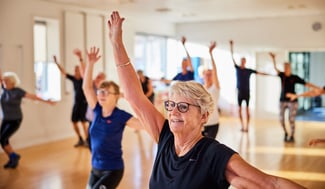
 When I think about my fitness journey, I realize the biggest changes weren't just physical. Of course, getting stronger, improving my balance, and feeling healthier were all exciting milestones. But what truly kept me coming back wasn't the workout itself; it was the people. I knew others were expecting to see me, and before long, I was looking forward to seeing them too.
Why does that happen? Because moving together with other people is a major motivator!
Check out these research-backed reasons that socializing while exercising is a double whammy!
Keeps Your Brain Engaged
Isolating yourself from others keeps you in a bubble, which means you only know what you know. Conversations stimulate attention, strengthen memory, and keep your mind active. According to Harvard Health, staying socially connected plays an important role in maintaining cognitive health as we age.
Reduces Stress and Boosts Your Mood
Have you ever left lunch with a friend or a family gathering feeling lighter than when you arrived? That's not just in your head. There is actually a chemical response when socializing with others, including lowering stress. Building relationships in places such as the gym or fitness classes will often lead to finding your “gym friends,” and you look forward to seeing them each session.
Creates a Sense of Belonging
One of the best parts of joining a group is feeling like you're part of something bigger. Before long, it becomes harder not to come to class because your peers expect to see you there. That sense of belonging provides encouragement, accountability, and emotional support, making it much easier to stay consistent.
Encourages Healthier Habits
Healthy behaviors are contagious. Healthier choices can often be achieved by being around others making healthier choices. Your peers who are also attending the same group fitness class, for example, are likely concerned about their physical, nutritional, and mental health. We tend to encourage each other down a healthy path because we care.
If you have been considering joining the gym or checking out a group fitness class, art class, or walking group, I encourage you to take a chance.
You don't have to know anyone when you walk through the door. Even if you aren’t sure how to get started, there will be someone there to welcome you and encourage you. Just like they say, “Those who move together, stay together!”
 Last week, I was in the Fitness Center chatting with one of our residents, Kent. He’s quick-witted, loves trivia, and can tell a joke faster than I can blink. But when a light body sculpt ball rolled off a chair behind him, he turned around, snatched it mid-air, and said, “I’ve still got it!”
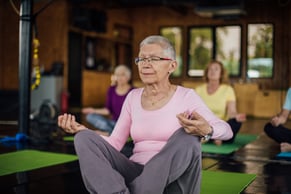 Mindfulness isn’t just a way to hit pause on a busy mind; it’s a tool that helps you get out of your head and into the present moment. Not only does it improve focus and creativity, but the more mindful we are, the better we handle life's challenges.
 As we age, physicians and specialty doctors will talk to you about exercise and eating a well-balanced diet. We sometimes forget that brain health is just as important. Concentration on moving or getting 30 minutes of exercise per day, and strength training 2-3x a week, but is there any emphasis on brain exercises? If so, what does it look like? Are your residents participating in an craft or art? Are they doing word or cross word puzzles, easy math, or reading aloud? Are they resting their mind, or meditating?
  The neuromotor connection refers to the intricate interplay between the nervous system and motor functions, encompassing a complex network of signals that regulate movement, coordination, and balance. In older adults, this connection undergoes natural changes, influenced by factors such as age-related neuronal alterations, decreased muscle mass, and changes in proprioception. The neuromotor systems can effect the human body in many different subsets of health.
 THE BRAIN: the most important organ in our body, is often the most forgotten when we think of training. Why does the brain always seem to slip through the cracks? We can’t stop talking about BMI, body fat percentage, heart rate reserve, and all these other buzz words in the fitness industry. Now you’re probably thinking “but isn’t exercise good for the brain?” and you’d be right but there is more to it than that. We aren’t specifically targeting our brain, we’re focused on our muscles, our heart and the brain is just getting a splash of the love it deserves. That’s something I’d like to change! And we can do that in the gym and at home.
 As we age there are many different changes that start to happen to our brain such as shrinkage, vasculature and cognition. With age, the brain shrinks and changes occur at all levels, from chemicals to morphology. Stroke, lesions, and dementia are all more common as people get older, as is memory impairment. Fortunately there are quite a few things we can do to help prevent or slow the process of some of those changes from happening. Regular exercise, a good diet, and low to moderate alcohol consumption, all of which minimize cardiovascular risk, appear to help the aging brain, as does increasing cognitive exertion in the form of schooling, games or meaningful activities. Physical and mental health may be the best defense against the effects of aging on the brain.
.jpg?width=378&name=Senior%20dancing%20GettyImages-504735537%20(1).jpg)

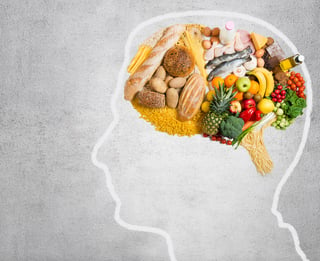 We already know that the foods you eat can affect your weight, heart, blood pressure, and certain cancers, but we also know that food and nutrition can affect your brain health. Whether it’s just improving your memory or helping to prevent Alzheimer’s disease, the foods you choose can help to make your
 Taking Care of Someone with Cognitive Loss