Corporate Fitness and Active Aging

How one senior living community made major improvements in their fitness program

NIFS Fitness Center Management | DataIf you DIY the fitness program in your senior living community, you probably think your offerings are market-standard and don't need to be reconsidered. Even with strong staff running your fitness program, that in-house team has limits on what they can build for the community, and it's likely that you're missing out on opportunities for substantial improvement. The problem with those missed opportunities is that even with something as basic as exercise, it's tough to know what you don't know.

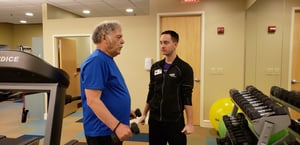
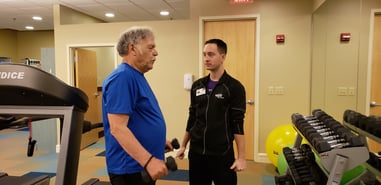
Here's one example of a client we're working with who already had in-house staff in place when we were brought on board to take over management of their fitness programming. In this case, the existing staff was well-credentialed and they were doing a good job of teaching group fitness classes and providing 1:1 exercise prescription and orientation-type services for the members. They were also running periodic programs and partnering across their communities with wellness initiatives. It was all good stuff, and yet, there was a lot of room for improvement. As part of the contract, we hired the existing staff and worked collaboratively to capitalize on what they were doing well, while also bringing in core services that provide tremendous value to program participants and the client. Here's a list of key data from our first full year at this community:
  • Annual fitness center visits increased 44% despite there being no change in total eligible residents during this time.
  • Appointment volume increased 68% which means that residents got a lot more high touch interaction with our fitness experts.
  • The average number of fitness center visits per day increased 43% and the number of residents who visited the fitness center at least once per month jumped 20%.
  • In a community where the group fitness program was already strong, we made a few tweaks and overall class participation increased 9%.

As I said, the staff leadership at this client location was strong before we came on board; they were doing a nice job tracking and using available data as well as providing good variety in programming. But, there are limits to what a small team can do in an environment like that without additional job-specific support. And that's the value of outsourcing your fitness center program to an organization that specializes in building and sustaining strong resident fitness programs. We were quickly able to help this team: 

  • Identify new ways to attract residents into appointments and structure documented follow-up practices to keep residents engaged in their exercise programs.
  • Adopt a program evaluation framework that allowed them to focus in on a few goals and truly evaluate what was/wasn't working in their community.
  • Provide comprehensive balance training/fall prevention programming with a depth that far exceed previous efforts, and served to draw in new participants to the fitness center and group fitness classes.

If you're ready to start moving your community fitness program to the next level, click below to download our eBook: How to Transform Your Fitness Center From Vacant to Vibrant.

Take your fitness center from vacant to vibrant > 

Topics: senior living fitness center fitness center for seniors outsourcing fitness managment resident fitness DIY staffing

The Balancing Act of Caregiving and Taking Care of Yourself

NIFS | Active Aging with familyIf you tend to be in a certain age category, you’ve most likely thought about caregiving for a loved one. Whether that be for your parents, siblings, children, other relatives or even friends, it can take on a life of its own. Caregiving is no easy task, so fully thinking through how this may play out in your life is a good idea (even if it is overwhelming). By planning ahead and being realistic about the situations in your life, you stand a better chance of decreasing the upfront stresses when you step into a caregiver role.

Better to have a plan and be prepared for it to go awry! You can expect to endure some stress along this journey, given the list of schedule changes, transportation challenges, medical decisions, housing choices and other decisions you will have to deal with. In the midst of providing care for a loved one, it’s really easy to lose sight of caring for yourself. But it’s another important element to include in your plan; if you don’t consider it, you may be surprised at the toll it can take on your own health.

Below are some ideas that may keep you on a healthy track so you can be your best when serving as a caregiver for the loved ones in your life.

Keep your own life a priority

Many caregivers get so consumed with all they need to do for those that they are supporting that they forget to keep their own life in order. There will be times when you’ll need to drop what you’re doing to be of assistance try not to make that a regular habit. Gauge the situation carefully and if it’s an emergency, the decision is clear. If it’s not, then you need to carefully decide if it needs your immediate attention. Can it wait? Is someone else medically able to offer assistance? Do they need this right NOW? Consider these questions before you put your life on the back burner every time something comes up. Do it in the beginning too so it doesn’t become a habit to take on these situations before taking care of yourself or putting your own life needs by the wayside.

Organize a schedule

If you’ve never been a caregiver, it’s going to take some practice building a sustainable routine. If you have kids, it may be similar to tracking the after school activities, birthday parties, and school events. Build your caregiving schedule into your week so there’s some consistency. This could include grocery store runs, pharmacy stops, meetings with advisors and just spending some quality time with your loved one. By building a consistent schedule, you’ll feel more organized and less likely to have this new set of responsibilities throw you off track.

Build boundaries

Boundaries will be important as well, not only with your loved ones but with yourself. Remember that you’ll need to continue doing the things that you love and enjoy; you are the only one who can take care of you. So, if you start to feel that caregiving is encroaching on your everyday enjoyment due to the demands, it may be time to create some boundaries. This may include limiting phone calls at certain times of the day, answering emails or texts when time allows, and not allowing disruptions to your everyday life when possible. Of course there will always be emergencies but don’t let every form of communication become one of them.

Incorporate lives

As a caregiving you’ll find that you may feel guilty due to the lack of time you can spend with your loved one as you try to juggle life. To prevent this, see if you can incorporate some activities with them and your normal schedule. This might include a walk with your loved one at the park on Sunday with the entire family. Pack a picnic and you have the opportunity to get some exercise for yourself, and to spend time with them and your own family. Seek outings that offer everyone some enjoyment.

Being a caregiver won’t be easy but you can build a routine that works for you and them with some careful thought. Start out on the right foot so you don’t build something that may fall apart or leave you feeling out of your element and exhausted. The goal is a win/win situation where everyone feels cared for, loved and fulfilled.

Like what you just read? Subscribe to our blog.

Topics: senior living caregiving caregiver how to be a caregiver caregiving stress caring for loved ones

Active Aging and the Benefits of Learning New Skills

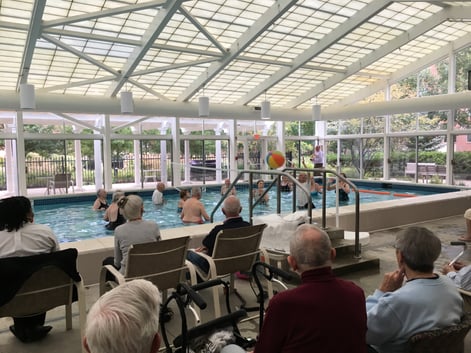
I recently held a Winter Olympic Senior Games event at Trillium Woods Senior Living Community in Minnesota. Over 65 residents ages 65 to 94 participated in a variety of events, such as chair volleyball, water volleyball, trivia, Wii skiing, shooting hockey pucks, competing at ping pong and billiards and building a snowman. One of my favorite parts about most of these events was that most of them didn’t require instruction or coaching from me in regards to proper techniques.

However, shooting a hockey puck was much different. Only a select few had ever picked up a hockey stick in their lifetime. Little did I know upon arranging the activities that I was setting myself up to teach seniors how to shoot a hockey puck into a net. (And not just a regular net, but  into a net with a goalie tarp attached for accuracy!)

NIFS | Active Aging Hockey

 The first practice was alarming, I think for both residents and myself.  I first explained and demonstrated the proper way to hold the stick, how to draw the puck back while always keeping the blade on the floor until the release, and following through to release the shot.  Easy for me, I have been doing it since age 4 and can do this better than anything. Many who chose to give this a shot were golfers, so it shouldn’t have surprised me when they picked up the stick. Their full swing included picking up the stick (holding at the top, not like I had demonstrated), winding up (taking the blade off the floor, not like I had demonstrated) and then failing with follow through to get the puck where they wanted it to go. They wondered why the puck responded the way it did and assumed that the way to fix their technique was simply by getting closer to the net.

So, with each resident I assisted getting them in proper position and instructed in detail each part of how to hold the stick, and how to draw the puck back and release the shot. Each resident was a little different, in how or what I had to explain. Believe it or not, while some needed more practice, everyone improved! Once they had the swing down, we moved on to teaching them how to lift the puck.  Slightly more difficult, however a select few were able to grasp this concept in the short four weeks we had to practice. 

Many would never think that at age 94 I am going to learn how to shoot a hockey puck, but that is what is so great about our brain and body. We can challenge ourselves in many ways allowing our brains to make new connections, and our bodies will adapt to different environments we place ourselves in. We are all able to learn a new skill, task, or sport at any age in life; much of your success is based on your mindset and effort given on a task. Take a look at this article on older adults and their ability to catch on and learn something new. Age is no excuse to remain complacent. What type new of activity, game, or task will you teach your residents? From my experience, I think both residents and instructors will enjoy the experience. Plus, these type of activities could improve your senior living fitness program! What new skill can you challenge your residents to learn?

Like what you just read? Subscribe to our blog.

Healthy Living with Essential Oils

NIFS | Essential OilsEvery time I turn on the TV my eyes are flooded with commercials promoting new remedies for aches, pains, and disorders. They often include an overjoyed person dancing or baking a cake while a soothing voice reads off the endless side effects of the drug.  “Upset stomach, wild dreams, or nosebleeds may occur," says the soothing voice, “However, your affliction will be controlled for 12 hours.” Geesh! But we have a whole cabinet full of them- a pill for inflammation, a pill for blood sugar control, a pill for the nausea we get from taking the blood sugar pill and on and on. Thinking back to my grandmother’s house- she had many pills but she also had other mixtures, oils, and potions for curing ailments. Sometimes an onion in a sock, sometimes horseradish with olive oil… whatever discomfort you had- Grandma knew a cure!  Which old wives’ tale rang true for you?

I’m not suggesting that traditional medicine should be thrown out the window. But I do want to explore how to incorporate oils into daily routines for enhanced well-being. Essential oils have been around for hundreds of years with documented uses dating back to around 1500 BC. Essential oils are a concentrated liquid that contains a plant’s chemical properties. Each oil has a unique property and potential effect depending on the plant from which it’s derived.  They are extracted through steam distillation and cold pressing, making the extracts full of potent antioxidants.

Essential oils can be used topically. They can also be inhaled or ingested. When used topically be sure to dilute a few drops of the essential oil with a carrier oil. Carrier oils include grapeseed, olive, coconut, and jojoba oils. They act as a base oil and do not affect the effectiveness of the essential oil. They absorb easily into the body due to their tiny molecular structure. Oils can be applied behind the ear, on temples, soles of the feet, or directly to the area of concern.

The technique of inhaling the oils for relief is called Aromatherapy. Simply sniff the oil scent directly from the bottle (1 to 2 inhales is all you need), or a diffuser can also be used. Only consume essential oils which are labeled safe to do so. One drop of cinnamon oil is all you need to elevate that Saturday morning French toast recipe! Or, you can add a few drops to water or yogurt. Some oils can be dropped into a capsule to swallow.

Here are a few ailments and the essential oil that may help to eradicate common aches and pains. Please note the information in this blog is meant to serve as a guide. It is not meant to diagnose, treat, cure, or prevent any disease. Interactions between oils and other over the counter or prescription medication can occur; always consult your physician before altering your medication plan.

  1. Inflamed joints can be soothed with the help of the frankincense oil. In a hot bath it works to nourish the skin and stimulate the body’s immune function.
  2. Remember where you left your keys with the help of rosemary. One study from Northumbria University found that being in a rosemary scented room could improve memory by 15% in older people.
  3. Dealing with an itchy scalp and or acne is no fun. A few drops of tea tree oil works to clear it in a hurry. Add to your conditioner or mix with Aloe Vera gel and apply.
  4. Battling infections? Oregano and thyme oil have supreme antibacterial properties. If taken orally, ingest in smaller doses with food over 10-14 days.
  5. If you’re having trouble falling or staying asleep, lavender oil may send you off to dreamland. Spray the oil around the room before bed, diffuse, or place a few drops in your body lotion and massage into your hands and feet.
  6. Support healthy joints and ease away pain with a blend of wintergreenpeppermint or black pepper oils. Dilute and massage it into the skin.
  7. Create an uplifting beverage to combat those gloomy days by combining ylang ylang (pronounced yah-lang yah-lang) and orange oil with water, honey and ice
  8. Tummy troubles? Give cool, bright peppermint oil a go. Add a few drops to herbal tea. Many brands may be ingestible but that’s not always the case, so read the labels carefully.

The effects of essential oils on the human body are still being researched. But the claims of those who use them are astounding. Call it an old wives’ tale or a miracle but some of these remedies may be worth a try if you’re open to alternative health methods.  

Subscribe to our blog

Topics: healthy living alternative living home remedies essential oils natural living

Healthy Habits Start Early: Exercises for Kids

Do you remember your childhood? I’m sure most of us can say we were pretty active as children and looking back we can see how important that was for our continued physical well-being. Without the distractions from electronics and television options, what else could we do but get up and move? We all know that kids should be active, but when kids want to go beyond traditional activities like riding bikes and playing tag, how can we safely challenge them? Check out the exercise descriptions below to get started with your kids. We've also provided a video at the end of the blog that you can use to start family workouts at home.

NIFS | Exercises for kids | Healthy Habits

Planking: What better way to challenge your kids than by asking them how long they can hold a plank? Start with elbows and toes on the ground, keep your back straight, abs tight, and all in one straight line. Body should be parallel to the ground. Strengthen core, upper body, and even lower body by starting with a 30-second plank.

Squats: Squats are just like sitting down in a chair, so if your kids have nailed that, they can get the hang of a squat. With feet shoulder width apart, slowly bend the knees as if you are sitting down on a box or chair. Make sure the knees don’t extend past the toes when lowering down into the squat position. Aim for 15-20 reps to start. Add a hop at the end for a little extra challenge!

Pushups: This is another exercise to test overall body strength. Start from a straight-arm plank position and bending at the elbows, slowly lower the chest to the ground. Make sure the body lowers as one unit versus a form that looks like “the worm."  Aim for 15-20 repetitions. Drop your knees to the ground if a modification is needed. 

Lunges: All legs here! Take a step forward with one leg and slowly lower the back knee down towards the ground. Step forward back to beginning position and switch legs. Make sure the front knee doesn’t extend past your toe, and that the chest stays upright. Shoot for 20 lunges to start, but make sure your form doesn’t weaken as you increase the repetitions.

Burpees: The ultimate test! If you really want to challenge your kids and maybe expend some of that extra energy, ask them to do a few burpees. These will really get the heart racing. Start by squatting down, putting the hands on the ground and either hopping or walking the feet back to a high plank position. Add the optional pushup from here and then walk or hop the feet back up towards the hands, followed by a hop straight up in the air. That, my friends, is one burpee. Shoot for 5-10 burpees and see how they feel. Increase repetitions as strength and endurance improve. 

Repeat all for a challenge!


These five exercises are great starting points to get your kids up and moving with you! Repetitions are always great but if you struggle with getting a full set completed, feel free to go for time. Here are some other tips if you're confused about what exercises are appropriate at what age. The key is movement and consistency to build healthy habits for the future!

Subscribe to our blog

Topics: healthy habits exercise for kids healthy kids exercises I can do with my kids

4 Things I've Learned from the Silent Generation

The Silent Generation are older adults who were born between 1928 and 1945. Their generational name “Silent” originally came from a 1951 TIME magazine article, in which they were described as a generation that “does not issue manifestos, make speeches or carry posters.” They were raised in a time when children were generally favored as seen, not heard. In 2018, we know them as those 73 to 93 years old. My perspective comes from working closely with these individuals for about two years. Here are four things that I have learned about this generation.

NIFS | Grandmother reading to grandchild

Aging is Not “One Size Fits All”

Aging is a mysterious natural process which manifests differently from person to person. You may hear of someone who has “aged well,” or another who is really “slowing down.” The fact is, those two people may well be the exact same age, but are experiencing aging very differently. Levels of mobility, independence, stamina, strength, and balance are all factors I’ve seen vary widely in individuals that are about the same age. Fortunately, these traits are not distributed by luck of the draw. Although genetics and family history play an important role, there are several lifestyle choices that can level the playing field. (More on those choices later.)

Caregivers Make a Difference

There are many older adults who maintain an active, independent lifestyle well into their nineties. These people are inspiring, but are often the outliers, not the norm. In my experience in the community setting, hiring an independent or agency assigned caregiver is a popular practice. These people act as employees of the individual needing assistance, helping out with anything from washing dishes to making sure all medications are taken without error. I believe that there are exceptional caregivers that invest in the lives of their employer, who can make a real difference in the aging process. I think specifically of those who regularly take the time to bring the resident they work for to the fitness center to exercise. This is not limited to hired caregivers, and can extend to family members as well. Here are some tips on hiring a caregiver.

Communities Provide an Unrivaled Social Experience

Books could be written about the pro’s and con’s of making the transition from home life to senior living life. That may be a project someday, but I’ll try to keep this one short. I think that living in a community with others who share not only your age, but interests, schedules, and perspectives has value. I cannot speak for all communities, but those that I have interacted with take great care to provide ample opportunity for social events. In fact, a complaint I often hear is having to choose which event to go to, because there is so much to do. Club meetings, exercise classes, lectures, movie showings, and meals are all popular ways to get older adults together. This makes everyone feel good. Here are some things to consider when choosing a senior living community.

Personal Trainers Have Lasting Influence

Now, about those lifestyle choices that so powerfully affect aging, namely diet, exercise, and sleep. These three tools can be used in a way that increases the likelihood of old age with a high quality of life. Unfortunately, according to the CDC, by age 75, about one in three men and one in two women engage in no physical activity. This fact, coupled with irregular sleep habits, poor diets, and other risk factors leave many older adults at high risk for cardiovascular disease and its deadly consequences. There is hope, however, for the Silent Generation. Some risk factors for cardiovascular disease are modifiable, meaning they can be improved by lifestyle change. One of the most effective tools for lifestyle change is a personal trainer who specializes in active aging. These are educated and certified individuals who help people reach their goals and decrease the risk of heart attack, stroke, falls, and other problems associated with aging. Even more good news: personal trainers can teach long lasting habits that will serve their clients for decades to come. I’ve seen it in action! Here’s a great article on how effective personal trainers can be for older adults.

***

There's a lot of life to be lived long past retirement; ask members of the Silent Generation and they'll tell you as much. Providing support for healthy aging can make all the difference. If you're caring for an aging loved one, subscribe to our blog to read more about ways to help them continue living well.

Subscribe to our blog

Here's What to Watch When the Farmers' Markets Come to Town

Farmers’ markets can be a great substitute for going to get fast food because you know exactly where the food is coming from. Another bonus is you get to see the producer face to face. It is also a great activity to do during the summer months because often there is live music and you’re helping your local farmers when purchasing your fresh fruits and vegetables. For those who don’t go to the farmers market often, here are some tips to ensure you make the most of your time and leave with all the right foods!NIFS | Farmers Market

Bring cash – Typically, there will be some vendors who do accept credit cards or check, but cash is always the one currency that will ensure you can get foods from any of the booths. Have a set limit of cash so you don’t get carried away, but don’t be afraid to bring a few extra bucks for those impulse buys.

Go at beginning or end of day – Knowing when to go to farmers market can make a big difference in the quality of foods you find as well as the price for those foods. Going in the morning when it first opens can help guarantee you get the freshest foods available. Alternatively, consider going during the last hour of the day so you can get discounts on any of the remaining products. Vendors want to go home empty handed, so this bodes well for a bargain when the market winds down for the day.

Take a lap – When you first arrive at the market, take a lap around before making any purchases. That way, you know all the foods available and can strategize the best way to spend your money.

Keep an open mind – When visiting the different booths, don’t be afraid to ask for a sample if there’s something you’ve never had before. This allows you to try new food, before making a purchase.

 Ask questions – The vendors should know everything about the food including; how the food was grown, if any pesticides were used, or how to prepare dishes with the food.

Buy in season – While the variety at the farmers market may not be as extensive as the grocery store, the food that is in season will be plentiful and most often will be better tasting.

Make a day of it – Going to the farmers market can be something you really look forward to each week. There’s plenty to do and lots of new foods to try, so have some fun with it! Depending on the size of the market, you can spend a couple hours browsing for the freshest foods and often enjoying some live music.

The farmers market can be a great place to discover new foods as well as find the freshest foods you already love! Start a new tradition with friends and family. It can be a great place to find those clean eating foods, sweet treats, local treasures and make a boring day not such a snore. So, go check out your local farmer’s market, support the community and have a great time!

Like what you just read? Subscribe to our blog.

Topics: Farmers' Markets

5 Reasons Spring is the Season to Walk

Need some inspiration to get moving this spring? Here are five reasons walking may help you kick start your spring fitness routine and your commitment to moving again after a long winter. No matter if you’re a beginner or a lifelong lover of walks, sometimes you need new reasons to lace-up and move.   

NIFS | Neighborhood Walk with Dog

Nice Weather

Typically springtime means it’s warming up, but it's also just cool enough to enjoy the sounds of nature before the sweltering heat sets in for the summer. Springtime weather also means the walker can experience the flowers and trees blossoming into those bright beautiful colors that make us fall in love with this special time of year! Use the opportunity to get out and soak up some Vitamin D (just don't forget your sunscreen) and increase your serotonin levels, which is known to put some pep in your step and a smile on your face.

Social Connections

Starting a springtime walk is a great opportunity to interact with other people, and research shows that social connections can positively influence your health. In addition, fitness trends predict that most people are more likely to start a new habit right after the New Year and just before summer, making spring the peak time to invite a friend for a walk. The support gained through social connections can also make getting outside on a regular basis more fun and consistent.

Fight Depression

Winter is the season correlated most highly with depression. Many believe there are three major factors behind this. First, there is the holiday season with all the stresses of shopping, travel, and overspending. The second reason may be the dearth of sunlight and the scarcity of vitamin D that people are accustomed to absorbing from the sun. Lastly, people are just less active in the wintertime due the frigid weather. Therefore, springtime is a great time to shake off your dibble downer dumps by walking outside and smelling the fresh spring air! Try three 30-minute walks a week and you may be surprised how effective it is; in many ways, it can be considered the cheapest antidepressant!

[Read More: Tips for easing seasonal depression]

Burn Off Winter Weight

Yep, winter’s over and just maybe you had your share of dessert and the occasional extra helping of your favorite dish. No finger pointing needed; springtime is here, and daylight savings time has arrived, so it’s time to put this in the past where it belongs. This means that you will have all the sunlight needed for a late afternoon fat burning session. Like any form of exercise, walking burns calories and, therefore, fat. Try the walking routine below to maximize your fat burning efforts.

  • Warm up at a comfortable pace for 5 to 10 minutes.
  • Walk quickly for 1 minute.
  • Return to a comfortable pace for 1 minute.
  • Repeat this pattern for a total of 30 minutes.
  • Cool down the last 2 minutes at a slow pace and then stretch.  

Spring Back, Move Forward

Spring back is only an expression but ask yourself this question. Have you fallen off the wagon of activity and making healthy choices? Well, don’t fret! Take time this season to spring back! The answer for any good knock down is a greater comeback. Spring in definition means, to leap, to jump, or to arise from. Take the term to heart and commit to spring walking. 

Subscribe to our blog

Topics: walking tips spring back beginners walking program walking for health starting a walking program

Half Marathon Training and Nutrition Tips from a Beginner

NIFS | Half Marathon | Race TipsI was looking for fitness challenge. I had already been running 5k races and had either won or placed in every race (6) within my age group, so I felt like I was ready for more. My mother suggested I race a half-marathon. Truly, running 13.1 miles sounded awful and I had no desire to run that far for pure enjoyment. Suddenly, I found myself logging longer runs on the weekends just to test my endurance. When early registration came for the Indy Mini Marathon, I went out on a limb and signed up. I had no experience with longer distances, but I learned a lot along the way.  Below are some tips that helped me through the half-marathon training as well as some keys for a strong race.

Training suggestions

Give yourself enough time to prep for the event; remember, it’s a “marathon, not a sprint.” I recommend giving yourself 16-20 weeks of preparation for a half marathon, especially if it’s your first time running one. If you’re a seasoned runner you could likely get away with a 12 week plan.

Research or have a professional design a training program that increases mileage each week. Throughout your training, you want to slowly progress and build upon the miles to increase endurance. Every fourth or fifth week, mileage should be reduced for recovery purposes and increased the following week to continue your journey. During the week (Monday-Friday) I did some speed work and concentrated on shorter distances (5-8 miles), and then I used one day on the weekend for a slower-paced long run (8-15 miles) in length.

With two weeks remaining before your race, you want to slowly decrease the amount of weekly miles you're completing. The taper will give you the proper amount of time to recover so you're ready on race day.

Nutrition tips

You can’t put cheap gas in a high-performance vehicle and expect it to perform well; neither can you expect that with the human body. Not only does your training have to be focused, so does your nutrition. Well-planned nutrition and meal-timing is key with half-marathon training.

Pre- and post-run nutrition is important during training and on race day. Some foods may sit well with some people, but not so well with others, so you'll have to do some experimenting to find what works best for you. I would eat the same pre-training meal every day because I knew it settled well on my stomach, and I didn’t feel bloated or sluggish while running later in the day. My meals gave me great energy and gave me enough fuel to finish training sessions. Post-training hydration was a key in recovering as well. 

My Race Day Food Plan

(It's worth noting that the comments below are simply my experience; they probably wouldn't be highly endorsed by a registered dietitian, but these are foods that work for me.)

A couple days leading up to the race I would increase my carbohydrate intake. I did this to provide my body proper glycogen (energy) stores. I would continue to eat the same food sources, but only increase the amount of food and calories I was eating.

The day before the race I continued with the same nutrition protocol, but I switched from a complex carb source to a simpler carb source to eliminate the fiber found in most complex carbohydrates. I also increased my hydration as well. I would consume food sources such as pasta and white bread with jam or honey.

On race day, I would have a huge plate of pancakes from a “just add water” pancake mix and add a scoop of peanut butter 3-4 hours before. I wouldn’t count any of the calories in this meal. A lot of people think pancakes would not settle well but they actually do for me. They aren’t too heavy and I stick with a limited amount of sugar-free syrup.  I would eat till I was satisfied, but not too full.

About an hour before the race I would have a large Rice Krispie treat, and follow that up with 10-12 pieces of some sort of candy (Sour Patch Kids or Trolli Worms) 30 minutes before the gun was fired. Hydration was limited to 16 ounces of water from when I woke up to about 30 minutes before the race (I didn’t want to have to use the restroom during the race). I would just take small sips of water when I felt like I needed it. I would also keep about 10-12 pieces of candy in my pocket during the race for simple and fast fuel as the race went on, and hydrating only once or twice during the whole race at water stations.

Running 13.1 miles is a great accomplishment if you ever get the motivation or desire to run that far. I found it to be a great challenge for myself. Since the 2017 Mini, I've completed another half marathon and I plan on running many more. Each race I have found is a learning experience. Find what you enjoy. Commit. Be consistent. Eat. Train. And Run!

Like what you just read? Subscribe to our blog.  

Topics: nutrition running half marathon training running nutrition

Is Exercise Getting Left Behind in the Evolution of Corporate Wellness?

NIFS | Exercise ReminderThere is more and more discussion in corporate wellness today about doing wellness for (with?) employees, creating thriving workplace environments, shifting toward programmatic choices that allow for volunteerism and financial literacy, engaging employees with more purposeful work, and using job crafting to create more meaningful work.

It's an interesting time to engage in discussion about what these paradigm shifts really mean when it comes to practical, on-the-ground-application for employees. I agree with much of the dialog; I think it's past time to consider a shift and to take action on it. And yet, I'm concerned that we may be packing away some key elements for "old school" corporate wellness that should not be left out of the mix. One of those program options that is on the fringe is physical activity.

If the basis of your corporate wellness initiative is to help employees live well so that they can bring their best to work each day, then you cannot leave exercise behind. While you consider things like living wage, job crafting and other areas that impact individual well-being, you also need to keep the idea of making the healthy choice the easy choice at the top of mind. Here's how exercise maintains relevance in corporate wellness even as the concept of such offerings continue to evolve. 

The workplace is a prime place for making exercise easy

The research about the benefits of regular activity are clear. What remains elusive are effective strategies to nudge employees toward a more active lifestyle. But, that doesn't mean we should stop creating easy ways for the workers to move their bodies. Time and money (access) remain the two biggest barriers for adults when asked why they don't engage in regular exercise. Like it or not, the workplace becomes a prime location for employees to fit in some activity.  

Exercise doesn't require as much guess work as other initiatives

I know a lot of organizations have taken on wearables as the hallmark of their wellness program's physical activity component. It may be tempting to go that route - it seems relatively easy, and if the cost to implementation isn't a barrier for the organization, you can simply give everyone a Fitbit and get on with it. There are however, many reasons to exercise caution with the use of wearables in your wellness program, not the least of which is privacy.

[Read more: Why Wearable Fitness Trackers Aren't Your Wellness Program]

Outside of the wearable marketplace, there a host of ways you can make physical activity an easy choice in your work environments. We're partial to a corporate fitness center, but that's not the right fit in every business. While you need variety, you don't have to spend a ton of money to execute this well. Group fitness classes can be run with modest cost (or no cost - employees can fund this if you simply make the opportunity available). Painting out safe walking zones in your parking lot, providing resources for stretch breaks, and offering solid education on opportunities for exercise in the community are examples of low-cost initiatives that can easily be developed.  

Leading the way is required

Sometimes, the best way to communicate that movement is important for your workforce has less to do with programmatic offerings, but instead is focused on shifting your culture so that walking breaks are repeatedly encouraged and modeled.

[Read more: 5 Tips To Help Your Employees Move More]

Leaders in the organization have to adopt a mindset where taking a break for physical activity during the day is not just accepted, it's encouraged. One of the best ways to do that is by modeling (yes, that means you need to take your own breaks!). You also have to be mindful of workplace policies (clock in/out policies, productivity quotas, etc.) that may send a different message than the supportive communications you've issued. If words and actions don't match up, employees aren't likely to adopt new practices. 

At the end of the day, you can't really legislate that employees exercise. The motivation to move has to be an inner drive in order for it to be a sustained choice. But, you can make it easier for your workforce to have access to physical activity by creating both spaces and support for regular exercise. 

Tips for adding exercise

Topics: exercise at work corporate fitness corporate wellness success corporate wellness programs corporate fitness programming wellness programming