
.jpg?width=401&name=Woman%20running%20in%20snow%20-%20GettyImages-894281874%20(1).jpg)
As winter approaches, many of us tend to slack on our workouts. I don’t know about you but on dreary, cold days all I want to do is put on a good movie and lay on the couch. The weather gets colder and there is less daylight available during the winter months, making it difficult to find time to get a workout in. Ever heard of the Winter Blues? Feeling down can contribute to decreased motivation as well. The happy feel-good hormone tends to decrease with the lack of sunlight and warm air.
When winter starts to approach, I try to find new activities around the city to keep me moving and to give me a little motivation. Now is also a great time to start thinking about weekly, monthly, quarterly, or yearly goals. Setting small weekly goals that will lead up to a larger goal typically work best for me. One great way to stay motivated is to sign up for a race or trying a new fitness class. Whether it be a 5K, 10K, half marathon, or marathon, having something to work towards could be just what you need to keep you inspired through the winter. I plan for a race by deciding what an achievable goal time should be; I am my own biggest competitor so this approach works best for me. Another way to keep that motivation would be to try a new group exercise class or fitness trend. There are unique fitness classes that are very efficient ways to burn calories. Who knows, a yoga class or exercise DVD might get you hooked and keep you coming back for more.
[Read more: Don't Wait Until You Feel Motivated to Make Healthy Changes]
One popular fitness trend right now is high intensity interval training (HIIT) workouts. I really enjoy these quick high intensity workouts because they are easy to fit in during those shorter days of the year. These workouts can be done virtually anywhere and you only need a short amount of time. These classes usually consist of a little competition mixed with an intense cardio session.
There’s no shortage of options for continuing workouts even if you have to move them inside for the winter. So before the winter months hit, I encourage you to find a new fitness class or to set some new goals to keep you motivated this winter season. Don’t let the cold days and holiday treats keep you from your goals.



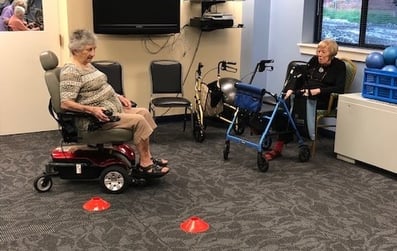 There isn’t anything easy about it. Residents were put to the test during
.jpg?width=438&name=Lung%20health%20GettyImages-961715338%20(1).jpg) COPD (Chronic Obstructive Pulmonary Disease) is a disease that makes it hard to breathe and, according to the
COPD (Chronic Obstructive Pulmonary Disease) is a disease that makes it hard to breathe and, according to the .jpg?width=381&name=Bored%20with%20exercise%20-%20girls%20GettyImages-844164510%20(1).jpg)
.jpg?width=476&name=Magnifying%20glass%20GettyImages-859832992%20(1).jpg)

.jpg?width=457&name=Group%20x%20dancing%20to%20music%20GettyImages-897892972%20(1).jpg) Pop in those earbuds and get moving. Exercise and music go hand-in-hand for many gym-goers. Listening to music is a great way to make your work out more enjoyable. There’s nothing like cranking up an upbeat, energetic, song that adds a little pep to your step. An excellent motivator, music helps you to keep up with the pace of your workout, and inspiring lyrics keep you moving. Those specific beats and lyrics can encourage you work harder and push you to complete your workout. Keeping up with the beat provided by music can prevent you from slacking and help you power through to reach your goals.
Pop in those earbuds and get moving. Exercise and music go hand-in-hand for many gym-goers. Listening to music is a great way to make your work out more enjoyable. There’s nothing like cranking up an upbeat, energetic, song that adds a little pep to your step. An excellent motivator, music helps you to keep up with the pace of your workout, and inspiring lyrics keep you moving. Those specific beats and lyrics can encourage you work harder and push you to complete your workout. Keeping up with the beat provided by music can prevent you from slacking and help you power through to reach your goals. 

 Whole grains have been advertised as being part of balanced diet for as long as I can