Corporate Fitness and Active Aging

3 Ways to Do Wellness Better with Better Resident Onboarding Processes

Raise your hand if your senior living community does not have a formal, functioning, and strategically built new resident onboarding/orientation/integration process. It’s common—really common—to see communities either have no process or expectations on how to integrate new residents, or to have expectations that are so loose and disorganized that the “process” is ineffective.

There is so much to take care of when someone moves in, not to mention all the other responsibilities of community jobs that don’t stop just because a three new residents arrived last week. Still, I think we’re missing a huge opportunity to do right by those new residents in the community’s wellness program when we only look at orienting them to the community as simply another item on the “to-do” list. You might be wondering how I’m making the leap on the orientation affecting wellness. Bear with me and read below about three ways you can do better with new residents to ultimately build a better wellness program.

Of course, in order for this to make sense, you’ll need to appreciate that I’m coming from the position that your wellness program is more robust than simply filling the calendar with “one and done” activities. For your wellness program to be multidimensional and person-centered, it has to be based on fulfilling the purpose and passions of the residents you serve. For tips on how you can better evaluate the quality of your programs, read this blog


#1: Shift Away from Telling Them What They Need to Know.1-_senior_independence

In most communities where I’ve provided wellness consulting, if there is any formal new resident integration process in place, it involves staff scheduling time with the resident to tell him about a particular area of the community. There’s usually collateral involved, and the time the staff member spends with the resident is usually a download of programs, services, and how-to’s related to that department.

I’m all for making sure new folks have the information they need in your community. They should absolutely know how to place a work order for service, how to reserve their seat on the bus trip to the symphony, and how to access their financial accounts with the community. But spending your “I’d like to get to know you better time” with that individual overloading them with do’s and don’ts, calendars, contact information, and anything else on your 20-point checklist will be daunting and downright exhausting for even those who are wildly enthusiastic about their move into your community. Imagine how it feels for those who are ambivalent about their transition.

This is not the end of your onboarding process.

#2: Start Focusing on Individual Purpose and Passion.

Once you’ve followed through on providing the basic how-to-get-what-you-need information for new residents, you can turn your attention to understanding individual resident passions. It’s understanding what makes an individual tick that sheds light on his potential. And that is the place you can help him connect in your community.

Several months ago, I wrote about the position of activities director and how it’s turned into something of an order-taker role. Tasking your activities director with onboarding new residents in a different way can be a great first step toward breaking down that order-taker paradigm. It could also be appropriate to consider a Community Navigator, as described in this blog from Glynn Devins, for this kind of role. Regardless of whose job it becomes, someone on your team initiates the “get to know you” visit with a new resident. But instead of using that time to download from a checklist, the time is spent asking open-ended questions that drive conversation and allow the staff member to honestly learn about what motivates and inspires the new resident.

I would advocate for some set/standard questions, but also allow space for the conversation to meander along the individual’s personal history to afford glimpses of who that resident is and what they’re truly passionate about. (In truth, your team members may need some training to learn how to do this style of conversation and investigation.)

Remember, too, that by the time a resident is ready to move into your community, they’ve already gone through the prospecting and sales process with your counselors. There’s a good chance that the resident answered several questions about personal interests as part of that wooing process, and using that information in advance of the 1:1 session will help maximize everyone’s time during that face-to-face meeting.

#3: Use What You Learn.

The information you gather from your sit-down with the resident should be used to start building a resident profile to help you connect that individual to opportunities in the community to learn and grow. You should also use the information you’re gathering from all new residents to build a database that informs your wellness programming strategy, because now (finally!) you have a basis from which to build programs and services that speak to the actual articulated needs of your residents. You’re no longer slapping spaghetti against the wall to see what sticks; instead, you’re building what they’ve asked for, and you’re feeding the resident’s purpose. You’re helping them live exceptionally well.

Are you ready to do wellness better? Learn more about wellness consulting.

Topics: senior wellness senior living community nifs fitness managment

What If: Health care providers worked together with exercise specialists to prescribe exercise?

Throughout 2015, we’ll be blogging about our dreams for corporate wellness, fitness, and aging well.  Some of the content will represent a gentle “poking fun” at the industry, but it’s all written to stimulate thought about what really could be if we put our heads together and started mapping out what’s really possible in the realm of individual wellbeing.  We hope you’ll join the conversation by commenting on the blogs, giving us additional ideas about which to write, and/or by finding us out on Twitter at #wellnesswhatif.

seniors_on_res_ballsYou’ve heard the saying, “it takes a village to raise a child”, right?  The idea is that a child needs a whole village worth of support an influence, and education, and diversity to be raised into a healthy and vibrant member of society.  If we look at individual wellbeing through a similar lens, I would say that it takes a team to help an individual be well. 

When I think about the generally poor health (admittedly, I tend to focus on physical health) for adults in the US, specifically preventable issues, I wonder how much is connected to adults simply not knowing how to choose better health and how much goes back to adults making unhealthy choices even though they know better.

Let’s face it, there are a lot of external players who influence an individual’s health.  I can’t get into all of those factors here, but I do want to focus on the potential for a better relationship between health care providers and exercise specialists.  What follows are some of the historical challenges as well as some what if ideas for working better together to take a team approach on individual wellbeing.

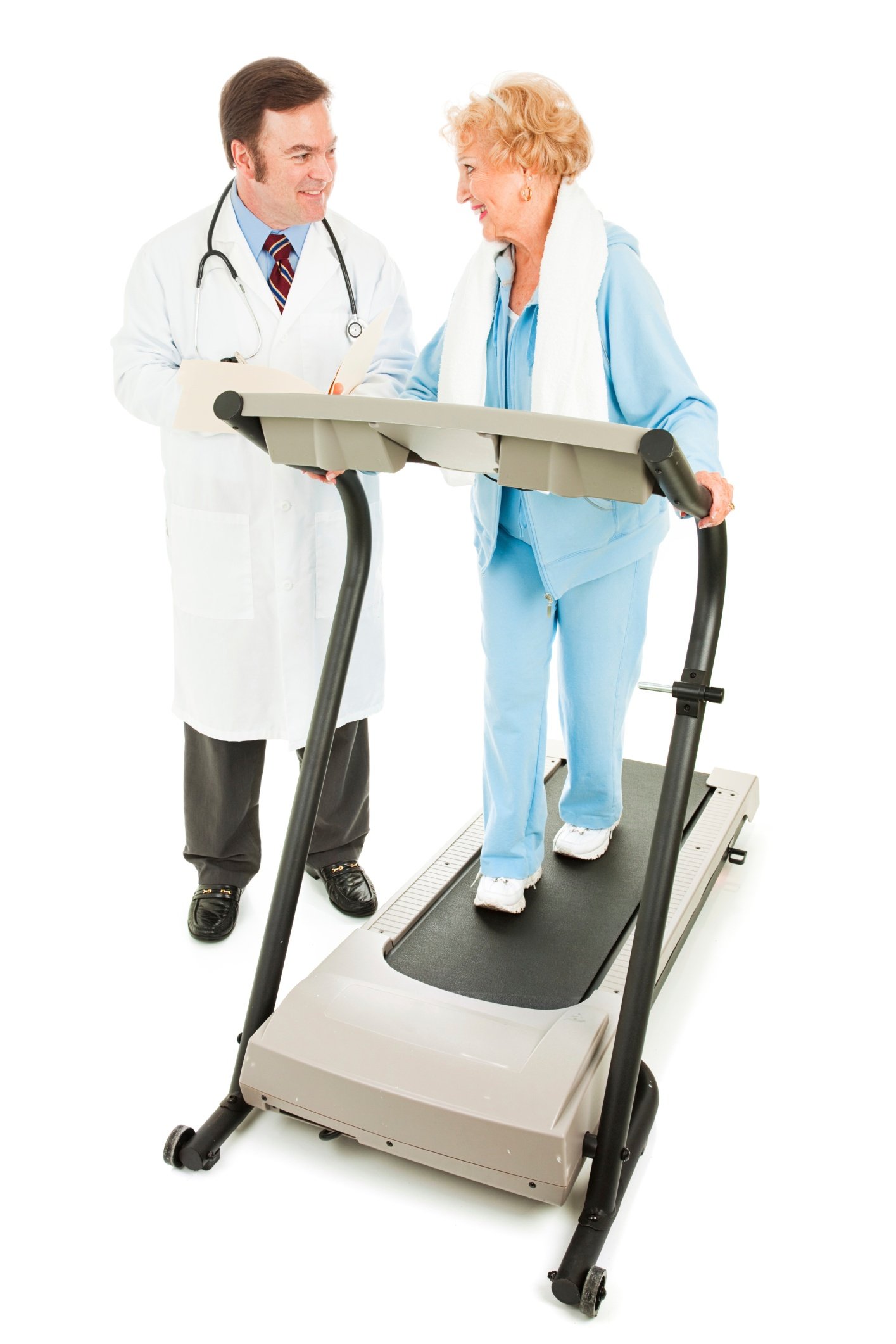
When I was working in corporate fitness several years ago, it wasn’t uncommon for me start talking with a new member about her goals for exercise and learn that she came to see me because their physician recommended she start exercising.  In further conversation, I would learn that either the doctor provided no guidance on how often, how much, what intensity of exercise would be best, or (sometimes worse) the physician would have provided recommendations that were not practical for the individual.

It was always so helpful, when working with individuals who had a complicated health history, to get a physician recommendation that took into account that complex health picture.  With more information from the doctor, I was able to write a more effective exercise prescription.  But more often than not, the physician is hurried and filling out one more form isn’t top on their list, so I’d get an almost blank form returned with little more than their signature.

          What if physicians had more time for discussion with patients about preventive health?

I think at least some of the barrier, though I’ve never heard anyone actually articulate this, is the image of the personal trainer.  The certifications available for personal trainers are many and varied in terms of their rigor and it leaves a lot of question about credentials.  Licensure has been debated for years in the industry and although the discussion varies by state (currently Louisiana is the only state with licensure requirements for clinical exercise physiologists), I think the reason licensure is even on the table is because the disparity among requirements for certification is so widely varied, it’s tough for even a well-educated individual to get to the bottom of what “certified personal trainer” really means.

What if all certifications had to meet a specific standard that raised the bar for education and experience?

The American College of Sports Medicine released an Exercise Is Medicine campaign years ago with the goal to have physicians make regular exercise a part of their recommendations for practitioners to their patients.  The program includes guidelines for health care providers as well as for exercise specialists to interact in the best interest of the public.  While some progress has been made on the partnership between the medical community and exercise professionals, there is much work to be done to bridge that professional relationship for the improved outcomes of the patients.

 What if health insurance supported visits with a certified exercise specialists as part of a prescription for better health? (Not unlike counseling from a registered dietitian accompanies a diagnosis of diabetes.)

 
What if general practitioner offices hired exercise physiologists to counsel patients right in their offices?
 
What if medical training provided some insight into exercise prescription and curriculum for exercise physiologists provided insight into what the doctor has to accomplish with a patient in an office visit?

We have a long way to go to build a strong village that contributes positively to individual’s health and this health care + exercise practitioner discussion is only one portion of that village.  What other areas are you passionate about?  Where do we need to build a better village to help individuals make healthier choices?


Topics: wellness exercise and health what if

Senior Living: Fitness Center Design for Current and Future Residents

father_daughterSeveral months ago, my parents were prospects in the market to relocate to a continuing care retirement community (CCRC) from their 4.5-acre home of almost 20 years. There were a variety of reasons for them making this move consideration, but age and ill health weren’t on that list. 

My parents (at the time of writing) are both 72 years old and in quite good health. My mom walks up to an hour with friends most days of the week; she’s done that for as long as I can remember. My dad is an avid exerciser and he’s the reason I’m a runner today. He gets significant cardiovascular exercise for more than an hour four to five days per week, along with rigorous strength training at least three days per week in his home gym. They are both very active in their community and in the extensive gardens and rich woods on their property.

They aren’t frail, and they don’t fit into the more typical average age of 80+ in most CCRCs. 

Checking Out a Community with My Parents

So when they started shopping and had narrowed down their list to a primary community that held their interest, they asked my family to join them for a tour. We walked through the community center building and got a great look into the typical areas including the bistro, the formal dining room, the library, the craft areas, and the fitness areas. 

After we left the community, and 100% without my prompting, my dad asked me why their fitness center had “all of that strength equipment for old people” in it. Those were his words, not mine. This comes from a man who has never belonged to a gym, who has exercised in his basement with modest equipment for decades, and who doesn’t bear an ounce of pretension. Yet he very quickly identified the “old people” equipment in his community’s fitness center.

Senior living community operators are in a tight spot when they try to cater to current residents but build space, programming, and services that they hope will appeal to future residents. The fitness center tour and post-tour discussion with my dad is no exception, and it’s exactly the reason that any operator engaging in a fitness center build—whether as part of brand new construction or as a positioning project—needs to thoughtfully and carefully establish their fitness center layout.

Design of the space and the equipment you select matters. Both elements can profoundly impact the residents’ experience in the space. And when your community is continually battling someday syndrome as a barrier to getting prospects to make the move, how you outfit the fitness center can also be a factor.

CCRC Fitness Center Equipment and Design Considerations

Here are a few things to think about with respect to senior living fitness center design and equipment that engages current residents and attracts future prospects: 

  • Create your group fitness studio and your fitness center as distinctly separate spaces. We see a lot of first-draft designs come with an accordion or partition wall between the two rooms. There is no actual utility for that design; and in fact, it may limit how both rooms can be used. 
  • Build size for the future. If your community is poised for a phase two or three that adds residential units and creates more potential fitness center members, build the initial fitness spaces for growth. 
  • Lay out the equipment with accessibility in mind. Put the equipment most likely to be used by your most frail residents nearest to your main entrance so that it is easy to access. 
  • Create clear sight lines for the fitness management staff. Design the spaces so that staff will have the greatest visibility possible for all areas. Part of the reason for having staff managing your fitness program is for participant safety. It’s tough to keep people safe when you can’t see them exercising.
  • Choose equipment that is built with an older adult in mind, but that doesn’t scream “old.” While there is currently a gap in the marketplace for a complete line of strength and cardio equipment well suited for this audience, that doesn’t mean you can’t buy beautiful and functional equipment that will work well both now and in the future. Contact me to get an operator’s perspective on the equipment that’s available

No doubt you have a lot to consider with a fitness center design project. If you’re a visual learner like me, you might get some inspiration from looking at a few of the projects we’ve been privileged to support.

Click on the button below to download a sample of our work!

Fitness Center Design

Topics: CCRC senior fitness management CCRC fitness center senior living communities fitness center for seniors nifs fitness center management senior wellness consulting

Employee Health: Five Tips for Sun Safety

outdoors2Sunshine and summertime is heading our way. With the weather temperatures rising and sunshine beaming down it’s easy to overlook the damaging effects too much sun can have on our health.  You should worry about your sun exposure all year long, not just in the summer months.  Be proactive in your sun protection as the weather warms up and you and your family start spending more time outdoors.  Overlooking the importance of protecting healthy skin can have devastating and lasting effects on not only one’s appearance, but also overall health.  Treat your skin with the care it deserves and stay safe from burns, blisters, and over-exposure with these five simple tips for sun safety.

  1. A shot a day! Always apply 1 oz of sunscreen when heading outside for extended periods of time.  Use “broad-spectrum” lotion with a sun protection factor or SPF of 30 or greater. 
  2. Apply & Repeat. Be sure to apply sun screen at least 15 minutes prior to heading out in the sun and remember to reapply every 2 hours.  Consider your activities while in the sun.  If you are enjoying some time in the water or dripping from sweat after a hot summer run reapply more frequently.
  3. Protect your Eyes.  Sun glasses are to eyes as sun block is to skin.  Don’t just lather up with lotion and be done with it.  Investing in a pair of UV protection sun glasses is vital to your eye health.  Plus, it’s the best way to guarantee optimal vision while playing, riding, running, or relaxing in the sun.
  4. Get Dressed to go out in the Sun. So what if its 70 degrees outside, you still need to put some clothes on.  Wear protective clothing, such as long-sleeved shirts, pants, and wide-brimmed hats when expecting to spend a day in the sun.  Unlike sunscreen that wears off in a couple hours, fabric doesn’t just evaporate in the sun.  Dress accordingly to protect your skin!
  5. Seek Shade.  Sitting under the shade of a tree or umbrella helps to significantly decrease direct sun exposure.  Although this is one alternative, it is not the only precautionary technique for limiting UV exposure. 

For optimal safety when out in the sun it is best to follow all five tips.  These simple proactive steps could determine how pleasant or miserable your future outdoor adventures are.  Keep that in mind the next time you step outside without adequate skin protection. 

Subscribe to NIFS blog

Topics: employee health health and wellness sun safety

Active Aging: Make no bones about it

walking_seniorsHow healthy are your bones? This may not be a question you can answer quickly. Many seniors already have weak bones and don’t know it, but the good news is you’re never too old to take steps towards keeping your bones strong. Strong bones support us and allow us to move well. They protect our heart, lungs, and brain from injury. Our bones are also a storehouse for vital minerals that we need to live.

When you think of bones, you might imagine a hard, brittle skeleton. In reality, your bones are living organs. They are alive with cells and flowing body fluids. Bones are constantly renewed and grow stronger with a good diet and adequate physical activity. The amount of calcium that makes up your bones is the measure of how strong they are. Your muscles and other systems in your body must also have calcium to work. Therefore if it is in short supply from what you get in the foods you eat, your body will simply take the calcium from the storage in your bones.

Falls are a common thing you hear about when discussing senior bone health. It is a major reason for trips to the emergency room and for hospital stays among older adults. You can help prevent fractures by maintaining the strength of your bones. If you fall, having healthy bones can prevent hip or other fractures that may lead to a potential severe disability. If bones are fragile, even a minor fall can be detrimental.  

Some things that weaken bones are out of your control. For example, if your family member has a bone problem, you could also be at risk. Also, some medical conditions can make you prone to bone disease. But there are also several things you can do to maintain your bone health as you age. 

Each day, calcium is deposited and withdrawn from your bones. If you don’t get enough calcium, you could be withdrawing more than you’re depositing. Be sure to get an adequate amount, this can be done by eating calcium-rich foods and taking supplements. It can be found in dairy products such as low-fat milk, yogurt, and cheese. You can also get it from orange juice, nuts such as almonds, soybeans, fortified cereals, and dark green, leafy vegetables such as broccoli and collard greens.

Vitamin D is necessary to help your body absorb the calcium. As you get older, your bodies need for vitamin D also increases. It is made by your skin when you are in the sun but many older people don’t get enough vitamin D this way. Eating foods with vitamin D, such as salmon, mushrooms, and fortified cereals and milk will greatly benefit your body. You can have a blood test done to check for a vitamin D deficiency or abnormal calcium levels. Taking supplements can help as well, talk to your doctor about how much vitamin D you need.

Physical activity is another way to keep your bones strong. Try to get a total of at least 30 minutes of physical activity a day, even if it’s broken up into 10 minutes three times a day. Participate in activities like walking, dancing, stair climbing, gardening, or strength training. When you jump, run, or lift a weight, it puts stress on your bones which sends a signal to your body that your bones need to be made stronger. New cells are then added which strengthens your bones.

Talk to your doctor about your bone health questions and concerns; together you can evaluate your risks. The doctor might recommend a bone density test. This is a safe and painless test that will assess your overall bone health and determine your risk for fractures. It is recommended that women over 65 and men over 70 should all have a bone density test.

By 2020 half of all Americans over 50 will have weak bones unless we make changes to our diet and lifestyle. As discussed, a diet that includes enough calcium and vitamin D and physical activity can help prevent bone loss and fractures. Take initiative today to keep your bones healthy and strong!

Get our Slideshare: Improve Resident Engagment

Topics: active aging bone density senior living community healthy living

Free Workout Friday: Boost Your Heart Rate With A Cardio Circuit

c--users-kgootee-desktop-free-workout-friday-final-resized-600

Boost your cardio and push yourself with this workout. Remember to take short rests between each exercise. Longer rests come at the end of the round! Your heart is a muscle so you want to challenge it when you work out. Alternating between bouts of high intensity cardio exercises and rest gives your heart a tough workout.  Music with higher beats per minute (120+) helps me get through tough cardio workouts. I focus on the beat of the music instead of how many reps I do. This workout doesn’t require any equipment. That means no excuses! You can do this circuit just about anywhere: your home, gym, or a park.

Work 30 seconds, rest 30 seconds, repeat circuit 1 time

  • Jumping jacks
  • Mountain climbers
  • Tuck jumps
  • High knees
  • Run in place
  • Star jumps
  • Butt kicks
  • Burpees

Do you find it hard to fit exercise in to a demanding workday?  Read this blog post for tips on how you can make exercise a part of your day!  For more blogs like this one, subscribe to our blog to receive them directly to your inbox.  

Subscribe to our blog

Topics: exercise at work corporate fitness Free Workout Friday fit it in

Active Aging: “We All Need to Be Needed”,Emotional Wellness and Dementia

When creating senior wellness programs, we often focus on the physical realm of wellness. I would like to take some time to talk about emotional wellness. In particular, I want to get into the emotional wellness of our residents with various forms of dementia. 

All too often when someone begins to feel the effects of some form of cognitive loss, they begin to pull away. At first it is out of embarrassment over not being able to recall a friend’s name immediately or the name of a common object, or the frustration as they lose the concept of time and place. 

senior_careTaking Care of Someone with Cognitive Loss

Imagine if you had the knowledge that you were no longer able to follow a conversation with a group of people and be able to equally contribute to that conversation. Wouldn’t that lead you to draw away from your friends and family to save yourself from such an embarrassment? All our youthful years we identify ourselves by what we do or what we know. I’m an athlete, a lawyer, a doctor, an engineer, and so on and so on. Wouldn’t this also lead you to be depressed if you could no longer identify yourself? 

What if we as the caregivers could do more than take care of someone with dementia? Do more than shower and dress and prop them up somewhere. Those of us in wellness tend not to be the ones to deal with the hygiene portion of an individual’s care, so how can we contribute to their daily lives? The easiest and best way is time and attention. Depending on the stage of disease, there are many things that we can do to let our residents know they are still loved. 

It is easy to say, “Yeah, but I don’t have time. I teach classes and run programs and work with people individually and there is just not enough time in a day.” There is good news. It does not take a lot of time. Programs can be created to include spouses, friends and family members, or volunteers to help share the responsibility of time. These programs can be built to be held in short increments of time. The most important thing with any of these programs is to just remember to be with your residents. Not shuffle them from place to place or activity to activity. Take the time to truly be with them. Let them tell you a story; ask questions about their interests. Don’t try to control the conversation. Let it go wherever it may, just as you do when catching up with a good friend. 

Ideas for Emotional Wellness Programs

Here are a few ideas to include in a dementia program:

Music time: Sing-alongs, classical music, or music of their time. Music is the universal language understood all over the world and is the best trick up our sleeve.Story time: This is not time to read a story to your residents. This is time to listen to your residents’ stories. Pay no mind if that story switches tracks; just be there to listen to that story and contribute to a conversation that may come out of it. 

Current events breaks: Try to focus on some happy current events. 

The most important thing to remember is to live in the moment, because that is all someone with dementia has: a series of moments. I encourage anyone who potentially will be spending time with someone with dementia to either read the book or see the movie Still Alice by Lisa Genova. It is a profound story that will open your world to an amazingly deep understanding of an individual’s perspective of the need to be needed.

New Call-to-Action

Topics: senior wellness programs brain health dementia memory care mental health emotional wellness

Free Workout Friday: Circuit Training for a Full Body Workout

c--users-kgootee-desktop-free-workout-friday-final-resized-600Circuit workouts are a great way to incorporate many exercises, using cardio, strength, or a combination of the two. Changing up stations throughout the workout will help increase your bouts of cardiovascular activity to increase your heart rate.  You can either choose to use time as an interval or a set number of repetitions. Don’t dilly dally and move quickly from one exercise to the next, only resting after each full round is complete.  Try for at least two rounds, if not three. 

 If you aren't much for timed workouts complete 10 reps at each stations and strive for three times around.

  • Bridge
  • Alternating lunge
  • Plank hop
  • Bicycle crunches
  • Pike
  • Superman
  • Fire hydrants
  • Leg raises

Check out this blog for another cardio circuit workout and subscribe to our blog below for more great content from NIFS Fitness Management.

Subscribe to our blog

Topics: exercise at work exercise at home Free Workout Friday health and fitness

NIFS Member Speaks: Tami Feaster turns her resolution into a lifestyle

members_speakTami is a determined woman.  She began as a secret exerciser doing her own thing.  She is now a bold woman with confidence willing to try everything she can.  She actively recruits co-workers to join her for exercise sessions at the onsite corporate fitness center in their workplace and is always game to try new exercises.  It has been fantastic to be able to get to know Tami during the past few years.

Turning a Resolution into a Lifestyle

It was the end of December 2011 when I saw a picture of myself from Christmas that year and I was horrified. I couldn’t believe that I had let myself get so out of control with my weight gain, eating habits, and lack of exercise. My face was round and my stomach was larger than it had ever been. At that moment, I decided that I was going to make a lifestyle change, I had to. I just prayed that I would have the desire to stick with it as many past New Year’s resolutions had not been successful.

That Christmas, my daughter had received a Wii console system and I decided this was going to be my mode of getting fit. I started by weighing in and found myself to be 225 lbs. at a height of 5’5 and according to the console, I was obese. That was not going to do it for me, a change had to happen!

TamiFeasterMy exercise routine started out by playing the activity games, step aerobics, yoga, stretching, “running”/jumping in place, etc. for approximately 5 days a week for 45 minutes or more. I also had access to a gym, which after a month or so of the Wii, was my next mode of exercise. I would wake up at 3:50 in the morning in order to make it to the gym, make it back home in time to wake my daughter up for school, and get to work by 7:30 am. It was hard at first, but the weight was starting to really come off and I loved seeing the results and feeling good. By April, I was jogging on the treadmill with a 12 minute mile. Wow! I couldn’t believe I was “running”! At that point I was hooked….I loved running!

Not only did my exercise habits changed, but so did my eating habits. We read so many articles about eating a healthy breakfast, 2 small snacks a day, portion control, low carbs, good carbs, fruits and veggies, well, I put it into practice. And it worked. I was starting to really know my body and what worked, what made me feel good, and how to get results. Education is key in obtaining a healthy weight loss goal.

I can’t really say that I’ve had any setbacks, which is amazing since it’s been over 3 years since I’ve started this lifestyle change. It’s a decision that I made back then and have not wanted to turn back. Since 2012, I’ve lost 63 lbs and have dropped 5 pant sizes. I’ve recently completed my first ½ marathon, although I didn’t finish in my goal time, I finished a measly 13 minutes over my goal. That just means I need to train a little bit harder next time. By no means am I finished with my goals that I keep setting for myself. Once I set a goal and meet it, I set a new goal for myself and keep going!

My advice to you….make the decision to make a better you! Strive to be healthy and you will succeed!

*Weight loss claims or individual results vary and are not guaranteed.


Subscribe to NIFS blog

Topics: employee health corporate fitness NIFS members speak member testimonials testimonials

What if: Occupancy and budget were not obstacles & you could focus on improving resident lifestyles?

Throughout 2015, we’ll be blogging about our dreams for corporate wellness, fitness, and aging well.  Some of the content will represent a gentle “poking fun” at the industry, but it’s all written to stimulate thought about what really could be if we put our heads together and started mapping out what’s really possible in the realm of individual wellbeing.  We hope you’ll join the conversation by commenting on the blogs, giving us additional ideas about which to write, and/or by finding us out on Twitter at #wellnesswhatif.

seniorlivingwomentalkingWe do a lot of wellness consulting in senior living, and by “wellness”, I mean non-clinical, lifestyle-focused consulting.  For many of our clients, that consulting relationship involves a thorough review of their “activities” department; in other cases, it’s focused more on what’s happening with their exercise program.  Regardless of the original area of focus, we always arrive at the same point – building a strategy that allows the community to shift from filling a calendar toward supporting resident purpose and passion.

Often, when I talk with a client who thinks he’s interested in having us come onsite to consult, there’s a heavy discussion about cost.  And while I certainly understand a business’s sensitivity toward expenses, I often wonder:  If budget (and occupancy – the two are inextricably linked) was no obstacle, what would you be expecting from your activities department?

Leadership in senior living communities have a lot to focus on, and it makes sense that activities might not rank near the top.  In fact, it’s common for that department to be well-liked by residents and to be well rated on satisfaction surveys.  So no pain point exists because there doesn’t appear to be an issue.  The challenge with continuing to look the other way is two-fold:

  1. Your current residents may not realize what’s possible, so putting your faith in them to be your barometer for when something needs to change is ill-placed.  That is particularly true with activities because that area of your community traditionally bears out the 80/20 rule where 20% of your residents engage in 80% of the activities.  You are likely supporting the interests of a vocal minority in your community.  And the question becomes: What is your activities department developing to meet the needs and interests of the less-engaged majority? 
  2. The adult child knows better.  They are not content with bingo, cards, and trips to the theatre, and they won’t be fooled by a full calendar that lacks opportunities for them to live out passions, dreams, and purpose. 

If you think your programming is top notch and you perhaps just have an engagement challenge, take a look at our slideshare on how to get your residents to engage.

Get our Slideshare: Improve Resident Engagment

Maybe you know wellness is an important differentiator for your community, but you really feel compelled to nail down a more favorable and consistent occupancy rate before you begin fine tuning programming and other lighter elements at your community.  I can see why you’d adopt that philosophy, but before you stake your claim there, consider reading this blog on how and why wellness is an important differentiator for any community.

Think also about the long term investment of putting in some money up front on wellness consulting that breathes new life into your campus and creates a new outlook on how activities are developed and delivered.  It’s a chicken and egg debate but if a $5,000 investment could be an important step toward solidifying occupancy and thus improving your budget outlook, would that $5,000 be worth it?

Here’s our picture of what it means to do wellness better in senior living:

  • When you do wellness better, you have data your marketing and sales staff can work with to back up their stories with prospects about how fantastic it is to live well at your community. 
  • When you do wellness better, you have more diverse, robust, and life-enriching programming on your calendar that appeals to a wide audience. 
  • When you do wellness better in your community, you create natural bridges across departments for collaborative programming so that one over-worked activities director doesn’t have to do it all. 
  • When you do wellness better you understand individual resident passions and interests and incorporate those at the personal and program level to ensure opportunities where you residents can live with vitality in the ways that are true for them. 
  • When you do wellness better, you do so much more than fill a calendar.  You map out a program and service strategy, informed by data, resident interests, and past successes.

If you think your community may be falling short in one or more of those areas, check out what we have to offer in the way consulting to help you do wellness better.

Are you ready to do wellness better? Learn more about wellness consulting.

Topics: senior wellness senior living senior living community wellness consulting what if resident wellbeing senior wellness consulting