
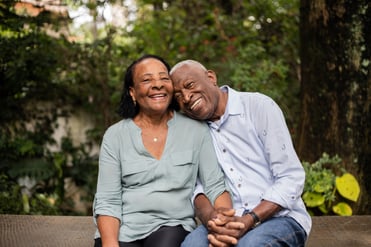
 Let’s take a moment to think about your internal dialogue about exercising or just before a workout. Did it sound anything like “I’m too tired, I don’t have enough time, my back hurts”. Negative self-talk creates resistance and can make it even harder to start. Now, picture this: “Thank your body for this energy to move. Thank you, lungs, for my ability to breathe without thinking about it. Thank your body for strong legs that can carry me through this walk or run. Thank you for this time to dedicate to my health”. Doesn’t that feel like a breath of fresh air?
We often think of fitness in terms of reps, sets, weights, miles, calories, and the numbers on a scale. We focus on the doing, the going, the movement combined with sweaty clothes and achievements. One of the most powerful tools cannot be measured by reps, miles, sweat, or achievements; it is gratitude. Gratitude strengthens the mind-body connection and transforms how we show up for ourselves. When you shift your focus from what your body can’t do to everything it can do, you unlock a reservoir of motivation and appreciation that changes your relationship with exercise. The power of perspective.
 There is a quote that keeps coming to mind as I write this…” Gratitude fuels consistency”. First, I think we all know that when it comes to fitness, you must be consistent; otherwise, there is no overload, no progress, no change. Consistency is the key to any fitness success. Gratitude addresses two enemies of consistency: burnout and self-judgment. With the practice of gratitude, you begin to cherish the journey and stop chasing results. You become more mindful of small victories, and this positive feedback will help make you more likely to show up again.
Fun fact time… “Studies show that practicing gratitude lowers cortisol levels and improves sleep, both of which directly affect energy and endurance.” Pretty cool, right?
Let’s dive into the mind-body connection for a moment and how gratitude helps you stay present during your workout. For example (picture this): You are in the middle second set of squats…You begin to focus on the immediate sensations…. the burn in your muscles, the rhythm of your breath, the feeling of the surface under your feet (to root yourself for more energy and strength). Those cortisol lowering benefits we mentioned earlier are happening during exercise along with a boost of mood elevating neurotransmitters...this helps make your exercise more enjoyable. This is a shift from focusing on the physical act to becoming a moving meditation and being thankful for your gift of health.
.png?width=340&height=340&name=Untitled%20design%20(38).png) Most of us know that exercise is good for our physical health. It helps us stay strong, improve our balance, support our heart health, and continue doing the things we enjoy. But movement is not only good for the body. It can also have a meaningful impact on how we feel.
Most of us know that exercise is good for our physical health. It helps us stay strong, improve our balance, support our heart health, and continue doing the things we enjoy. But movement is not only good for the body. It can also have a meaningful impact on how we feel.-1.png?width=376&height=219&name=Untitled%20design%20(37)-1.png)
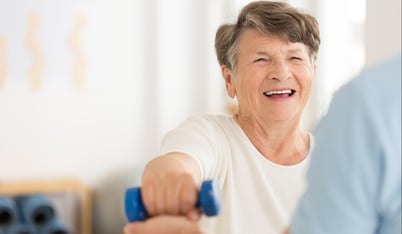 Building strength by being still… did you know there was such a thing? My guess is yes, if you take a moment to think about it. Many of us associate getting stronger with constant movement, lifting weights, running, or completing repetitions. However, some of the most effective exercises actually involve holding completely still.
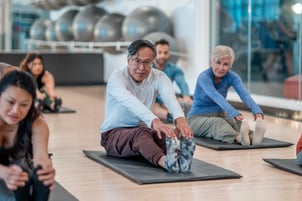 It is natural for our bodies to lose mobility and stiffen as we age. This results from becoming more sedentary as we get older. The less we move our bodies, the more our body adapts to the lack of movement by reducing its range of motion. That is where the famous saying “move it or lose it” comes into play.
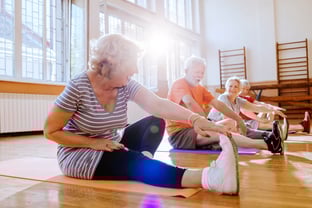 Why Flexibility Declines With Age
 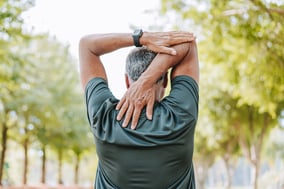 Think about the last time you took a walk and really noticed how your body felt. Were you light on your feet, or did you feel like you were leaning forward or shuffling a bit? How we hold and move our bodies affects how steady, strong, and comfortable we feel.
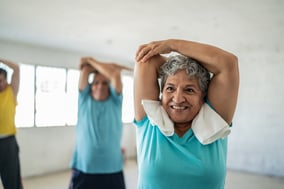 We all want to stay strong and active as we age, but real strength isn’t just about how much weight you can lift or how far you can walk—it’s about how you carry yourself. Good posture is like a superpower. It helps you move with confidence, reduces pain, and gives you more energy throughout the day. When we stand tall, everything from balance to breathing improves.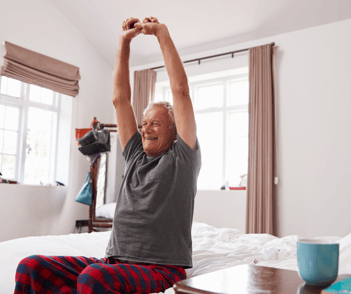

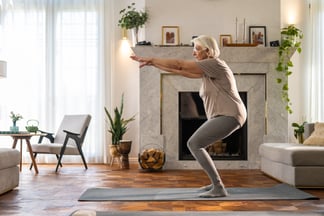 Improving and maintaining your balance is central to help prevent falls and avoid injury. There are many ways to enhance your current level of balance, whether it be getting your daily steps in by walking, taking weekly chair or standing yoga classes, or by strengthening your stability muscles to help keep your body standing strong. Balance is much more than simply standing on one leg. Consider this 3-step approach to improve your balance potential.
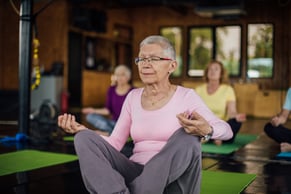 Mindfulness isn’t just a way to hit pause on a busy mind; it’s a tool that helps you get out of your head and into the present moment. Not only does it improve focus and creativity, but the more mindful we are, the better we handle life's challenges.