
 Strength training, also known as resistance training, uses external resistance to improve physical function, build strength, and increase lean muscle mass. While many people recognize its role in building muscle, strength training also provides two often-overlooked benefits: increasing energy levels and helping prevent injuries.
Improving Energy
To understand how strength training improves energy, it's important to look at the role lean muscle mass plays in the body. Beyond helping you move, muscle is metabolically active tissue that requires energy (calories) to maintain. Because of this, muscle directly influences both your resting metabolic rate (RMR) and basal metabolic rate (BMR).
- Resting Metabolic Rate (RMR): The minimum number of calories your body needs to perform daily functions, including low-effort activities. RMR accounts for up to 75% of the energy you burn throughout the day. The most accurate way to measure your RMR is through indirect calorimetry testing at a laboratory, although many fitness trackers can provide a general estimate.
- Basal Metabolic Rate (BMR): The minimum amount of energy your body requires to support essential bodily functions such as breathing, circulation, and organ function.
How does strength training affect your energy?
As you build lean muscle through strength training, both your BMR and RMR increase. This means your body burns more calories even while you're at rest.
Higher metabolic rates can:
- Make it easier to reduce body fat.
- Support healthy weight management.
- Help sustain energy levels throughout the day.
- Increase the total amount of energy your body can use each day, giving you a greater capacity for daily activities.
Injury Prevention
In addition to improving energy, strength training plays a vital role in reducing the risk of injury. Building lean muscle and consistently performing resistance exercises helps your body become stronger, more stable, and better prepared for everyday movement.
Why is strength training important for injury prevention?
- Improved coordination: Strength training enhances the mind-body connection, allowing for smoother, more controlled movement during everyday activities.
- Increased bone density: Stronger bones can help reduce the risk of fractures and breaks.
- Natural body armor: Muscle acts as a form of shock absorption, helping protect your body from bumps, slips, and falls.
- Healthier joints, ligaments, and tendons: Building muscle around your joints reduces stress placed on them while strengthening the surrounding ligaments and tendons as they adapt to increased resistance.
Where to Start
If you are overweight, have a medical condition, or haven't exercised in a long time, talk with your primary care physician before beginning a strength training program.
If you're looking for guidance, speak with our staff about working with a personal trainer or joining one of our strength training classes.
If you'd rather start on your own, begin with simple bodyweight exercises such as:
- Squats
- Lunges
- Push-ups
- Crunches
Starting with these foundational movements can help you build strength, improve confidence, and establish a routine that supports both your energy levels and long-term health.
 Summer is the perfect time to get outside, stay active, and work toward your fitness goals. But with longer days, warmer weather, and the pressure to stay in shape, many people end up doing more than their bodies can handle. Whether you're hitting the gym, training for a race, or enjoying outdoor activities, staying healthy means finding the right balance between exercise, nutrition, hydration, and recovery.
 According to the CDC, one in four older adults falls every year, which results in 14 million falls each year in the US. There are many contributing factors that lead to a fall; sometimes it might be out of the person’s control, but knowing this staggering fact, it would be wise for all older adults to invest time in their health and fitness. My favorite part of exercise is that almost all movement is considered exercise, so if you are intentional about movement every day, you will see maintenance or improvement in your fitness. What is even better, is if you challenge yourself, even in small ways, you will see even more improvement. Today, I would like you to consider challenging yourself for better balance.
  It’s raining, it was a rough day, my sports team lost, my dog looked at me funny. There are so many easy excuses to go home, relax on the couch, crack open a cold pint of ice cream, and take the stress away with a favorite show. Seems like the way to deal with the challenges in life, right? Maybe for an occasional day, but there’s something better out there! Believe it or not, strength training is a great way to build resilience to life’s problems.
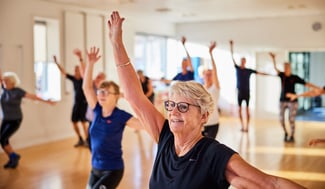 When I think about my fitness journey, I realize the biggest changes weren't just physical. Of course, getting stronger, improving my balance, and feeling healthier were all exciting milestones. But what truly kept me coming back wasn't the workout itself; it was the people. I knew others were expecting to see me, and before long, I was looking forward to seeing them too.
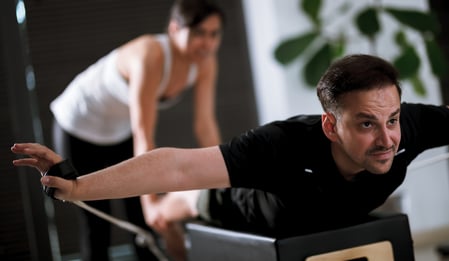 Did you know your everyday posture could have an effect on your overall health and wellness? Your posture is a makeup of your musculoskeletal system at work to maintain proper positioning throughout the body regardless of it you are in motion or static. While posture tends to be an automatic position that most of us do not notice, being hyperaware of your posture throughout the day could lead to positive overall changes in spinal health, balance, movement efficiency, breathing, focus, mental health, and maximizing your muscle gains during exercise.
 When life gets busy, it can be hard to always get into a proper workout space or gym to get a workout in, especially with tight-packed schedules, family life, or work stress, and finding the right time. This can make it easy for regular fitness habits to be placed on pause, with it being difficult to go back. Being active does not have to be a time-consuming commitment or create unnecessary stress. Doing small workouts that are 30 minutes or less can be effective and keep you active without requiring large amounts of time. Exercise does not have to be done in a gym setting; even short amounts of physical activity have been found to improve sleep, elevate energy levels, and reduce stress.
 “I don’t always enjoy exercising, but I love when it’s done!” This statement is one of the most popular comments I hear in the fitness center, whether it’s a class or someone exercising on their own. Then, they often explain that it’s not just that they’re glad the exercise is over, but it’s about how they feel afterwards. They relieve stress, they feel accomplished, and even feel energized afterwards. We know there are many physical benefits to exercise, such as improving heart health, controlling blood pressure, improving bone, joint, and muscle health, and reducing the risk of type 2 diabetes. Recently, it is also becoming more common to hear about the mental and emotional benefits of exercise.
 Building strength by being still… did you know there was such a thing? My guess is yes, if you take a moment to think about it. Many of us associate getting stronger with constant movement, lifting weights, running, or completing repetitions. However, some of the most effective exercises actually involve holding completely still.