
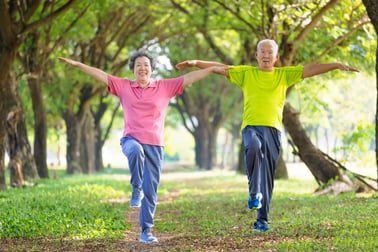
 According to the CDC, one in four older adults falls every year, which results in 14 million falls each year in the US. There are many contributing factors that lead to a fall; sometimes it might be out of the person’s control, but knowing this staggering fact, it would be wise for all older adults to invest time in their health and fitness. My favorite part of exercise is that almost all movement is considered exercise, so if you are intentional about movement every day, you will see maintenance or improvement in your fitness. What is even better, is if you challenge yourself, even in small ways, you will see even more improvement. Today, I would like you to consider challenging yourself for better balance.
- Walking! Holy smokes is walking underrated. And you might think to yourself “I walk all the time!” But are you really? Consider your typical 8 hour day, how many steps do you get? Adults 60 and older and in good physical health should aim for 6,000-8,000 steps/day. For someone with lower mobility, you should aim for 3,000-4,500 steps/day. Being upright and using your legs automatically engages you in balance exercise.
- Seated Exercise. Wait a minute… I just said that walking was one of the best ways to work on balance. Yes, it is, but walking isn’t easy for everyone, every day. You might have neuropathy, back pain, or experienced falls already, so walking feels a little scary… If this is the case, engaging in seated exercise 3-5 times/week like seated marches, leg lifts, toe taps, seated crunches, etc. improves muscle strength and endurance which are vital for balance.
- Specific Balance Exercises. Exercise that focus specifically on balance such as Tai Chi, Single Leg Stands, Heel to Toe Walking, Foam Balance Pad work, etc. challenge your balance so your body can practice reaction. Fitting in these types of exercises 2-3 times/week is ideal. Remember to start with exercises that are slightly challenging before progressing to more advanced work.
- Strength Exercises. Building muscle is so important when it comes to your overall health, but especially when it comes to stabilizing the body. Without strong muscles, your body has a harder time of standing up straight, handling obstacles, and reacting. Utilizing dumbbells, resistance bands, or selectorized strength equipment (like what you find in a gym), and water resistance in the pool are all ways to increase strength!
- Diet and hydration. Believe it or not but exercise isn’t the only piece to the puzzle when it comes to better balance. You must eat a balanced diet for level blood sugar, you must take proper medications to avoid interactions, and you must stay hydrated to avoid dizzy spells that accompany dehydration.
If you have a goal of improving your balance, start with these simple steps. Engaging in daily activities like these will help you pinpoint where you struggle when it comes to balance and other fitness and mobility areas. Take those cues and work on them one at a time. Improvements doesn’t happen overnight, so keep at it! I know you will do great!