
Corporate Fitness and Active Aging

Why Functional Movement Matters

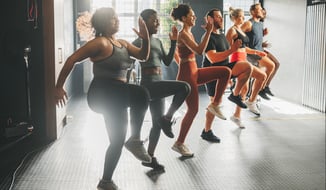
GettyImages-1428463538Functional movement means training your body to move the way it does in daily life, using several joints and muscle groups at once instead of just one. Rather than sitting in a machine to work only a single muscle or group, you pull, push, squat, and twist in ways that match real-life actions like picking up groceries, climbing stairs, reaching overhead, or catching yourself if you trip. The main idea is simple: your body never moves just one muscle at a time, so your workout shouldn’t either.

Functional vs. Isolation Exercises

Traditional gym workouts often use isolation exercises like triceps extensions, leg curls, and chest flyes. These moves target one muscle at a time and are good for building up specific muscles, which is why bodybuilders use them. However, they don’t help your muscles learn to work together as one unit.

Why Training Multiple Muscles Matters

A study compared compound exercises like squats and rows to single-joint moves like leg extensions and bicep curls, with both groups doing the same amount of training. People who did compound exercises got stronger in all the exercises tested. This is probably because using several joints at once challenges and trains your nervous system more.

For example, someone who can power clean 200 pounds has taught their grip, back, hips, and legs to work together. Someone who only does heavy leg curls and back extensions might have strong muscles, but they haven’t practiced the coordination needed to safely lift heavy.

This doesn’t mean isolation exercises have no value. They are helpful for correcting a weak muscle or for bodybuilding. But if your goal is general fitness, better sports performance, or being able to handle daily tasks, functional compound movements give you more results for your time.

Functional Movement and Injury Prevention

One of the best reasons to do functional training is that it can lower your risk of injury. A review published in PeerJ looked at studies where athletes did functional correction training, which means checking for movement problems and then working to fix them. Athletes who did this training had a 60% lower risk of injury compared to those who didn’t.

The reason is simple. Most non-contact injuries happen when a weak spot in your body makes another part take on too much stress. For example, an athlete or person with weak hips might end up with knee pain. An office worker who can’t bend at the hips properly might hurt their lower back when lifting a suitcase. Functional training helps find and strengthen these weak spots before they lead to injuries.

How to Add Functional Movement to Your Workouts

If you’re new to functional training, the easiest way to start is to make sure your weekly routine covers all seven movement patterns. A workout with goblet squats (squat), deadlifts (hinge), walking lunges (lunge), push-ups (push), rows (pull), and a rotational exercise like woodchops (twist) covers every pattern. Walking or running takes care of gait.

Start with body weight or light resistance and focus on moving well before adding more weight. Good quality of movement matters more than how much you lift, especially in the first few months.
Topics: exercise functional movement movement

Loop Band: Lower Body Strength and Joint Health

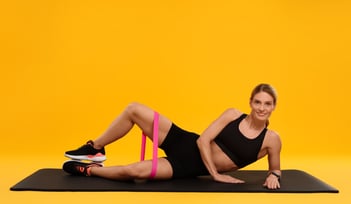
GettyImages-1954473359Lifting heavy is great for meeting your goals of increasing muscle size and tone, but it can also lead to joint pain and muscle imbalances. Adding a Loop Band to your training plan can help strengthen your stabilizing muscles in your hips and glutes. The band can also lessen strain on your knees and hips.
A loop band is like a resistance band, except it is a continuous loop. This allows you to put it around your ankles or knees without having to hold it with your hands. The shape of this allows for different uses than a traditional resistance band. The loop band comes in different lengths and thicknesses, allowing you to pick the correct band for your specific needs. Loop bands generate constant tension while doing the exercise, and the harder you pull against the band, the more it pulls back on you. The properties of these bands activate your stabilizer muscles during the full range of motion.

These stabilizer muscles are key in keeping your joints aligned and moving the way they are intended. Bands are a great change-up from heavy load workouts and are a fantastic supplement to protect your joints. Adding loop bands to your routine is a great way to add strength to your lower body, protect your joints, and engage your stabilizer muscles in your hips.

Lateral Band Walks
15-20 steps each direction x2
  • Place the band around your ankles or just above your knees. Drop into a mini-squat position and take steady steps to the side, keeping the band stretched tight. This exercise builds outer hip strength and teaches your knees to track straight.

Standing Glute Kickbacks
15-20 total x2
  • Keep the band around your ankles. Hold onto a stable surface for balance, tighten your core, and press one leg straight back behind you without arching your back. This isolates and sculpts your glutes.

Fire Hydrants
15-20 total x2
  • Start on your hands and knees with the band positioned just above your knees. Keeping your knee bent at a 90-degree angle, lift your leg out to the side. This movement locks in hip stability and targets hard-to-reach muscles.

Clam Shells
12-15 per side x2
  • Lie on your side with your knees bent and the band just above your knees. Keeping your feet glued together, open your top knee toward the ceiling like a clamshell to strengthen your deep hip rotators.

Glute Bridges
20-25 total x2
  • Place the band around your thighs just above your knees. Lie flat on your back with your knees bent and feet on the floor. Lift your hips toward the ceiling while gently pressing your knees outward against the band to maximize glute activation.

Glute Bridge w/ alt Leg Raise
12-15 / leg total x2
  • Hold your body at the top of a standard glute bridge, then lift one foot a few inches off the floor while keeping your hips completely level. Alternate legs to challenge your core and hip stability.


Topics: work-life balance workout Loop Band

JumpStart July: 82 Residents, One Month, Incredible Progress

Jumpstart Logo_MFBH

At NIFS, we believe great wellness programming should be intentional, measurable, and responsive to the residents we serve. Data is an essential part of that philosophy, helping us better understand resident engagement, recognize progress, and continuously shape programming that supports meaningful outcomes. JumpStart is one piece of our broader service model that helps us put that philosophy into action.

In July, we placed a special focus on taking a closer look at the progress residents were making across our partner communities. The response? WOW!

In just one month 82 residents completed their jumpstart program, and the outcomes gave us a lot to celebrate! Of the 82 residents 53 were women and 29 were men; a summary of their results are below:

22% improvement in lower-body strength.

  • Think of standing up from a chair more easily, navigating stairs, and having more strength for everyday transfers.

15% improvement in upper-body strength.

  • Strength that supports carrying groceries, opening doors, lifting household items and completing everyday tasks.

23% improvement in cardiovascular endurance.

  • More stamina for walking through the community, participating in outings, keeping up with friends and simply doing more throughout the day.

53% improvement in lower-body flexibility.

  • Supporting everyday activities like putting on shoes and socks, getting dressed, reaching toward the floor and getting in and out of a vehicle.

45% improvement in upper-body flexibility.

  • Important for reaching into cabinets, putting on a jacket, brushing their hair, and other daily activities.

8% improvement in balance and stability.

  • Supporting confidence while changing direction, navigating uneven surfaces and moving throughout the community.

The July results gave us plenty to celebrate, but they also reinforced something even more important: this is part of how we do wellness at NIFS. What makes these outcomes so exciting isn't just what happened in an assessment, it's what those improvements can mean in real life. More strength can mean getting up from the dinner table independently, more endurance can mean saying yes to taking a walk with a friend, more flexibility can make getting dressed in the morning a little easier, better balance can mean feeling more confident moving throughout the community and sometimes seeing those results on paper gives the resident something equally important: proof that the work they're putting in is making a difference.

JumpStart isn’t a short-term campaign or a once-a-year initiative. It is part of our standard service model and our commitment to using data to better understand the residents we serve, demonstrate meaningful progress, and program with intention.

Across our partner communities, hundreds of residents have participated in the NIFS JumpStart program, giving our teams valuable insight into resident abilities, progress, and opportunities for continued engagement. That information helps us tell a bigger story, not just about participation, but about the impact wellness programming can have on strength, endurance, mobility, balance, independence, and everyday life.

Click below to learn more about NIFS and how we take your fitness and wellness programs from good to great!

Topics: active aging fitness programs for seniors senior living wellness programs improving senior fitness jumpstart

The Link Between Movement and Mood

Untitled design (38)Most of us know that exercise is good for our physical health. It helps us stay strong, improve our balance, support our heart health, and continue doing the things we enjoy. But movement is not only good for the body. It can also have a meaningful impact on how we feel.

Think about the last time you took a walk, stretched after sitting for a while, or joined a fitness class. There is a good chance you felt a little more energized, relaxed, or positive afterward. Movement can be a simple way to support both our physical and emotional well-being. The best part is that you don’t need to complete a long or difficult workout to feel the benefits.

Movement can be as simple as walking down the hallway, stretching in your chair, working in the garden, or moving along to a favorite song. It might mean joining a group fitness class, completing a few balance exercises, or taking five minutes to move before starting your day. It all counts!

Movement can also give us a much-needed break from whatever may be weighing on our minds. When we are worried, frustrated, tired, or simply having a tough day, a little activity can help us reset. It gives us something positive to focus on and may help us return to the rest of our day feeling a little clearer or more refreshed.

Untitled design (37)-1
There is also something powerful about the feeling of accomplishment that comes from moving our bodies. Maybe you walked a little farther than you expected. Maybe you tried a new class. Maybe you completed ten minutes of activity on a day when you did not feel like doing anything at all. Those small wins matter.

Of course, exercise won't make every difficult feeling disappear, and that is not the goal. We all have days when we feel stressed, sad, frustrated, lonely, or unmotivated. Movement is simply one tool we can use to care for ourselves during those moments.

The key is finding an activity that feels enjoyable and realistic for you. Try to start with just five minutes and notice how you feel. You may feel calmer. You may have more energy. You may feel proud that you did something positive for yourself.

There is no perfect workout, and every day does not have to look the same. Some days you may feel ready for a full class or a longer walk. Other days, a few gentle stretches may be enough.

The next time you need a little boost, remember that movement may be one of the simplest places to start. Move in a way that feels good, make it something you enjoy, and give yourself credit for every step.

Register your senior living community for our nationwide Move Your Mood event on Tuesday, October 6. Join us as we strive for 5,000 senior workouts in a single day!


Topics: emotional wellness movement Wellness Companion Move Your Mood