
.jpg?width=408&name=GettyImages-494388997%20(1).jpg) It should come as no surprise that most people aim to improve their lives in one way or another with the start of a new year. Particularly when it comes to focusing on better health and fitness, January’s clean slate seems to be the ideal time to get back on track and into shape immediately following the busy holiday season and prolonged period of indulgence. This seems to be a universal practice as we have found that to be no exception for our members and residents in senior living communities!
It should come as no surprise that most people aim to improve their lives in one way or another with the start of a new year. Particularly when it comes to focusing on better health and fitness, January’s clean slate seems to be the ideal time to get back on track and into shape immediately following the busy holiday season and prolonged period of indulgence. This seems to be a universal practice as we have found that to be no exception for our members and residents in senior living communities!
NIFS partners with communities across the US to manage their fitness center programming. Similar to most public gyms, our staff also notice patterns related to New Year’s resolutions. In the first few days of January we have come to expect an influx of participation, but these numbers start to decline after a few weeks as old routines creep back and resolutions are abandoned.
Knowing how to set goals, find motivation, build better habits, and remain consistent are all huge components of why so many “resolution-setters” fail. In fact, one study conducted by the University of Scranton suggests that only 8% of people stick to their resolutions, so we saw this as an opportunity to better support the communities and residents we serve and developed NIFS Five Star Fit Club. We piloted this program in ten communities for the first time in January 2019 and it resulted in:
- Total visits: An average increase of 21% in total resident participation to the fitness centers in January 2019 compared to January 2018.
- Group Fitness Visits: An average increase of 28% in participation in group fitness classes in January 2019 compared to January 2018.
- Appointment Volume: Resident engagement increased by 135% in the number of appointments conducted in January 2019 compared to January 2018.
- New Members: Across the communities, a total of 43 residents began participating in their fitness center for the first time as a direct result of the Five Star Fit Club program.
This incentive program is three weeks long and includes both a personalized assessment and exercise prescription as well as an interactive workshop where residents learn how to effectively change their habits and routines. Additionally, members are encouraged to visit their community’s fitness center independently and attend a set number of group fitness classes. The premise of the program is for participants to earn five stars over the three-week period by participating in the mentioned programs and services. In doing so they are being recognized and rewarded, experiencing accountability, and sensing small wins all while creating sustainable healthy habits and routines to keep them on track for the remainder of the year!
In 2020, even more NIFS clients are kicking off the New Year with the 5-Star Fit Club and we look forward to hearing about the healthy habits and lifestyle choices residents adopt. Robust programs like the 5-Star Fit Club are a great way for senior living providers to support resident well-being while increasing utilization of amenities such as their fitness centers and pools. Click here for some other programming twists brought to NIFS clients.

.jpg?width=396&name=GettyImages-864508820%20(1).jpg) The holidays are a busy time for everyone. Multiple family gatherings, end of the year projects, tons of shopping, yet somehow you have to find time to exercise. Consistency is key with almost everything in life if you want to continue to have motivation towards something important to you. Often times individuals find themselves taking one or two days off from something and those couple of days turn into a week or a month. Exercise is especially something that can be difficult to get back on track after a short break, so continuing your normal routine is vital.
The holidays are a busy time for everyone. Multiple family gatherings, end of the year projects, tons of shopping, yet somehow you have to find time to exercise. Consistency is key with almost everything in life if you want to continue to have motivation towards something important to you. Often times individuals find themselves taking one or two days off from something and those couple of days turn into a week or a month. Exercise is especially something that can be difficult to get back on track after a short break, so continuing your normal routine is vital.
.jpg?width=383&name=GettyImages-936397332%20(1).jpg) Walking everywhere is slowly becoming a bigger trend, specifically in states that it never used to be. As fitness trackers are being used more and more, step challenges are increasing both at work and at home. Research is discovering the benefits of walking and ensuring that people are getting their steps in every day. Walking is one of the best means to reach physical activity recommendations and by meeting those recommendations, individuals lower their risk for diseases such as cardiovascular disease, diabetes, obesity, and many more.
Walking everywhere is slowly becoming a bigger trend, specifically in states that it never used to be. As fitness trackers are being used more and more, step challenges are increasing both at work and at home. Research is discovering the benefits of walking and ensuring that people are getting their steps in every day. Walking is one of the best means to reach physical activity recommendations and by meeting those recommendations, individuals lower their risk for diseases such as cardiovascular disease, diabetes, obesity, and many more. When thoughtfully planned and executed well, there are a variety of opportunities to generate revenue out of robust health and fitness programs in senior living communities. But you might be thinking, “I didn’t realize there was ANY revenue potential."
.jpg?width=383&name=GettyImages-1008096704%20(1).jpg) All personnel working in a senior living community have a stake in supporting resident well-being from your concierge to your bus drivers to your service staff in the dining room. The daily interactions your team have with residents and the work culture at a community all directly impacts the quality of life of residents. As communities pursue opportunities to both evaluate resident care needs and broader program and service needs under the banner of enrichment, forming a wellness committee of your key stakeholders can be an integral step. Finding the right balance of personnel to represent different arms of the community as well as getting their buy-in with already full workloads can be a tricky step.
All personnel working in a senior living community have a stake in supporting resident well-being from your concierge to your bus drivers to your service staff in the dining room. The daily interactions your team have with residents and the work culture at a community all directly impacts the quality of life of residents. As communities pursue opportunities to both evaluate resident care needs and broader program and service needs under the banner of enrichment, forming a wellness committee of your key stakeholders can be an integral step. Finding the right balance of personnel to represent different arms of the community as well as getting their buy-in with already full workloads can be a tricky step.
.jpg?width=527&name=GettyImages-985893328%20(1).jpg) is where it is critical that communities identify their wellness champion. This person can act as a catalyst in eliminating the silos and bringing everyone together to work from a unified vision of how lifestyle offerings and services are delivered to residents.
is where it is critical that communities identify their wellness champion. This person can act as a catalyst in eliminating the silos and bringing everyone together to work from a unified vision of how lifestyle offerings and services are delivered to residents..jpg?width=434&name=GettyImages-1161759077%20(1).jpg) When we’re talking about whole-person well-being, it isn’t just the health care options available, or the fitness program offerings. Communities should be cautious about how narrowly they define “wellness” when connecting it to their physical spaces or services. This can have a significant impact in the messaging of your community culture to your residents and prospective residents. Supporting resident well-being should flow through every nook, cranny, department, and service under your roof; however, many communities miss opportunities because they want the word “wellness” labeled on a space or department.
When we’re talking about whole-person well-being, it isn’t just the health care options available, or the fitness program offerings. Communities should be cautious about how narrowly they define “wellness” when connecting it to their physical spaces or services. This can have a significant impact in the messaging of your community culture to your residents and prospective residents. Supporting resident well-being should flow through every nook, cranny, department, and service under your roof; however, many communities miss opportunities because they want the word “wellness” labeled on a space or department..jpg?width=447&name=GettyImages-1173137476%20(1).jpg) Oh, my aching feet! More importantly, why do my feet hurt? Let me explain further. At times in the past, the top of my foot has felt like it was being crushed by the laces of my sneakers. I logically thought that all I needed to do was loosen the laces of my sneakers and it would solve the problem. It did not help. Really, all it did was create more problems because then my sneakers felt like they were going to fall off, and then the loose-fitting sneakers began to rub on and irritate my heels. On top of that, when I did loosen the laces, the shoes would then come untied too easily.
Oh, my aching feet! More importantly, why do my feet hurt? Let me explain further. At times in the past, the top of my foot has felt like it was being crushed by the laces of my sneakers. I logically thought that all I needed to do was loosen the laces of my sneakers and it would solve the problem. It did not help. Really, all it did was create more problems because then my sneakers felt like they were going to fall off, and then the loose-fitting sneakers began to rub on and irritate my heels. On top of that, when I did loosen the laces, the shoes would then come untied too easily.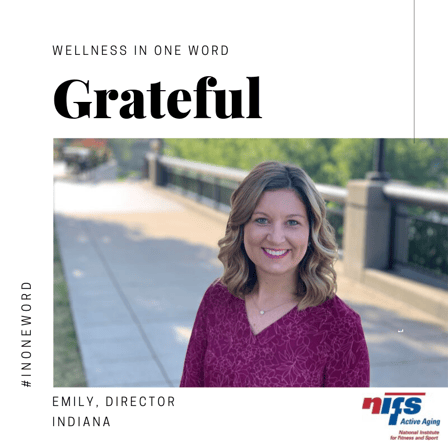 When I asked our NIFS team members to share their “word”, I received submissions of vitality, fulfillment, longevity, power, and balance. Our staff join our team from all walks of life and personal and professional experiences, yet their commonality is a strong desire and passion to work with seniors. Through providing individualized exercise services and teaching a variety of exercise classes, our staff are building relationships and helping improve the quality of life for older adults across the country. The tone and context of their submissions was similarly unified.
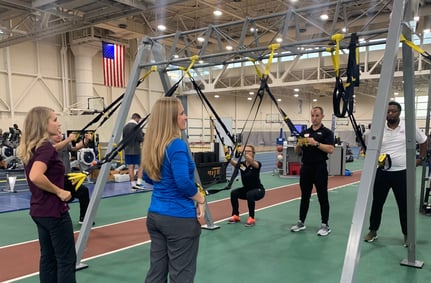 Variety is the spice of life, and that’s what we’ll have in town this week at our annual managers’ meeting. Each year we fly our management team to our headquarters in Indianapolis for professional development, collaboration, and networking. Our passionate team arrives from across the U.S. from different client settings and with varying personal interests and backgrounds. Their one commonality is their passion for serving their members, and we love the dialogue and collaboration that unfold when everyone gets together.