
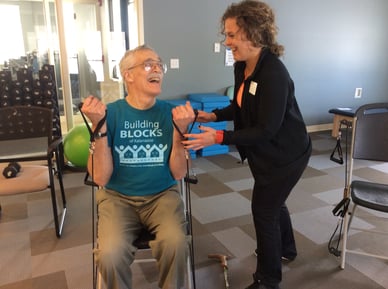
 One of my favorite things about my job is when I have the opportunity to visit our client sites and spend time with our staff. Not only are these team members exceptionally knowledgeable and creative in developing fitness offerings for active older adults, but their passion to serve their clients and residents never ceases to amaze me. I think this is what truly differentiates the service NIFS provides from a traditional contractor partnership—how our staff members become one of the team and integrate so seamlessly with the community’s staff and vision.
Examples of this were evident to me during a recent trip to Baltimore, where I had a chance to visit and connect with staff at three communities we serve.
We integrate with your team. Sometimes partnerships with contractors can feel like everyone is working in a silo, and opportunities to bridge communication, resources, and so on are missed. Our staff members are committed to learning about the culture at a community and building relationships with the key players who have a stake in resident well-being, including activities, dining, therapy, home health, and much more. Our staff members attend resident-care meetings, collaborate on upcoming programs and events, and fluidly refer residents to and from therapy services. For a client in Towson, Maryland, our staff meets regularly with the activities team to collaborate on a monthly programming calendar and a streamlined approach to what is offered to residents across the continuums of care. Each week, our fitness staff member also sets up the movie and serves popcorn in the theater at the movie matinee—they are part of the team and lend support beyond the four walls of the fitness center.
We learn about your residents. While many communities have similarities, what sparks enthusiasm and interest from residents can be different from one community to the next. Our staff members learn about resident interests through surveys, evaluating program outcomes, and tracking participation data to measure the impact of various programs. Then they hone in on niche offerings in which the residents are most receptive. In some communities, residents thrive on healthy fitness competitions, while others are more engaged in educational presentations. We tailor programs and services to the unique needs and interests of each community we serve. For a client in Pikesville, Maryland, our Fitness Manager has learned just what makes the residents tick, down to the time of day they schedule offerings for peak engagement. Our manager strikes just the right balance in maintaining steady favorites while introducing new programming to keep residents inspired and challenged.
We help you reach your goals. The community’s goals become our staffs’ goals, and being a part of the team helps us support those efforts. Our staff members have helped clients expand brain-fitness offerings, navigate construction and design projects, as well as bridge programs and services across the continuums to better serve residents in licensed-areas. Communities are regularly evolving to meet the needs of their residents and prospective residents, and we are proud to partner with clients in playing whatever role we can to support those efforts. For a client in Baltimore, Maryland, we have worked hand in hand with their architects and leadership on the design of a new fitness center as they undergo renovations. Our Fitness Manager has done a tremendous job navigating the messaging to the residents about transitions to temporary spaces, changes in class times, and so on.
Residents often don’t recognize our staff as contractors and have the impression that we are community personnel, and that is fine by us. The more fluid and integrated we are, the more the residents and our clients benefit. This recent trip to Baltimore exemplified this continuity at all of our client locations in the area, and I once again took pride in watching our staff in action, doing what they do best!

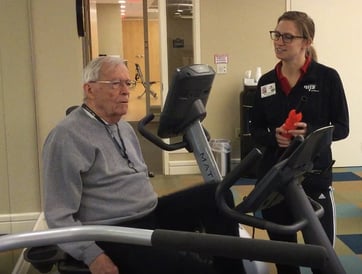 Fitness management is the cornerstone of our business. Recently we have seen an uptick in clients requesting our support in developing broader wellness programming for their residents through the continuums of care. Sometimes the need arises due to challenges with community personnel who don’t have the tools and resources to cultivate the desired lifestyle for residents. Sometimes it’s because they don’t have a point person to pull everyone together out of their silos across the continuums. Sometimes it’s both! Sound familiar?
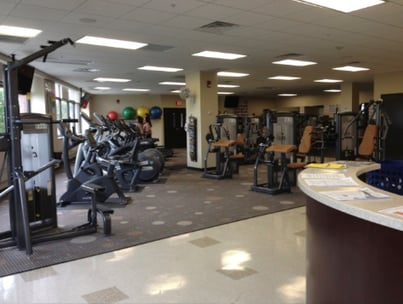 This has been the year of design and consulting work for senior living clients who are renovating or building new fitness centers. I think I could give you the dimensions of a NuStep T4r model in my sleep (they are 60 x 27 x 24 inches, by the way). It truly is exciting to see the industry dedicating resources to well-designed fitness spaces to support quality programs and services for residents.
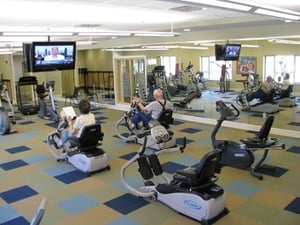 Televisions and entertainment: Determine whether you will pursue wall-mount televisions or the integrated console option on the cardio machines. With some equipment like NuSteps and rowers not having the integrated TV option, you will want a wall-mount TV somewhere in your facility. With wall-mount TVs you’ll have to navigate the channel wars for the lifelong battle between Fox News, CNN, and MSNBC, which individuals have VERY strong preferences for—imagine that! Consider an FM tuner option with headphones if needed, but we generally see residents politely following the first-come, first-served rule.
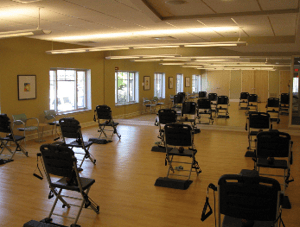 Exercise chairs: We are big fans of the
 .jpg?width=437&name=GettyImages-483770407%20(1).jpg) Hand-write cards and notes.
Hand-write cards and notes.
.jpg?width=404&name=GettyImages-1132973672%20(1).jpg) Fitness Fads vs. Classic Methods
Fitness Fads vs. Classic Methods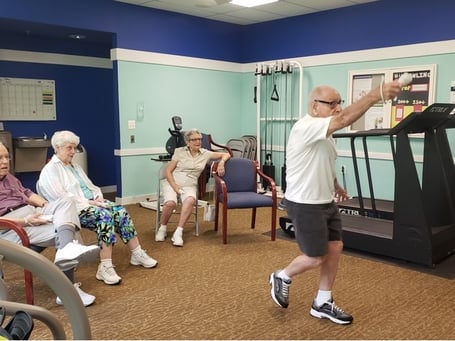 This summer, teams all around the country ironed their bowling shirts, warmed up their throwing arms, and double-checked their TV connections in preparation for the first-ever 10-week session of the NIFS Wii Bowling League.
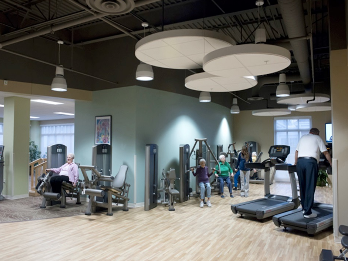 Picture this: You are 78 years old touring a senior living community with the marketing and sales coordinator. They take you to the ground floor or basement of the building and they flip on the lights of the uninhabited fitness center. It has painted cinderblock walls, fluorescent lights, no windows, and a hodgepodge of equipment. It feels deserted and you wonder how active the community is.
.jpg?width=393&name=GettyImages-470296838%20(1).jpg) Caffeine functions as a stimulant, which means you will experience an increased heart rate, more blood flow to your body, and more oxygen to your muscles when you consume it. Here are
Caffeine functions as a stimulant, which means you will experience an increased heart rate, more blood flow to your body, and more oxygen to your muscles when you consume it. Here are 
 ere are my top 5 reasons why visiting your local farmer’s market is a must.
.jpg?width=521&name=GettyImages-929610028%20(1).jpg) I’m Too Old
I’m Too Old