Corporate Fitness and Active Aging

Does This Count as Exercise? A Senior Fitness Challenge

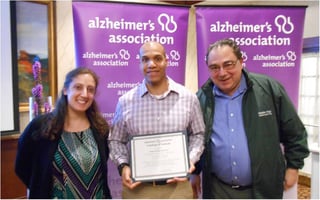
Recently we were challenged at our senior community to increase our exercise and record it to send to our corporate office, in hopes of raising awareness of how important exercise is for those who have Alzheimer’s and those hoping to prevent it through senior fitness.

An Exercise Challenge for Alzheimer’s Awareness

The Goal: Each community needed to accumulate around 1,500 hours of exercise in 60 days, which would translate to 100,000 total hours from all communities.

The Prize: The corporate office would donate $10,000 to the local Alzheimer’s Association chapter.

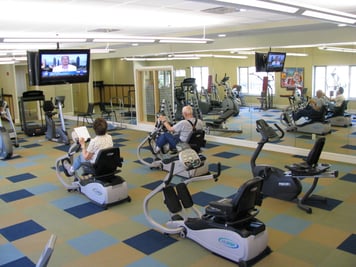
The great thing about this challenge is that we already have many group exercise opportunities where hours are easily accumulated, as well as a fitness center that members can utilize. But we wanted to amp up the amount of exercise residents were doing because, after all, it is a challenge to exercise more to bring awareness.  

While explaining this challenge to the residents and fielding questions the following weeks, I found that many residents and members did not know what was considered exercise. I was getting questions left and right, “Is this exercise? Does this count?” 

ThinkstockPhotos-163162703_1What Counts as Exercise?

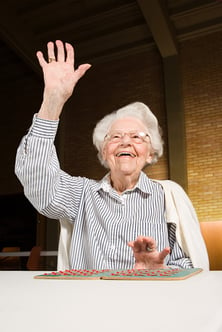
So here is the thing: exercise doesn’t have to be a hard workout routine only in a fitness center or group fitness setting. Some folks feel as though that is what exercise is, and I am happy to break the news that it is not the only way to get in exercise! Guess what, things that you enjoy as well as activity needed for healing count as exercise!

Here is a list of the “does this count” exercises residents asked me about. 

These are just a handful of the activities residents are participating in that they weren’t sure would count as exercise. The great thing about fitness and activity is that there are many avenues to take in order to reach the level of fitness you are looking for. Exercise does not have to be a boring, long-drawn-out routine. 

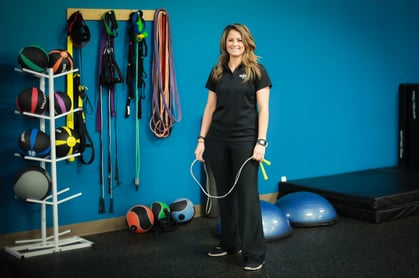
If a regimented fitness center routine is what you like for your workout, that is great!  But, if you need something else to hold your interest, whether it is a game like corn toss or working long hours in your garden, it is best to do an activity that you will stick with. And if you want to add intensity or are having a hard time finding what suits your interest, that’s the best time to consult with your fitness specialist to plan out exercises or activity that are best for you!

Subscribe to our blog

Topics: senior wellness CCRC senior fitness senior living community exercise and wellness exercise for elderly Alzheimer's Disease

What If: There Were More than One Class of Elite Performers at Work?

Throughout 2015, we’ll be blogging about our dreams for corporate wellness, fitness, and aging well. Some of the content will represent a gentle “poking fun” at the industry, but it’s all written to stimulate thought about what really could be if we put our heads together and started mapping out what’s really possible in the realm of individual wellbeing. We hope you’ll join the conversation by commenting on the blogs, giving us additional ideas about which topics to explore, and by finding us on Twitter at #wellnesswhatif.

Businesses need top performers in order to survive. We need sales staff who are heavy hitters, research staff who are actually rocket scientists, and customer service professionals who can turn any frown upside down. You know who those folks are in your organization, that top 5% of all performers. In some cases, they might be unsung heroes, but at a lot of businesses, the best among us are often publicly lauded. They are the elite.

Changing the Definition of “Elite”

Not everyone can fit into that narrow industry-specific definition of elite. But maybe, if business leaders opened their minds about what counts as elite, we could have more than one class of top-tier performers.

What if you didn’t have to exceed your sales quota to be considered among the elite at your worksite? Don’t get me wrong. You’d still have to work really hard. After all, becoming top tier is definitely hard work. Some would say rising to the top requires strength, agility, and grace under stress.

Rollerblading_woman_ThinkstockPhotos-476542628According to a study published in the American Journal of Preventive Medicine, researchers at the Pennington Biomedical Research Center found one way to get into the top 5% is to sweat. In their analysis of the American Time Use survey, they concluded that only 1 in 20 Americans engages in vigorous exercise (the kind that makes you sweat) on any given day. 

That’s right, a paltry 5% of us are working hard enough to actually sweat when we work out.

What Does This Have to Do with Employee Health? 

The way to sustained weight loss toward a healthy weight is through a healthy diet combined with prolonged cardiovascular exercise (45 to 60 minutes) at least five days per week. Employers: If you want a workforce that is at a healthier body weight, you have to (among other things) create an environment that supports and provides opportunities for your employees to work out hard enough to sweat. You need to build a corporate health culture that supports breaking a sweat in your worksite fitness center, or through another avenue of the employee’s choice.

Certainly, there’s more to individual well-being than being physically fit. But I wonder how many employees hold back on working out because of their environment (lack of access, lack of support). What if businesses publicly rewarded the exercising (aka sweaty) elite alongside the elite sales force and recognized the importance of employee health and fitness?

Download our whitepaper for tips on adding exercise to your worksite wellness program. 

Download Now


Topics: corporate fitness weight management corporate fitness centers cardio employee health and fitness health culture what if

The Importance of Being Your Own Health Care Advocate

It is safe to generalize and say the majority of people put a lot of trust in their doctor and admire them simply for their level of education. After all, they did go through many years of extensive and exhausting studying and training in order to earn the title of “Doctor.” They even have a decent health grade and framed certificates around the office, but does that mean we should put all of our faith in them and make them 100% responsible? Well, not exactly.

overwhelmed_senior_ThinkstockPhotos-471557740There are a lot of checks and balances in place when it comes to health care. You have nurses, nurse practitioners, pharmacists, physician’s assistants, physicians, surgeons, and more, but what if all of these fail? Though it may be rare, it does happen. So who should ultimately be accountable? You. 

Too often, patients sit in a doctor’s office and are given loads of information, which might as well be told in a foreign language, all wrapped up in 5 minutes. The patient sits, smiles, and nods, thinking (or pretending) that they followed every detail that was spilled out to them. We assume the medications and dosages we are being prescribed are necessary and safe.

Kelly’s Story

A friend of mine, who we will call Kelly, was not feeling well and had arrangements to fly later in the week. To avoid being uncomfortable during her travels, Kelly reached out to her doctor. Kelly’s doctor was out of town, but the partnering doctor was available to see her. Without hesitation, the partnering doctor prescribed Kelly an antibiotic, and, without any questions, Kelly picked it up at her local pharmacy. A week later, Kelly felt extremely foggy-headed and enormously sluggish, and started developing rashes, painful headaches, very achy joints, and more. 

Kelly put her week on replay, trying to figure out what she had done differently that could cause such a major downward spiral in her physical health. Then it hit her: the antibiotic. She quickly started searching for answers and within seconds, from a simple Google search, she found it. Kelly was prescribed a sulfa drug, which is the number-one drug that should be avoided if you have lupus. Because the doctor seemingly did not even glance at Kelly’s files, the pharmacist did not pay attention to her log of current medications, and Kelly did not think twice about a doctor’s advice, she had the worst lupus flareup she had ever experienced.

How to Advocate for Your Own Health Care

Why do we assume all instructions are best for us because of a health professional’s level of education and authority? It is our body, yet we blindly and mindlessly do as we are told. Why is it difficult to be vulnerable and admit that we do not understand the information we are given during our visits? When did we lose our curiosity or stop asking “why?” You are at the office seeking medical advice, so seek it! Here’s how:

  • Ask questions.
  • Have logs and questions written down before you walk into the office.
  • Make the doctor or nurse write down information for you.
  • Ask for the doctor to explain what the lab results mean, not just rattle off numbers that you can read yourself. Then ask for copies of the lab results.
  • Remind all health professionals involved of your medications and lifestyle changes.
  • Request print materials related to your diagnosis. If your doctor is not willing, it may be time for a new doctor.

Remember, you are part of the team that makes decisions toward improving your health and wellness. Be involved, be informed, and be okay with asking for help when you don’t understand. Be your own advocate.

Your health is important, check out our quick read to see why exercise is important in aging well, download it below!  

 Download now

Topics: senior wellness health and wellness wellness health care

What Does Wellness Really Mean for Senior Living Communities?

Our use of the word “wellness” in senior living is confusing and potentially problematic for the consumer. When the possible definition by organization for “wellness” swings all the way from a few group fitness classes at one community to a full-blown medical clinic in another organization, it’s challenging to succinctly define what is being offered under the wellness banner. 

Nurse_doing_fitnessThinkstockPhotos-474647990Sometimes I visit a community and they have a wellness director who is an RN with primary responsibilities for running the community’s outpatient clinic and helping residents navigate their health care needs. In other cases, I interact with an individual at the community level whose title is wellness director, but whose primary roles are focused on running the fitness program. Those two individuals have two very different focus areas, diverse areas of expertise, and they offer two entirely different value propositions for prospective residents. And neither of them paints a full picture of what community wellness can be.

How you define your community in the area of wellness can be a point of distinction and a clear competitive edge for your business. But I wonder if that definition is best suited to be made at the community level or if there is a need, or even better a benefit, to defining it at an industry level. LeadingAge has initiated a “NameStorm” to find a new term for “continuing care retirement community” (CCRC). Is there a need for this kind of industry-wide focus on how we universally define wellness in senior living?

If we use the well-recognized dimensions of wellness (and I’ll go with the seven defined by the ICAA) as the means to define individual wellbeing, then the essential duties of the RN clinic director and the fitness program manager fold into various dimensions. But so do the essential duties of several other common jobs at a CCRC, including the activities director, the social worker, the dietician, the chaplain, etc. I could argue that each employee at the community has some portion of his essential duties impacting resident wellness.

I think, in a lot of cases, we get wellness all wrong. We want to box it into neat compartments, but it really spills out to all areas of the organization. Wellness is about building meaningful lifestyle opportunities for residents. It’s about honoring who they are as individuals and finding ways to help them tap into what motivates them, what provides them with purpose, and what keeps them engaged in life.

As I’ve started shifting my view on resident wellness in senior living to this broader perspective, I’ve started wondering whether resident wellbeing doesn’t need to sit a little higher in the organizational chart. Wellness isn’t just fitness and it’s not just activities. It doesn’t belong under either of those “departments.” It’s not limited to nutrition or spiritual designations, and it’s not focused on health care and clinical services.

Perhaps it’s the culture we’re trying to build.

But if that’s true, if wellness provides a cultural focus for our organizations, then each employee needs to have a stake in what it means to provide person-centered opportunities for well-being. And that message needs to come from the top. It can be supported by a well-developed employee wellness offering, as well (which is being discussed more and more in senior living). It can get folded into employee goals, job descriptions, and team meetings. And while one person should probably have ultimate responsibility for wellness in the community, it cannot operate in a silo apart from other elements that are unique to what your community offers. (This post talks more about how the various departments can collaborate better.)

How are you cultivating wellness beyond your fitness programming, your activities calendar, and your clinic?

Download our whitepaper on how you can create a culture of wellness in your senior living community.

Download Now

Topics: senior wellness CCRC continuing care retirement community

Alzheimer’s Disease Diagnosis: The Scary Truth of Being Uninformed

familly_caringDuring my morning commute a few months ago, I switched on the radio and caught the tail end of a brief NPR story about doctors not communicating to their patients when they are diagnosed with Alzheimer’s. Because I am surrounded by this disease in the workplace and have experienced it first-hand in my family, I was quick to become empathetic and my heart sank into my stomach. It just seemed so unfair and, well, wrong.

The next day, I decided to dig a little more deeply and find the article in writing. Maybe I missed some important details at the beginning of the story. Maybe the twist was that these patients were being diagnosed but simply forgot after they walked out of the doctor’s office doors, because, after all, they do have memory loss and dementia. Unfortunately, that was not the case.

According to this specific study, an alarmingly low number of patients with Alzheimer’s (only 45%) claimed that they were given this diagnosis by their doctor. When the study looked past the patient’s input, still only 53% of family members or caretakers reported being aware of the diagnosis. The reasoning behind this sits among a variety of excuses, ranging from the doctor having limited time in each appointment to the doctor simply feeling uncomfortable.

Is It Acceptable to Withhold the Diagnosis?

Are these legitimate excuses? Is it ethically acceptable to withhold information that is unknowingly being written down in your medical records just to save one or both parties from feeling uncomfortable? 

Sure, it feels terrible to look someone in the eye and tell them devastating news, but when a person is relying on someone, their doctor in this case, to keep them informed, the doctor needs to take responsibility here. Withholding this information puts the patient at risk of harming himself, as well as those around him. What if those around a person with Alzheimer’s believe these forgetful moments are merely part of a normal aging process? Maybe one day the person with Alzheimer’s cannot recall a street name, which may seem normal, but what if the following week(s) lead to such scenarios:

The person with Alzheimer’s…

  • Goes for a walk or bicycle ride without telling anyone and gets lost.
  • Accidentally leaves the gas burner on all day while home alone.
  • Needs help but forgets how to dial the phone.
  • Leaves the water running in the bathtub, does not realize it, and goes to bed.
  • Gets in a pool alone and forgets how to use their legs, loses footing, and goes under.

Benefits of Knowing the Diagnosis

Some of these examples may seem extreme, but they are actually scenarios that either myself or someone I know has personally witnessed. So many dangerous situations can be avoided if family or close friends are aware of the diagnosis. And though there is no cure, doctors are finding medications that can help slow down the disease process, and researchers are finding more and more ways for people with Alzheimer’s to gain a better quality of life through means such as music, aquatics, memory care, and more.

I often see family members or caretakers get frustrated, and even angry, with people who are forgetful. When we are able to have a medical diagnosis, can realize that it is truly a disease and out of the person’s control, and can view the whole picture, we are opening a door to having more compassion and understanding for the situation a person with Alzheimer’s is facing. 

Subscribe to our blog

Topics: senior wellness cognitive function memory dementia memory care Alzheimer's Disease

Active Aging: Ten Ways for Seniors to be Active in the Country

active_in_countryLiving in the country can have its share of pros and cons when it comes to getting in your recommended daily activity. Although you might not have access to a fitness center at your fingertips, here is a list of 10 ways for seniors to stay active in multiple wellness dimensions while living in a rural area: 

  1. Can you dig it?  Try gardening!  Plant your seeds and reap the benefits with a bouquet of flowers, a variety of vegetables, and some new herbs to spice up your daily activity as well as your meals.
  2. Enjoy some time with nature by going on a nature hike!  With the scenery ever changing, this can be a beautiful change up to your typical cardiovascular exercise routine.  So don’t delay, lace up your shoes and take a hike!   
  3. Go for a swim at a local lake or community pool.  This activity uses the gentle resistance of water to strengthen your muscles.  It is easier on joints and the buoyancy of the water is effective for those with balance issues.  Don’t forget your water floaties!
  4. Walk a pet.  Take your favorite companion around the block for some good company during your exercise.  Maybe you start with a short distance that increases over time as you and your pet improve your stride and endurance together.
  5. Not feeling like going outside?  Then workout to a fitness DVD!  Pick out a yoga, gentle aerobics or senior boot camp DVD to do at your own pace in the comfort of your home.  What other workout DVDs do you recommend? 
  6. Go to the mall!  Do laps around your local mall to get your steps in each day.  You don’t have to go into a store and make a purchase if you don’t want to, but this is a great option whether the weather is rain or shine!
  7. Camping with the family.  Helping set up camp and carrying a pack can be a great way to burn calories while spending time with your loved ones.  Just avoid eating too many roasted marshmallows to gain back all of the hard earned calories that you just burned off!
  8. Check off the “honey-do” list.  Kill two birds with one stone by doing chores around the house while making your spouse overwhelmingly appreciative of you!  Dust, vacuum, do the laundry or put way the dishes and work off calories all the while!
  9. Do work around the yard.  Spend a nice, sunny afternoon outside by mowing, pruning and raking your yard.  Have a home improvement project that you’ve been putting off?  Then now is a great time to conquer it!  Your neighbors will be impressed by how immaculate your yard looks, and you will be reaping the benefits of your activity!
  10. Play with your grandkids at a park or playground.  Tap into your inner child and participate in the games that suit your fancy!  These are memories that your grandchildren will cherish for the rest of their lives. 

What ways have you found to be fit in your area?  Keep in mind these safety recommendations to optimize your overall wellness.  Don’t live in a rural area?  Then check out this blog about Ways to Stay Fit in the City!

Subscribe to our blog

Topics: active aging active living senior fitness

Active Aging: Ten Ways for Seniors to Stay Active in the City

active_in_cityIf you live in a city, then you have your share of challenges when it comes to keeping fit.  Although so many things can be available at your fingertips, how do you successfully stay active?  Here are 10 ways to be fit in multiple wellness dimensions for seniors living in an urban area: 

  1. Stop to smell the flowers by walking around a park or botanical garden.  Research shows that green space and being outside can lower stress.  I’m not saying you have to hug a tree in appreciation…unless you want to.   
  2. Enjoy a cultural experience at a museum while racking up your steps.  Many cities house museums for art, science, history and much more!  This is a great excuse to check out the latest exhibit while stepping your way towards health.    
  3. Walk a pet.  Use a cute pooch as your excuse to get out and about on a regular basis.  Start slowly and increase your pace and/or distance over time!
  4. If you have access to a body of water, then try sailing, canoeing, or kayaking.  This can be a fun option to mix into your routine by getting out on the water.  Don’t forget to take pictures from that different point of view to show all of your friends!
  5. Take the stairs.  Stairs are everywhere throughout the city.  If this is a safe option for you, then challenge yourself with some stair routines.  Walk them, every-other step them, do sidesteps…be creative!  I usually do stairs while listening to Eye of the Tiger…and pretend I’m Rocky Balboa.
  6. Explore your city’s architecture and history.  Whether it’s on foot or on a bike, explore the ins and outs of your city while getting exercise.  More and more cities are offering bike rental services so if you don’t own a bike, then try renting one! 
  7. Participate in an organized race event.  Many cities host races of various lengths, causes and themes for you to participate in throughout the year.  Select a race with a meaningful cause to you and train accordingly.  This can also provide a target end-goal for your exercise regimen. 
  8. Attend festivals or street markets.  This will give you an opportunity to walk around and even pick up a few fresh treats while being social with a few hundred of your closest friends!
  9. Beat traffic by walking instead of driving.  Given the accessibility of many locations, try walking to and from appointments and events such as grocery stores, hair appointments, doctor’s appointments, dentists, and the theaters when appropriate.  This is a healthy option that is also good for the environment. 
  10. Try a Gentle Yoga or Tai Chi class!  Both of these classes are beneficial to seniors since they are gentle on joints, promote range of motion and target on balance improvement.  Some classes will even meet outside on nice days!

What ways have you found to be fit in your city?  Keep in mind these safety recommendations to optimize your overall wellness.  Don’t live in a city?  Watch for my next blog about Ways to Stay Fit in the Country! 

Exercise is important as we age, check out our quick read for more information and share with your loved ones to keep them active, click below!

Download now

Topics: active aging senior living exercise for elderly

NIFS Nutrition: 10 Healthy Snacks for Road Warriors

travel_snacksWhether you are traveling for business or for pleasure it typically means most meals are eaten out or on the go.  This can be challenging to make the most balanced choices and keeping your eating on the right track.  You want to try foods special to that region, you are busy and grabbing the first thing that sounds good, you don’t have access to a grocery store for more fresh foods can all be challenges while traveling.

The following 10 healthy snack ideas can help to keep you satisfied between meals and allow you to make balanced decisions at lunch or dinner.  These are snacks that you can bring from home that don’t require any refrigeration or utensils.  These can be easily thrown in a purse, bag or suitcase and readily available for you to grab at snack time.

Trail mix – Grab a handful of your favorite lightly salted or unsalted nuts, a handful of dried fruit, and a handful of high fiber cereal and toss in sandwich baggies for a high fiber and shelf stable snack.

Fresh fruit – Bananas, apples, pears, grapes, and citrus fruits are great options to grab from home for a sweet and tasty snack.  If you are concerned about the fruit bruising or spoiling during traveling, consider grabbing the squeezable fruit pouches.  Just be sure to pick the ones with only fruit and vegetables listed in the ingredients. 

Peanut butter sandwich – These aren’t just for kids!  2 slices of whole wheat bread can provide 8 grams of filling fiber and 2 Tbsp of peanut butter can provide 8 grams of protein.  This delicious and portable snack is perfect for traveling away from home. 

Hardboiled egg – This snack will provide you with all of the essential amino acids your body needs.  They can go a few hours without being refrigerated, so try to eat them as a morning snack if possible.  Or if you have access to a refrigerator, they will stay good in their shell for up to a week.

Jerky – This portable protein snack comes in many options such as beef, turkey, chicken, venison, and bison.  They are typically low in saturated fat and calories.  However, these can be loaded with sodium and not so good for you nitrates.  Look for lower sodium varieties and jerky with very short ingredient lists. 

Nutrition bar – These prepackaged bars can be confusing since there are so many options on the market.  Check out my blog with tips and suggestions, but as a rule of thumb grab a bar with less than 15 grams of protein, more than 3 grams of fiber, 15 grams or less of sugar, and mainly heart healthy fats. 

If you forget to grab snack when you leave home, here are some options that can be available for purchase.

McDonald’s fruit and yogurt parfait – This snack size treat has 150 calories and 4 grams of protein.  Save 30 calories and 40 mg of sodium when you skip the granola topping. 

Starbucks protein box (1/2 the box) – The full box is 380 calories which is more along the lines of a meal than a snack, but if you have someone to split with or a fridge for the leftovers, ½ the box is a great snack option.  Apples, grapes, a hardboiled egg, multigrain muesli bread, cheddar cheese, and peanut butter are all included.  

Wendy’s small chili – At only 170 calories and loaded with 15 grams of filling protein, the small chili is a great snack option.  Beware of the toppings though…the cheese will double the fat content and add 60 calories to the cup. 

Subway apple slices and cheese slice – For a perfect combination of fiber and protein, grab a bag of apple slices and 2 pieces of cheese for a snack around 100 calories total. 

The most important tip is everything in moderation!  Enjoy your travels, try something new, and get out there and explore the new city!

Download our whitepaper to receive tips for adding exercise to your worksite.

Download Now

Topics: nutrition healthy food choices nifs nutrition news

Senior Wellness: Elder Falls Linked to Obesity

fall_riskObesity is an epidemic in our society today. Those who are obese have greater risk of diabetes, coronary artery disease, stroke, and arthritis.

This article discusses obesity in the elderly and how it increases their risk of falling. As might be guessed, the greater an individual's degree of obesity, the greater the risk of falling. A fall may also bring about greater disability for an elder’s ADLs (Activities of Daily Living).

The Risks of Falls for Elders

For more mild cases of obesity (BMI 35.0–39.9 kg/m (2)), an elderly person is at greater risk for long-term disabilities after falling. If an elder is more of a “weekend warrior” type, this claim makes sense. They are obese and need to make lifestyle changes, but they aren’t in such bad shape as to be completely sedentary (inactive). If they attempt a very strenuous activity, they could very well cause themselves a long-term disability.

One claim the article makes is that obesity may reduce an elder’s risk of injury from a fall. This claim doesn’t make sense from an orthopedic perspective. What do most of us do when we fall? We put out our hands to try to catch ourselves, right? Imagine the shoulder and wrist injuries that even a healthy, active athlete could sustain in such a fall. An obese elder is most likely going to have been sedentary (inactive) for at least several months. Being sedentary will have caused atrophy (wasting of muscle tissue) throughout the person’s body. Wrist and shoulder injuries, and perhaps even head and neck injuries, could be expected in an obese elder suffering a fall.

Prevent Injuries Through Exercise and Diet

Practicing prevention is much easier than being laid up with an injury. Strength training, yoga, Pilates, and other forms of exercise, combined with a healthy diet, can help keep us all more fit and active in our later years.

Download our whitepaper on Advanced Balance Programming for your CCRC.

Download Now

Topics: weight control senior fitness obesity yoga injury

Why Corporate Fitness Center Design Matters

Corporate_Fitness_Center-1When a business makes the commitment to put in a corporate fitness center, they are making a statement (hopefully one of many) about how important their employees’ health is. It’s a substantial investment, and the project is not to be taken lightly. 

From an outside perspective, you might think there’s not much to designing this kind of space. Put up the walls, install the equipment, and you’re ready to go, right? I suppose you can charge ahead with that philosophy, but you may be leaving quite a bit to chance in terms of building a space that is safe, efficient, and effective for your employees. 

From conception to completion, we’ve had the privilege of being involved in dozens of fitness center design projects over the last several years. Below are three reasons why we think thoughtful design in corporate fitness is key to a successful fitness center program.

 Webinar Series: The Guide to Successful Corporate Fitness Centers

Selecting the best equipment influences the success of your space.

When deciding which exercise equipment you want for your space, be sure to do your homework. Every sales rep will offer to lay out your space with their equipment for free. And every rep will tell you that their equipment is the best. Carefully lay out the features that are most important to you (don’t forget about warranty), and make a pro/con list for the equipment you’re considering to determine what will work best in your space and for your employees.

Hiring the right staff will help maximize use of the fitness center.

Only about 20% of American adults are meeting the physical activity guidelines as offered by the Centers for Disease Control and Prevention. (And that’s probably a falsely high estimate because the data is gathered through self-report mechanisms.) So you can expect that less than 20% of your workforce would get enough exercise even if you didn’t put in an onsite fitness center. Simply offering a corporate fitness program isn’t enough to get employees in the inactive 80% camp to start moving. 

Corporate fitness is not an “if you build it, they will come” proposition. Having the right staff on board can make a big difference on utilization of spaces and programs through the fitness center. But you have to build the space from a user’s perspective in order to provide opportunities to maximize the programming that invites new participants. 

Your fitness management staff should be able to keep track of key metrics as well as provide a variety of programs (including group fitness classes) and services designed to draw in more users on a regular basis. 

Establishing the best possible layout will make a difference for users.

Thoughtful design will take into account the quantity and types of equipment needed in the space, as well as intended uses for the environment. For example, if you have an employee audience with an insatiable appetite for group fitness classes, don’t skimp on your studio space. Make it large enough to accommodate anticipated volume, and equip it with the right types of storage to house the group class toys. Carefully research what’s needed for the group fitness stereo, and pay close attention to work areas adjacent to the studio space to make sure that soundproofing is available where needed. 

Adequate locker room and shower space is a must, and easy access to drinking water is essential. Flooring surfaces need to be carefully considered along with where to place mirrors, how to orient equipment near and around windows, and what staff office/desk spaces will accommodate. 

And you should rely 100% on your architectural team to provide all of those elements for the space initially. But it’s not reasonable to expect that team to understand, from an operator’s perspective, how your fitness staff and employees will work and exercise in the space. Unless your architect had a previous career managing a corporate fitness center, my experience is that the architect might miss some key elements in the design that would ultimately inhibit the end-user experience.

If this brief outline of key design and program elements for your fitness center has you thinking you might be in over your head, check out our fitness center design sampling, or contact me to talk through the questions brought on from reading this post.

Topics: corporate fitness centers participation corporate wellness staffing fitness center design equipment corporate wellness consulting