Corporate Fitness and Active Aging

Corporate Wellness: Free Workout Friday - 200 Squats

free workout fridayIn this fitness challenge we are going to tackle 200 squats! Squats are one of the best exercises you can perform to strengthen the quad and glute muscles and to tone and define the legs. Also, squats are easy to perform anywhere, as you only need your body weight! The website above will give you a 7-week training program, working up towards 200 squats. Here are some other exercises you can use to supplement the training program and really ramp up your leg strength and endurance.

  1. Leg press—This machine allows you to perform the same basic movement as a squat, but gives you a chance to increase the resistance beyond just your body weight, to really enhance the sheer strength in the leg. Build gradually on the weight, and never try to lift weight that would cause you to lose proper form (i.e. arching your back).
  2. Step-ups—Lifting the body from the ground up to a high step (16-18 inches) is a good way to increase muscular strength in the legs. If you perform several reps of a step-up, you will also get an added benefit of a cardio workout, as the heart rate rises! Start with just using body weight, then as weeks progress, hold dumbbells at your side as you perform the step-up.
  3. Lunges—This exercise works the quads and glutes in a similar way as squats, but lunges are generally more challenging. Perform alternating lunges until muscle fatigue in order to improve endurance.

Grab your co-workers and head down to your corporate fitness center and challenge each other to the 200 squat challenge.

Topics: corporate wellness corporate fitness nifs fitness management Free Workout Friday squat challenge

Active Aging: Workout Technique - Form First

seniors lifting weightsWe have all heard the phrase “quality over quantity,” and most of us have even directed this adage at someone else. But do we really believe it? And if we do, why is every gym and fitness center in the country filled with people sacrificing form for a few additional reps and pounds?

Before you pick up a weight, start a treadmill, or begin whatever mode of training you have planned for the day, think about your technique. “Where should my feet be?” “Should my hips be under my torso or behind it?” and “How am I going to breathe?” should be some of the questions you ask yourself before getting started.

Common problems associated with poor exercise technique include injuries such as sprains, strains, and fractures. Decreased activation of the desired muscle is also common when performing an exercise incorrectly. I see this most often when people are doing exercises too fast and momentum begins to reduce the work the targeted muscle has to do. All of these technique-associated problems have one thing in common: time.

“Time is more valuable than money. You can get more money, but you cannot get more time,” said Jim Rohn. So stop wasting your time recovering from injuries you got only because you were doing exercises incorrectly or because you had to do extra repetitions since poor form caused the targeted muscle not to fatigue as quickly as it should have.

Here are some workout technique tips for making sure you take the time needed to do the exercises properly and safely.

Use Your Resources

There are countless fitness resources around us, some clearly better than others, that you can consult with to ensure that you are doing exercises properly. The first thing I would recommend you do is research the exercise technique on your own so that you have a general idea of what to expect. Then you should consult with the fitness professional in your active aging community, who can then provide you with cues and possibly hands-on instruction.

Proper Breathing During Exercise

Proper breathing can make the most difficult exercise seem easy. Or it can have the exact opposite effect, making a routine move seem like the end of the world. The most common method of breathing while performing resistance training is to inhale during the eccentric contraction (lowering weight) and to exhale during the concentric contractions (lifting weight). This method of breathing is not the only option an exerciser has, so do your research and find out what is the best method for you, but keep in mind that some variations carry risks. The Valsalva maneuver, for example, can be used when resistance training, but this method of breathing, exhaling against a closed airway, can cause dizziness as the blood levels returning to the heart drop.

Correct Body Position

Once you learn the appropriate body position for your desired exercise, pay attention to it as you execute the reps. The best way to do this is by watching yourself in a mirror. If you notice that your form is beginning to deteriorate and you are not able to correct it, stop the exercise and rest or reduce the weight you are working with. As I mentioned earlier, a few extra reps now are not worth the time you could miss as you recover from an injury.

This year’s tragic bombing of the Boston Marathon has sparked a new saying: “If you see something, say something,” reminding us all that we are the first line of defense when it comes to our own as well as our neighbors’ safety. This motto could also be used in the gym when you see someone demonstrating poor form; say something, but you better make sure you know what you are talking about first.

Topics: exercise strength training Fitness Center injury weight training

Corporate Wellness: How did we get overweight? (Part 2 of 3)

unhealthyHow did we get this overweight, this quickly?  In part one of this series, we talked about what obesity is and if it's really a disease, you can read that here.  Obesity has been around since recorded history, but never to the degree we have experienced the past 30 years.  In nature, people and animals who store energy are more likely to survive famine, yet there is more food available now than ever.  Several experts feel we’ve encountered the “perfect storm.”  We’ve experienced a significant change in our environment with increased stress levels, while sleep, free time, and activity levels have decreased.  In our food, nutrient levels have decreased while use of chemicals and preservatives has majorly increased.  (Side note: Did you hear Twinkies are coming back with an increased shelf life of an additional 3 weeks?  They aren’t just refrigerating those things.)  Let’s look at a few of the causes of this increase in weight gain over the past 30 years.

Let’s eliminate pre-existing diseases which lead to weight gain from the start.  Pre-existing diseases have not seen much of a change over time and our diagnosis and treatments have improved drastically.  For that reason, it’s easy to eliminate this from the causes of our recent epidemic.  As a quick example, let’s look at hypothyroidism, an underactive thyroid gland, or type 1 diabetes, when your body does not produce insulin and breaks the ability to convert sugars, starches and other food into energy.  If  untreated, these two diseases can cause significant enough hormone imbalances to slow the metabolism and induce fat storage.

Next, when the first law of thermodynamics is applied to the world of health and fitness, “The change in internal energy of a body is equal to the heat supplied to the body minus work done by the body”, it can be roughly translated as “calories in vs. calories out.”  This is a point many argue on.  If this were the only factor to consider, weight loss would literally be as simple as a math problem.  If it was true, it would mean everyone who is overweight or obese is just lazy and eats too much.  Eat less, exercise more!  But then why, according to the Institute of Medicine, is there an increase in obese children under two years old?  They don’t diet and exercise.  Are you going to call them lazy?  Unfortunately, the issue is not as simple as “Eat less, exercise more!” and goes way beyond personal responsibility for any age.  Thinking the answer is simply “calories in vs. calories out” is wrong and ignorant.  Personal responsibility is only a part of the equation for many people; nonetheless, assessing dietary trends is critical to solving the issue.  As well, average caloric consumption is up and average activity levels have decreased with the advancement of technology.

In February of 1977, the U.S. government released a directive urging Americans to “Reduce overall fat consumption from approximately 40 to 30 percent of energy intake” in an attempt to lower the occurrence of heart disease, our #1 cause of death in the U.S.  According to the CDC, since roughly that same time mean caloric intake has increased, mean percentage of calories from carbohydrate has increased, and mean percentage of calories from total fat and saturated fat has decreased.  In addition, we’ve experienced not just an increase in carbohydrate over that time but more specifically an increase in sugar.  In 1975 our average sugar consumption per capita was roughly 25lbs/yr; we hit over 100lbs/yr per capita in 2000 and it is now estimated to be over 150lbs/yr per capita.  This coincides eerily with our obesity epidemic.  So we’ve succeeded in adopting our hallowed low fat diets but we’ve only gotten fatter and heart disease is still our #1 killer.

In my opinion, this change in our diets has caused a wide-spread toxicity and hormone imbalance in our bodies; our epidemic.  Americans (and now much of the world) are sick and it’s not because we’re lazy.  Of our total sugar consumption, much of it is estimated to come from High Fructose Corn Syrup (HFCS).  HFCS is a man-made sweetener introduced to the U.S. in … you guessed it… 1975.  Use of HFCS has increased at about double the speed of standard sucrose (table sugar) since its introduction.  You’ll find more foods at the grocery (roughly 60-80% of products) packed with sweeteners and chemicals than those without.  Now we can’t simply correlate the introduction and steady incline of HFCS or other chemicals to our obesity epidemic, but it’s certainly a culprit and part of the equation at least, causing a huge debate all by itself.

What are your thoughts?  Comment below and look for my 3rd post in the 3-part Obesity Blog Series on the cure for obesity.

Like what you just read? Click here to subscribe to the blog.

Topics: corporate wellness obesity health overweight disease

NIFS Nutrition News: How to burn those calories consumed at the fair

midway at the fairIt only comes around once per year, so why not indulge with dinner at the fair?  Well some of your favorite fair foods might only be consumed once per year, but if you aren’t increasing the amount of exercise to go along with them, the extra weight gained can stick around for longer!  Here are some of the more popular fair food items and how far the average person would need to walk around to burn it off!

Top 5 State Fair Foods

  1. Elephant Ear –Average is 310 calories and 15 grams of fat – 3 miles / Funnel cake(6”) – 276 calories & 14 grams of fat – 3 miles
  2. Lemon shake up  - 254 calories – 2 ½ miles
  3. Deep fried everything (fried snickers – 444 calories & 29 gram so fat)(fried twinkie – 420 calories & 34 grams of fat) (one oreo – 98 calories – 1 mile) – 4.5 miles
  4. Corn on the cob – 250 calories & 12 grams of fat - 2.5 miles
  5. Corn dog - – 200 calories & grams of fat & 10 grams of fat – 2 miles

Ways  to save calories:

  • Think your drink – bottled water or sugar free lemon shake ups
  • Don’t arrive starving so you want to purchase everything in sight.  Have a balanced snack before you head to the fair.
  • Share with friends and family
  • Sit down and eat vs. walking and grazing
  • Wear comfy shoes to maximize your walking

Check out all booths and choose your absolute favorite….plus you will walk more scoping out the best booths! So enjoy your dinner at the fair and then get back to balanced eating tomorrow morning!Like what you just read? Click here to subscribe to the blog.

Topics: exercise nutrition walking nifs fitness management health and wellness fair food

Why Fitness Initiatives Fail in Corporate Wellness: Truth #4

ROIIn truth #1 of this four-part blog, I started to climb on my soapbox about measuring ROI in corporate wellness. (I’ll spare you the rant; you can reread the blog if you’d like.) Suffice it to say that I am not an expert at calculating ROI. NIFS is not an organization that touts ROI among our selling points. That’s right, I can’t tell you the return on investing in a corporate fitness center (and I sure as heck am not going to make something up!).

But don’t confuse our lack of skills for ROI analysis with a general lack of drive for data. In fact, it’s quite the opposite. Ask my staff; they can just about recite from memory my key points on the importance of evaluating the programs they’re running and the services they’re providing to determine impact.

Here’s the thing about evaluation: truth #1, truth #2, and truth #3 matter a lot less when you aren’t taking the time to be strategic about what you’re doing with exercise programming for your employees. If you’re just going to slap spaghetti against the wall to see what sticks, why bother? There are too many tasks competing for your precious time to not implement your corporate wellness initiatives wisely.

Truth #4: Fitness initiatives fail as part of a corporate wellness strategy because evaluation of the programs isn’t incorporated into program design.

Raise your hand if any of these points sounds like something you want to do for your corporate wellness program:

  • Make the case for more money, more staff, more support, and more respect.
  • Spend time on programs that are really making an impact.
  • Drill down to the tougher issues in corporate wellness, like sustained participation.
  • Observe and act on trends over time in participation, completion rates, and overall impact for similarly situated initiatives.

With a comprehensive evaluation strategy in place for your corporate wellness programs, you can accomplish most, if not all, of those things. I know because that’s exactly what we do for our corporate fitness management clients.

A Breakthrough 

Several years ago, I spent a lot of time wracking my brain trying to figure out how we could jump into the ROI game. But I kept getting stalled at our lack of access to all the data, the variables I couldn’t account for, and my extremely limited knowledge of statistics. It seemed like there must be some door I needed to open that would reveal the secret formula I needed to get to the next steps. But I couldn’t find that door for my life.

Then I heard Ron Goetzel speak at the American Journal of Health Promotion conference. During his seminar he pretty much just came out and said it. I, me, myself, could not calculate ROI alone. I would need a team, and some (a lot of) money and it would be much broader than our small impact in a corporate fitness program.

After I got over a mixture of disappointment (I had been so sure I could figure it out!) and relief, I got to thinking about what I could do that focused on data and ultimately evaluated effectiveness of our programs and services. In the end, we built an evaluation framework that made sense for us and allowed us to (1) prove our worth for our clients who had invited us to manage their fitness centers as part of their wellness program, and (2) communicate better information to our members who were counting on us to help them improve their health.

Building the Case for Corporate Wellness

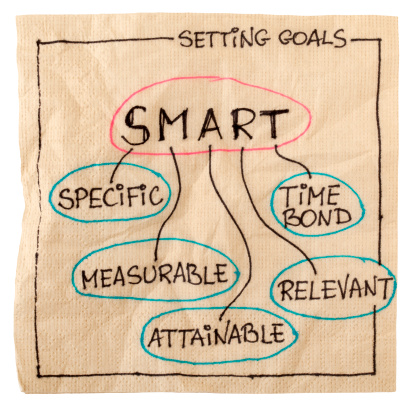
So let me spare you my investigational roller coaster because what was true for me is likely also true for you: you probably don’t have what you need to really calculate ROI from your corporate wellness program. But let’s face it, even the most generous of CEOs won’t throw cash at initiatives indefinitely. You will need to build a case for the effectiveness of your efforts early on. When you can begin drafting your initiatives with an end in mind where you set out SMART goals and then evaluate your progress against those goals, you have what you need to start building your case.

In our experience, though, it’s not just about setting goals and then looking back at the data to see if you achieved them. That’s only part of the evaluation framework. The other part is looking at impact, and impact can be measured when you look at your communication strategy, how effectively the program is run, and what participation rates and completion rates are.

When you start to piece out those specific impact-related elements, you can get a sense of opportunities for improvement that lie within your initiatives. For example, maybe you learned through a post-program survey that your communication strategy wasn’t focused on the best avenue to reach your designated population. Perhaps that group would rather receive a postcard invitation than an email. And poof—just like that you have some actionable data on which you can start improving the next offering. But if you didn’t plan out the initiative with the concept of offering a post-program survey that would assess program communication, you have no data on which to act.

I’ve said it before and it bears repeating here: We’re not experts at all things corporate wellness. But I strongly submit that if this evaluation strategy works for our corporate fitness initiatives, it’ll work for other areas of your wellness programming, too. And if you want to read more about the “how-to” of program evaluation, check out our blog: 4 Keys to Getting Wellness Program Data You Can Actually Use.

Looking for one resource that contains all four of these truths about why corporate fitness initiatives fail in corporate wellness?  Download our eBook for the full series.

CORP Initiatives

Topics: corporate wellness corporate fitness corporate fitness managment ROI engagement

Corporate Wellness: Free Workout Friday - Stability Ball

Free Workout FridayDo you have a stability ball at home that just collects clothes or has turned into a toy for the kids or the dog? Are you asking yourself what is a stability ball? It’s the big exercise ball you purchased awhile ago but never really used. I’ve created a fun strength workout you can do at home or at the gym. All you need is a mat, stability ball, and some free weights.

One of the benefits to using a stability ball is you incorporate more muscles balancing on/with the ball. The more muscles you use, the more calories you burn. Working on the ball helps to improve balance and core strength (abdominal & lower back muscles).

Stability balls come in different sizes, so you want to make sure you have the correct size for you! When seated on the ball, your thighs should be parallel to the floor. In most cases, leave the larger sizes for the taller people.

Incorporate the ball in your next strength workout by trying the exercises listed below.

  • Side Lunges -  lift leg up & over the ball
  • Hamstring ball roll
  • Preacher ball bicep curl
  • Outer thigh lift on ball
  • Tricep dips on ball
  • Ball wall squats
  • Chest press on ball
  • Seated shoulder press on ball
  • Seated reverse fly on ball

Like what you just read? Click here to subscribe to the blog.


Why Fitness Initiatives Fail in Corporate Wellness: Truth #3

managing corporate fitness center liabilityIn this blog series, we’re focusing on why fitness fails as part of a corporate wellness strategy. The first two truths looked at how boring fitness programming is dying on the vine and how crucial multilevel organizational support is often missing for wellness elements that are low on the totem pole.

Before I jump into truth #3, let me provide a brief intro by way of a true story.

A woman joins a fitness center, signs all the required paperwork (including a waiver and release of liability), and embarks on her first studio cycling class. At the beginning of the class, she tells the instructor she’s new to the gym and new to cycling. So the instructor helps her get set up on the bike and advises the new participant to watch him (the instructor) closely for direction. Part way through the class, the instructor advises participants to stand while they ride. As this new member stands, the handlebars dislodge from the bike frame and the member falls to the floor. She sustains injuries that result in long-term chronic pain in her upper extremities.

She sues the bike manufacturer and the gym she joined. In the end, the gym walked away without financial liability to the plaintiff (although they no doubt paid their counsel significant sums to argue on their behalf). The court’s decision came back to the club’s use of a waiver.

Ladies and gentlemen, I give you truth #3:

Truth #3: Fitness initiatives fail as part of a corporate wellness strategy because liability and safety are either overlooked or overanalyzed.

We live in a litigious society. There is no getting around that and businesses know it. The best you can do is make sure you’re prepared, that you’re practicing industry-accepted norms with respect to gathering and protecting health information as well as securing participant signatures on well-written waivers.  

Over- or under-responding to liability concerns will get you in trouble.  Below we look at each of those scenarios.

The Perils of Overlooking a Corporate Wellness Liability Policy

Sadly, despite the level of corporate policy and legal mumbo jumbo found in employee handbooks and on other business procedures, organizations sometimes fail to plan for their liability in connection with fitness opportunities as part of their corporate wellness strategy.

Nothing will shut down your fitness initiative faster than someone getting hurt in a program that wasn’t built with the right liability-managing procedures.

Yes, you should be using a well-written and easy-to-understand waiver for your walking program and your group exercise classes. Yes, you need to be thinking about how your liability carrier will react when they learn that you allow spouses into your corporate fitness center after someone has filed a claim. Yes, it is a good idea to have a corporate wellness policy about flex time that allows employees to exercise at work. It should also stipulate that their exercise at work is 100 percent voluntary and not subject to Workers’ Compensation.

I can’t tell you how many times I’ve been brought in to consult on a project to build a new fitness center as part of a corporate wellness strategy overhaul and the client has given no thought—zero, zippo—to how they will deal with their liability in the onsite fitness center. The thing about this is that there actually is a whole set of standards and norms for running a fitness center that, when well executed, well documented, and regularly reviewed, is part of a great quality and liability-management practice.

Overthinking Corporate Wellness Liability

While it is more commonly the case that liability is overlooked, there is also the potential to overthink your liability and thus end up paralyzing your programming. Far too many quality fitness initiatives are pulled off at businesses on a regular basis to allow your programs to get stalled by a legal team that is afraid to move. There is a happy medium on this issue and it lies in that place I described earlier: the one where you acknowledge the risks, you take the best steps you can to protect against them, and then you get on with it.

Once you find that balance in managing organizational liability with corporate fitness initiatives, you can put more energy back into developing creative programs (truth #1) and cultivating relationships with key stakeholders throughout the organization who can support your fitness initiatives (truth #2).

Up next, in the fourth part of this series, I’ll talk about the importance of moving beyond your “I’m not good at math” mantra to dig deeply into program evaluation in corporate fitness. (Yes, there’s math involved, but you can handle it!)

Looking for one resource that contains all four of these truths about why corporate fitness initiatives fail in corporate wellness?  Download our eBook for the full series.

CORP Initiatives

Topics: corporate wellness corporate fitness centers ROI corporate fitness centers; return on investement engagement liability legal issues

Corporate Wellness: Free Workout Friday - Band Workout

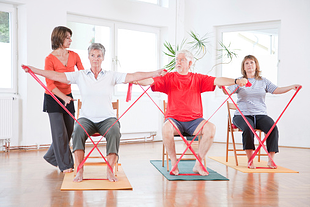
Free Workout FridayDo you feel that you have to use machines or dumbbells to get a good strength workout? Well, it’s time to think outside of the box and incorporate resistance bands into your workout. In the past, bands were seen for older adults because they may not make you sore or you don’t feel they are as intense. Bands are great to throw in your bag or car while traveling because they don’t take up much space and aren’t near as heavy to carry around.

One advantage to using bands is you have to use your muscles to control the band throughout the entire lift. Usually with dumbbells there is a part of the lift where you’re not using much muscle control. If it’s not burning your muscles at the end of a resistance band workout, then double up! That’s right; grab two thicker bands for added intensity.

When using bands, think slow and controlled movements! You need to control the band, don’t let the band control you. Adding in holds & pulses with your reps really helps to “feel the burn”. Try this band workout at least a couple times a month to mix up your strength workouts. Also, keep your eye out for a part two to this blog incorporating partner band exercises.

  • Band underneath both feet, wide squats with an outer thigh lift (alternating legs on the lift). 40 squats total, 20 outer thigh lifts on each side
  • Band underneath front foot, lunges (add intensity by bringing the band handles up by shoulders or higher). 20 on each leg
  • Band underneath both feet, outer thigh walks back & forth. 1 minute
  • Band underneath both feet for added intensity or under one foot for less intensity, bicep curls. 20 reps
  • Band underneath both feet, arms straight by sides, tricep pulses, push the back away from your body. 1 minute
  • Band underneath both feet; place both handles in front of your body, grabbing both handles with both hands, upright rows (elbows come up high than your wrist). 20 reps.
  • Repeat!

Fit tip - the thicker the band, the higher the resistance, so pick your poison by challenging yourself!

Topics: Free Workout Friday fitness corporate fitness centers corporate fitness managment

Corporate Wellness: Is Obesity Really a Disease?

obese manOfficially, one-third of the U.S. is now ill. The American Medical Association has voted and officially upgraded obesity from a “condition” to a “disease.”

While I have no doubt this decision will affect everyone due to the change in how insurance companies view and care for obesity, I find myself wondering whether obesity truly should be considered a disease. Some will argue it fits the definition of a disease. People die of obesity as they would cancer, while others feel people actually die of the diseases from the metabolic dysfunction, which in turn causes obesity. It’s a very complex issue that has already created quite the debate, and surely there is more to come.

The Implications of Classifying Obesity as a Disease

One thing is for sure: By classifying obesity as a disease that is costing insurance companies and Americans more money, there will be increased pressure on associated industries to work together to find a “cure.” As an example, obesity needs to be measured differently on a universal scale. The current standard is Body Mass Index (BMI) and because of this simplistic means of measuring one’s height versus weight, the Council on Science and Public Health actually recommended against classifying obesity as a disease. It is not uncommon for someone with a BMI above the recommended level to be healthy and free from metabolic dysfunction. On the other hand, it is equally normal to have someone who is within the recommended BMI range with an unhealthy amount of body fat and suffering from the same metabolic dysfunction. The first person would be overtreated, while the latter would go untreated.

My Opinion on Obesity Diagnosis and Treatment

Do I feel obesity is a disease? No, it is my professional opinion that obesity is a symptom or marker of metabolic dysfunction; however, I am optimistic now that it has gained the title of disease because it does shed new light on the issue. My fear is that classifying obesity as a disease will bring obesity too far into the medical world. Insurance is likely to cover expensive drugs and surgeries rather than support lifestyle changes. Knowing there is no single way to “cure” everyone of obesity, I feel strongly this would not be the right direction to go. As we seek an effective means of treatment for obesity, I support its classification as a disease under a few conditions:

  • If a more inclusive method for identification and diagnosis is implemented. BMI alone is not sufficient or even accurate in some cases.
  • If each case is handled separately. With different causes of obesity and metabolic dysfunction, there will be multiple successful methods.
  • Lifestyle changes should play a role in all cases to some degree, and including these changes should be a priority.
  • More resources need to be applied to further research and education of causes, treatments, and prevention of obesity and metabolic dysfunction.

What do you think? Comment below and watch for part two in this three-part obesity series, on the causes of obesity.

Topics: overweight employees Body Mass Index obesity control healthcare costs

Active Aging: Taking the Extra Step Toward Fitness

senior playing with a dogHow many times do you circle a parking lot looking for that perfect spot right in front of the door? It doesn’t matter if I am at the supermarket, a sporting event, a restaurant, or even the gym (sad, but true); I see people circling the lot like they’re in the Indy 500. As I get out of my car and walk to my destination, all I can do is ask myself, “Do they really think they are benefiting from parking in front of the door?”

My reasons for parking in the back of lots have changed over the years, but the end result hasn’t, and that is more steps walked equals more calories burned.

Can You Walk 10,000 Steps Per Day?

If you have ever been in a walking program or used a pedometer, there is a good chance you were advised to hit the 10,000-steps-per-day mark, but what does that mean? Is it attainable? Let’s break it down into numbers we deal with on a regular basis.

The average person’s stride length (the distance between successive points of contact of the same foot) is about 2.5 feet, so one step would be about 16 inches (assuming a normal walking pattern), which means you take about 4,000 steps to walk a mile. So if your goal is 10,000 steps per day, you will walk about 2 miles per day. If you consistently hit that 10,000-step mark, you are considered moderately active.

But what about the people who frequently take less than 5,000 steps per day? People in this group are considered sedentary. A drastic increase in steps can lead to many people quitting shortly after starting. People looking to increase their daily steps should look to add about 500 to 1,000 steps per day and increase at this rate every week until they hit their goal. So if you currently take 5,000 steps a day and you are increasing your steps by 1,000 per day per week, it will take you 5 weeks to hit your 10,000-step goal.

How to Walk More Steps

So where can you find these hidden steps, you ask? Here are a few activities you can adjust to add extra steps:

  • Parking farther back in parking lots: Parking an additional 20 spaces back equals about 200 steps round trip.
  • Getting up to change the channel: Changing channels 6 times per day equals about 60 steps total.
  • Walking to consult a coworker as opposed to calling them: Based on 2 round-trips of 60 feet equals about 200 steps.
  • Take the stairs: Taking the stairs causes more caloric expenditure than walking on a flat surface, and one flight equals about 15 steps.
  • Walk your pet: Walking around the block equals about 1,000 steps.

These are easy ways to add a few hundred steps to your day; pick and choose all, one, or something else. The goal is to go at your pace and to do what you like; anything else will just lead to a decline in program adherence until you ultimately quit. The steps you need are all around you, and if you look hard enough I guarantee you can find the time and energy to take an extra step.

Topics: employee health walking employee wellness fitness healthy habits staying active physical activity counting steps