Corporate Fitness and Active Aging

Senior Living: Five Tips for a Restful Night Sleep

Getting enough sleep is important to all areas of your health. According to a study from Harvard Medical School, “Chronic sleep loss can contribute to health problems such as weight gain, high blood pressure, and a decrease in the immune system’s power.” I know, if I don’t get enough sleep, it affects my mood and performance level.

Working at a senior living community, I am asked by residents, “how can you get the necessary sleep you need when you toss and turn and just don’t sleep well?” Some of the biggest concerns from seniors I hear about not sleeping well involve muscle cramps that wake them up, not being able to clear their minds to stay asleep and frequent trips to the restroom.  I believe there are 5 key ways to get a more restful night’s sleep. I’ve shared these with my residents and I hope they can work for you as well.

  1. senior_drinking_waterDrink Water Throughout the Day. When I am busy, I find I rarely get enough water throughout my day. By the time night comes, I am super thirsty. It is hard to get enough water close to bed. Not only that, if I drink a lot before bed, I find myself waking up to use the restroom, which interrupts my restful sleep. Another negative side effect to not drinking enough water is muscle cramps. Dehydration can increase the likelihood of muscle cramps while sleeping.
  2. Take a Warm Bath or Shower. I have heard this is because the warmth of the water increases your body temperature and when you sleep, your body temperature decreases. This may be true, but for me the reason a warm shower works is it relaxes my tight, tired muscles. The warmth releases tension and helps ease my aches and pains from daily activities and exercise.
  3. Stretch. This goes hand-in-hand with the warm shower. You can get a better night’s sleep when your muscles aren’t tight and painful. I have found light stretching in my bed before I close my eyes gets my body ready for sleep. I concentrate on lower body, hip, and back stretches. I hold each stretch for at least 30-60 seconds. I close my eyes, take long and deep breaths, and focus on relaxing the muscles as I stretch them.
  4. Breathe. This is very important while stretching, but deep breathing throughout the day also helps reduce stress. When I am frustrated or upset, taking three-four deep belly breaths helps me calm down and refocus. At night this deep breathing is good because it helps clear my mind. After I finish my stretching routine, I lie flat on my back with my eyes closed and focus on breathing. In yoga, this is called savasana or corpse pose. It is beneficial because it helps your memory, reduces heart rate and blood pressure, increases oxygen levels in your blood, reduces headaches, and helps improve your focus.
  5. Reduce the Distractions in your Bedroom. This is by far the hardest thing for me to practice. Turning off the TV, putting the book away, and not sleeping with my smart phone next to my bed have helped me go to sleep faster. Picking up my cell phone to check email, the weather, and social media means I stay awake longer than I need to. The noises and distractions can also interrupt restful sleep, so put them away.

Tonight, may you sleep soundly after a day of drinking water, taking a warm bath or shower, stretching, breathing, and relaxing without any distractions; Sweet Dreams!

Five Reasons to Choose NIFS

Topics: senior living wellness

3 Ways  Fitness Participation Data Improves Senior Living Communites

group_of_seniors

If you can't answer these questions about your community fitness program, it's time to consider doing something more with the data you're gathering to create a more effective offering for your residents:

  1. Do you know how many classes you offered last month and which residents attended compared to the preceding month?
  2. Do you know how many appointments were conducted in the fitness center last year compared to this year?
  3. Does your tracking for fitness center or class attendance allow you to see individual participation trends by resident?

In many communities with which we work, there is often some type of sign in practice in place, but typically little to nothing is done with that information once the resident signs his name on the way into the fitness center. Consistent participation tracking is even less common in the group fitness classes; it's more common to simply estimate headcounts.

Tracking resident participation in all of your offerings is central to highlighting the value of your fitness program and continuing to evolve what you are doing.  Read on to discover three key ways participation data can help you provide more effective programming in your senior living community fitness center.

1. Create Visit Goals for the Residents

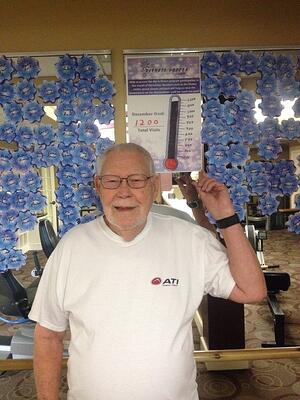
By keeping record of how many total visits you have to your fitness center, pool, and group fitness offerings, you can determine the ebbs and flows in participation through the year. As the busy holiday season approaches and exercise routines get pushed to the back burner, set a community goal for your residents to accumulate more visits in December of this year as opposed to last year. We’ve seen firsthand how residents LOVE to rally together as a team for goals like this. Providing them with weekly updates on their standings has helped us reach visit goals and prevented lulls in participation. You won’t know what a reasonable goal is, however, if you don’t have historical data to evaluate.

[Related Content: Increasing Participation in Senior Living Fitness Programs]

2. Reach Out to Individuals

Your tracking system should allow you to see how many times any given resident participates in part(s) of the program. If someone comes to a particular exercise class six times a month and the fitness center nine times a month, you should have that information at your fingertips through proper tracking procedures. Then you can recognize their efforts through recognition programs such as a monthly “Fit 15” listing. Similarly, if you have a resident who joined the program but stopped coming, you’ll have that important information at your fingertips. Personally contacting a resident and letting them know that their participation is missed and inviting them back to an old favorite or a fresh new opportunity can be a great tool for improving exercise adherence.

Let's be clear: We’re talking about tracking attendance by resident; that’s the only way this will work. Taking simple headcounts for total visits in your program will not allow you to consistently evaluate the specific members who make up your participation and create those avenues for personal connection and recognition.

3. Demonstrate Value

Having participation data that shows you monthly totals for your different offerings will allow you to evaluate what is effective, what is gaining or losing momentum, and what might be ready for a change. By sticking with a group fitness class on the calendar that has only two or three consistent participants, you might be limiting resources that could go toward a fresh new offering that would cater to the needs and interests of more individuals. Residents will be much more able to embrace change when you can show them the data and well-thought-out intentions behind it.

Similarly, if you feel your program cannot expand further without additional resources, let the data demonstrate the value in your current offerings. If an exercise class is busting at the seams, have a few months worth of data to show the growth and articulate the need for another class on the schedule. If your fitness center participation is increasing, use the monthly visit and appointment data to demonstrate the need for additional staffing support or more equipment.

[Related Content: Benefits of Tracking Participation Data]

***

Don’t shy away from data. It can support important decisions about the future of your fitness program. Start small with a simple list of all the residents in the community and invite them to start checking in. From there, you can build basic spreadsheets to create a tracking tool that will help you determine what parts of your community’s fitness program need the most attention. Or, reach out to us for NIFS consulting services - we'll provide you with the tools to get off the ground quickly with improvements to your fitness program that boost your senior living community.  

find out more about consulting

Topics: active aging fitness programs for seniors participation senior living fitness center

Corporate Wellness: Laughing... it's good for the soul and your health

laughterIf smiling is contagious and laughter is infectious, then why don’t more of us do it? When people laugh together, it brings them closer, and creates happiness and intimacy. Laughter not only does these few things, but it also causes physical changes within the body. 

Laughter is powerful and priceless (I mean, who doesn’t like a bargain?!). Oh, and it’s fun! Humor and laughter have the ability to:

  • Boost Your Immune System: Laughing decreases the stress hormones and increases the immune cells and anti-bodies, improving your body’s resistance to infections and diseases.
  • Trigger the Release of Endorphins: That natural feel-good chemical rush you get can improve your overall feeling, decrease pain, and fight off stress.
  • Relax the Whole Body: It relieves tension and stress, allowing your muscles to stay relaxed for up to 45 minutes after that obnoxiously good belly-laugh you just had.
  • Protect the Heart: Laughter increases blood by improving the function of blood vessels, aiding in the protection against cardiovascular problems.

Humor can keep one optimistic and even one little smile can turn someone’s day around. A good laugh can bring your body back into balance. I think it is hard to resist a good laugh or smile when the person next to you is laughing in an absolute hysterical manner. A shared laugh can keep relationships fresh and exciting and build strong bonds too!

You can learn to develop or improve your sense of humor by:

  • Learning to laugh at yourself
  • Laughing at a situation, rather than getting upset over it
  • Keeping things in perspective
  • Surrounding yourself with reminders to lighten up a little

In life, remember not to take yourself too seriously. Yes, some events are sad and not the right occasion for laughter, but learn to look at the positive side of the event. Laughter is priceless, fun, and easy to use! If you need a good laugh, I am sure one of our Corporate Fitness staff members could crack a joke or two! Laugh on, my friend - it’s good for the soul.

Five Reasons to Choose NIFS

Topics: wellness

Corporate Wellness: Tis the season for volunteering

volunteeringThe holidays are right around the corner and what better way to spread holiday cheer than to volunteer!  Fall sports are starting to wind down with the winter rolling in, big projects at work are wrapping up, and schedules start to open up for new activities to fill in.  The holidays are the perfect time to sign the family up for a volunteer day to share some of your good wealth. 

4 Tips for Giving during the Holiday Season:

  1. Helping out in your community- The joy of winter means cold weather and most likely a good amount of snow.  Show someone you care by offering to shovel their driveway or sidewalk.  Or, invite your neighbors over for a warm meal and not only share a meal, but share conversation.
  2. Serve from home- With all of the do-it-yourself projects out there, there’s plenty of ways to get creative in your home!  Organize a volunteer group to create holiday bags for a local shelter or senior living community or even your neighborhood. 
  3. Visit a local animal shelter- Animals need attention during the holidays as well.  Colder weather makes it harder to take animals outside to play; why not visit your local animal shelter and offer to donate your time playing with animals or helping out around the office?  If you have the resources, consider fostering an animal in need.
  4. Give back to veterans and military families-  If you know a family, offer to bring over a meal or snacks over the weekend.  Offer to give the family a break and carpool to school or invite the family over for some fun at your house.

Places like the Salvation Army, local homeless shelters, and the American Red Cross are always searching for help around the holidays and year round.  Never volunteered before?  Try one of the 4 ways above and go from there!  All it takes is one small act of kindness to change someone’s day!

Other ways you can do good and initiate a great family tradition is to let the kids choose an angel from a giving tree, donate to your local coats for kids, or work in a soup kitchen.  There are many ways to do good during the season.  Share with us how your family spreads joy to others, comment below and tell us your family traditions during the season of giving.

Subscribe to NIFS blog

Topics: wellness volunteering,

How One Senior Living Community Got Focused on Brain Fitness

senior_puzzleMost senior living communities have a variety of group fitness classes on their calendars focused on balance, muscular strength, flexibility, and cardiovascular health, and the clients we work with are no different. But we’ve landed on a program tied in with our group fitness classes for seniors that has become wildly popular with the residents. It turns out, it’s been a great way to draw more participants into the exercise program, too.

The Popularity of Brain Activities

At one of our client’s communities we have many of the typical activities to stimulate the mind: card games, lectures, forums, resident committees, etc. And at one point we offered a “Memory” workshop series. This was so popular that we added a word of the day and the TriBond® game to our daily information board in the fitness center, along with including puzzles in our newsletter.

Over time, we noticed that more and more people started coming to the fitness center to learn the word of the day, to get the TriBond® puzzle, and to ask questions about the puzzle in the newsletter. It was obvious that our residents were craving ways to challenge their minds, and we were eager to respond in ways that would help them keep their minds strong or increase their abilities.

So we added a brain fitness class to our group fitness schedule, and that class is thriving each week! In the weekly offering, our residents have a wonderful time challenging their minds. They learn new games like Sudoku, and play old games like Memory™. They also engage in history trivia questions and challenges. One of our residents recently named all 44 presidents, in order, off the top of her head!

How to Start Brain Fitness Classes at Your CCRC

We’ve started offering this type of class at our other senior living client sites with similar popularity. Here’s some advice on how you can get it started in your community:

  • Hold an event such as a brain fitness fair for your residents to see how fun and important it is to continue to work on the mind.
  • During the event, pay attention to what the residents like and don’t like. This will help you build a class structure that works for them.
  • Do not always make the class what they like. In order to strengthen the mind we need to challenge it. Typically the things that we do not like are the things that we find challenging.
  • Begin putting puzzles in your weekly or monthly newsletters.
  • ADVERTISE EVERYWHERE!

Brain Class Structure

For the structure of the class, consider the following ideas:

  • Begin with a task that can be done while waiting for everyone to come in and sign in. (Example: Write your name with your non-dominant hand or with both hands at the same time.)
  • Have classical music playing in the background. Some studies show this increases the brainwaves that stimulate thought process.
  • Come prepared with four to five activities. Make it a variety of word games, long-term memory/short term memory, and deductive reasoning. Here are some sites that might provide some ideas: MazestoPrint.com, Activityconnection.com, BrainBashers.com, and ThinkablePuzzles.com.
  • Leave time for discussion in small groups and then time with you for answers.
  • Have the answers for all activities to share with the participants. (The residents will be angry if you don’t!)
  • If you do not finish all activities, consider giving “homework.”

Learn more about physical exercises that help improve cognition here.

Let us know how your brain fitness program works in your setting! We’d love to keep sharing these kinds of ideas to improve the health of the residents we work with. 

Download Our Free  Webinar Series Today!

Topics: CCRC active aging senior living communities brain health cognitive function resident wellness programs memory

Corporate Wellness: Think PINK Year Round

pinkOctober brings the awareness… It has gained a lot of attention over the past few years and helped to raise women’s awareness of this aspect of health they should not take lightly. I wanted to take this time to fully educate and extend the awareness on the topic of breast cancer by exposing a few myths about this disease and remind people to be aware year round. The following information is provided courtesy of National Cancer Institute:

The Breast Cancer Myth

Finding a lump in your breast means you have breast cancer.

The Truth

Only a small percentage of breast lumps turn out to be cancer.  But if you discover a persistent lump in your breast or notice any changes in breast tissue, it should never be ignored. It is very important that you see a physician for a clinical breast exam. He or she may possibly order breast imaging studies to determine if this lump is of concern or not. 

Take charge of your health by performing routine breast self-exams, establishing ongoing communication with your doctor, getting an annual clinical breast exam, and scheduling your routine screening mammograms.

The Breast Cancer Myth

Men do not get breast cancer; it affects women only.

The Truth

Quite the contrary, each year it is estimated that approximately 2,190 men will be diagnosed with breast cancer and 410 will die. While this percentage is still small, men should also check themselves periodically by doing a breast self-exam while in the shower and reporting any changes to their physicians. 

Breast cancer in men is usually detected as a hard lump underneath the nipple and areola.  Men carry a higher mortality than women do, primarily because awareness among men is less and they are less likely to assume a lump is breast cancer, which can cause a delay in seeking treatment.

The Breast Cancer Myth

A mammogram can cause breast cancer to spread.

The Truth

A mammogram, or x-ray of the breast, currently remains the gold standard for the early detection of breast cancer. Breast compression while getting a mammogram cannot cause cancer to spread. According to the National Cancer Institute, “The benefits of mammography, however, nearly always outweigh the potential harm from the radiation exposure. Mammograms require very small doses of radiation. The risk of harm from this radiation exposure is extremely low.”

The standard recommendation is an annual mammographic screening for women beginning at age 40. Base your decision on your physician's recommendation and be sure to discuss any remaining questions or concerns you may have with your physician.

The Breast Cancer Myth

If you have a family history of breast cancer, you are likely to develop breast cancer, too.

The Truth

While women who have a family history of breast cancer are in a higher risk group, most women who have breast cancer have no family history. Statistically only about 10% of individuals diagnosed with breast cancer have a family history of this disease.  

If you have a first degree relative with breast cancer: If you have a mother, daughter, or sister who developed breast cancer below the age of 50, you should consider some form of regular diagnostic breast imaging starting 10 years before the age of your relative’s diagnosis. 

If you have a second degree relative with breast cancer: If you have had a grandmother or aunt who was diagnosed with breast cancer, your risk increases slightly, but it is not in the same risk category as those who have a first degree relative with breast cancer. 

If you have multiple generations diagnosed with breast cancer on the same side of the family, or if there are several individuals who are first degree relatives to one another, or several family members diagnosed under age 50, the probability increases that there is a breast cancer gene contributing to the cause of this familial history.

The Breast Cancer Myth

Breast cancer is contagious.

The Truth

You cannot catch breast cancer or transfer it to someone else's body. Breast cancer is the result of uncontrolled cell growth of mutated cells that begin to spread into other tissues within the breast. However, you can reduce your risk by practicing a healthy lifestyle, being aware of the risk factors, and following an early detection plan so that you will be diagnosed early if breast cancer were to occur.

The Breast Cancer Myth

If the gene mutation BRCA1 or BRCA2 is detected in your DNA, you will definitely develop breast cancer.

The Truth

According to the National Cancer Institute, regarding families who are known to carry BRCA1 or BRCA2, “not every woman in such families carries a harmful BRCA1 or BRCA2 mutation, and not every cancer in such families is linked to a harmful mutation in one of these genes. Furthermore, not every woman who has a harmful BRCA1 or BRCA2 mutation will develop breast and/or ovarian cancer. But, a woman who has inherited a harmful mutation in BRCA1 or BRCA2 is about five times more likely to develop breast cancer than a woman who does not have such a mutation.” For people who discover they have the harmful mutation, there are various proactive measures that can be done to reduce risk. These include taking a hormonal therapy called Tamoxifen or deciding to take a surgical prevention approach which is to have bilateral prophylactic mastectomies, usually done with reconstruction.  Most women will also have ovaries and fallopian tubes removed as well since there is no reliable screening test for the early stages of developing ovarian cancer.

The Breast Cancer Myth

Antiperspirants and deodorants cause breast cancer.

The Truth

Researchers at the National Cancer Institute (NCI) are not aware of any conclusive evidence linking the use of underarm antiperspirants or deodorants and the subsequent development of breast cancer.

To throw in a little corporate fitness your way, exercise boosts the immune system and helps you to keep your weight in check. With as little as three hours of exercise per week, or about 30 minutes a day, a woman can start to lower her risk of breast cancer. This doesn’t mean you need a gym membership to start. Power walking is more than sufficient!

Click here for more information about this topic or to continuing supporting the cause year round.

Subscribe to NIFS blog

NIFS: How a simple squat challenge helped corporate fitness metrics

squat_challengeWhen our members talk, we listen.  Sometimes we get good old fashioned direct, face-to-face feedback about what’s working and what isn’t, and sometimes they tell us what’s working by their participation.  Such was the case with a recent squat challenge we ran at one of our corporate sites.  In fact, the simple challenge was so effective, we’ve proceeded to design more programming around the same concept. 

Here’s a little of the history and data on the original corporate fitness center program:

The 30 Day Squat Challenge was designed to help our members get up from their desks and choose to be active during the long and busy work days in August.  The challenge ran the duration of August and we established a set number of daily squats the participants needed to complete, with every third day being a rest day. The participants could do the squats where ever they wanted (though we love when they come to the fitness center to do them) and they had all day to complete them, but they had to log their efforts at the Wellness Center.

On the first day of the challenge, the expectation was for participants to complete 50 squats, and by the end of the challenge, successful participants completed 250 squats!  We would never advocate performing 250 squats in a row (or even 50 in a row, for that matter), so allowing participants all day to complete the squats was a must.

I loved hearing the stories about when and where participants were squatting and who they were convincing to participate with them. A lot of members got their kids and spouses involved, making it a family affair. We had a bulletin board in the fitness center with squat variations and modifications for members to follow and we integrated the squats into our group fitness classes to keep the participants motivated.  It was really fun seeing everyone squatting in the fitness center; it really turned out to be a group effort.

When we mapped out this program, we set three goals we hoped to achieve by running the Squat Challenge:

  1. We wanted to increase visits to the fitness center by three percent compared to August 2013.  This is a tough month for us to draw our members in because many of the employees are sneaking in final summer vacation time before their kids head off to school.
  2. For those members who participated in the challenge, we wanted them to increase their total time spent being active through the day by 10 minutes each day.  We know how important even short, 10 minute bouts of physical activity can be for an individual’s health and we wanted to see if this program provided a means of stimulating more movement in our employee population.
  3. Finally, we set a goal to achieve a 50% completion rate.  We’re constantly trying to determine what’s most effective at helping our members stick with a program, and we hoped to learn a little more about how small exercise goals might influence success rates.

The Squat Challenge was very successful with 50% completion rate.  We also met our fitness center visit goal (increased by three percent) for August, 2014, and half of the program participants reported that that increased their total active minutes per day by at least 10 minutes.  On top of the great numbers we also fielded some positive feedback.  One member said, “Loved this Challenge!  [It] made my legs so much stronger, [I] love when you can honestly feel results in a short amount of time.”  Another program participant said, “I started Roller Derby and if I hadn't done the squat challenge, I seriously would not have made it thru the 1st practice. So thank you Squat Challenge!” 

Up next is an Ab Challenge.  We can’t wait to see how the members do and what we can achieve for participation and completion goals. 

If you’d like to learn more about NIFS best in class programming for corporate fitness centers, sign up for our best practice series. 

NIFS Best Practices Corporate


Topics: corporate fitness fitness programming

Corporate Wellness: Sleep Ergonomics

sleep_positionHave you ever woken up and felt like you never slept at all and could hibernate for weeks upon weeks? You know, it’s similar to that back-to-work Monday feeling. The average person spends one third of their life sleeping, so it may be good to consider your bed posture being as important as your daily posture. Your bed, sleeping position, and use of pillows are key to more than one night of good sleep.

Starting off with your bed, mattresses come in all sizes, designs, and firmness. They say the more firm the better. A firmer bed will provide your back with more support and has the ability to keep your spine in better alignment. A mattress’s life span is about 8-10 years and can range anywhere from $800 for a queen to about $1000 for a king size bed. Go big or go home I guess, right? The bigger the bed, the more room to switch up your sleeping positions from starfish to the fetal position. Kidding! Find a mattress that fits your budget, but remember that it has a huge role in how well you sleep!

Secondly, the type of pillow you lay your head on at the end of a long day or for a quick power nap can change your bed posture and result in a terrible night of sleep. Depending on your neck depth, you’ll need to find a pillow that fits it. Yes, everyone has a different neck depth. Your sleeping position also affects the type of pillow you need. If you're a back sleeper, you'll need a pillow that fills the space between your neck and bed, but not too high because you don’t want to be able to see your feet. The side sleepers should find a pillow that fills the space between their ear and bed. You may find that this pillow needs to be thicker than the ones for sleeping on your back. For all you stomach sleepers, your pillow should be quite thin and only thick enough to level your head while sleeping. This pillow should only fill the space between your head and mattress. There are several ways to modify your pillow to fit your sleeping position. You can add towels or foam to fill thickness and trim foam or remove padding to make it thinner. 

Lastly and more importantly is your sleeping position. The pressure on your back varies to the position you sleep in. The position with the least amount of back pressure is lying on your back and then your side. The worst and most stressful sleeping position is on your stomach. If you sleep on your back or stomach, it is recommended you place a pillow under your knees as well and if you sleep on your side, place a pillow between your knees.

Who knew there were so many tips and tricks to a smooth sailing night of sleep? I know I didn’t! No matter how you choose to sleep, just be sure to keep that spine in alignment. If your body has trouble adjusting and needs some stretching to loosen up, stop by your corporate fitness center and ask a Health Fitness Specialist for recommended stretches!

Working to build your corporate fitness program and need a little help?  Click below to download our guide to successful corporate fitness centers to get the tools you need for successs.

 Guide to Successful Corporate Fitness Centers

Topics: sleep wellness

NIFS Nutrition News: Top 5 Worst Snacks to Eat While Watching Football

football_foodIt’s that time of the year again: football season. With every year comes a clean slate for each team. Rosters are changed, stars have yet to emerge, and the underdog team is nowhere close to being discovered. With the changes the football season brings, have you ever considered your dietary habits for the season? Similar to the new football season ahead, do you plan to change your eating or drinking habits for football Sunday?

You really can keep nutrition and wellness in mind while enjoying a game party. Here are some of the worst snacks to eat while watching football, followed by suggested alternatives.

The Top 5 Worst Foods to Eat While Watching the Big Game

  1. Heavy or dark beer: Heavy or dark beer is loaded with calories and often has more alcohol per volume than a lighter beer. Consuming a six-pack of this type of beer in an afternoon can easily equal half of your daily caloric intake allowance and set back your hard work over the previous few months.
  2. Fattening ribs: Ribs are often loaded with fat and sodium, two culprits of poor heart health. Ribs tend to have flavorful dipping sauces and marinades that are primarily sodium infused. One serving of ribs can quickly tack on a load of sodium, which is known to cause water retention in the body.
  3. 7-Layer Bean Dip: Tortilla chips, guacamole, shredded cheese, sour cream, and refried beans are all loaded with calories. If this is combined with ribs and some dark beer, it’s a diet’s worst nightmare.
  4. Original potato or tortilla chips: A one-ounce serving of original-style potato chips contains about one fifth of your daily fat intake. There is even more in tortilla chips. When combined with bean dip and fatty ribs, potato chips are the straw that broke the camel’s back.
  5. Nachos: Nachos often include ground beef, refried beans, sour cream, guacamole, cheese spread or whole cheese, and olives. While this may sound appetizing to some, it can quickly add up to a weight-gaining mess. If you are eating out at a local bar for the Sunday game, avoid nachos as an “appetizer” because based on the total calories in one meal, it could be considered two meals.

 The Top 5 Best Foods to Eat While Watching the Big Game

  1. Light beer or wine in moderation: Light beer contains a fraction of the calories in dark brew. In addition, wine is full of flavonoids and contains fewer calories than a dark beer. Remember to exercise moderation when having any alcohol regardless of the “strength” of the source.
  2. Grilled salmon: Grilling does not always need to be bad for you. In fact, grilling can be a much better option than baking. Exchange ribs for a nice piece of salmon. Salmon is full of good fat and it can fill you up quickly.
  3. Fat-free onion or spinach dip: Homemade dip that includes fat-free sour cream and a dip mix can save loads of calories from entering the body. Try out your favorite flavor and mix it up frequently.
  4. Baked chips or sweet potato chips: If chips are going to be consumed, buy ones that are baked. Baked chips have less fat and less sodium than fried. If you are more inclined toward the healthiest option, try fat-free and low-sodium chips.
  5. Assorted vegetable tray: An assorted vegetable tray is a great snack for the game. Veggies can be dipped or used as a side dish. Swap out the nachos for veggies and try this as your appetizer instead.

For more tips for a fumble free football party, check out this article. For more help making healthy eating choices, find out more about NIFS Personal Nutrition Consulting.

Subscribe to our blog

Topics: nutrition healthy food choices

NIFS: The Substitute; Don't Fear an Unknown Group Fitness Instructor

instructorsStand on the street and ask 100 random people their feelings about going to school as a child and you will get 100 different answers. If I were asked my response would have sounded something like this, “I just want to graduate and get a job so I can be done with homework and live the easy life like adults.” I’m shaking my head as I write this, but that is how I truly felt back then. No matter whom you are certain days in school were destined to be fun, and those days were when we had a SUBSTITUTE. Well today I am going to be that sub, except I won’t be in a classroom with books, I will be on a track with kettle bells, plyo boxes, and resistance bands; I’m subbing for an outdoor boot camp class.

Personally I love to cover other instructor’s classes, because I am guaranteed to encounter something different. The something different part is what we should all look for no matter our profession, new experiences break the monotony of our every day schedules and will positively affect our brain function. As I’m preparing for class my mind is racing and I love it, what music should I play, I wonder how many people will come, how fit are they, what if they can’t do an exercise, what if we don’t have enough equipment?  Are just a few of the questions racing through my mind, but instructing the class and facing those questions gives me the opportunity to hone my skills, meet new people, travel to new places, and hopefully become a better instructor for the classes I already have, and for  those I will sub for in the future.

I hope the same benefits I receive from instructing a new class is passed on to the class I am leading. Any fitness professional will tell you to vary your workouts to reduce boredom and to aid physiological changes. Well nothing will change things up for a group fitness program like being led by a different instructor. No matter how similar two instructors are, there will always be some differences, for example a different cadence will require a higher level of mental focus so that you can stay in sync with the instructor. Often people who have been working with the same instructor for long periods of time can go into “auto-pilot” or turn their brain off during class because they are so familiar with the routine that their body just moves without much thought as to what they are doing.

This blog is not meant for just group fitness instructors and exercise class goers, it’s meant for everyone. Break your everyday cycle and try something different. It will affect an area in your life positively. For all my class goers: when that sub does walk through the door, don’t pout, your instructor will be back, but in the mean time act like a kid again, let all that energy out and have a great class, after all it’s only a sub!

Get your groove on with NIFS group fitness classes

Topics: group exercise group fitness for seniors