Corporate Fitness and Active Aging

JumpStart July: 82 Residents, One Month, Incredible Progress

Jumpstart Logo_MFBH

At NIFS, we believe great wellness programming should be intentional, measurable, and responsive to the residents we serve. Data is an essential part of that philosophy, helping us better understand resident engagement, recognize progress, and continuously shape programming that supports meaningful outcomes. JumpStart is one piece of our broader service model that helps us put that philosophy into action.

In July, we placed a special focus on taking a closer look at the progress residents were making across our partner communities. The response? WOW!

In just one month 82 residents completed their jumpstart program, and the outcomes gave us a lot to celebrate! Of the 82 residents 53 were women and 29 were men; a summary of their results are below:

22% improvement in lower-body strength.

  • Think of standing up from a chair more easily, navigating stairs, and having more strength for everyday transfers.

15% improvement in upper-body strength.

  • Strength that supports carrying groceries, opening doors, lifting household items and completing everyday tasks.

23% improvement in cardiovascular endurance.

  • More stamina for walking through the community, participating in outings, keeping up with friends and simply doing more throughout the day.

53% improvement in lower-body flexibility.

  • Supporting everyday activities like putting on shoes and socks, getting dressed, reaching toward the floor and getting in and out of a vehicle.

45% improvement in upper-body flexibility.

  • Important for reaching into cabinets, putting on a jacket, brushing their hair, and other daily activities.

8% improvement in balance and stability.

  • Supporting confidence while changing direction, navigating uneven surfaces and moving throughout the community.

The July results gave us plenty to celebrate, but they also reinforced something even more important: this is part of how we do wellness at NIFS. What makes these outcomes so exciting isn't just what happened in an assessment, it's what those improvements can mean in real life. More strength can mean getting up from the dinner table independently, more endurance can mean saying yes to taking a walk with a friend, more flexibility can make getting dressed in the morning a little easier, better balance can mean feeling more confident moving throughout the community and sometimes seeing those results on paper gives the resident something equally important: proof that the work they're putting in is making a difference.

JumpStart isn’t a short-term campaign or a once-a-year initiative. It is part of our standard service model and our commitment to using data to better understand the residents we serve, demonstrate meaningful progress, and program with intention.

Across our partner communities, hundreds of residents have participated in the NIFS JumpStart program, giving our teams valuable insight into resident abilities, progress, and opportunities for continued engagement. That information helps us tell a bigger story, not just about participation, but about the impact wellness programming can have on strength, endurance, mobility, balance, independence, and everyday life.

Click below to learn more about NIFS and how we take your fitness and wellness programs from good to great!

Topics: active aging fitness programs for seniors senior living wellness programs improving senior fitness jumpstart

Active Aging: Train like a boxer for championship results

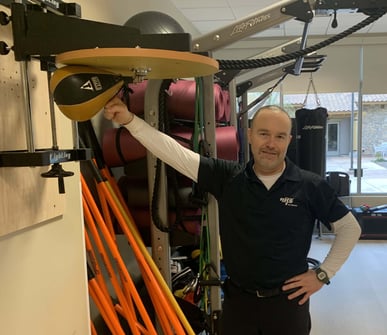
SpeedbagTraining elements from boxing have become very popular in the active aging segment of the population so it stands to reason that it would be a great training element to include in a senior living fitness program. The benefits when done correctly are immense and include improved balance, cardiovascular fitness, strength, agility as well as hand-eye coordination which translate very well to the functional demands of advancing age. Training methods should concentrate on balance, safety, (lots of water breaks and watch for overexertion,) and most of all….fun! Incorporating boxing into existing group fitness classes or implementing a low impact cardio kickboxing class is a great way to jazz up your group fitness calendar for residents and it is particularly beneficial for residents with Parkinson’s Disease.

Boxing teaches a can-do spirit and instills a level of resiliency that can help those facing difficult tasks, including coming back from injury or sickness. Even though the sport of boxing is an individual one, the camaraderie and community associated with the training is ideal for building social ties and the sense of accomplishing something difficult as a group. The saying that “it’s not how many times you get knocked down but how often you get up!” is universally understood and applicable to almost everyone. Not sure how to get started? Check out the suggested progression below!

  • Shadowboxing in the mirror is the best way to begin a workout as it encompasses all the techniques involved in boxing training and gives one instant feedback on how they are progressing. Teaching certain combinations like jab, cross, hook and so forth will also engage the memory and will be entertaining to the class or individual as they try to follow along. Shadowboxing is also great to do first as it is a nice low-impact workout. 30 seconds on with a 30 second break then repeat.
  • Next, work on a strength element like static squats and wall push-ups to allow for a recovery of the cardiovascular system. 30 seconds for the static squat/ 30 second break and 30 seconds of wall push-ups followed by a 30 second break.
  • Hand/Eye coordination is next and can be done on a speedbag, double-end bag or even playing catch with a pickleball. 30 seconds on, 30 second break.
  • After that, working with a heavy bag will develop strength and balance. Hand wraps and appropriate gloves should always be used with this type of work. Those looking for a softer impact can barely ‘tap’ the bag and focus more on the cardio/balance aspects. 30 seconds on, 30 seconds break.
  • Mitt work is probably the most fun part of the class or training session and a chance for the boxers to show their stuff. Form a circle or line and have the boxers step in and out for 3 to 5 punch combinations. Make sure everyone has gloves on for this exercise or they can shadowbox in your direction, and you can pretend to be an opponent while keeping safe distance.

Variations of this circuit can be repeated and or modified to allow for different abilities. Finish with 5 minutes of stretching and plenty of water. Have fun and go get ‘em champ!

Considering whether there is opportunity to kick your group fitness calendar up a notch to reach more residents? Read more here…

DOWNLOAD: 3 Keys to Adding Group Fitness Classes at your Community>

Topics: fitness programs for seniors group fitness for seniors fitness for seniors Parkinson's Disease Pump It for Parkinson's

NIFS Pump it for Parkinson’s: A Special Event, 15 years in the making!

PI4P logo_final-01Register your community for our FREE educational event and get your residents pumping for Parkinson's Disease as we raise awareness!

Get Registered

Over 15 years ago, I remember sitting down at the computer in my senior living client’s fitness center and Googling, “exercises for Parkinson’s disease”. I had a new resident move-in with Parkinson’s and though I’m a certified and degreed exercise physiologist, I wanted to make sure I understood how to support her needs. Her name was Carolyn and I still remember her smile.

I now work at the operational level for NIFS supporting dozens of senior living clients and team members across the country. I benefit from a bird’s eye view of hearing successes and challenges impacting our communities and what residents want in their fitness center. I was continuing to hear requests from clients and staff for Parkinson’s resources. Our clients wanting a quality, yet manageable program that stands up to their brand promise in helping residents live well, and from our staff feeling like there were missed opportunities to better engage these residents.

Our staff are degreed fitness professionals, but those credentials don’t tell the full story of who they are as people. They are intuitive and gifted in relationship building with their members. They shared stories of individuals with Parkinson’s trying an existing balance class and noticing they weren’t coming back. They shared stories of what they were witnessing in the emotional needs of these residents who can also experience fatigue and depression.

As a prospective or current resident with a diagnosis speaks to our clients or staff, we want them to feel confidently met with exercise options that they know are designed for their needs. This is where Bold Moves was born. We spent over a year researching, completing specialized certifications, and meeting with our team to learn not only how to better support the exercise needs of those with Parkinson’s, but in a way that we know is manageable in a senior living fitness environment. We know the equipment, spaces, personnel, and resources commonly in place and created safe and empowering programming with Bold Moves that our staff could apply across different client settings.

Many think they have classes and one-on-one services that residents with Parkinson’s can participate in already. This was our line of thinking too. But after implementing Bold Moves, the level of engagement by residents with Parkinson’s skyrocketed. In the first two months of the program, we saw a 96% increase in group fitness participation by these individuals having a dedicated class on the calendar uniquely designed for their training needs. We have also seen a 100%+ increase in completion of our one-on-one exercise prescription service. These residents are regularly engaging in their community’s fitness centers more and it’s amazing to see how far we’ve come since the days of that simple Google search looking for resources!

We were so pumped by these outcomes; we wanted to celebrate and share resources to help more communities support their residents. On World Parkinson’s Day, we are going BIG with Pump it for Parkinson’s. During this nationwide event on Tuesday, April 11, senior living providers will come together, utilize complimentary programming materials to host their NuStep step-a-thon, and receive expert resources from NIFS to continue supporting their residents with Parkinson’s. Don’t have a NuStep in your community? That’s OK. We can find opportunities utilizing the equipment you do have. It is estimated that one million people are living in the US with Parkinson’s and our goal is to come together and complete at least one million steps on the NuStep as we Pump it for Parkinson’s. In addition to the great Parkinson’s resources including instructional videos for your fitness staff and education from NIFS Registered Dietitian, your community will also have an opportunity to win a free NuStep T6 Cross Trainer in thanks to our partnership with NuStep! We are thankful for our industry partners with NuStep, ICAA and Wellzesta who are helping us spread the word about this event so more communities can join us. For more information and to register your community, visit our Pump it for Parkinson’s page here.

Learn More: Pump It for Parkinson's

Topics: fitness programs for seniors senior living communities senior living wellness programs Parkinson's Disease Bold Moves Pump It for Parkinson's

The Importance of Changing Up Your Workout

GettyImages-529580019Working on one’s strength, agility, form, balance and flexibility are all so very important. Building/working on one’s strength helps prevent or lessen an injury. Using weights helps to strengthen the muscles. That being said, working the same muscles every day is not beneficial. Muscles need time to recover. Doing repetitive movements breaks the muscles down and causes wear and tear which leads to injury.

An example would be a marathon runner. Many runners only run, which puts a lot of strain on the body. Some runners cross-train (cross-training is doing another from of exercise that helps your muscles work in another way. (elliptical, bike, swim)).

Cross-training helps the muscles to work differently. Some runners have this thought that if they lift weights it will slow them down. When it’s actually the opposite. Weight training helps strengthen the muscles that the pressure is putting on those joints and body parts while running.

Switching up a land based class to an aqua class

Bike > Nustep

Nustep > Elliptical

All of these things will force one to use their muscles differently.

Another thing one can do while on a piece of cardio equipment is change the resistance and or speed on the machine. Increasing the resistance for 30 seconds to 2 minutes will get the muscles to work harder. Then go back to where you started from. The same with speeding up on the bike or Nustep for 30 second intervals and then going back to the starting pace.

While using weights, the amount of weights that one uses should be changed up for 6-8 weeks or maybe earlier depending on the individual. The muscles need to be challenged, by using the exact same weight all the time doesn’t do that for a person. When the same weights are being used over and over the body is going through the motions. Even if you can’t do as many reps, build up to the amount of reps you are doing with the new weights. Do one set with heavier weights, go back to the original, then go back to the new weight.

It is important to keep track of how long you have done the same workout for. It would be great if one can remember to change it up every 6-8 weeks. This will keep shocking and challenging the body to be the best it can.

Compare this to eating the same food all of the time, one gets bored and loses the flavor. The same goes for exercise, the body gets bored and doesn’t get the results that are wanted by doing the same thing all of the time.

Subscribe to our blog

Topics: active aging fitness programs for seniors senior fitness

Senior living residents take on the NIFS Summer Games

Summer Fitness Games_AAEvery 4 (or 5) years a special summer event comes around that makes us all want to feel like an athlete. This year, residents in CCRCs from Minnesota to Florida showed that they have what it takes to compete in the NIFS Summer Games. NIFS fitness staff put together 8-10 different events that residents could compete in over the course of the Games. On the surface, this program looked like a way to celebrate the summer, but there was certainly more intention behind the design.

Functional Movements

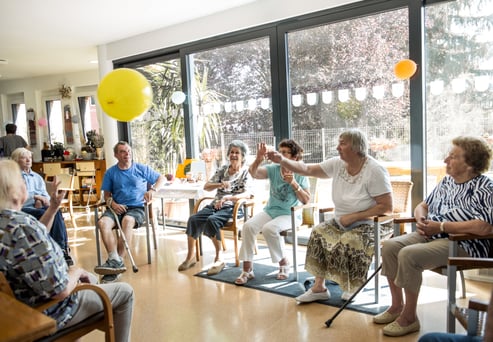
The most obvious goal of the Summer Games program is movement. Each sport was chosen as a way for residents to motivate themselves to get some physical exercise into the day. But, while they were enjoying themselves, they were also performing functional movements in each activity. Some were obvious. For example, “gymnastics” was actually a series of balance exercises using cones, foam pads, and other tools. Walking and swimming events were also an obvious way to get more people to exercise to earn their medals. But what about sports like basketball, soccer, and table tennis? On the surface, it’s “just” tossing a ball at a hoop or kicking one into a basket, but have each of these incorporates other important skills as well. Think about it: to throw a basketball into a hoop you not only have to practice hand-eye coordination, cognitively calculate depth and force, but most people also perform a mini-squat to lob the ball up toward the hoop. For soccer, many of the same skills apply plus you have to balance on one foot to be able to line up and kick the ball.

Social Wellness

I think we can all recognize that the last 18 months have taken a toll on most people’s social and emotional wellness. One major barrier for some residents to come back to the fitness center and to group fitness classes is that they feel like they’ve lost their fitness. They are worried they won’t be able to keep up and so they are missing out on the physical benefits of regular exercise. One way to combat that feeling is to get people out of their homes and back into the social situations they love. Once they start to remember what they’ve been missing in the fitness center and with their friends and neighbors, it’s more motivating to come back to their regular activities.

And, of course, FUN!

At the end of the day there’s always going to be some element of trying to improve quality of life and infusing some fun into the community. For the NIFS Summer Games, much of the enjoyment for participants came from the competition aspect. Over 400 medals were handed out to participants across the program! Whether they were competing with other residents to see who could earn the most medals or challenging their own past performances, this one definitely brought out the athlete in everyone!

Get Our Guide to Successful Fitness Programs

Topics: senior living fitness programs for seniors

Senior Living: Building Confidence with Targeted Fitness Classes

GettyImages-638886566Throughout the past year, everyone’s wellness routine has been thrown upside down at some point or another. Maybe you figured out what your ‘new norm’ looks like, you are not sure where to start, or you are somewhere in the middle trying to find that new norm. A lot of the residents at the senior living community where I am employed are unsure of where to start, specifically after the pandemic.

It felt like all at once, a handful of residents became aware of how far they regressed with taking the stairs, causing not only concern but also action. The residents were out at a Colts game or the symphony, had to take a set of stairs to their seats and came face-to-face with the harsh reality of how challenging the stairs were not only physically, but also mentally. We decided to add a “Stair Master” class to our group fitness schedule, which allowed the residents to learn proper biomechanics of taking the stairs, work on their capabilities twice a week, and have a support group that understood the struggles with the stairs. We had this class 2x per week for 4 months, each time focusing on the stairs in addition to strength, cardiovascular fitness, balance, and stability. Below are the three concepts we looked at each month to not only help evaluate if we were targeting what we wanted to target, but it was also used as an aide for residents to see their progress.

  • Evaluation. There was no gold standard evaluation for out goals, so we made up our own evaluation. We wanted to overshoot what residents would typically have to do at an outing so regardless of how many stairs, they would be confident. The first Thursday of the month, we would perform 4 continual minutes of stairs and record the results. As the months went by, the residents had pride in how they felt as well as how far they had come along since the first evaluation.
  • Intensity. Classes lasted 45 minutes, with a water break around the halfway point. We would consistently change when in the class we did the stairs, the duration spent on the stairs, and use work to rest ratios to help add intensity to the exercise without overloading the residents. If the stairs were added towards the end of the class, we found that residents were challenged more than if they were at the beginning of class. Overtime, going down the stairs presented a greater challenge, specifically mentally, and that allowed for our class to focus on overcoming mental barriers.
  • Rate of Perceived Exertion. Once residents completed the 4-minute evaluation, we would ask them to rate their perceived exertion on a scale of 1-10. At the end of the 4 months, we saw the number of flights of stairs residents successfully performed did not increase exponentially, however their rate of perceived exertion consistently decreased.

How are you creatively adapting to the needs of your residents?

Topics: fitness programs for seniors senior group fitness classes fitness for seniors

Kicking off 2020 with the 5 Star Fit Club

GettyImages-494388997 (1)It should come as no surprise that most people aim to improve their lives in one way or another with the start of a new year. Particularly when it comes to focusing on better health and fitness, January’s clean slate seems to be the ideal time to get back on track and into shape immediately following the busy holiday season and prolonged period of indulgence. This seems to be a universal practice as we have found that to be no exception for our members and residents in senior living communities!
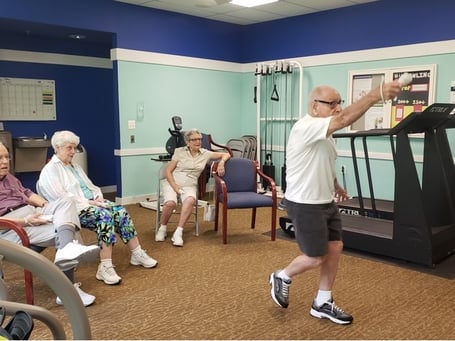
NIFS partners with communities across the US to manage their fitness center programming. Similar to most public gyms, our staff also notice patterns related to New Year’s resolutions. In the first few days of January we have come to expect an influx of participation, but these numbers start to decline after a few weeks as old routines creep back and resolutions are abandoned.

Knowing how to set goals, find motivation, build better habits, and remain consistent are all huge components of why so many “resolution-setters” fail. In fact, one study conducted by the University of Scranton suggests that only 8% of people stick to their resolutions, so we saw this as an opportunity to better support the communities and residents we serve and developed NIFS Five Star Fit Club. We piloted this program in ten communities for the first time in January 2019 and it resulted in:

  • Total visits: An average increase of 21% in total resident participation to the fitness centers in January 2019 compared to January 2018.
  • Group Fitness Visits: An average increase of 28% in participation in group fitness classes in January 2019 compared to January 2018.
  • Appointment Volume: Resident engagement increased by 135% in the number of appointments conducted in January 2019 compared to January 2018.
  • New Members: Across the communities, a total of 43 residents began participating in their fitness center for the first time as a direct result of the Five Star Fit Club program.

This incentive program is three weeks long and includes both a personalized assessment and exercise prescription as well as an interactive workshop where residents learn how to effectively change their habits and routines. Additionally, members are encouraged to visit their community’s fitness center independently and attend a set number of group fitness classes. The premise of the program is for participants to earn five stars over the three-week period by participating in the mentioned programs and services. In doing so they are being recognized and rewarded, experiencing accountability, and sensing small wins all while creating sustainable healthy habits and routines to keep them on track for the remainder of the year!5-Star Fit Club

In 2020, even more NIFS clients are kicking off the New Year with the 5-Star Fit Club and we look forward to hearing about the healthy habits and lifestyle choices residents adopt. Robust programs like the 5-Star Fit Club are a great way for senior living providers to support resident well-being while increasing utilization of amenities such as their fitness centers and pools. Click here for some other programming twists brought to NIFS clients.

Get Our Guide to Successful Fitness Programs

Topics: fitness programs for seniors senior living communities NIFS programs adding fun to senior fitness

NIFS Wii Bowling Tourney Brings Out Competition All Over the U.S.

HRGT Wii Bowling 3This summer, teams all around the country ironed their bowling shirts, warmed up their throwing arms, and double-checked their TV connections in preparation for the first-ever 10-week session of the NIFS Wii Bowling League.

What started as a little friendly banter between colleagues quickly became a full-blown tournament as NIFS managers from various fitness centers started exploring new opportunities for some variety in recreation programming. After a few group emails had been sent, we finally came up with the idea to host a virtual bowling tournament.

Residents formed teams of two to four people. Each week, teams played their round of bowling and NIFS fitness center managers sent scores in to be tallied. Each Monday, updated standings and a new schedule were sent out to all participating sites. This went on during seven weeks of regular play, and then the single-elimination playoffs began. After three weeks of playoffs, only one team was left standing: The PinStrikers from Lakewood, NJ are this summer’s Wii Bowling Champions!

Thinking of hosting your own Wii Bowling tournament? Here are a few tips to make it successful:

Make it accessible to everyone.

Nearly everyone can learn how to play Wii Bowling. That’s one of the best things about it! Just practice patience when teaching new people and everything will go well. You can even play while seated if balance is a concern.

Be sure the rules are clearly communicated.

Avoid frustration from all parties and be sure you are clear about the rules you’ll play by. For our tournament, we had a schedule and then the standings were set according to win/loss record rather than by scores. It made the tournament aspect much more interesting because there were no clear front-runners or favorites.

Make it fun!

I hope this goes without saying, but fun should be the first priority here. Be sure everyone is clear that it’s just a game and the opportunity is open to everyone!

Have you ever hosted a virtual tournament between teams of people in different communities? NIFS can help you evaluate your program and improve offerings for your residents with NIFS Consulting, click below for more information.

Are you ready to do wellness better? Learn more about wellness consulting.

Topics: senior fitness management fitness programs for seniors balance technology competition sports senior living activities

Running in retirement

It's more common than you think - folks well into their 70's and 80's still running for exercise. (I hope it's my story when I'm 80 years old!) Below are accounts from two resident who live in a community where NIFS provides fitness center management services. We were so impressed with these two residents, we asked to spotlight their stories:

Judy Carlson

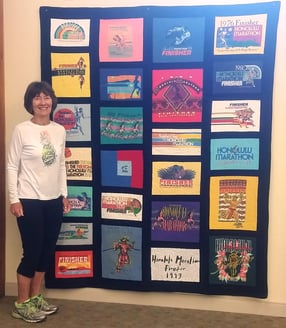
She was born in New Jersey, but lived in Honolulu, Hawaii with her husband RJudy Carlson Marathon Quilt.jpguss, for almost 50 years before becoming a Timber Ridge resident. 

Throughout her running career (she started at age 35), she's competed in 42 marathons, all across Hawaii. Although she says she's run her last full marathon, she continues to run races and has a group of friends with whom she runs the Hawaii Pacific Health’s Women’s 10k every year. She has also picked up races local to Seattle and she plans to complete the Seattle Half Marathon this Thanksgiving weekend.

Judy loves running because it brings people together and creates a sense of community.

I used to meet with a running a group and it was nice because there was no age discrimination; you just show up and run, nobody cared how old you were.

She told us that despite all of her long distance running, she's never seriously trained; she's in it for the enjoyment.  You can see Judy pictured next to a quilt she made from some of the t-shirts she received during marathons she's completed.

Dan Anderson

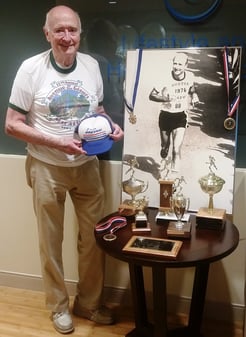
Dan Anderson Marathon.jpgShortly after Dan graduated from MIT, he married the love of his life, Portia, and they moved to Southern California where he began taking classes at USC and started work at the Hughes Research Laboratory.  He's had quite a career - not only did he play a large role in the development of the modern day laser, he later went on to serve as the Chief Patent Counselor at Boeing. Now, at the age of 89, Dan resides with his wife Timber Ridge.

When Dan wasn't in school, developing lasers, or working through patent law, he was running.  He finished his first marathon, the Palos Verdes Marathon, at the age of 24, and he went on to run marathons in Boston, Tri Cities, Culver City, Northern California’s “Avenue of the Giants” (his favorite), Vancouver, Memphis, Austin, Los Angeles, Athens, among others.  

In his earlier years, Dan enjoyed training others using his 6x6 training method that helped his trainees go from walking to running a 10k at the end of six months. He trained his colleagues from Boeing, including the President of Boeing at the time.

All told, he completed 116 marathons.  He ran his last marathon at 80 years old, but he's not done running; he's led and participates in the running group at Timber Ridge.

Subscribe to our blog

Topics: fitness programs for seniors senior fitness older adult running

How to make the most out of your community fitness center

I talked with a lot of folks at the 2017 LeadingAge Expo last week about how they can make the most out of their senior living community fitness center. In case you and I didn't connect at that event, here are 3 tips on how to make the most out of your community fitness center programs.

water aerobics for seniors

Start with the staff

Upgrading what you're offering in your fitness program is a great way to stand out from the competition (if you do it well), but offering a trainer a few hours per week likely isn't enough to truly draw residents into the fitness program. 

If you have no staff - start there. Let's talk about how you can start providing expert staff in a cost effective manner with the greatest impact for your community.

If you have staff - evaluate how effective they are for your residents. There's a nuance here that's worth mentioning: how well-liked the staff are is not the same thing as how effective they are. Your residents deserve both an affable fitness team and effective, fun, engaging programs and services. So when you're thinking about how well your fitness staff are performing, start by addressing how well-received they are, but don't stop there. Ask how they spend their time in service to the residents and how are they measuring the success of the community fitness program. For example, are they providing services, like exercise prescriptions, equipment orientations, and assessments that help residents understand how to exercise safely while working positively toward their goals? Do you have data on how those services are used? 

[Read More: How NIFS managers spend their time in senior living fitness centers]
 

Consider the programming

Fitness programming in the community goes well beyond fee-based personal training and group fitness classes.  Many communities do robust programming exceptionally well.  If your struggling with ideas, here are a few blogs that spotlight NIFS work with our clients in this area:

As a leader in the community, you should be getting data about how effective the programming is, how many residents are participating, and what the fitness staff will do differently next time to achieve their goals.  If you aren't getting that kind of information from your program, it might be time to look at ways you can improve your program. 

Seek opportunities to improve

I talked with a number of community leaders who noted that they have fantastic staff in their fitness center and were thus certain that we wouldn't have services that would benefit their community. The truth is, there are always ways to do better; what we're really talking about here is whether there's an appetite to pursue improvement. 

If you don't want to turnover staff, but you recognize your fitness team is only as good as the silo they're in, consider bringing in a consultant to evaluate the programming. There are most likely areas where your program could improve. Bringing in a consultant with an extensive background in the field and blissful ignorance about your services is a great way to uncover those opportunities that aren't apparent to those who are working in that environment.  

Are you ready to do wellness better? Learn more about wellness consulting.

Topics: fitness programs for seniors senior fitness resident wellness programs LeadingAge LeadingAge 2017 resident engagement senior living status quo